
Can Brutalism Be Spiritual?
PRO: Concrete Can Still Become a Vessel for Awe
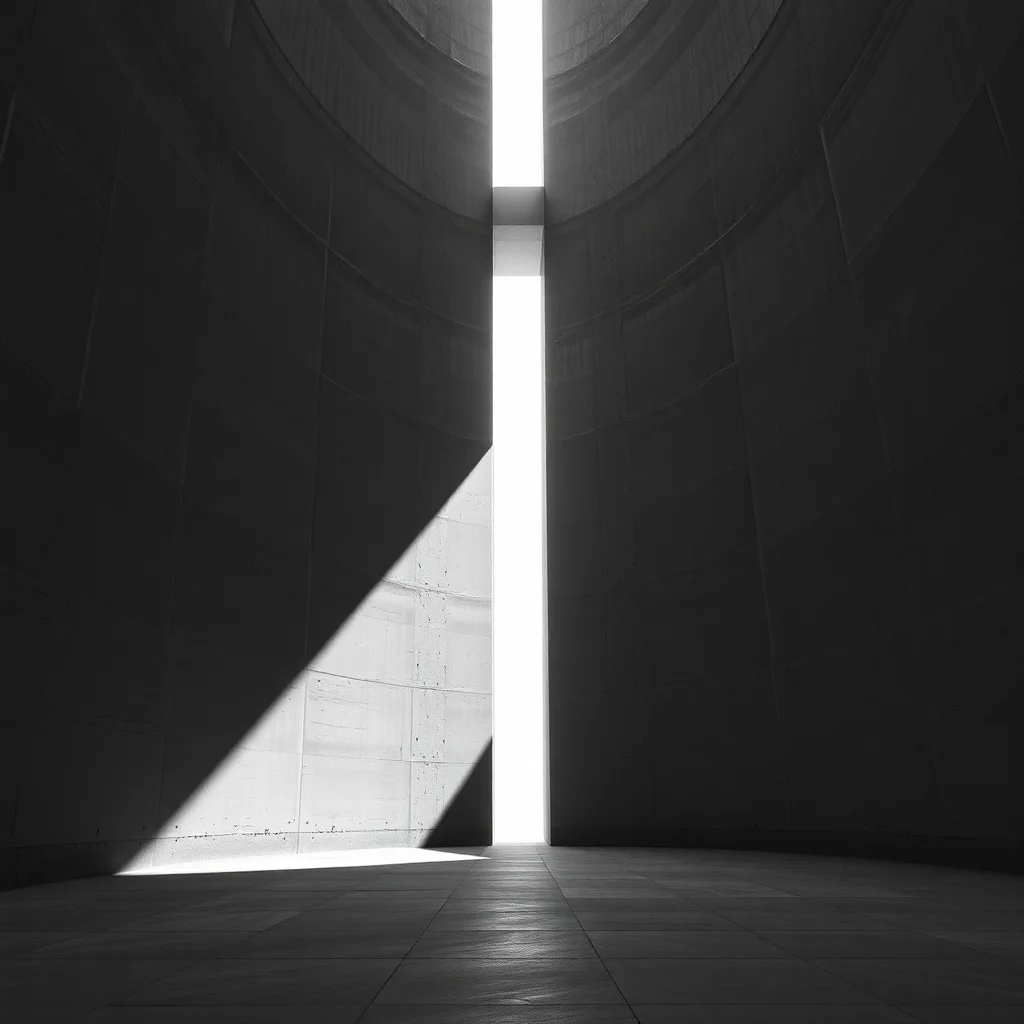
Brutalism has spent decades being accused of emotional violence, but that accusation collapses the moment you stand before architecture that uses raw concrete not as an aesthetic stunt but as a rite of passage. The most compelling sacred brutalist spaces do not ask to be “soft.” They ask to be endured, entered, and interpreted. Their severity is precisely what makes them spiritually legible. Concrete, in these cases, is not cold industrial residue; it is a material of mass, silence, and permanence, capable of turning light into ceremony and enclosure into meaning.
Monte Grisa in Trieste is the clearest proof. Designed by Antonio Guacci and launched by Bishop Antonio Santin, the sanctuary’s folded concrete geometry reads like a fortress of faith, but it is not mere aggression. The building’s triangular repetition, monumental scale, and elevated siting above the city give it an almost liturgical distance: you do not simply arrive there, you ascend into it. That movement matters. Sacred architecture has always relied on staging—thresholds, compression, release, directional pull—and brutalism, stripped of ornament, makes those spatial dramas impossible to ignore. In Monte Grisa, roughness is not the enemy of devotion; it intensifies it.
Ritual Without Ornament: Why Brutalism Works for Faith
What brutalism offers religion is a refusal of distraction. In a culture flooded with images, polished surfaces, and instant sentiment, a raw concrete sanctuary resists easy consumption. This is why spiritual brutalism can feel more honest than decorative piety. It does not pretend that transcendence is cozy. It understands that faith is often built from tension, repetition, and the discipline of attention. The lack of ornament forces the body to confront scale, acoustics, shadow, and the weight of silence.
Consider Le Corbusier’s Notre Dame du Haut at Ronchamp, often misread as a soft exception to modern severity. It is not soft; it is sculptural, ambiguous, and psychologically charged. Its thick walls and cavernous interior turn light into a theological event. Or take the Dominican Motherhouse of Sainte Marie de La Tourette near Lyon, where Corbusier translated monastic life into concrete discipline: austere, rigorous, and deeply spatial. These projects prove that the sacred does not require historical mimicry. It requires architectural conviction. Brutalism can supply that conviction in abundance.
The same logic appears in later works by architects who treated concrete as an instrument of devotion rather than a symbol of modernity alone. In countries shaped by postwar reconstruction, churches and chapels often embraced the material because it felt morally unadorned, even penitential. The roughness of the form mirrored the roughness of the era. In that sense, brutalism was not a style imposed on religion; it was religion’s architectural language for a damaged century.
This is also where multisensory architecture becomes relevant: brutalist sanctuaries succeed when they activate more than vision, making sound, texture, and temperature part of the devotional experience. The most affecting concrete interiors are never just seen; they are felt through the body, which is why their austerity can become unexpectedly intimate.
CONTRA: The Same Severity Can Look Like Power, Not Grace
But brutalism’s spiritual promise is inseparable from its danger. The material that produces reverence in one viewer can produce intimidation in another. Concrete’s monumental honesty can slide into a rhetoric of authority, and sacred architecture is especially vulnerable to that slide. The line between solemnity and authoritarianism is thinner than admirers of the style like to admit. A building can claim transcendence while still making the visitor feel watched, reduced, or disciplined into submission.
This is the central contradiction of brutalist sacred form: it can look like a fortress because it is one. In the wrong hands, monumental mass becomes an aesthetic of control. The same heavy planes that guide contemplation can also block empathy. A sanctuary that denies warmth, texture, or human-scale detail can begin to feel less like an invitation to the divine than a warning against dissent. Brutalism’s moral seriousness is not automatically virtuous; it can just as easily become punitive.
Even Monte Grisa, for all its symbolic force, is open to this criticism. Its monumental presence on the hill can be read as protective, but also as defensive, even militarized. That ambiguity is not incidental—it is the style’s essential instability. Brutalism always risks becoming a monument to its own authority. When faith adopts that language too eagerly, the result can be a sacred space that confuses awe with obedience.
In broader design debates, the same tension appears in conversations about emotional architecture, where buildings are judged not only by form but by how they shape feeling. Brutalist sanctuaries expose that question at its sharpest: if architecture can comfort, it can also coerce, and the difference often lies in how deliberately the space acknowledges human vulnerability.
Coldness Is Not the Opposite of the Sacred—But It Can Be a Trap
Defenders of brutalist spirituality often argue that coldness is a superficial reading, that what seems severe is actually contemplative. Sometimes they are right. Thin emotional decoration can be a form of spiritual laziness. Yet it is equally naïve to pretend that people do not respond viscerally to material atmosphere. If a church feels hostile, the theology of the plan will not rescue it. Architecture is not an essay. It operates through bodily memory, temperature, sound, and fear.
That is why some brutalist religious buildings succeed precisely when they introduce a counterpoint: controlled daylight, textured formwork, surprising openings, or a sequence of compression and release. The Brazilian architect Paulo Mendes da Rocha understood this when working in concrete environments that remain severe but never dead. Similarly, Gottfried Böhm’s pilgrimage church at Neviges is not a sentimental object; it is a jagged liturgical mountain, but one that stages ascent with dramatic emotional clarity. The difference between spiritual intensity and authoritarian bleakness is not softness. It is spatial intelligence.
When brutalism fails in sacred contexts, it usually does so by relying on sheer mass without ritual choreography. Then concrete becomes just concrete: a sign of expense, bureaucracy, or ideological hardness. The building loses transcendence and keeps only the posture. That is the danger for any architecture that mistakes gravity for meaning.
The Best Sacred Brutalism Understands Light as Theology
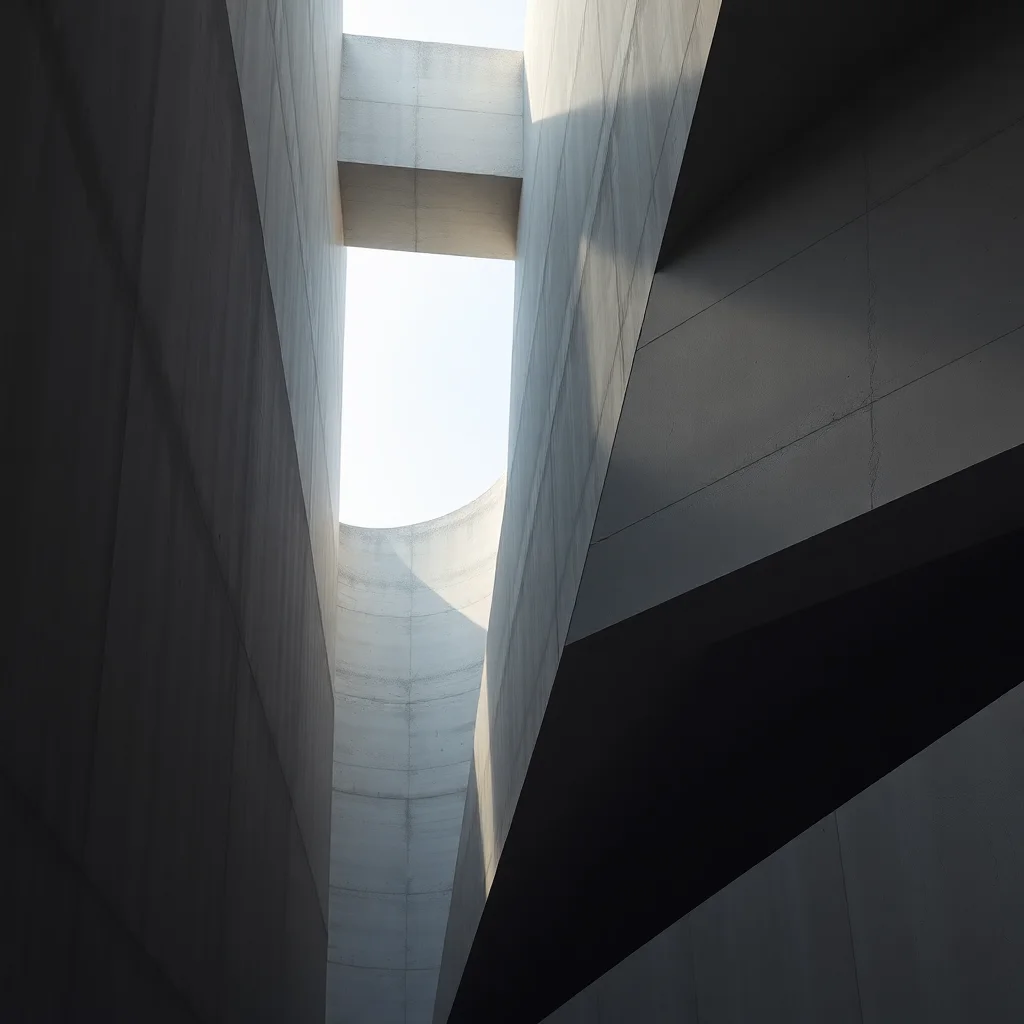
What saves the strongest brutalist sanctuaries from their own harshness is not ornament but light. Light is the material that brutalism cannot control entirely, and that is exactly why it matters. In sacred architecture, light is never neutral; it is symbolic, directional, and temporal. Concrete can frame it, suppress it, or release it in blades and voids, but it cannot own it. This makes light the counterforce that prevents raw architecture from collapsing into brute force.
Monte Grisa depends on this logic. Its severe concrete shell gains spiritual charge through the contrast between mass and illumination, between the heaviness of the structure and the shifting life of the atmosphere around it. This is also why sacred works by architects such as Tadao Ando, though often described as minimalist rather than brutalist, remain relevant to the argument: their concrete walls become meaningful because light cuts them open like revelation. The material is not “softened”; it is activated.
The enduring lesson is that spirituality in brutalism is not about making concrete friendlier. It is about making severity purposeful. A raw surface can support contemplation if it creates hierarchy, orientation, and pause. It becomes spiritually convincing when it transforms matter into sequence and silence into expectation.
That emphasis on atmosphere also connects to designing for mental health, where environmental cues are treated as crucial to emotional resilience. In sacred brutalism, the same principle holds: a building’s psychological effect is not secondary to its theology, but part of how that theology is experienced.
PRO and CONTRA: Brutalism’s Faith Lies in Its Refusal to Lie
So, can brutalism be spiritual without softening its edge? Yes—but only when it accepts that faith itself is not soft. Faith is not comfort architecture; it is a demand for attention, humility, and endurance. The best brutalist sanctuaries do not dilute their material force to become “welcoming.” They understand that welcome can also be severe, that awe is often sharper than consolation, and that symbol is stronger when it resists instant legibility.
And yet the critique remains lethal: the same refusal to soften can become a refusal to care. Brutalism in sacred architecture succeeds only when its severity is disciplined by ritual, proportion, and light. Without that, it is just hard material performing moral seriousness. With it, it becomes something more dangerous and more magnificent—a built argument that transcendence is not a blur of softness, but a confrontation with weight, scale, and silence.
The question is not whether concrete can be spiritual. It plainly can. The real question is whether we have the patience to distinguish between a sanctuary and a monument to severity.
FAQ
Is brutalism inherently anti-spiritual? No. Brutalism can be profoundly spiritual when its mass, light, and sequence are used to shape ritual experience rather than simply assert power. The issue is not the material itself but the architectural intention behind it.
Why do some people find brutalist churches moving while others find them oppressive? Because the same spatial qualities that produce awe—scale, shadow, rawness, silence—can also trigger discomfort or alienation. Personal expectation matters, but so does whether the building offers a clear ritual and emotional journey.
What makes Monte Grisa important in this debate? Monte Grisa shows that raw concrete can support symbolism, pilgrimage, and monumental presence without relying on ornament. Its hilltop setting and geometric severity turn the sanctuary into a dramatic act of ascent and enclosure.
Can contemporary architecture learn from sacred brutalism? Absolutely. The lesson is not to copy concrete forms, but to understand how threshold, light, and spatial intensity can create meaning. Contemporary sacred design should learn from brutalism’s conviction without inheriting its failures of scale or coldness.
Open question: if brutalism can be spiritually powerful and politically intimidating at the same time, should we see that tension as a flaw—or as the very source of its force?
Get the Mainifesto weekly — curated design debates, speculative ideas and the week's best articles every Saturday.

Elena March May 11, 2026
That tension isn’t a flaw to me; it’s the point. Brutalism works when its heaviness makes you stop, but the same mass can turn oppressive if the social context is wrong. The article is right to treat spirituality and intimidation as two sides of the same architectural language.
Tom Brightwell May 12, 2026
I think we should be careful not to romanticize a style that too often reads as cold, expensive to maintain, and hostile at street level. If a building needs to lean on symbolism and monumentality to feel meaningful, that’s usually a sign the basics aren’t doing enough work. For me, the tension is more liability than source of force.
David Lim May 12, 2026
What interests me is that brutalism turns material honesty into a kind of ethical signal, which can feel almost devotional. But that same clarity of form also amplifies hierarchy and control, so maybe the real question is who gets to decide whether the building reads as sanctuary or command structure. I don’t think the tension weakens brutalism; it gives the style its charge.