

A Fresh Interior Cannot Erase a Home’s Past
A Fresh Interior Cannot Erase a Home’s Past
A kitchen can be demolished in a morning. A home’s history is less cooperative. Behind newly plastered walls and professionally staged furniture, a property may carry a history of murder, suicide or another traumatic event that its next occupants would consider essential knowledge. Renovation changes what they encounter. It should not determine what they are allowed to know.
Dwell’s reporting on stigmatized properties identifies an uncomfortable market reality: a tragic backstory does not necessarily come with either a reduced asking price or disclosure. That gap puts interiors in ethically charged territory. A fresh start can serve the person who moves in—or the person who wants an inconvenient history out of the sales conversation. The difference is not the colour of the paint. It is whether transformation accompanies informed choice or substitutes for it.
PRO: A Home Should Not Be Sentenced to Its Worst Moment

The strongest argument for renovation begins with the people who must live there, not those who consume its story. Future occupants are entitled to ordinary domestic life. They should not have to preserve a room arrangement because strangers recognise it from news photographs, or keep a doorway that makes coming home feel like entering someone else’s tragedy.
Imagine a buyer who knows a property’s history and chooses it anyway. Moving the main bedroom, opening a dark kitchen to the garden or replacing damaged flooring can establish routines that have nothing to do with the previous occupants. These are hypothetical interventions, not a universal prescription for recovery. Their legitimacy rests on the resident’s agency: the person living with the past should help decide how physically present it remains.
Maggie’s cancer care centres offer a useful, limited comparison. Projects by architects including Alison Brooks and the late Richard Rogers place considerable emphasis on welcoming domestic settings, daylight, gardens and places to talk. They are not precedents for treating crime scenes, nor proof that architecture resolves trauma. They demonstrate a more modest proposition: spatial decisions can support people facing difficult circumstances. A renovated home deserves the same possibility, without being sold as a psychological cure.
PRO: Privacy Is a Design Brief, Not an Admission of Guilt
Public fascination can become another burden attached to a stigmatized address. A recognisable facade, exposed entrance or front room visible from the street may turn daily life into an involuntary performance for curious visitors. Screening, planting and a reconfigured entrance can protect occupants without denying anything that happened.
The distinction is familiar in residential architecture. Courtyard houses, from traditional inward-facing dwellings to the work of Luis Barragán, organise privacy through walls, thresholds and carefully controlled views. Those devices are not inherently secretive. Applied to a notorious property, they can reduce exposure while admitting daylight and preserving a relationship with the outdoors. Privacy should not be confused with a duty to keep a home visually available to the public.
Nor should preservation become compulsory theatre. The tension between protecting an interior’s heritage and allowing a home to change takes on particular urgency here. Retaining a particular staircase or bedroom as an unofficial memorial may satisfy spectators while harming residents or distressing victims’ relatives. Sometimes removing a recognisable feature is a compassionate decision. The ethical requirement is not to preserve every material witness.
A responsible renovation can therefore be radical. It can replace finishes, change circulation and give the building an entirely different atmosphere. But that freedom depends on separating two tasks: changing the physical environment and communicating relevant history. A home can stop looking like its past without its seller pretending that past never existed.
CONTRA: The Fresh Start Can Become a Sales Alibi

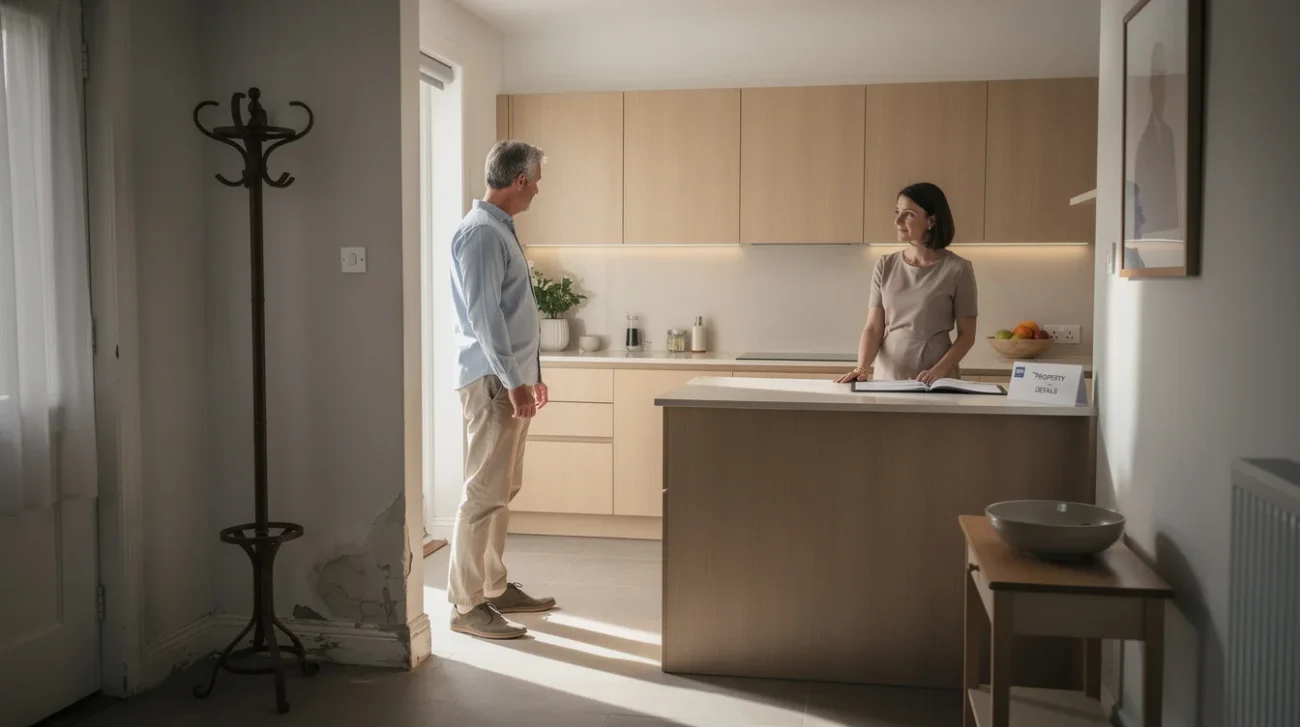
The opposing argument starts where the property listing begins. Renovation does not simply alter rooms; it produces photographs, descriptions and expectations. Pale oak, a generous island and immaculate plaster make an effective visual narrative: this is an uncomplicated place to begin again. When information is withheld, that narrative can do work that an explicit falsehood would otherwise have to perform.
Consider a hypothetical investor who acquires a house associated with a widely reported death, changes its interior beyond recognition and markets it solely as a newly transformed family home. None of those design decisions is intrinsically wrong. The problem emerges if the sales process leaves buyers unable to evaluate information that would materially affect their decision. A purchaser’s concern may involve personal beliefs, anticipated attention from strangers or future resale—not a belief that the building itself is dangerous.
Dwell’s observation that stigma does not reliably produce a discount matters here. Price cannot be treated as a substitute for disclosure. A full asking price does not establish an untroubled history; a bargain does not establish informed consent.
The interior becomes ethically compromised when its visual reassurance is used to close an informational gap rather than acknowledge one. Design cannot guarantee that every buyer will ask the question a seller would prefer to avoid.
CONTRA: Designers Cannot Outsource Every Ethical Decision
Disclosure law varies by jurisdiction, event and circumstance. A death, an unresolved physical hazard and a reputation generated by publicity are not interchangeable categories. Legal advice is essential to a transaction. But legal compliance alone cannot answer whether a design team is helping a client mislead someone.
A designer need not become an investigator of every previous tenancy. Once a significant history is known, however, the brief deserves scrutiny. Is a layout changing because the future resident wants it changed? Or is the stated objective to make the address difficult to recognise while avoiding questions from purchasers? Similar drawings can serve very different purposes.
David Chipperfield Architects’ restoration of Berlin’s Neues Museum, developed with conservation architect Julian Harrap, offers a revealing counterpoint. Its treatment of damaged fabric makes repair and historical discontinuity legible rather than presenting an untouched fiction. A private home is not a museum, and residents owe nobody an exhibition of trauma. The relevant lesson is intellectual rather than stylistic: transformation need not depend on pretending there was no rupture.
For stigmatized property renovation, the defensible boundary is clear. Designers should resist knowingly misleading project narratives, distinguish physical remediation from cosmetic work and encourage appropriate disclosure through qualified professionals. Renovate the house as thoroughly as its occupants need. Do not turn the renovation into evidence that there is nothing else to discuss.
FAQ: Renovating Without Concealing
What is a stigmatized property?
It is a property whose appeal may be affected by associations beyond its physical condition, such as a violent death or intense public notoriety. The term does not, by itself, mean that a building is unsafe. Legal definitions and treatment vary.
Must a seller disclose a death in a home?
There is no universal rule. Requirements depend on the jurisdiction and circumstances; direct questions and misrepresentation may also carry legal consequences. Buyers and sellers should seek local professional advice rather than assume that silence is either permitted or prohibited everywhere.
Can renovation make a stigmatized home safe to occupy?
Where contamination or damage exists, qualified specialists should assess and address it. Decorative renovation is not a substitute for that work. A redesigned interior may support comfort, but it cannot guarantee emotional wellbeing or eliminate attention associated with an address. As with claims that an interior is neuroinclusive, the needs of the people using the space matter more than a reassuring design label.
Should a renovation preserve evidence of a tragedy?
Not automatically. After applicable investigative and legal requirements are satisfied, occupants’ privacy and needs matter. Accurate disclosure does not require a memorial interior: history can be communicated through appropriate records and conversations without keeping every room unchanged.
If a renovation gives a home a new identity, who should decide how much of its old one the next buyer must be told?
Watch the Mainifesto Short
Get the Mainifesto weekly — curated design debates, speculative ideas and the week's best articles every Saturday.
Editorial Perspectives
Questions and counterpoints developed by the Mainifesto editorial desk to extend the discussion.
Perspective 1
A renovation changes the finishes, not the history, and buyers deserve more than the version that helps a sale. In adaptive reuse, I see how easily ‘a fresh start’ becomes permission to erase former residents; disclosure standards should be set publicly, not left to whoever profits from the new identity.
Perspective 2
I don’t think a home must carry every past event into its next life. Changing the light, acoustics and way rooms connect can genuinely change how it feels to live there; beyond safety issues and legal duties, buyers should be able to choose how much history they want.
Perspective 3
I’d separate documented harm from inherited stigma before deciding what needs disclosure. Fresh plaster can hide damp or contamination, so buyers need records of what was found, removed and tested—not an assumption that new materials mean a clean slate.
Perspective 4
The seller shouldn’t be the sole judge of what matters when they’re also trying to recover the renovation bill. Set clear disclosure rules, provide the relevant records before buyers spend money on surveys, and let them decide what the history is worth to them.