
Can an Imperial Monument Tell a Different History?
Can an Imperial Monument Be Expanded Into a Different History?
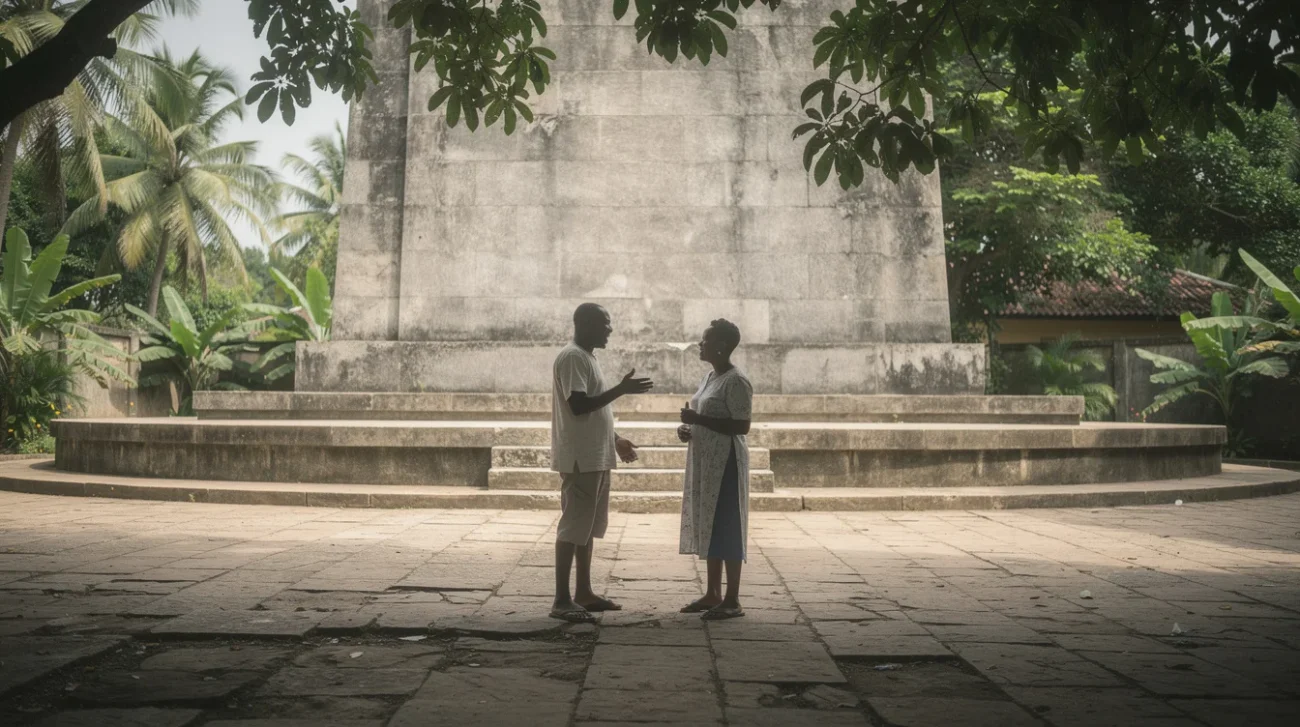
An imperial monument does not merely remember the dead. It decides which deaths constitute history, whose service deserves architectural dignity, and who remains outside the frame. According to Wallpaper, Oshinówò Studio’s extension of the Freetown Memorial in Sierra Leone honours the local Carrier Corps for the first time while retaining the existing monument designed by Edwin Lutyens. That is a significant correction. It is not automatically a change of governing narrative.
The architectural question is sharper than whether preservation and recognition can coexist. Clearly, they can. The question is whether the newly recognised become historical subjects in their own right—or supporting figures in an imperial story that still owns the stage. Addition can redistribute authority. It can also make an old hierarchy look newly generous.
PRO: Recognition Can Change What the Original Monument Means
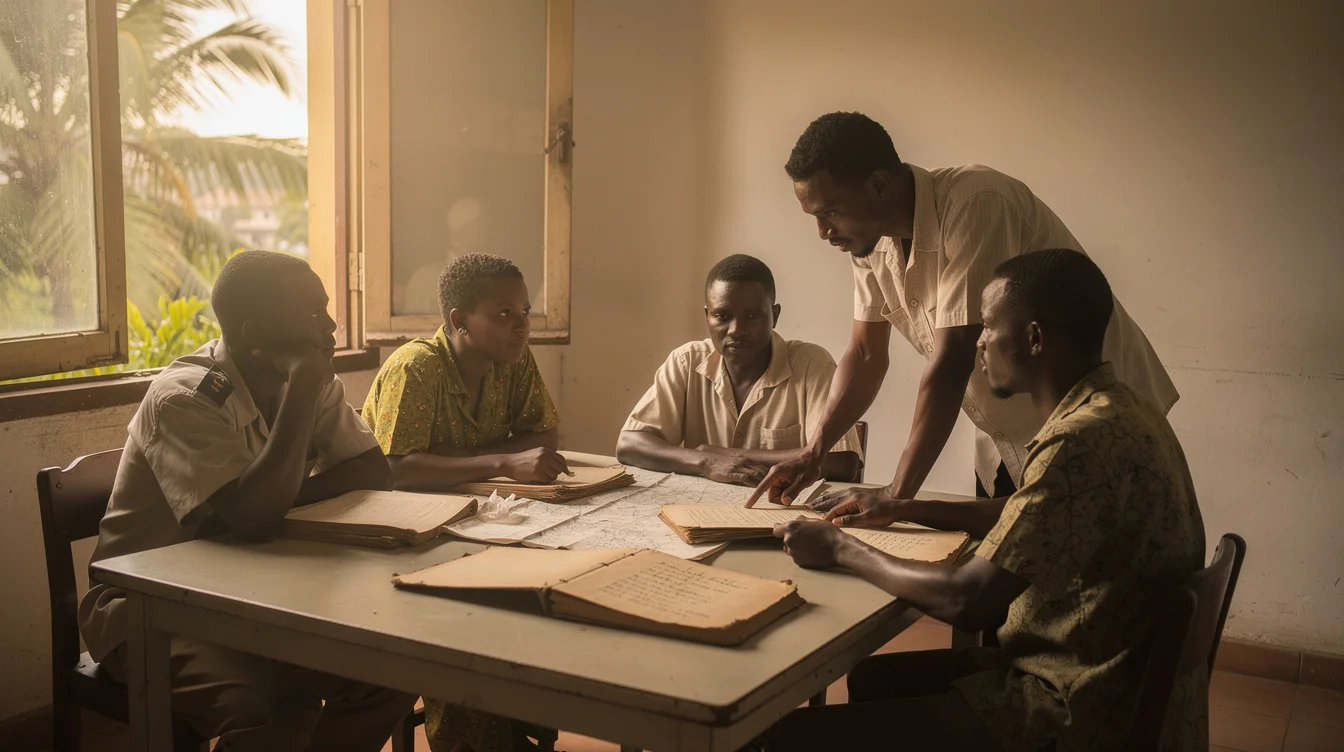
The strongest argument for the Freetown Memorial extension is that a monument’s meaning is not permanently locked inside its original design. Meaning also comes from what surrounds it, who gathers there, and which histories visitors encounter. Bringing the Carrier Corps into the commemorative field can make it harder to understand military history solely through uniformed combatants and imperial command.
Carrier labour sustained military operations through the movement of supplies and equipment. Recognising that work challenges the familiar separation between heroic action and supposedly secondary support. The important shift is not simply that another group receives thanks. It is that visitors may have to reconsider who made the military enterprise possible in the first place.
Washington’s Vietnam Veterans Memorial offers a useful, if imperfect, comparison. Maya Lin’s 1982 wall was followed by other commemorative works, including Glenna Goodacre’s Vietnam Women’s Memorial in 1993. The later sculpture did not replace the wall; it made women’s service more visible within a landscape whose public imagery had largely centred men. Additions need not cancel an earlier memorial to challenge the limits of its representation.
Freetown’s stakes are different because colonial power is embedded in the story. Nevertheless, the principle holds: a retained monument can become evidence of an earlier, narrower understanding rather than the final authority on remembrance.
PRO: Keeping the Imperial Object Can Expose Its Limits
Demolition is not the only way to withdraw a monument’s monopoly on meaning. Preservation can keep the original hierarchy available for scrutiny. A freestanding replacement might tell a more just story, but an intervention beside the inherited object can show exactly what that object failed to acknowledge. A related dilemma arises when deciding how much of a segregated school to preserve: retaining evidence of exclusion is not the same as endorsing it.
Jochen Gerz and Esther Shalev-Gerz’s Monument Against Fascism, inaugurated in Hamburg-Harburg in 1986, challenged the idea that remembrance requires an enduring, elevated object. Its lead-clad column invited public inscriptions and was progressively lowered into the ground. The project’s relevance here is not formal resemblance. It demonstrates that a memorial’s authority can be altered through participation and use, rather than accepted as a property of monumental architecture.
For Freetown, that possibility would depend on interpretation and practice as much as design. Carrier histories could anchor school visits rather than appear as an optional afterthought. Commemorative ceremonies could begin with their experiences. Archival uncertainty could be made visible instead of allowing missing names to become missing people once again. These are criteria for judging the extension, not claims about its documented programme.
Oshinówò Studio’s intervention therefore deserves to be evaluated as more than an appendage to Lutyens. If it changes where historical explanation begins, it can change the inherited monument’s role. The imperial object would remain, but it would no longer be allowed to explain itself.
CONTRA: An Expanded Memorial Can Preserve the Same Hierarchy
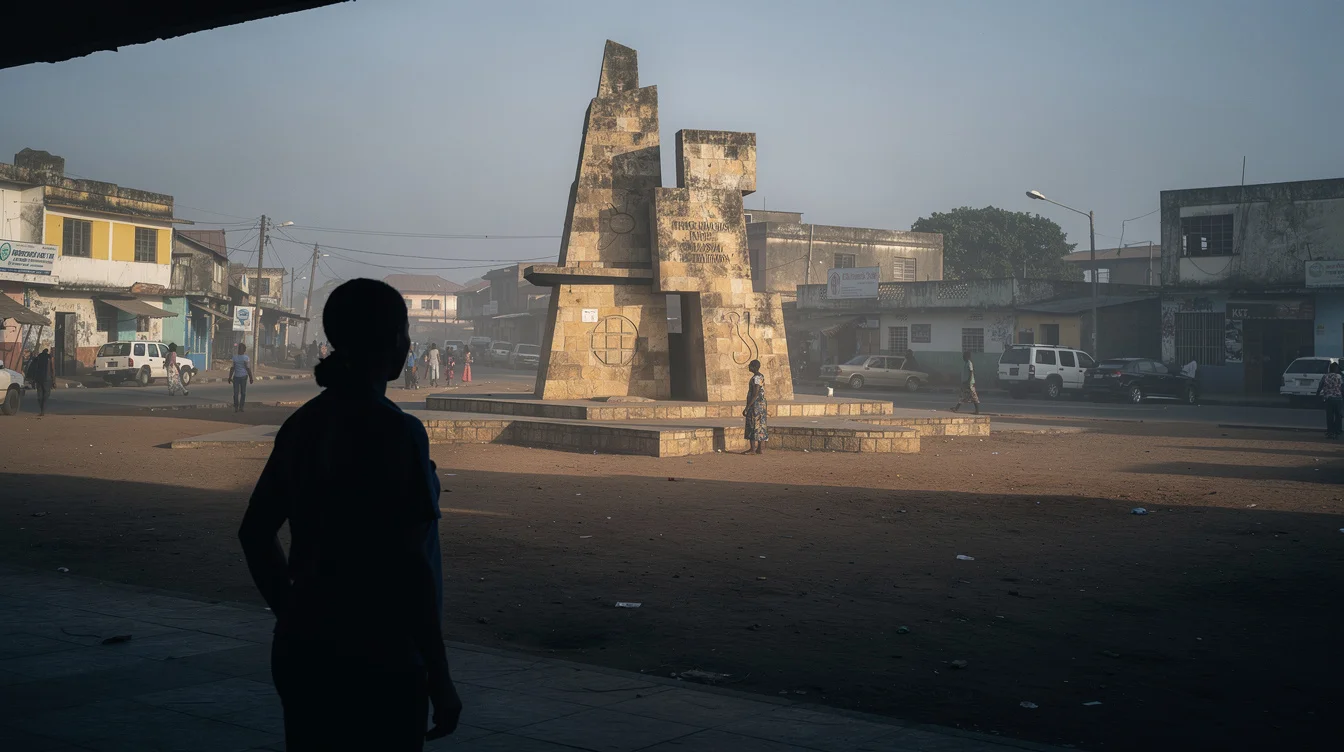
The strongest objection is that recognition and authority are not interchangeable. A monument can acknowledge more people while continuing to organise their lives around the institution that previously excluded them. The Carrier Corps might enter the narrative only as indispensable contributors to an imperial undertaking, rather than as people whose experiences reveal the undertaking’s inequalities.
That distinction matters because the language of honour can be politically convenient. It offers dignity without necessarily examining recruitment, working conditions, unequal treatment or the relationship between colonial rule and military labour. Those questions require specific historical evidence. A declaration of gratitude cannot answer them.
Spatial hierarchy can reinforce the problem. If an older monument remains the dominant destination while new interpretation occupies the margins, visitors may absorb the inherited ranking before reading a word. This is a general architectural risk, not an established description of Oshinówò Studio’s layout. Assessing the actual project would require plans, sightlines, inscriptions and observation of how the site is used.
New Delhi’s India Gate offers a caution about easy equations between intervention and transformation. Lutyens’s memorial has accumulated postcolonial meanings, while the nearby canopy now contains a statue of Subhas Chandra Bose. Changing commemorative occupants can redirect national symbolism without dissolving the monumental grammar of centrality, grandeur and state authority. Political revision does not necessarily produce a less hierarchical architecture.
CONTRA: Inclusion Can Become an Alibi for Preservation
There is also an institutional bargain hidden inside many additive projects: the historic object retains its protected status, while the contemporary intervention carries the burden of ethical repair. The original architect remains the canonical figure. The new designer supplies the context that makes continued admiration easier. This also raises the question of who gets credit when a building changes architects. In that arrangement, inclusion does not displace imperial prestige; it helps maintain it.
The removal of Cecil Rhodes’s statue from the University of Cape Town in 2015 expressed a different proposition. The objection was not merely that the campus needed more representation around Rhodes. His prominent presence was itself understood as a continuing allocation of honour. The lesson is not that Freetown should follow the same course. A war memorial and a statue celebrating an imperial figure have different commemorative obligations. The lesson is that adding context cannot always resolve what continued prominence does.
A demanding assessment of the Freetown Memorial extension must therefore ask who controls the account. Who selects the language? Can local historians and affected communities revise it? Are carriers remembered only through service to empire, or through lives and social worlds that exceed that service?
The source establishes a meaningful first recognition; it does not, by itself, establish a redistribution of interpretive power. Preservation should not receive an ethical exemption simply because inclusion has arrived beside it. The burden of proof lies in showing that the enlarged memorial changes the story’s organising logic, not merely its cast.
FAQ: Recognition, Preservation and Imperial Memory
What is changing at the Freetown Memorial?
As reported by Wallpaper, Oshinówò Studio is extending the existing memorial in Sierra Leone, retaining the monument designed by Edwin Lutyens while honouring the local Carrier Corps for the first time. That establishes an expansion of recognition, though not necessarily a transformation of the monument’s underlying narrative.
Why is recognising the Carrier Corps important?
Carrier labour made military operations possible but has often received less commemorative attention than combat. Recognition challenges that imbalance. Its historical value grows when interpretation addresses carriers’ experiences and conditions, rather than treating them only as logistical support for someone else’s achievement.
Does retaining an imperial monument mean endorsing empire?
Not inevitably. A retained structure can become an object of critical examination rather than reverence. But that distinction must be produced through interpretation, spatial relationships and public practice; preservation alone does not make an imperial monument critical of its origins.
How can an extension genuinely change a memorial’s narrative?
It can change the starting point of the visitor’s encounter, give previously excluded histories equal interpretive weight, and establish meaningful local authority over future accounts. The test is not simply how much new architecture appears, but whose experiences determine what the whole site means.
If the people once excluded are finally admitted to the monument, but the monument still decides how they matter, whose history has really changed?
Watch the Mainifesto Short
Get the Mainifesto weekly — curated design debates, speculative ideas and the week's best articles every Saturday.
Editorial Perspectives
Questions and counterpoints developed by the Mainifesto editorial desk to extend the discussion.
Perspective 1
I’m for this extension: keeping the imperial monument visible while honouring the Carrier Corps can expose a contradiction that a clean replacement would hide. Restoration doesn’t have to reconcile those histories, and it certainly shouldn’t turn their friction into a tasteful backdrop for neighbourhood ‘uplift’.
Perspective 2
I don’t buy inclusion as a correction to imperial memory when the original monument still sets the terms of recognition. If the Carrier Corps matter here only because they served the empire, the frame has expanded but the hierarchy hasn’t changed.
Perspective 3
I’d look at the extension in plan and section: who gets the main approach, the dominant sightline, the space where people actually stop? If the Carrier Corps remain spatially secondary, the design could reproduce the ranking that the new inscription is meant to challenge.
Perspective 4
I’d want to see the operating budget alongside the design: who maintains the extension, funds interpretation and keeps it accessible? The addition is worth doing if people can actually use it to learn a different history, but an opening ceremony won’t deliver that on its own.