The Supermarket Lane That Refuses to Rush You
The Supermarket Lane That Refuses to Rush You
The supermarket has become a machine for making human hesitation look like a malfunction. Find the barcode. Present the card. Pack faster. Move aside. Its interiors rarely announce this disciplinary ambition; they communicate it through narrow exits, impatient queues and the tiny territory available for gathering purchases. Efficiency is presented as a universal benefit, even when the customer experiences it as pressure.
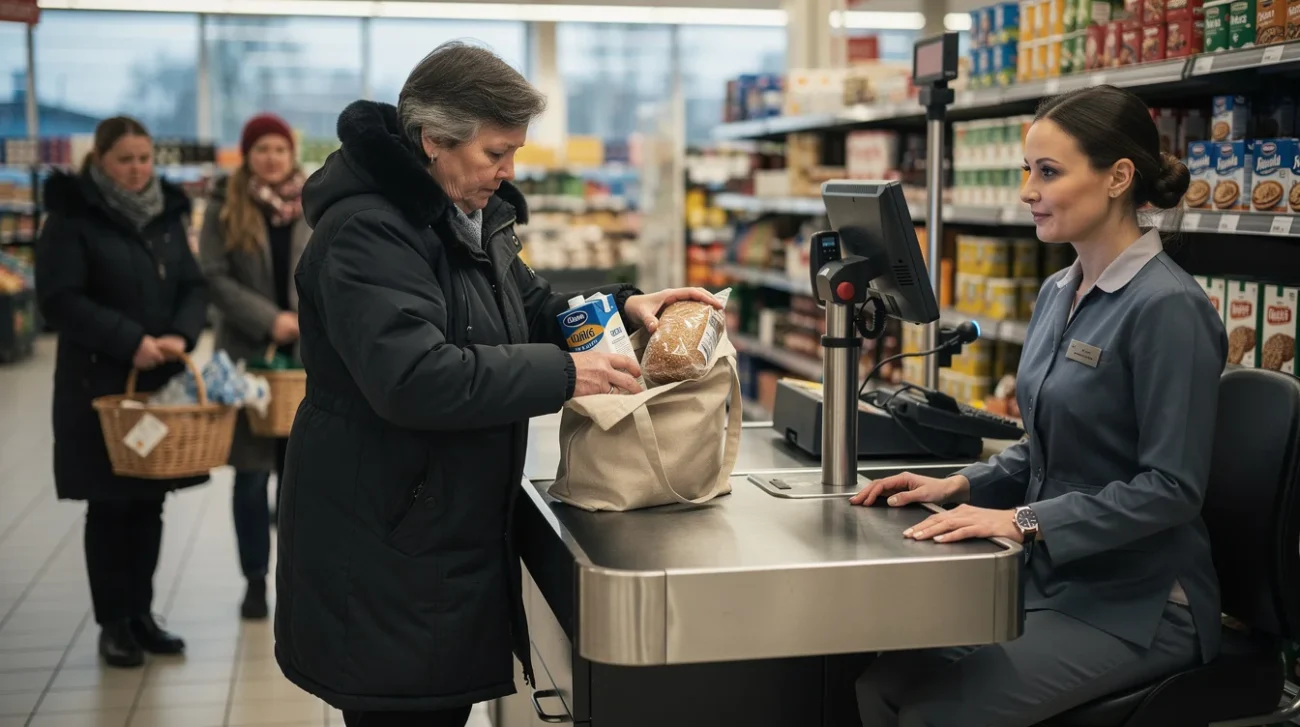
K-Citymarket’s slow checkout in Finland interrupts that logic. As reported by Monocle, the supermarket’s slower lane offers a successful counterexample to the assumption that every transaction should accelerate. The available source establishes the initiative, not a detailed architectural specification. The spatial proposals here are therefore design propositions, not claims about what that particular store has installed.
The provocation is bigger than a friendly cashier. Time belongs in the accessibility brief. Someone with a tremor, someone processing unfamiliar payment instructions, someone shopping with a toddler and someone simply exhausted may need different amounts of it. A store can have a step-free entrance and still make the final transaction feel hostile.
But a slow lane is not automatically humane. Its success depends on who gets to use it, where it sits and whose labour makes its generosity possible.
Accessibility Has a Clock
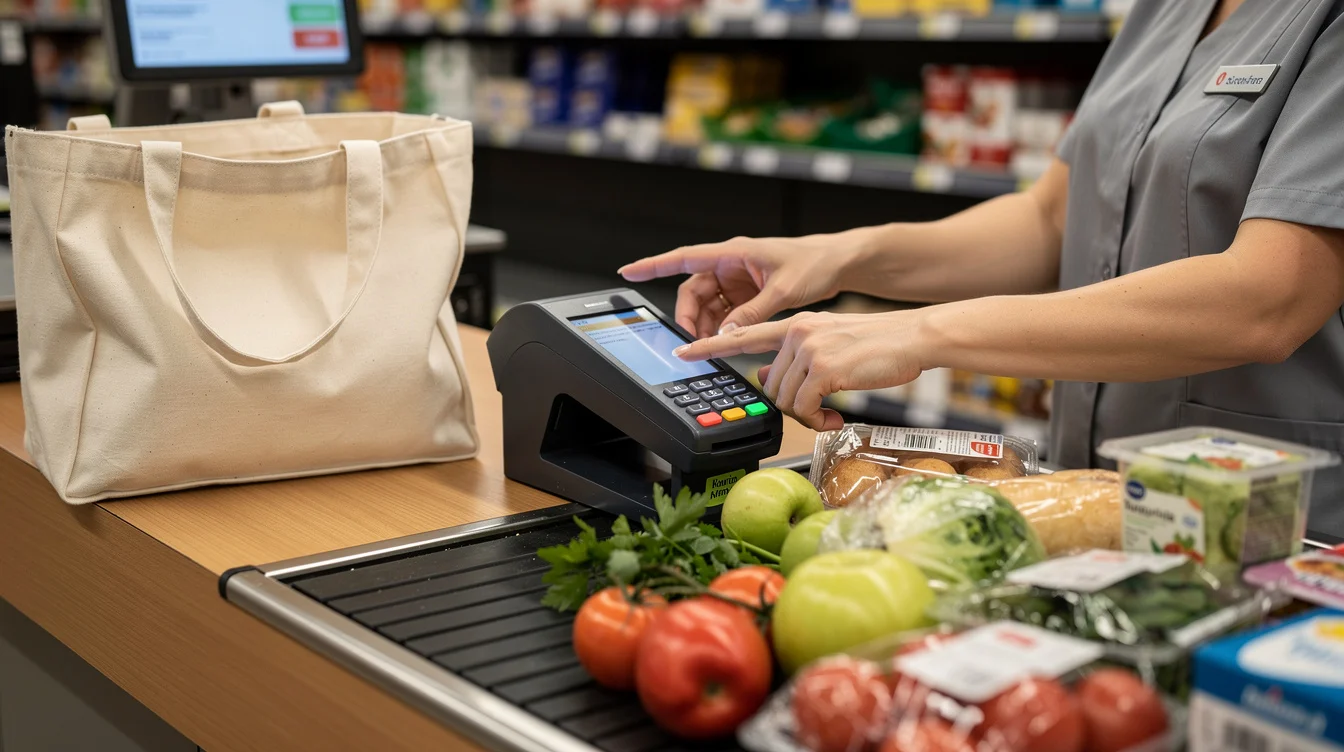
Much accessible-design thinking is expressed through dimensions: turning circles, reach ranges, clear widths. These are indispensable. They are also incomplete. A payment terminal can be physically reachable while its interaction sequence remains difficult to follow under pressure. A generous aisle does little for a customer who cannot pack groceries at the speed set by the conveyor.
Ronald Mace’s universal-design tradition offers a useful corrective: environments should accommodate human variation rather than treat it as an exception requiring special permission. Applied to checkout design, that means examining the duration of an interaction alongside its geometry. How long can someone read a screen? Can they ask for an instruction again? Is there somewhere to stop without obstructing the next person?
Slower processing is not the same thing as lower competence. Retail spaces too often collapse the distinction. A customer searching for a loyalty card becomes a public obstacle because the layout exposes their delay to everyone behind them.
The slow lane should challenge that exposure, not merely relocate it. Dutch supermarket chain Jumbo’s conversational checkouts provide a related precedent: speed need not be the only service proposition. Yet conversation and extra processing time are different needs. A shopper should be able to request patience without also agreeing to perform sociability. The tension recalls the question of perfect sound or good company in listening bar design: whose preferred experience does the space prioritise?
Design the Exit, Not Just the Sign
A sign above an unchanged checkout is a declaration of intent, not a complete interior strategy. If the conveyor still deposits purchases into a cramped packing area, the next basket still arrives too soon and waiting customers still crowd the payment terminal, the architecture continues to demand haste.
A stronger design would separate scanning, payment and packing more clearly. Consider a packing surface beyond the immediate transaction point, with room to arrange bags without blocking circulation. Give seated and standing customers usable surfaces and adequate approach space. Keep the route legible enough that nobody must solve a miniature traffic problem while holding milk, keys and a receipt.
Seating matters, but its placement matters more. A bench across the store is not meaningful relief for someone who cannot leave their place in line. Seats beside the waiting area, combined with a clear way to preserve queue order, could make rest practical. Any arrangement would need testing with wheelchair users, walking-aid users and people who find standing difficult.
William H. Whyte’s observations of public-space seating remain relevant here: the presence of a seat is only part of its usefulness. Choice and relationship to surrounding activity count. The supermarket equivalent is not a lonely chair under a compassionate slogan. It is rest integrated into ordinary shopping.
A Choice of Pace, Not a Hierarchy of People
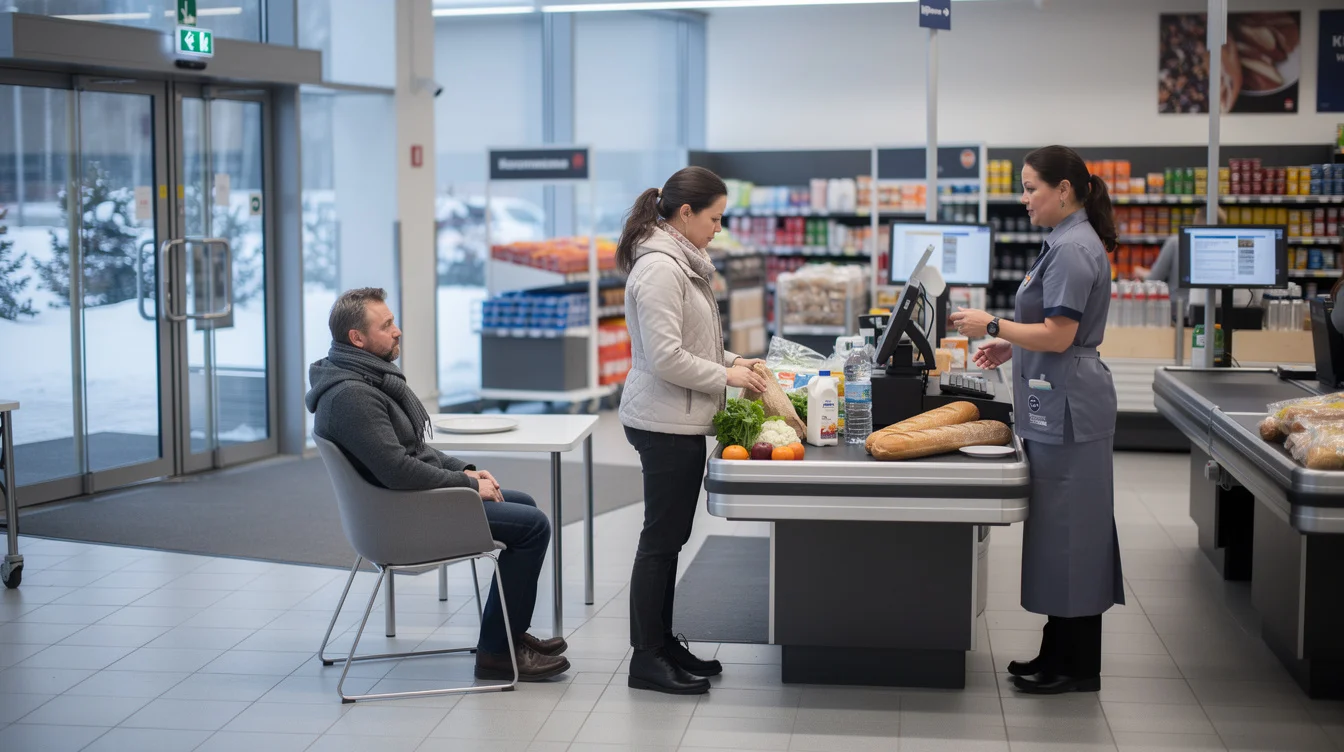
The slow checkout risks becoming an architectural label: this is where the old, lonely or inconvenient customers belong. A well-intentioned service can stigmatize precisely the people it claims to welcome, particularly if it is hidden at the end of the checkout bank or decorated like a care facility.
Its identity should describe the service, not diagnose the user. “Extra time available” communicates something different from imagery that codes the lane exclusively for older people. No customer should have to explain a disability, disclose anxiety or prove that their need for patience is legitimate. Equally, nobody should be redirected there because a cashier or fellow shopper decides they look slow.
Choice is the point; segregation is the failure. Place different checkout options within the same visual and material language. Give the slower lane equivalent lighting, maintenance and visibility. Advertise when it is staffed before customers commit to a queue, rather than revealing its availability at the conveyor. The distinction echoes the difference between feeling at home and having control in senior living: comfort alone does not guarantee autonomy.
Fast checkout must remain a legitimate preference too. Someone managing pain may need to leave quickly; a carer may have a narrow shopping window. Accessibility is not a moral victory of slowness over speed. It is the ability to choose a workable pace without surrendering dignity.
Who Pays for the Extra Minute?
The most dangerous version of this idea is also the easiest to market: a retailer announces a compassionate checkout and expects the cashier to supply unlimited warmth. The furnishings change, the press photographs arrive, but the rota and performance targets remain untouched.
Arlie Russell Hochschild’s account of emotional labour offers the necessary warning. Managing feeling as part of paid work is work. Listening, reassuring, negotiating queue frustration and gently ending a conversation require effort. They cannot be treated as an inexhaustible personality trait possessed by “naturally friendly” employees.
A credible slow-checkout programme therefore needs protected staffing, appropriate breaks and performance measures that do not punish its intended pace. Workers should help define the service and have meaningful input into assignments. A cashier may welcome conversation on one shift and find sustained emotional engagement exhausting on another.
Boundaries must be explicit. This is retail service, not counselling. Customers may need kindness without needing a conversation; workers must be able to finish an exchange without appearing to betray the concept. Supervisors also need a plan for long queues and difficult interactions.
If patience is promised to customers but denied to employees, the slow lane is merely a new extraction technique. Its operating budget is as much a design material as the counter surface.
Measure Dignity, Not Just Throughput
Retailers will reasonably ask whether a slower lane can function within a busy store. The answer should come from operational testing, not sentimental claims that kindness automatically pays for itself. Trial different staffing periods. Observe queue spillover. Check whether packing space remains accessible when baskets accumulate. Ask employees where the concept breaks down during peak demand.
Evaluation should include more than transactions per hour. Do customers feel hurried? Can they understand the service before joining? Do people who need a seat actually use it? Are workers missing breaks or handling more conflict? A checkout that produces attractive customer testimonials while worsening staff fatigue is not a successful inclusive-design intervention.
K-Citymarket’s example matters because it makes a supposedly fixed retail convention negotiable. The checkout is not naturally fast. It has been designed, staffed and measured to favour speed. Those choices can be revised.
The larger ambition should not be one exceptional lane carrying the entire ethical burden of the supermarket. Ordinary checkouts also need sufficient packing room, understandable interfaces and staff empowered to respond patiently. The slow lane is most valuable as a trigger: a visible demonstration that customer experience cannot be reduced to the rate at which bodies leave the building.
FAQ
What is a slow checkout?
It is a checkout option where customers can complete their transaction at a less hurried pace. K-Citymarket’s Finnish example, reported by Monocle, challenges speed as the default measure of good service. Conversation can be welcome, but should never be compulsory.
Who should be able to use it?
Anyone who prefers extra time. Access should not depend on age, a disclosed disability or a staff member’s assessment. Customers’ needs change between visits, so the service should offer a choice rather than assign people to a category.
Which interior changes could support slower shopping?
Useful proposals include generous packing areas, clear circulation, readable signage and seating that lets customers rest without losing their place. These are recommendations, not documented features of the K-Citymarket installation, and should be tested with shoppers and staff.
How can retailers protect workers from extra emotional demands?
Fund adequate staffing, protect breaks, involve employees in service design and avoid speed targets that contradict the lane’s purpose. Set boundaries around conversation and provide supervisory support. Patience must be supported by working conditions, not extracted through expectations of friendliness.
If a supermarket can make room for a different pace, should patience remain a special service—or become a baseline obligation of every checkout?
Watch the Mainifesto Short
Get the Mainifesto weekly — curated design debates, speculative ideas and the week's best articles every Saturday.
Editorial Perspectives
Questions and counterpoints developed by the Mainifesto editorial desk to extend the discussion.
Perspective 1
Markets have long been places to exchange a few words, not just money; the supermarket’s obsession with speed is hardly timeless. A slow lane makes room for that complexity, but patience shouldn’t become a boutique amenity while everyone else is hurried through.
Perspective 2
Give every checkout enough space to pack comfortably, but don’t pretend a wider counter pays for another cashier. Basic patience should be standard; a dedicated slow lane only works if staffing and performance targets let workers honour the promise.
Perspective 3
I’d want to see who uses the slow lane, who avoids it, and whether it shifts pressure onto the other cashiers. Test clearer queues and more packing space across all checkouts before deciding that shoppers who need time belong in a separate lane.