

Can a Psychiatry Museum Preserve Patients’ Voices?
Can a Museum Preserve Psychiatry’s History Without Speaking for Its Patients?
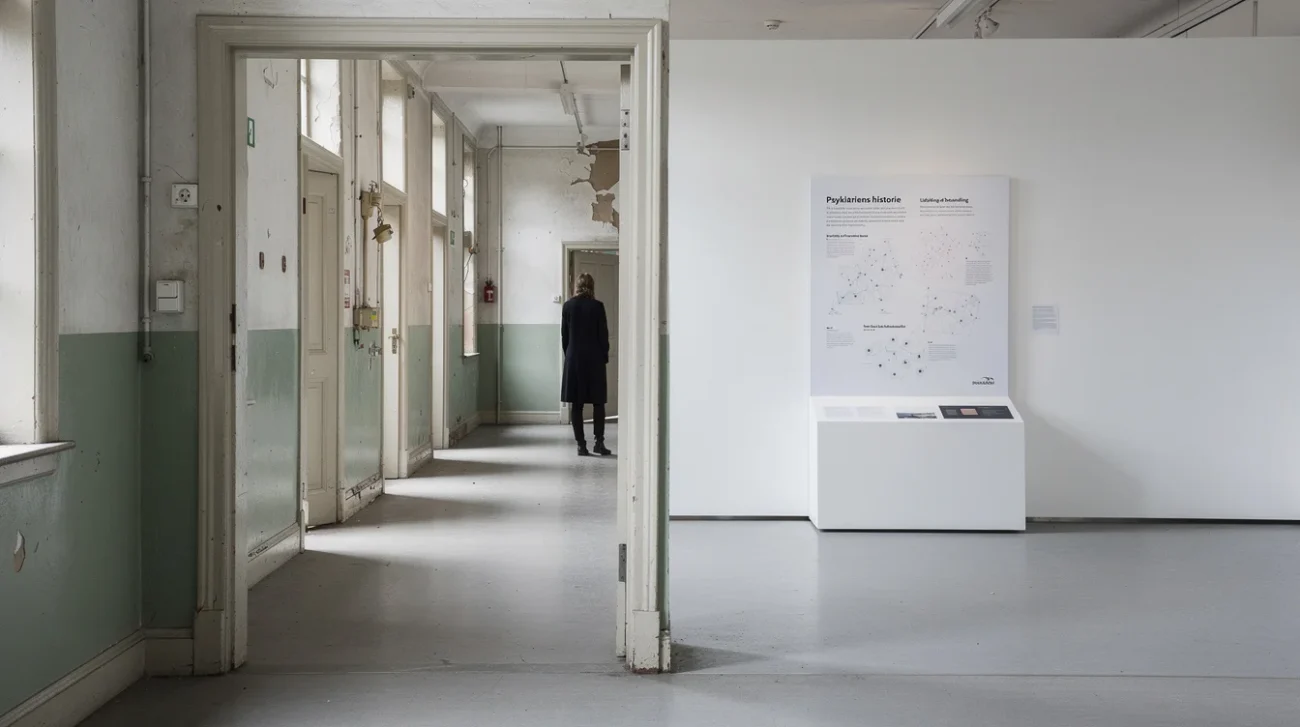
A former psychiatric patient building is never an empty container. Its rooms once organised relationships between people receiving care and people authorised to administer it. Turning that building into a museum changes its function, but does not automatically redistribute its authority.
Denmark’s MIND Museum, a conversion by C.F. Møller Architects, preserves the site’s history while creating flexible settings for communicating the development of psychiatry. That premise presents an architectural opportunity and an ethical trap. Preserving the place where patients lived is not the same as preserving their perspectives. The source description establishes the project’s adaptive-reuse ambition; it does not establish how patients participate in interpretation. The following positions therefore examine what this building type could enable—and what its museum programme must resist.
PRO: Preserve the Building as Evidence, Not as an Icon
Demolition can make uncomfortable histories conveniently abstract. Keeping a former patient building allows visitors to encounter the physical scale of institutional life: the relationship between a room and a corridor, the distance to an exit, the boundary between collective and private space. Where surviving evidence supports such readings, architecture can make the organisation of care tangible in ways that a chronological display cannot.
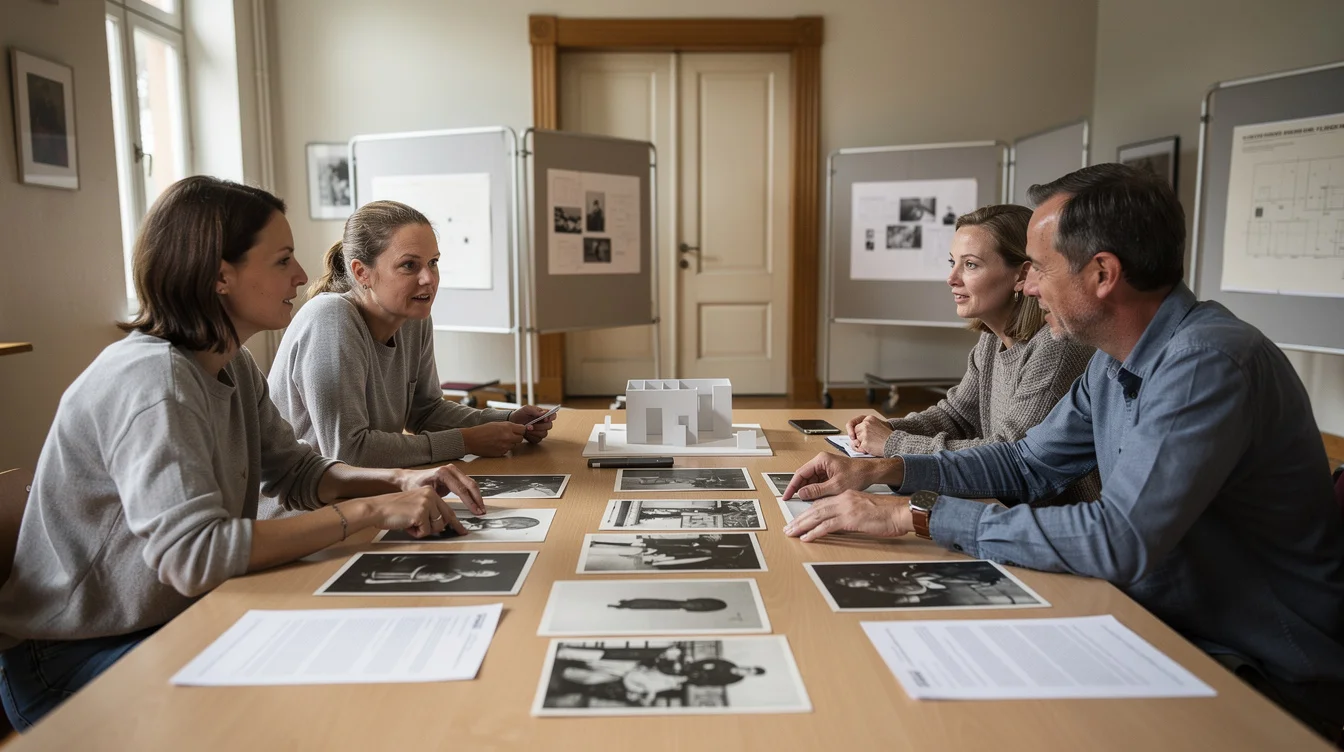
But the building needs to be cross-examined. A doorway cannot tell us, by itself, whether someone experienced it as protection, confinement or both at different moments. An interpretation panel could pair an archival account of a room’s intended function with a patient’s recollection, identifying the date and circumstances of each. Contradiction would become part of the exhibition rather than an embarrassment to be edited out.
Carlo Scarpa’s interventions at Castelvecchio in Verona offer a useful architectural reference—not because a psychiatric museum should borrow his aesthetic, but because his treatment of junctions makes relationships between old fabric and new display legible. At MIND, similarly distinguishable insertions could prevent contemporary exhibition choices from masquerading as historical inevitabilities.
The strongest preservation strategy would retain evidence while exposing the act of interpretation. A new display frame, visibly independent of an older wall, could carry several accounts of the same space. The wall remains; its meaning stays open to argument. This is a more demanding form of conservation than treating age itself as proof of authenticity. The question of who pays for heritage and whose interests it serves also matters here: preservation priorities shape which histories remain visible.
PRO: Flexible Layouts Can Give Testimony Room to Disagree
The flexible exhibition settings described in the project’s source context matter because psychiatric history should not be frozen into a single authoritative installation. Research changes. People reconsider whether they want their experiences made public. Families and former patients may disagree about what an object signifies. A museum needs the spatial and technical capacity to respond without rebuilding an entire gallery.
One possibility is a series of independently accessible exhibition clusters rather than a compulsory march from supposedly primitive treatments towards enlightened modern practice. A visitor could approach the history through work, medication, friendship, privacy or discharge. Within each cluster, professional accounts would sit beside first-person material without being presented as the explanation that settles it.
Bethlem Museum of the Mind in London offers a relevant institutional reference through its engagement with mental healthcare history and art associated with people who have experienced mental distress. Its example suggests an important distinction: patients’ creative work need not appear merely as clinical evidence. At MIND, where appropriate and with permission, an artwork could be interpreted as an artwork before being discussed in relation to treatment.
Thresholds could reinforce that independence. Before distressing material, a clear notice, a visible alternative route and somewhere to pause would give visitors meaningful choices. Seating outside the main circulation stream would allow reflection without making someone an obstacle. Architecture can support patient perspectives by refusing to make every encounter compulsory. Flexibility becomes ethical infrastructure when it permits withdrawal, revision and competing accounts—not simply interchangeable exhibition furniture.
CONTRA: The Institution’s Surviving Fabric Is Not a Patient’s Voice
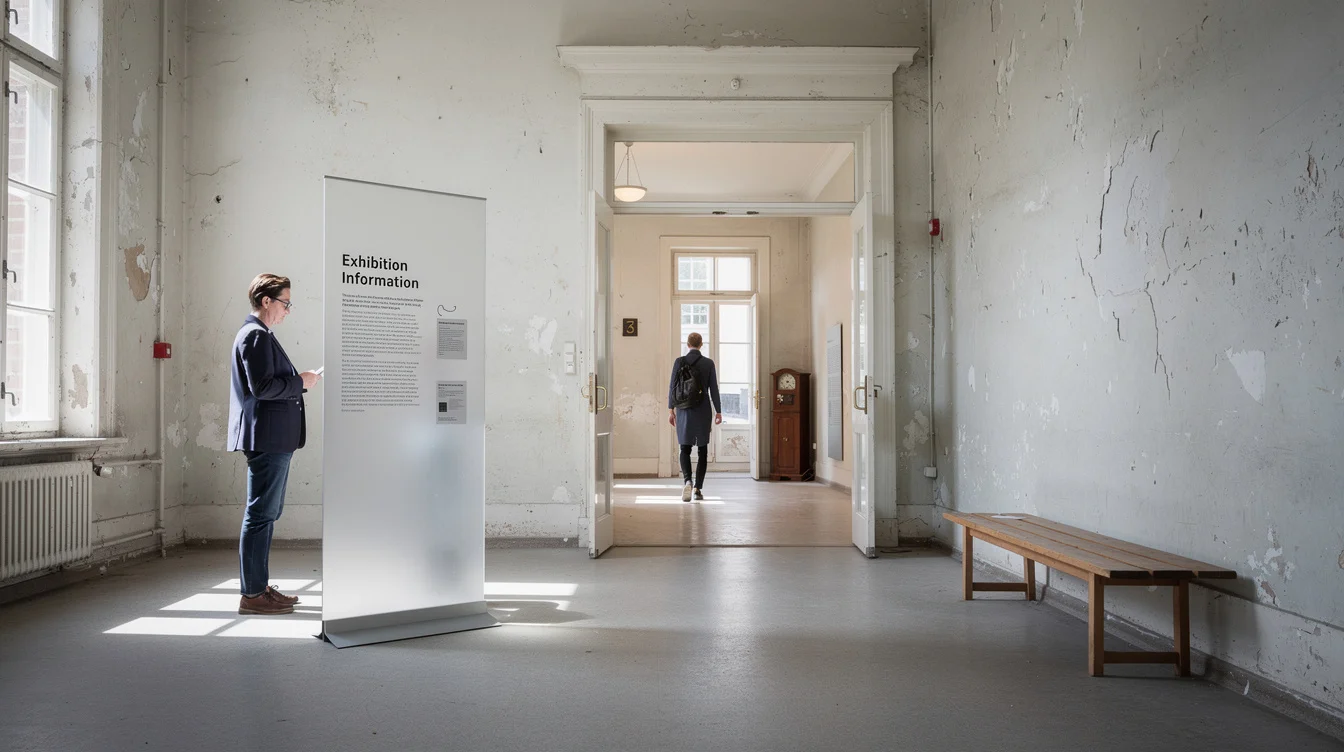
The strongest objection is that preservation can amplify precisely the authority the museum hopes to scrutinise. Institutional buildings generally survive through decisions made by owners, administrators and heritage bodies. Their fabric records investment, regulation and maintenance more readily than boredom, affection, fear or resistance. What remains materially substantial is not necessarily what mattered most to the people who lived there.
Even an impeccably conserved room can encourage a misleading promise: stand here and understand what a patient experienced. The visitor can leave. The former occupant may not have had that choice. Lighting, labels and the museum ticket establish a fundamentally different relationship to the space. Atmosphere is not testimony, and immersion is not understanding.
Daniel Libeskind’s Jewish Museum Berlin is an instructive, though historically distinct, comparison. Its spatial disorientation demonstrates architecture’s capacity to produce strong emotional responses. It also provides a useful warning for psychiatric museums: an architecturally induced feeling cannot stand in for another person’s historical experience. A claustrophobic installation might make visitors anxious while teaching them very little about a particular patient’s life.
For MIND, the risk would be allowing the former patient building to become the exhibition’s principal protagonist. Beautifully photographed surfaces could make institutional history aesthetically consumable. Carefully preserved thresholds might receive more attention than the people who crossed them. Conservation should therefore include an account of what the building cannot disclose: missing testimony, altered rooms, destroyed records and experiences that left no recoverable material trace.
CONTRA: Participation Without Editorial Power Is Decoration
A second objection cuts deeper: no arrangement of galleries can compensate for unequal control over the story. A museum might commission patient quotations, install listening stations and still reserve every consequential decision for curators, clinicians and designers. In that model, lived experience supplies emotional texture while professional expertise supplies the argument. The hierarchy survives behind a more sympathetic exhibition design. This is a broader design-governance problem: who gets a say before a project takes shape matters as much as who is invited to respond afterwards.
The history of psychiatric reform around Franco Basaglia, first in Gorizia and later in Trieste, is a necessary reference because it directs attention beyond institutional appearances towards rights and power. For a museum, the corresponding question is not simply whether former patients are represented. It is whether they can challenge categories, reject a proposed display and influence how resources are allocated.
That requires paid participation, transparent editorial responsibilities and procedures for disagreement. Living contributors should understand where their testimony will appear, how it may be edited and what withdrawal options remain available. Historical records demand a different approach: legal access does not automatically make an intimate case file ethically suitable for public display. Relatives can contribute knowledge without being assumed to speak conclusively for the person concerned.
Spatially, this could mean reserving a prominent, well-resourced gallery for independently curated responses rather than relegating them to a concluding community corner. Yet even that room risks becoming an alibi unless its curators possess genuine authority. The decisive adaptation is institutional, not architectural. MIND’s preserved fabric and flexible spaces can support a plural history, but only governance can prevent the museum from absorbing every dissenting voice into its own reassuring account.
FAQ: Architecture, Evidence and Patient Authority
What is the architectural premise of Denmark’s MIND Museum?
C.F. Møller Architects converted a former psychiatric patient building into a contemporary museum. The project combines preservation of the site’s history with flexible settings for communicating the development of psychiatry in Denmark.
Can a preserved patient room communicate lived experience?
It can reveal spatial conditions, but it cannot explain how every occupant experienced them. Interpretation should connect documented uses with attributed testimony, acknowledge alterations and identify gaps rather than treating architectural atmosphere as historical proof.
How could exhibition layouts give visitors more agency?
Non-compulsory routes, clear notices before distressing content, visible exits and places to pause can support informed choices. Multiple thematic routes can also interrupt a single progress narrative and allow conflicting accounts to remain visible.
What distinguishes meaningful patient participation from tokenism?
Meaningful participation includes payment, editorial influence, clear consent procedures and a real capacity to challenge displays. Adding quotations is not enough if contributors cannot affect the museum’s central claims or the treatment of their own stories.
If former patients challenge the story that a preserved building seems to tell, should the museum change its interpretation—even when that unsettles the architectural experience?
Watch the Mainifesto Short
Get the Mainifesto weekly — curated design debates, speculative ideas and the week's best articles every Saturday.
Editorial Perspectives
Questions and counterpoints developed by the Mainifesto editorial desk to extend the discussion.
Perspective 1
Yes—the interpretation should change when former patients challenge it, even if that disrupts the spatial narrative. We treat buildings as layered systems in design; why freeze their meaning at the institutional layer and call that authenticity?
Perspective 2
I wouldn’t rewrite the museum’s interpretation simply because former patients dispute it; conflicting accounts need to be documented and tested, not automatically resolved in one direction. Keep the architectural sequence legible and present those challenges alongside it, so visitors can assess the tension themselves.
Perspective 3
The blunt question is who controls the labels, the archive and the budget. If former patients can contribute testimony but have no power over interpretation, the museum risks preserving the institution’s hierarchy along with its walls.