

White House Ballroom Tests Executive Power
Preservation has entered the chain of command
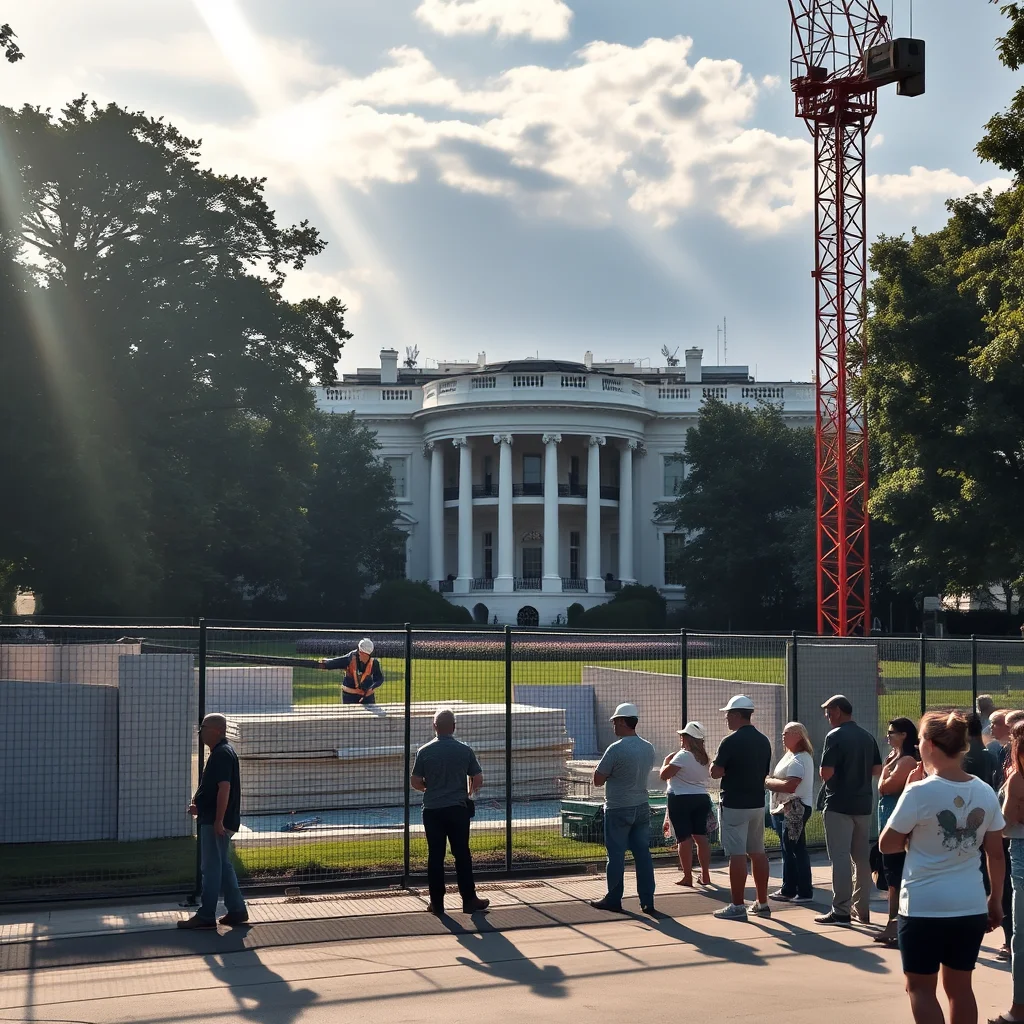
The White House is no longer only a residence, workplace or ceremonial backdrop. With the Supreme Court allowing construction on the above-ground elements of the proposed ballroom extension to continue, it has become something more volatile: a construction site for executive power.
The ruling lifted a temporary ban imposed by a lower court judge in April after preservationists, including the National Trust for Historic Preservation, challenged the project. The legal question is narrower than the architectural one. Courts may debate procedure, jurisdiction and the timing of permits. The public is left with a more unsettling question: what does it mean when the physical fabric of a national symbol can be rapidly altered by the political authority that occupies it?
Architecture is often treated as the slowest form of government. Stone, brick and timber appear to resist the urgency of electoral cycles. Yet the ballroom project exposes the opposite possibility. A powerful administration can turn permanence into momentum, using demolition, foundations and steelwork to make a political claim before public argument has reached any conclusion.
This is why the dispute matters beyond Washington. The issue is not simply whether a new room is tasteful, useful or technically compatible with the existing complex. It is whether preservation can still function as a civic limit when the executive branch controls the building, defines the programme and benefits from the symbolism of completion.
The White House has always been rebuilt, but never innocently
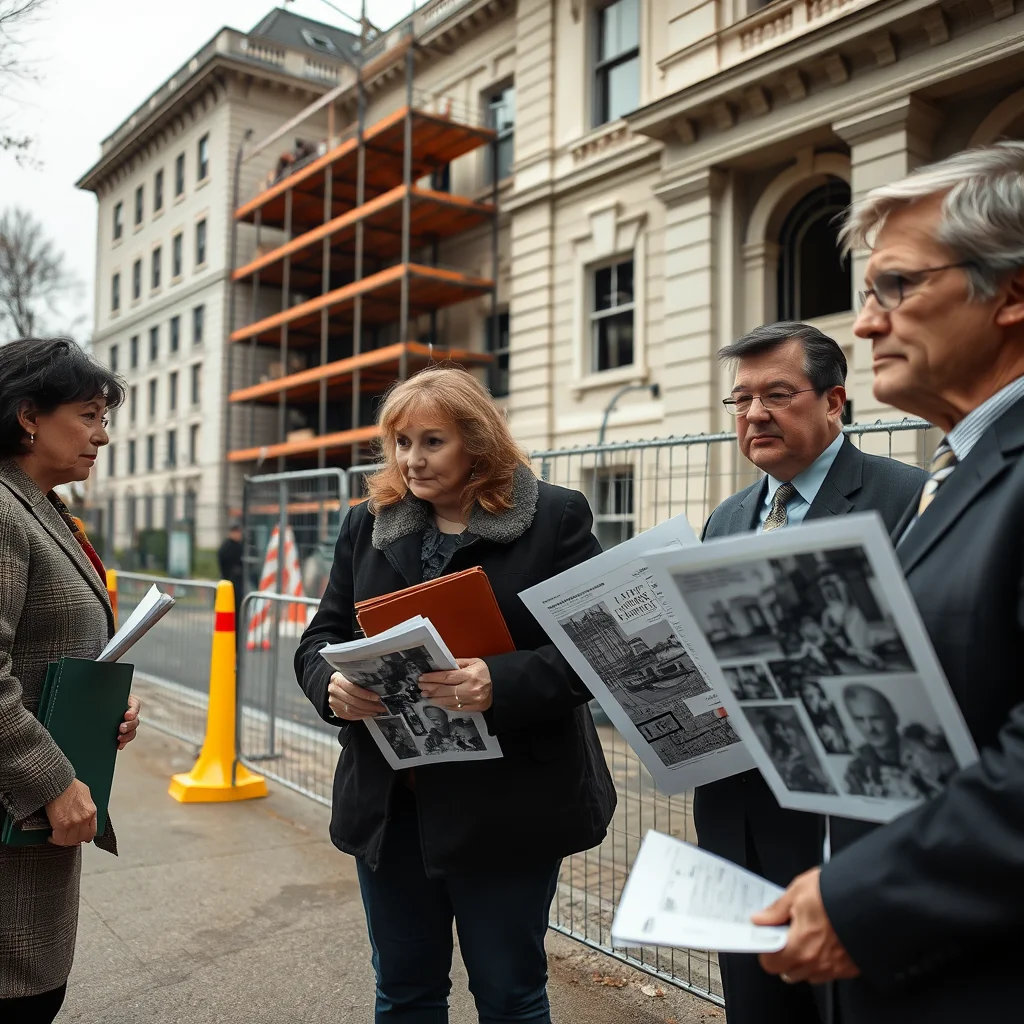
Historic preservation is not the same as freezing a building in amber. The White House itself has a history of adaptation, damage and reconstruction. After the building was gutted and structurally rebuilt during the Truman administration between 1948 and 1952, its historic exterior became a carefully maintained shell around a modernized interior. That intervention is now part of the accepted story of the building, but acceptance should not be confused with neutrality.
Every major change to a monument rewrites the relationship between memory and authority. The Truman reconstruction preserved the recognizable image of the executive mansion while making it safer and more functional. The proposed ballroom, by contrast, raises the question of how far an expansion can go before the historic building becomes an accessory to a newer political composition.
Comparable tensions appear everywhere. I. M. Pei’s Louvre Pyramid was condemned by critics who feared that contemporary geometry would violate a royal palace, yet it ultimately became a persuasive new threshold for the museum. Norman Foster’s glass dome over Berlin’s Reichstag made transparency into a public spectacle while transforming a loaded parliamentary ruin into a democratic emblem. These projects succeeded partly because they were subjected to prolonged architectural, political and cultural scrutiny.
The speed and executive ownership of the ballroom controversy create a different atmosphere. A new intervention may eventually prove architecturally coherent, but coherence after the fact cannot substitute for consent before construction. In preservation, process is not bureaucratic scenery. It is part of the meaning.
A courtroom pause is not a civic conversation
The Supreme Court’s decision does not settle the project’s legitimacy. It permits construction on above-ground elements to continue while the broader legal dispute proceeds. That distinction is crucial, because physical progress changes the political psychology of a case. Once foundations rise and walls acquire volume, opposition is pressured to appear destructive, costly or unrealistic.
Construction creates its own argument. Cranes imply inevitability. Delivered materials imply expenditure. Workers on site imply that the debate has already been won. This is a familiar tactic in urban development, where momentum can become a substitute for permission. In a national monument, the effect is magnified: the machinery does not merely build a room; it stages the authority of the person ordering it.
Preservation groups are therefore challenging more than an addition. They are defending a public review culture that assumes historic places belong to a wider civic inheritance. The National Trust’s involvement signals that the dispute sits within a long history of campaigns against the casual destruction of American landmarks, from the fight over Pennsylvania Station in New York to battles over modernist civic buildings threatened by redevelopment. Similar questions animate debates over who decides when a cultural landmark has failed.
Legal process can identify whether rules were followed, but architecture also requires a cultural test: was the intervention imagined with enough humility to recognize that the site exceeds its current occupant? A judge can halt concrete. Only public scrutiny can determine whether the project deserves to stand.
When symbolism becomes square footage
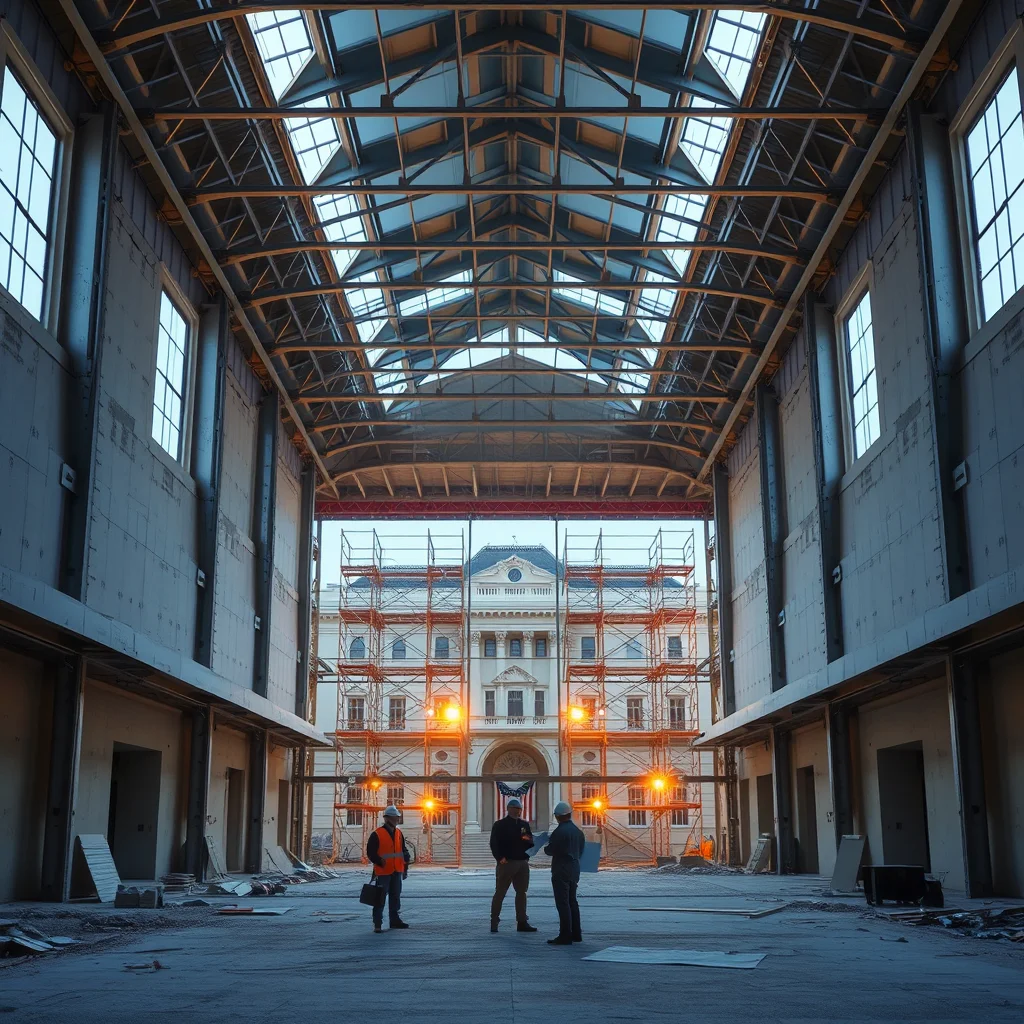
A ballroom is never just a ballroom in a presidential complex. It is a room for donors, visiting heads of state, ceremonial dinners, campaign mythology and the projection of hospitality as power. Its scale, procession and access patterns would communicate who is welcomed, who is displayed and how the presidency wants to be seen.
That symbolic burden makes the project architecturally consequential even before its details are known. The White House’s public image depends on controlled familiarity: the portico, the columns, the lawns and the carefully framed rooms of state. An extension could support contemporary needs, but it could also convert an ensemble of layered meanings into a single administration’s branded backdrop.
History offers warnings. Albert Speer’s monumental plans for Berlin showed how architecture can turn state ambition into physical intimidation. By contrast, Lina Bo Bardi’s work at SESC Pompéia in São Paulo demonstrated how adaptive reuse can create civic grandeur through openness, roughness and shared occupation rather than authoritarian scale. The difference is not simply style. It is whether architecture enlarges public life or concentrates the image of power.
The ballroom’s political message will be read through its thresholds as much as its facade. Who enters through the main route? What remains visible from public grounds? Does the addition clarify the building’s institutional role or make the presidential residence feel more like a private palace? These are design questions, but they are also democratic questions.
The danger of treating history as a personal interior
Presidential buildings invite personalization. Every administration rearranges furniture, changes lighting, updates security and introduces its own taste. That is normal. The danger begins when temporary occupancy is translated into permanent architecture without an equally durable public mandate.
The distinction between stewardship and possession should be obvious, yet power routinely blurs it. A president occupies the White House; no president owns its historical meaning. The building belongs to an imagined public that includes citizens who will never enter it, future administrations that may reject the project and communities whose national story is not represented by the ceremonial language of a grand reception room.
This is why comparisons with private renovations are misleading. A billionaire may enlarge a house, remove a staircase or add a ballroom according to personal preference. A president cannot plausibly claim the same freedom without reducing a civic institution to a domestic estate. The architecture of the executive mansion must remain accountable to a constituency larger than its host.
Even famous restorations reveal this principle. Notre-Dame’s reconstruction after the 2019 fire prompted fierce debate over whether a spire or roof should replicate the past or register the present. The argument was difficult because the cathedral was both a functioning building and a shared cultural artifact. The White House carries an even sharper constitutional charge: its image is inseparable from the exercise of national power.
What responsible intervention would require
Opposition to the ballroom should not become a lazy argument that historic buildings must never change. Museums, courts, libraries and government houses need accessibility, security, climate control and spaces for contemporary public life. The right lesson from preservation is not immobility. It is accountability.
A responsible project would disclose its full architectural and operational logic, not only its visual promise. It would explain the effect on historic sightlines, landscape, circulation, service infrastructure and public access. It would publish independent assessments rather than relying on political assurances. It would invite alternatives, including smaller additions, off-site facilities or adaptive reuse within existing structures.
Designers should also be named and held to a standard higher than client service. The best work around historic buildings, from Carlo Scarpa’s precise interventions in Italian museums to David Chipperfield’s restrained work at the Neues Museum in Berlin, demonstrates that contemporary architecture can be forceful without pretending to erase time. Such projects distinguish between contrast and domination.
Most importantly, the process should make room for refusal. Consultation is meaningless if every objection is treated as an obstacle to be managed. A public symbol earns its legitimacy not by avoiding disagreement, but by proving that disagreement can alter the outcome. That principle echoes the idea of belonging as a design brief in architecture, where public value is treated as a central measure of success.
The real precedent is still being built
The immediate legal ruling will be remembered as a procedural event, but the construction itself may become the more influential precedent. If an administration can advance a major alteration to a historic presidential complex while litigation continues, future leaders may regard monumentality as a form of executive action: announce, mobilize, build and force opponents to catch up.
That logic would transform preservation law from a safeguard into a negotiation over sunk costs. It would also reward political impatience. The most aggressive proposal would gain an advantage simply by reaching the site first.
Architects should resist the fantasy that their work is outside politics. A ballroom extension may be detailed with elegant proportions, high-performance systems and impeccable stonework, yet it would still be a political instrument. Architecture does not become neutral because it is well made. Indeed, craftsmanship can make power more persuasive by giving ambition the appearance of inevitability.
The White House can remain a living building without becoming a personal monument. But that requires a civic imagination stronger than the desire to leave a visible mark. It requires treating preservation not as nostalgia, but as a distribution of power across generations.
The question now is not whether the ballroom can be constructed. It is whether the public can still claim the right to decide what the White House is allowed to become.
Get the Mainifesto weekly — curated design debates, speculative ideas and the week's best articles every Saturday.

Ricardo Estévez September 2, 2026
A building with this much accumulated memory cannot be treated like a blank site, even when the proposed intervention is politically convenient. Preservation should allow change, but not the kind of erasure that turns a public monument into a private stage set for one administration.
Olivier Dubois September 2, 2026
The White House is not merely a residence; it is a national palimpsest, and palimpsests resist the fantasy of a single author. To let each president redraw its architecture at will would be a very American form of amnesia, dressed up as executive efficiency.
Tom Brightwell September 2, 2026
A permanent alteration to a building this visible needs more than a presidential sign-off, if only because the cost of getting it wrong lasts longer than any term in office. Function matters, but so do maintenance, reversibility and the public bill attached to the grand gesture.
Marcus Reed September 3, 2026
People experience the White House as a symbol before they experience it as architecture, so the question is whether a new ballroom improves the institution or just the optics. If the project has no clear operational value, measurable public benefit or credible budget, it sounds like expensive branding.