

Can a Branded Museum Still Feel Public?
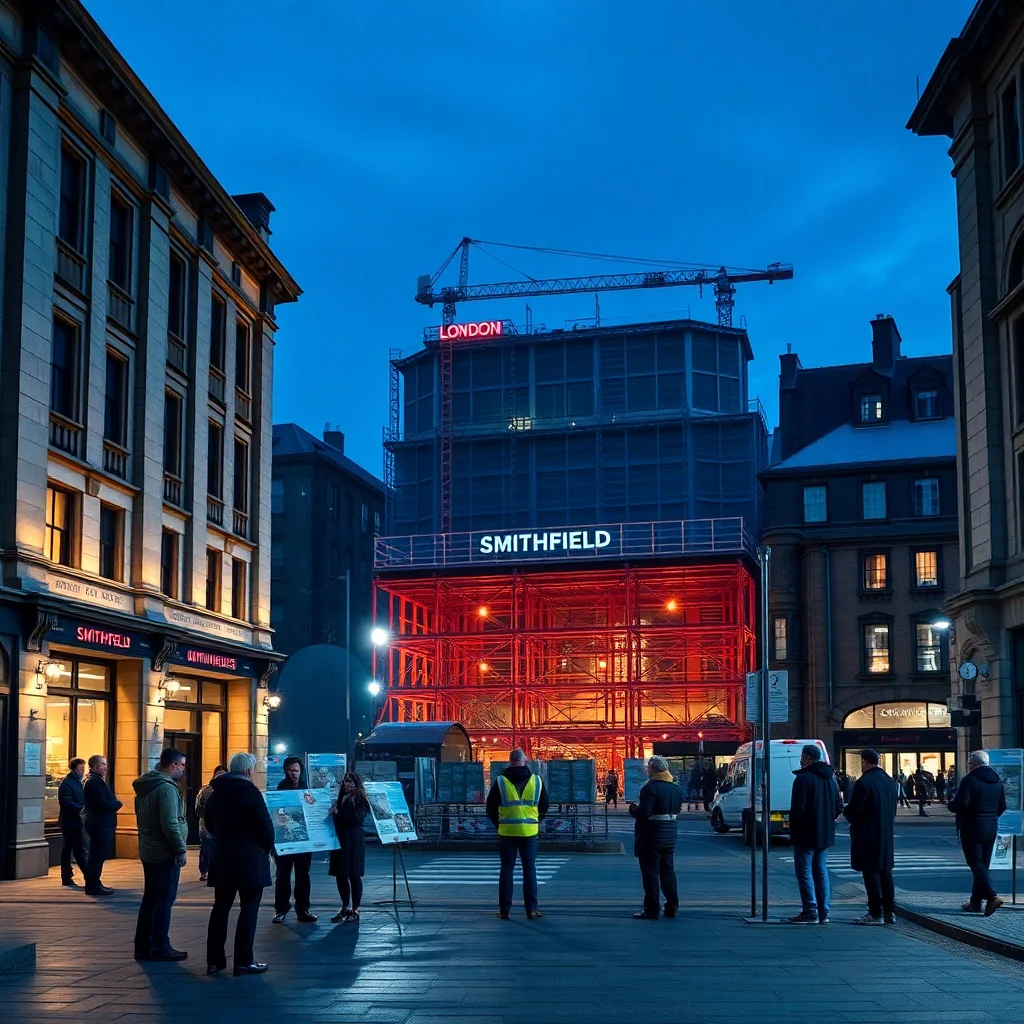
Public memory, now with a logo
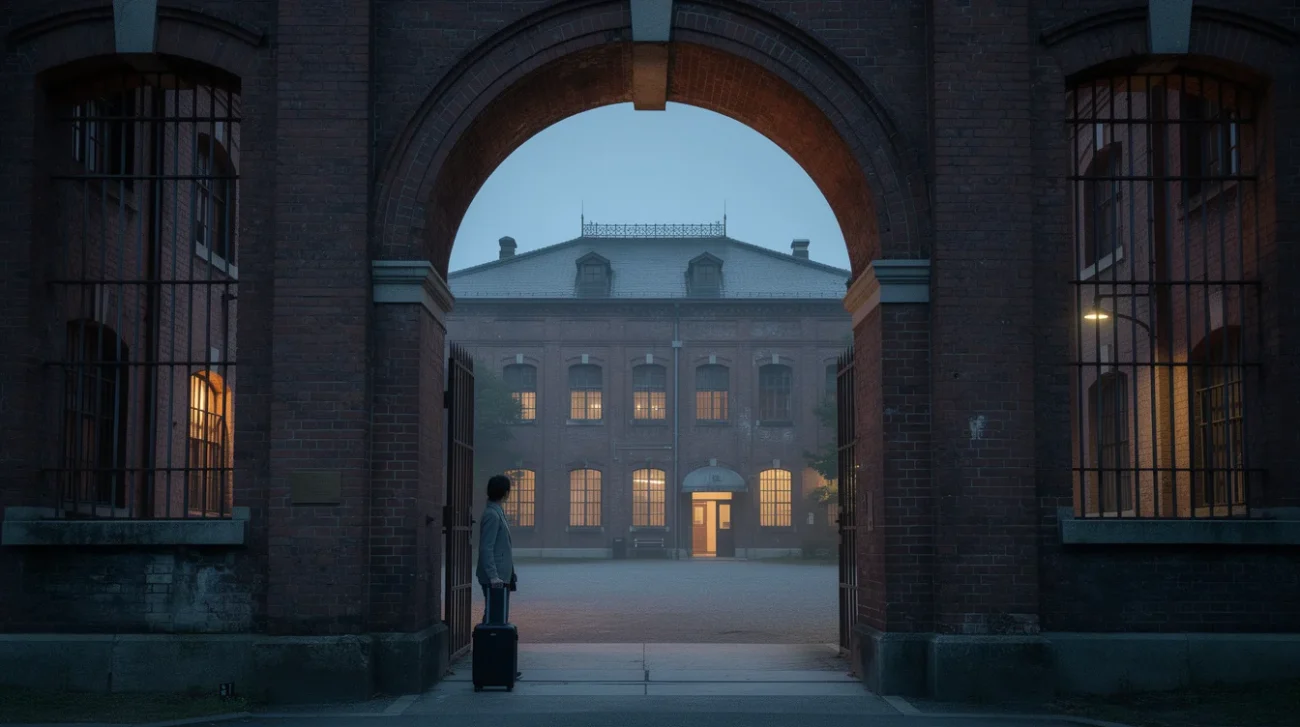
London Museum’s move to Smithfield is being sold as a civic upgrade: more access, more space, a bigger platform for the city’s story. But the architectural reality is sharper than that. When a museum becomes a destination object with a carefully managed identity, the question is no longer whether it can display history well; it is whether it can still belong to the messy, plural, argumentative idea of public memory.
This is not a semantic quibble. Museums today are expected to do too many things at once: conserve artefacts, entertain tourists, teach schoolchildren, anchor regeneration, and project a coherent brand. The new London Museum, designed by Stanton Williams with Asif Khan and conservation architects Julian Harrap Architects, sits squarely inside that contemporary contradiction. It is a heritage institution framed by architectural authorship, and that authorship will inevitably shape how the city is read, packaged, and consumed.
The relocation matters because the old Museum of London at Barbican always felt like an awkward but serious civic machine: introverted, difficult, and more committed to accumulation than image. Smithfield promises the opposite—clarity, visibility, public invitation. That is the promise. The risk is that accessibility becomes choreography, and history becomes something you move through rather than something you contest.
PRO: A branded institution can widen the civic circle
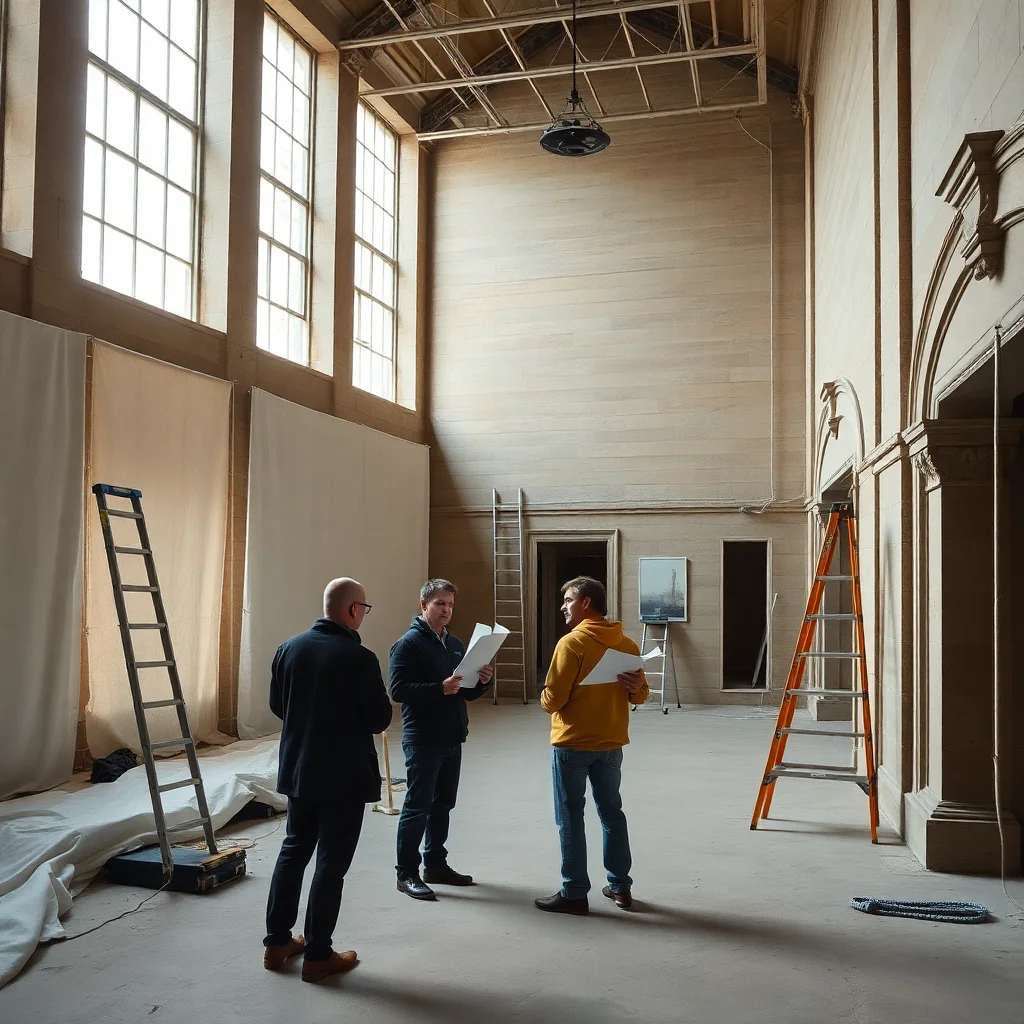
There is a strong case for a museum that knows how to present itself. In an age when public institutions are competing with algorithms, private collections, and blockbuster cultural venues, invisibility can be fatal. A legible architectural identity can act as an access point, especially for audiences who have been structurally excluded from the museum world by class, language, geography, or cultural confidence. That is one reason debates about belonging as a design brief matter so much in public architecture: recognition can be a form of welcome.
Look at how the British Museum operates as a global civic stage, however compromised its politics may be, or how the Rijksmuseum in Amsterdam turned a vast national collection into a fiercely coherent visitor experience after its overhaul by Cruz y Ortiz and its interiors by Jean-Michel Wilmotte. The architecture did not dilute the collection; it made it navigable, and in doing so widened the public it could plausibly claim. Likewise, the V&A’s recent architectural repositioning has helped transform an intimidating encyclopaedic institution into something more porous, more teachable, more usable.
Smithfield’s museum can perform a similar civic translation. London is not a city short on spectacle, but it is often short on civic legibility. A strong architectural identity can help people locate the institution in a crowded cultural economy. If the design gives Londoners a point of recognition and pride, then the brand is not a vanity layer; it is a public interface. In that reading, the museum’s managed image is not a betrayal of public memory but a condition of making memory public at scale.
Public-facing architecture is not the enemy of scholarship
One of the oldest romantic myths in architecture is that seriousness must look modest. It is a false dichotomy. Scholarship does not disappear because a museum is beautiful, clear, or even marketable. In fact, many of the most intellectually ambitious cultural buildings are also highly authored. The Louvre Abu Dhabi, by Jean Nouvel, is inseparable from its image, yet the institution still stages a serious encounter with history through arrangement, light, and spatial sequence. The issue is not whether a museum has style; it is whether style becomes an editorial filter that flattens complexity.
That distinction matters for London Museum because the city it claims to represent is not a stable narrative. It is a battlefield of migrations, class conflict, imperial extraction, labour histories, financial power, and ordinary survival. A good museum must hold contradiction without turning it into a lifestyle. If Stanton Williams and Asif Khan manage to create spatial conditions that admit ambiguity—sequence, threshold, compression, interruption—then architectural identity can support rather than suppress scholarship.
Asif Khan’s practice is especially relevant here because his work often treats public space as cultural translation rather than mere display. Stanton Williams, meanwhile, has a long history of disciplined, quiet institutional architecture that resists theatrical overstatement. Put together, those instincts could produce a museum that is recognisable without becoming superficial. The danger is not branding per se; the danger is when branding hardens into certainty, leaving no room for historical friction.
CONTRA: When heritage becomes an experience economy
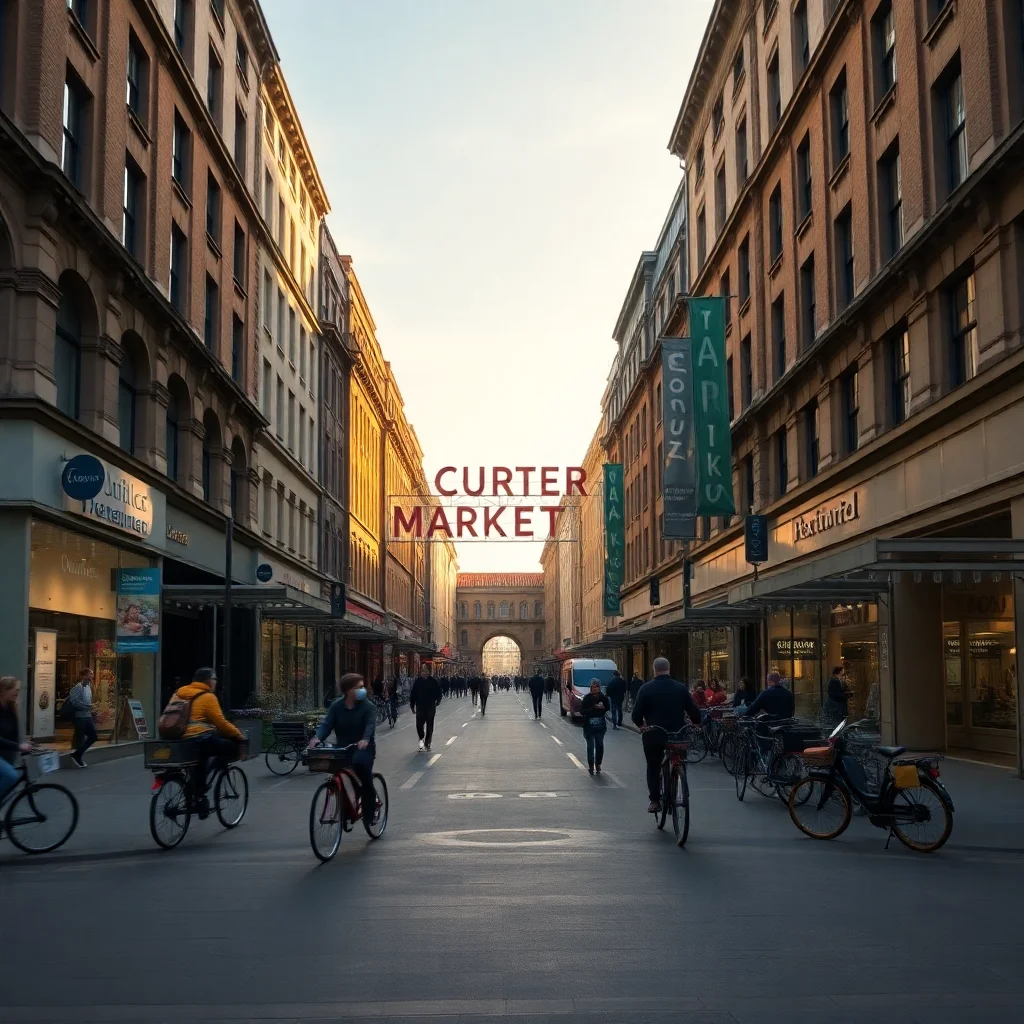
But the critique cannot be waved away. The contemporary museum is increasingly designed as an experience economy machine, where the architecture scripts emotion before the collection speaks. This is not harmless. If every threshold, gallery, café, shop, and social-media moment has been optimised, then the institution risks becoming less like a civic archive and more like a calibrated consumer journey. The visitor is not invited to think; they are guided to feel.
We have seen this logic everywhere. At the Fondation Louis Vuitton, Frank Gehry’s spectacle is inseparable from the brand ecology of luxury patronage. At the museum scale, the line between institutional legitimacy and cultural marketing gets thinner every year. Cities love this condition because it produces investment narratives: iconic architecture signals renewal, which signals safety, which signals desirability. But public memory is not a property-development tool.
Smithfield is especially exposed because the museum’s relocation is not neutral. It is tied to demolition, redevelopment, and a new civic image for a historically charged part of London. That makes the question of authorship unavoidable. If the building is too controlled, too polished, too carefully composed, it could end up turning the city’s rough histories into a refined backdrop for cultural consumption. London’s story is not a brand asset. It is an argument, and arguments are not always elegant.
Who gets to curate the city’s self-image?
The sharpest problem with a branded museum is not visual, but political. A museum claims public memory while selecting, interpreting, and sequencing it. That is always editorial. Yet when architecture is enlisted to intensify that editorial power, the institution can begin to look like the custodian of consensus rather than a platform for dispute. In a city as unequal as London, consensus is often another word for exclusion.
Think of how Zaha Hadid’s MAXXI in Rome turned circulation into a dramatic spatial event, or how the recent overhaul of museums such as the National Museum of Norway demonstrated that institutional clarity can coexist with architectural force. Those projects prove that strong design does not automatically trivialise content. But they also show how easily the building can become the headline, while the collection is reduced to a pretext. If that happens in London, the museum’s claim to represent “the city” risks becoming a performance of inclusivity rather than its practice.
Heritage institutions should be suspicious of coherence. Cities are not unified narratives; they are accumulations of dissent, erasure, and improvisation. A museum that over-stabilises that messiness may attract visitors, donors, and headlines, but it will also soften the political teeth of history. Accessibility should not mean simplification. Public memory should not be made smooth enough to sell.
What a truly public museum would have to do
The real test of London Museum is not whether it opens with acclaim, but whether it can sustain disagreement after the opening ceremonies are over. A genuinely public museum would not hide its authorship, but it would also not let architectural identity monopolise attention. It would build spaces where scholarship can interrupt spectacle: rooms that slow you down, labels that do not flatten complexity, displays that admit uncertainty, and civic programmes that welcome local voices without turning them into decorative consultation. That same challenge runs through debates over whether heritage buildings should be preserved or reprogrammed, because reuse is always a question of who gets to author the next chapter.
That is a demanding standard, but it is the only one worth applying. Museums do not just store objects; they manufacture collective permission about what matters. If the new London Museum becomes a branded cultural landmark that still allows the city’s contradictions to remain visible, then it will have done something difficult and valuable. If, instead, it turns public history into a premium experience wrapped in institutional confidence, then the architecture will have succeeded exactly where the museum has failed.
The building is not the problem. The problem is when the building becomes the answer too early.
- Architecture can widen access. Strong identity helps a museum enter public consciousness, especially in a city saturated with cultural noise.
- Branding can flatten conflict. When every space is curated for seamless experience, history risks becoming smooth, legible, and less truthful.
- Scholarship needs friction. The best museums protect ambiguity, not just wayfinding and visitor flow.
- London is not a neutral subject. Any museum about the city must confront inequality, migration, empire, and labour, not package them away.
- Authors matter, but should not dominate. Architectural voices can sharpen meaning, provided they leave room for collections to argue back.
- Public memory is a political duty. A museum earns its civic claim only if it remains more than an attractive instrument of urban branding.
FAQ
Why is the London Museum relocation controversial?
Because it combines a major civic heritage mission with a highly curated architectural identity, raising concerns that history may be packaged as destination culture.
Does strong branding always weaken museums?
No. A clear visual identity can improve access and public recognition. The problem begins when branding overrides complexity and turns scholarship into atmosphere.
What other museums balance architecture and content well?
Examples often cited include the Rijksmuseum in Amsterdam, the British Museum’s navigable civic scale, and the Louvre Abu Dhabi, where strong image still serves curatorial intent.
What should visitors look for in the new museum?
Not just the architecture, but whether the galleries allow contradiction, discomfort, and multiple London stories to coexist without being simplified into a single narrative.
Where this leaves us
London Museum will not be judged fairly if we ask only whether it looks impressive. The harder question is whether it can host public memory without converting it into civic branding. That tension is now built into the project’s DNA. In that sense, the museum is a perfect object for our moment: progressive in language, ambitious in image, and under permanent suspicion for how it packages the public.
Maybe that suspicion is healthy. A museum that claims to represent a city should be forced to answer for every simplification, every polished surface, every curated certainty. If the institution can survive that scrutiny, it may yet become a place where London sees itself more honestly. If not, we will have built another beautiful container for managed remembrance.
Get the Mainifesto weekly — curated design debates, speculative ideas and the week's best articles every Saturday.

Marcus Reed July 3, 2026
If the building is memorable enough to become the brand, that’s not a problem — that’s the asset. People don’t visit “neutral memory institutions”; they visit places that make them feel something, and a strong identity helps with repeat visits, fundraising, and civic relevance.
Ricardo Estévez July 3, 2026
Neutrality is a fantasy once a museum starts performing itself as an icon. The danger isn’t the brand alone, it’s when architectural spectacle smooths over the messy, contested histories a public museum is supposed to hold open.
Elena March July 3, 2026
A museum can be branded and still serve the public, but only if the operational choices back up the claim. If wayfinding, pricing, access, and programming are inclusive, the architecture can be expressive without becoming a closed-off civic logo.
David Lim July 4, 2026
The real question is whether the architecture creates a readable civic framework or just a consumable image. If the spatial system supports multiple interpretations and uses, then the brand can be a wrapper rather than a replacement for public memory.
Karim Haddad July 4, 2026
No building with a managed identity is neutral, and pretending otherwise is just branding with better lighting. The issue is power: who gets to script the memory, who gets excluded by the spectacle, and whether the institution can still absorb conflict instead of flattening it.