

Cladding, Local Production and Architectural Control
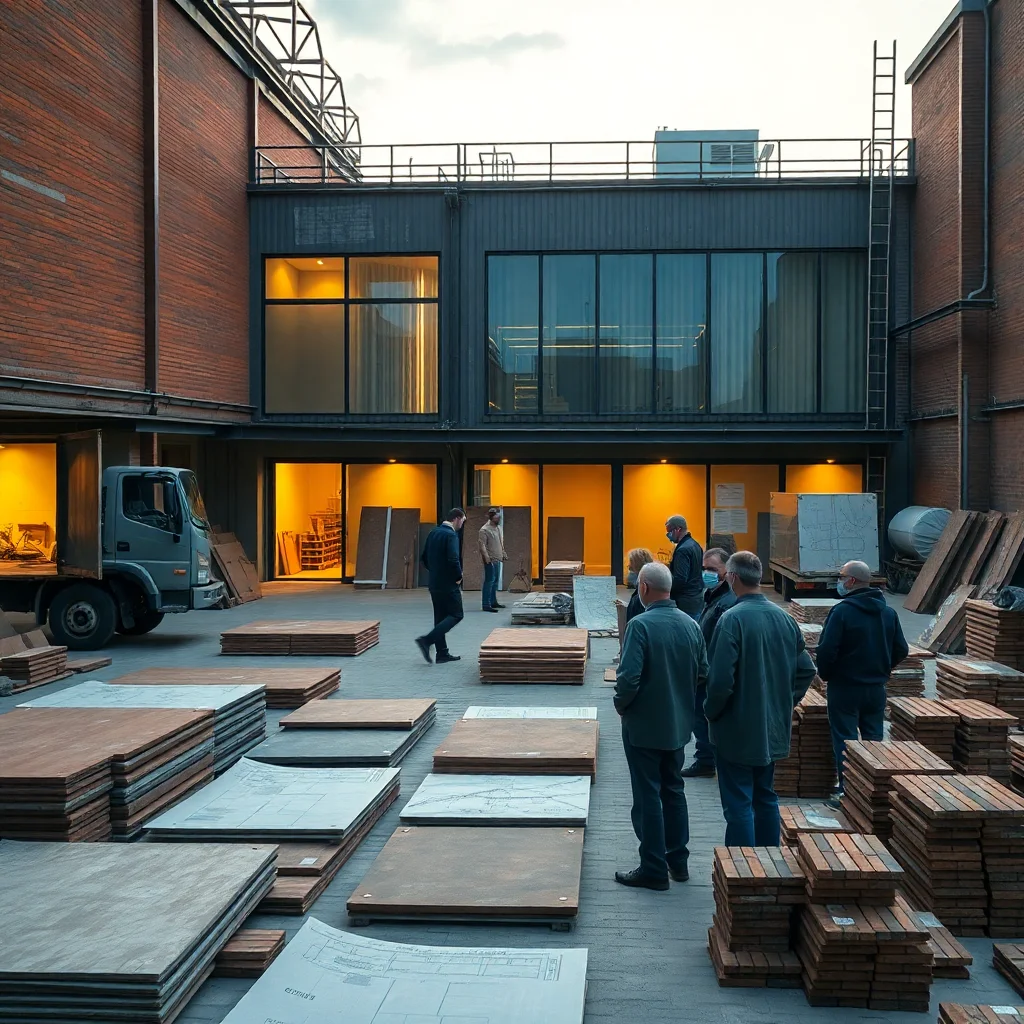
When the facade stops being a drawing
Cladding is still sold to the public as appearance: the skin, the finish, the image. That is the lazy version. The real story begins much earlier, at the moment a specification leaves the architect’s desk and enters a chain of fabricators, transport schedules, installers, cost consultants, and supply constraints. By the time the envelope reaches site, the project has already been negotiated into something else. The question is not whether the building looks right in the render. The question is whether architecture can still control its own image once production becomes local, contingent, and expensive.
This is why cladding systems are such useful evidence. They are not neutral layers; they are public declarations of who got to decide. In projects with highly expressive envelopes, from Herzog & de Meuron’s textured brick work to the ceramic and metal skins explored by contemporary practices worldwide, the facade becomes a test of discipline. If the design intent survives fabrication, the architect still has authority. If it does not, then the building is only a compromise with a better marketing budget.
The source context identifies the hidden interval between specification and installation as decisive. That interval is where architecture is often humbled. Local production can sharpen a project, or it can fragment it. It can reduce carbon and shorten supply chains, but it can also force substitutions, simplify geometries, and erase the subtlety that made the design worth building in the first place.
Local industry is not a service; it is a co-author
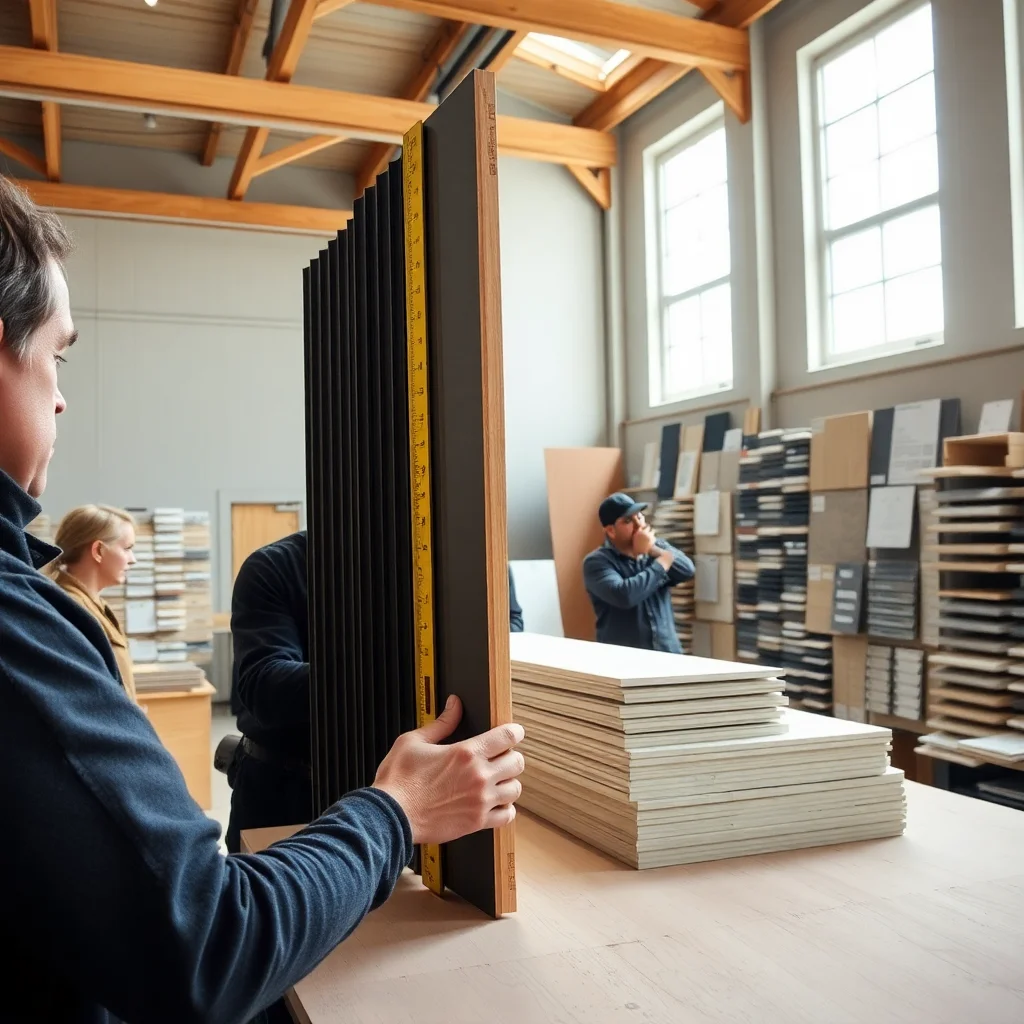
There is a comfortable fantasy that the architect imagines, the manufacturer executes, and the contractor installs. In reality, local industry writes part of the script. A ceramic workshop, a sheet-metal fabricator, a precast plant, or a composite panel supplier does not merely reproduce an envelope; it translates it through available machinery, labor skills, tolerances, and production rhythms. This translation is often where design either becomes real or becomes generic.
Consider the long history of brick as both a structural and expressive material. From Louis Kahn’s National Assembly Building in Dhaka to the rigorous masonry atmospheres of Peter Zumthor, the material’s authority depends on craft systems that can actually deliver consistent color, depth, and jointing. Change the local production model and the facade changes character. The same is true of terracotta rainscreens, which have re-emerged in projects seeking tactile richness and durability. Their beauty is inseparable from the factories and firing processes that shape them. When those systems are weak or distant, the architecture becomes merely a reference image.
This is not nostalgia for artisanal purity. It is a recognition that local industry sets the limits of architectural ambition. A facade conceived in a studio as a precise field of folds, perforations, or gradients may arrive on site as a more pragmatic, more buildable version. Sometimes that is intelligent adaptation. Sometimes it is censorship by logistics.
That tension also helps explain the appeal of adaptive reuse as civic infrastructure, where existing buildings are not treated as inert shells but as working frameworks that must be reinterpreted through current capabilities. In both reuse and cladding, the real challenge is not inventing an image, but making a technically and culturally coherent one survive contact with reality.
Specification is where power looks abstract
At specification stage, cladding often appears controllable. Materials can be named, thicknesses fixed, finishes sampled, mock-ups approved. Yet this is also where the first acts of dilution begin. Architects write documents assuming a chain of competence that may not exist. Fabricators interpret the brief through available tooling. Contractors value-engineer visible elements because facades are convenient targets: they are expensive, they are measurable, and they are mistakenly treated as cosmetic.
Look at the way expressive envelopes have evolved in places with strong local manufacturing ecosystems, such as parts of northern Europe or northern Italy, where industrial proximity allows experimentation to be tested and refined quickly. There is a reason so many contemporary facade innovations emerge from contexts where architecture, fabrication, and construction occupy close geographic territory. The building envelope becomes a conversation rather than a package shipment. By contrast, imported systems can flatten this dialogue into a procurement exercise.
Some of the most compelling recent architecture has treated this as a design opportunity rather than a technical nuisance. Bureau de Change, Mikhail Riches, and many other practices working with patterned brick, glazed tile, and metal cladding understand that envelopes gain identity through collaboration with local firms capable of making unusual details repeatable. The problem is that repeatability is expensive when labor is scarce and timelines are compressed. Architectural ambition is often less defeated by theory than by lead times.
Seen from that angle, the debate resembles the one in Repair or Replace? Europe’s Architecture Culture War: the issue is never just whether something can be changed, but whether the system supporting it can be made to carry the change without collapsing into compromise.
Logistics is the hidden aesthetics department
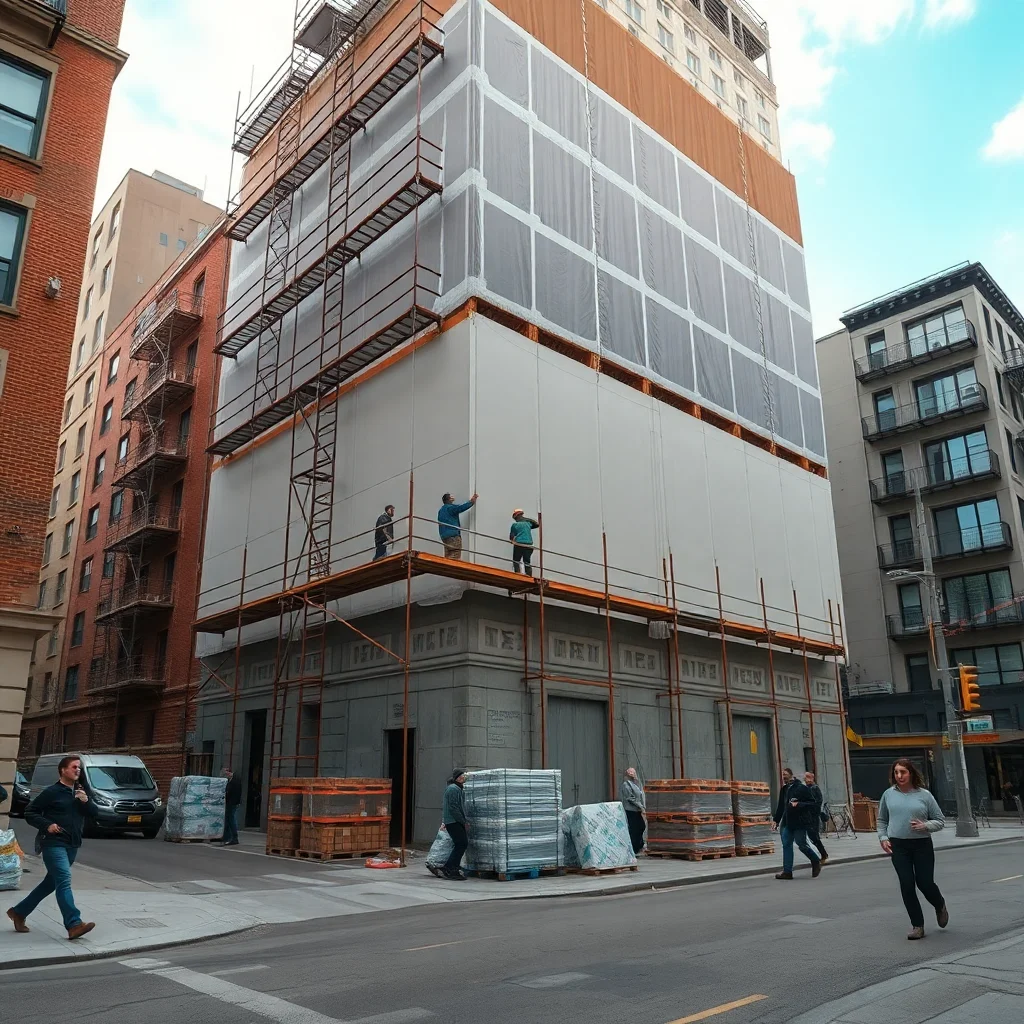
Once material leaves the factory, logistics begins to shape its image. Panel sizes are altered to fit trucks. Fragile finishes are simplified to survive handling. Sequencing on site determines whether a refined joint is feasible or whether a clumsy workaround becomes permanent. This is the part of the process architects romanticize least, yet it is where many of the final visual decisions are made.
In large civic or cultural projects, the envelope often depends on a choreography of subcontractors that can make or break the work. High-performing facades, from ventilated rainscreens to complex folded-metal systems, are notoriously sensitive to installation accuracy. A one-millimeter tolerance in a model becomes a visible line in the weather. A site team that lacks experience with the system can turn elegance into patchwork. The architect’s image survives only if the logistics of delivery are treated as design, not as an afterthought.
This is why some projects succeed precisely because they embrace local constraints. Rather than forcing a remote ideal onto the site, they derive their identity from available capacities. The result may be less spectacular in renderings but more convincing in reality. A facade that looks slightly tougher, thicker, or more repetitive than the original drawing may actually be more honest. It reveals that architecture is not a digital portrait; it is an industrial event.
The same practical realism appears in discussions of the new public utility aesthetic, where infrastructure and public-facing form are understood as one thing rather than separate realms. In both cases, performance and appearance are inseparable, and the image is only as durable as the system behind it.
Cost pressure is not the enemy. Amnesia is.
Everyone in architecture knows the ritual: the original scheme is costed, the numbers return brutal, and the envelope is “optimized.” That euphemism often means stripped, thinned, simplified, or standardized. Yet cost pressure does not automatically destroy quality. What destroys quality is the refusal to understand cost as a design variable from the beginning. When cladding is treated as an image first and a production system second, the budget arrives like an executioner. When it is conceived as a fabricated assembly, cost becomes part of the creative logic.
There are instructive precedents here. Renzo Piano’s work has long demonstrated that technical precision and industrial coordination can produce elegant envelopes without aesthetic surrender. Similarly, contemporary practices working with modular facade systems often discover that tight cost control can sharpen rather than blunt expression, provided the details are conceived for production from day one. The problem is not economy itself; it is the fantasy of unlimited refinement with limited resources.
Local fabrication can help, because proximity lowers transport costs, improves oversight, and opens opportunities for iterative mock-ups. But it can also expose a harsh truth: if the local industry cannot achieve the required finish, the architect must either redesign or accept compromise. That decision reveals more about the project’s ethics than any polished competition board ever could.
The facade is where authorship meets reality
In the end, cladding exposes a deeper crisis in contemporary architecture: the shrinking distance between authorship and execution. If a building’s face can be materially reinterpreted by suppliers, fabricators, and installers, then architecture is no longer a singular act of composition. It is a negotiated industrial process. That should not be read as defeat. It should be read as the actual condition of building.
The strongest facade projects do not pretend otherwise. They are precise about what must remain fixed and flexible about what can be adapted. They understand that a local producer is not merely a vendor but a participant in making the building legible. They also understand that image is fragile. A cladding system can make a project appear elegant, civic, severe, or playful, but only if the chain from specification to installation is coherent enough to preserve intent.
So the real debate is not whether local production is good or bad. It is whether architecture is willing to let its image be tested by reality. A facade that cannot survive local fabrication was never as intelligent as it claimed to be. And a city that cannot support ambitious envelopes through its own industry is not merely under-resourced; it is architecturally under-ambitious.
That challenge is especially visible in civic projects, where resilience and public value are expected to align, much like in Can Homes Absorb Climate Chaos? where architecture is measured not by purity of concept alone but by how well it handles pressure, adaptation, and imperfect conditions.
FAQ
What does cladding reveal about architectural control? It reveals that control is never absolute. The facade is shaped by design intent, but also by fabrication methods, contractor expertise, logistics, and budget decisions that can reinforce or erode the original concept.
Why is local production important for facade design? Local production can reduce transport emissions, improve responsiveness, and support iterative testing. It also makes the relationship between architect and maker more direct, which can strengthen the final result if the local industry has the necessary capability.
Does value engineering always weaken cladding design? No. When cost is integrated early, value engineering can simplify intelligently and improve buildability. It becomes destructive only when it is used to strip away the very qualities that give the envelope meaning.
What is the biggest risk in expressive facade projects? The biggest risk is assuming that a compelling image can survive without a production strategy. If tolerances, materials, and installation sequences are not aligned from the start, the envelope will lose precision long before it reaches the street.
Get the Mainifesto weekly — curated design debates, speculative ideas and the week's best articles every Saturday.



Ricardo Estévez June 14, 2026
In adaptive reuse, the facade is almost never the pure idea people imagine from drawings; it is negotiation with what already exists, what local crews can actually make, and what a budget will tolerate. If the image changes, that does not automatically mean failure — often the compromise is the architecture, and the honest part of it.
Olivier Dubois June 14, 2026
The article is right to push against the fantasy of architectural autonomy. Since Semper, and later Frampton, we have known that cladding, making, and the conditions of production are not secondary matters but the very register where architecture becomes legible — or banal. The question is less whether the image survives than whether the project has any intellectual rigor left once it meets reality.
David Lim June 14, 2026
I think the compromise can be the real architecture, but only if it is designed deliberately rather than accepted as a failure after the fact. The interesting question for me is whether digital coordination, material simulation, and fabrication data can make those compromises more precise, so local production becomes a design input instead of a constraint hidden at the end.