

When Resorts Become Power Plants
From utility object to destination
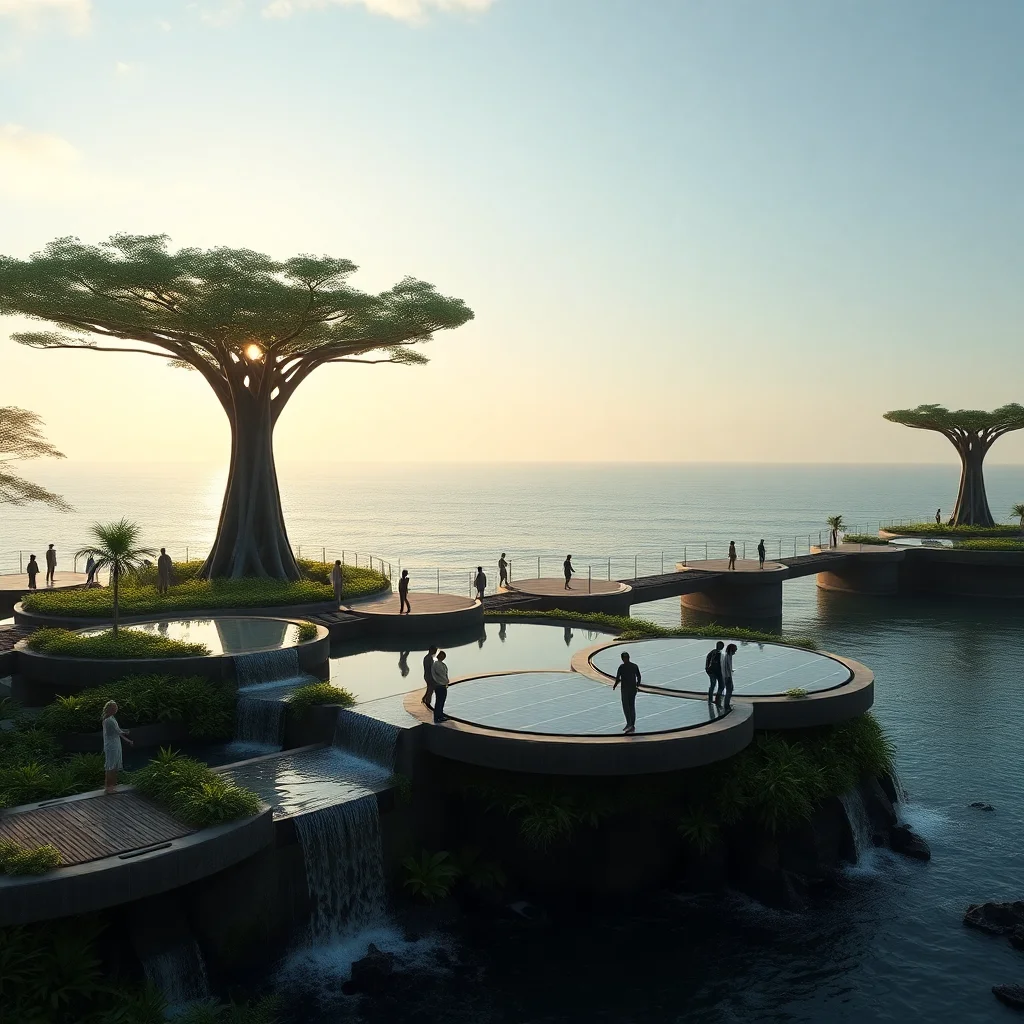
The baobab-inspired floating waterfall power plant proposed for Madagascar is more than a speculative energy device; it is a direct attack on the way we have been taught to look at infrastructure. In the modern imagination, power plants are fenced off, roads are tolerated, flood defenses are endured, and desalination sites are hidden behind corporate branding. This project flips that script. It suggests that climate infrastructure can be emotionally legible, spatially rich, even seductive — a place you might visit, not merely a burden you accept.
That proposition matters because the climate crisis has already collapsed the old separation between utility and urban life. Coastal communities need energy, water, shade, cooling, and protection at the same time, often in the same footprint. If architecture can fuse those systems into an environment that also offers gathering space, landscape, and dignity, then adaptation stops looking like sacrifice and starts looking like civic ambition. The design language here is not accidental. It borrows from resort typologies, from tropical leisure architecture, and from the symbolic scale of the baobab, a tree that reads as both shelter and monument.
The strongest precedent is not a single building, but a broader shift. Alejandro Aravena’s incremental housing demonstrated that architecture can accept incompleteness as a strategy rather than a failure. Open-source ecologies from studios such as MVRDV and the climate-sensitive urbanism of Turf Design and BIG show how infrastructure can become public realm. Yet this new proposal goes further: it asks whether the very aesthetics of survival can be made pleasurable enough to win social support. That is the real provocation. If climate adaptation is ugly, it will be resisted. If it is beautiful, it can become politically irresistible.
The resort logic is not a distraction

Critics will say the resort aesthetic is a dangerous distraction, a velvet curtain over hard engineering. But that complaint assumes that infrastructure must announce itself through austerity, exposed pipes, and an ethic of embarrassment. In practice, the most successful civic systems have always been designed with symbolic force. Think of Olmsted’s park systems, which treated flood management and public leisure as inseparable. Think of Lina Bo Bardi’s SESC Pompéia, where social infrastructure was not hidden inside architecture but made visible, generous, and collective. Even contemporary seawalls and storm-surge parks are moving in this direction: the infrastructure of protection is becoming the infrastructure of public life.
The proposed floating power plant in Madagascar extends this lineage into a hotter future. Its waterfalls, planting, and elevated walkways do something radical: they translate technical performance into an inhabitable landscape. That matters in coastal regions where infrastructure is often experienced as extraction or imposition. A resort condition suggests care, not merely control. It implies that the systems maintaining life — energy generation, water circulation, thermal moderation — can be pleasurable to encounter. In a climate emergency, pleasure is not decoration. It is a political instrument.
We already see the beginnings of this logic in projects such as the Copenhagen Harbour Baths, where water quality improvements were inseparable from public bathing culture, and in Rotterdam’s water squares, where flood retention became an urban amenity. The lesson is clear: when infrastructure is designed as an experience, people defend it. They use it, understand it, and invest it with value. The Madagascar proposal intensifies that lesson by merging energy generation with rehabilitation and hospitality, collapsing the old distinction between productive and restorative space.
Why climate infrastructure needs a new aesthetic language
The industrial sublime has had a long run. For over a century, architecture of power relied on monumentality, heavy materiality, and the visible spectacle of control. But climate infrastructure is not coal-era infrastructure. It is distributed, adaptive, ecological, and often hybrid. Solar fields, battery farms, tidal systems, desalination plants, greywater landscapes, and cooling networks do not need smokestacks to prove their seriousness. What they need is cultural legitimacy — a form language that tells the public this is not an emergency compromise, but a desirable future.
Designers such as Elizabeth Diller, Kate Orff, and Herzog & de Meuron have repeatedly shown that infrastructure can be spatially generous and politically charged. The West 8 artificial landscape projects, James Corner Field Operations’ parks, and the Dutch tradition of water urbanism all point to the same thesis: climate adaptation becomes durable when it is also memorable. The problem with much renewable infrastructure is not technical competence, but visual poverty. Too often it inherits the language of the warehouse, the shed, or the anonymous utility box. That is a missed opportunity. The climate transition will be fought in the realm of desire as much as in policy.
What makes the Madagascar project compelling is that it treats energy production not as an isolated machine, but as an atmospheric condition. The baobab reference matters because it is local, ecological, and symbolic at once. The tree is a natural archive of survival, a landmark of generosity in harsh environments. To shape a power plant as a baobab-like resort is to say that resilience should look rooted even when it floats. That paradox is precisely what contemporary architecture must learn to express.
The risk of turning survival into spectacle
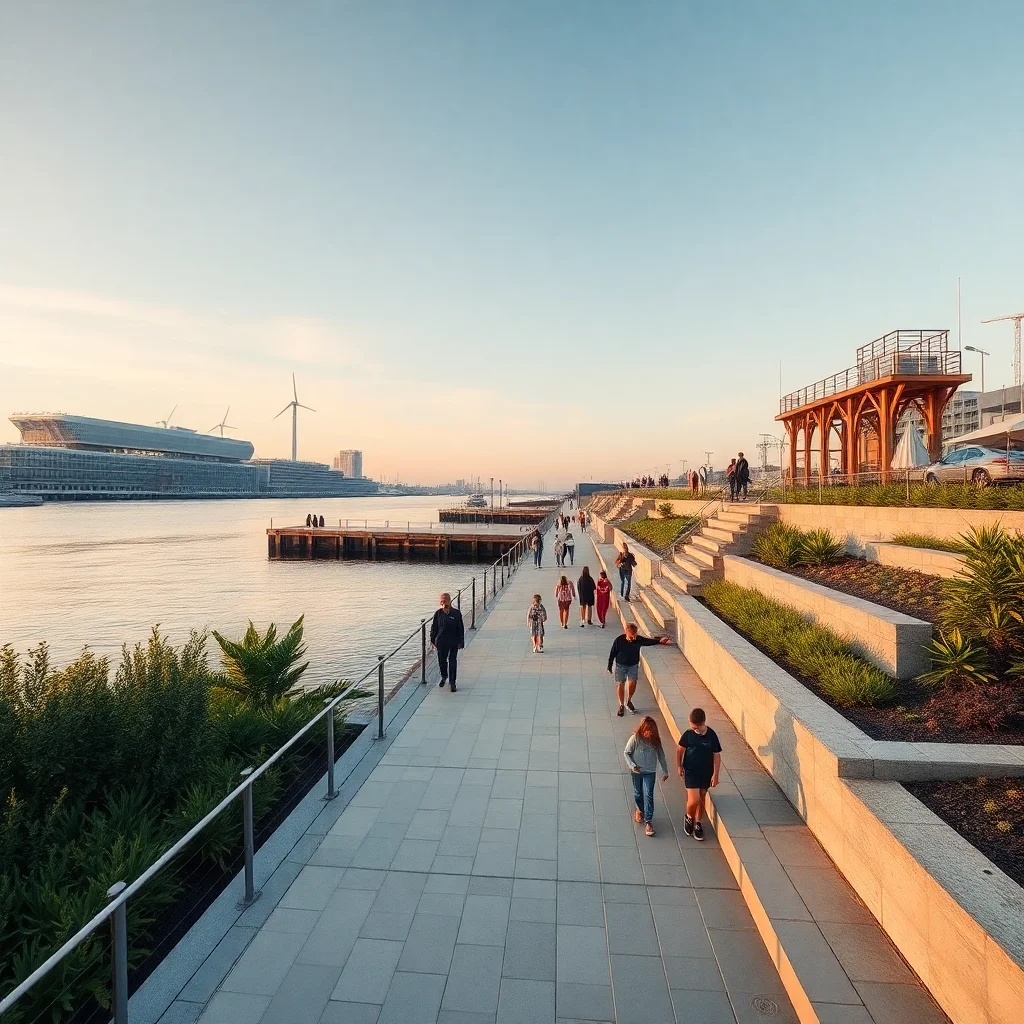
Still, the seductive image of a green energy resort carries real risks. Climate inequality can easily be aestheticized. A dazzling infrastructure project may serve tourists, investors, and design media while the communities most exposed to sea-level rise remain under-protected. The vocabulary of wellness and luxury can sanitize hard questions about land rights, maintenance costs, governance, and access. There is a thin line between climate adaptation and eco-branding.
That is why the project’s social rehabilitation angle is crucial. The source context frames the design as a self-sustaining center before it becomes a resort, and that sequence matters. If infrastructure is to be made beautiful, it must first be made just. The most credible precedent here is not luxury hospitality but social architecture: Anna Heringer’s material- and community-based work in Bangladesh, or the way adaptive reuse can operate as civic infrastructure. These projects do not deny beauty; they prove that beauty can be inseparable from ethics.
Any future that fuses coastal defense with leisure must confront who gets to relax inside the infrastructure of survival. Public access, affordability, and community stewardship cannot be afterthoughts. Otherwise the climate resort becomes another enclosure for the privileged, while everyone else remains outside the fence. The design challenge is therefore not simply to make infrastructure attractive, but to make attraction accountable. That is a much harder, and much more interesting, architectural problem.
Toward a politics of desirable adaptation
The real significance of this project lies in its refusal to accept the grim script that has governed environmental architecture for decades. We are told that climate adaptation will be costly, severe, and visually subdued. But the future will not be won by austerity alone. Cities need places that demonstrate how survival can be communal, scenic, and materially intelligent. The emerging aesthetics of climate infrastructure are therefore not cosmetic; they are strategic.
Imagine a coastline where energy platforms double as bathing terraces, desalination gardens, and shaded promenades. Imagine flood barriers that operate as markets and viewing decks. Imagine battery storage wrapped in public landscape, or wave energy systems that become landmarks rather than secrets. This is not utopian fantasy. It is the logical extension of a design culture already moving from isolated objects to metabolic environments. The Madagascar proposal gives that movement a vivid image: a floating ecology of production and respite, a machine that does not apologize for being seen.
That is the question architecture must now confront. If the climate era demands new infrastructure everywhere, why should those systems look like punishment? Why not make them places people aspire to inhabit? Why not design resilience as a form of collective desire rather than a civic burden? For a broader reflection on this shift in domestic space and climate pressures, see Can Homes Absorb Climate Chaos?.
FAQ
What does it mean for a resort to become a power plant?
It means infrastructure is no longer treated as a hidden technical backend. Instead, energy generation, water systems, landscape, and public amenity are designed as one coherent place.
Why is this important for climate adaptation?
Because people support what they can understand, use, and enjoy. If adaptation is framed as a valuable destination, it is more likely to be funded, maintained, and protected over time.
Isn’t there a danger in making infrastructure look luxurious?
Yes. The risk is that beauty becomes a cover for exclusion or greenwashing. The design must remain publicly accountable, socially accessible, and rooted in community needs.
What architects or projects point in this direction?
Examples include Rotterdam’s water squares, Copenhagen Harbour Baths, SESC Pompéia, and landscape-led work by designers such as Kate Orff, James Corner Field Operations, and West 8.
So should climate infrastructure be beautiful enough to desire?
The answer may determine whether the climate transition becomes a shared civic culture or a resented technocratic mandate. If architecture can make survival feel spatially rich, socially just, and emotionally compelling, then the future of infrastructure may finally leave the language of exile behind.
Get the Mainifesto weekly — curated design debates, speculative ideas and the week's best articles every Saturday.


Tom Brightwell June 13, 2026
If the kit works and the operating costs make sense, I’m all for it. But once you start dressing infrastructure up as a resort, you have to ask whether you’re improving resilience or just making it palatable for people who can already afford a nice view. The real test is whether the local community gets reliable power, not just a prettier skyline.
Marcus Reed June 13, 2026
I like the idea of infrastructure that people actually want to be near, because the experience is half the battle in hospitality. But if the resort only becomes desirable for guests and investors, then it’s a missed opportunity. Who gets to enjoy it should be tied to who benefits from it every day, not who books the room.
Elena March June 13, 2026
The article hits a real tension: adaptation becomes more durable when people accept it, but beauty alone doesn’t make infrastructure equitable. If these projects are going to be celebrated as landscape, they need to prove they’re serving public needs, not just premium users. Otherwise we’re just wrapping resilience in a luxury finish.