
Adaptive Reuse Is the New Luxury
Concept: Luxury Has Switched Sides
The old luxury was the clean slate: demolish, erase, begin again. The new luxury is harder, more intelligent, and far more political. It is the ability to take what already exists and make it desirable again without pretending that history, structure, or carbon debt can be wished away. That is why adaptive reuse has moved from niche moral preference to architectural status symbol. It signals not restraint, but mastery: the rare ability to design with limits rather than against them.
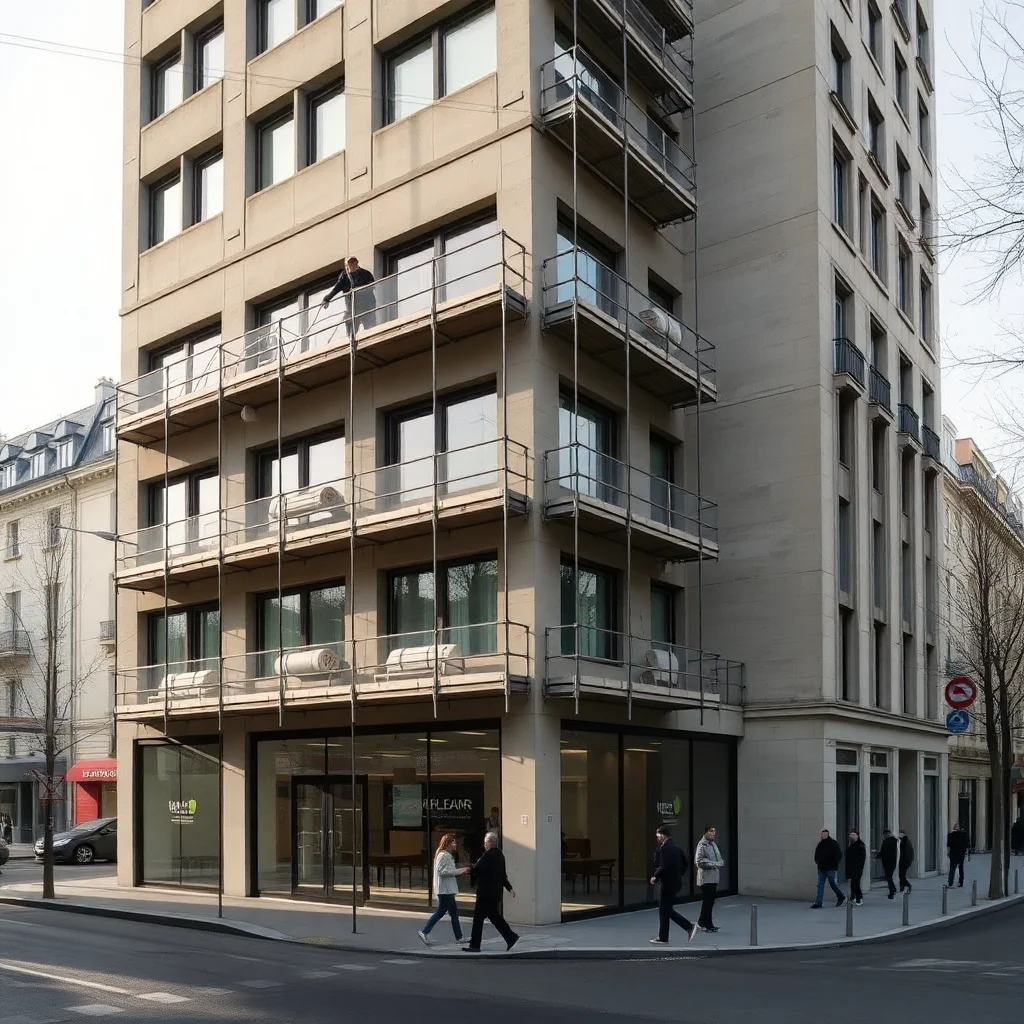
The completed Rue de l’Église office building transformation in Neuilly-sur-Seine makes that shift legible. Instead of replacing a 1970s office block, Vincent Lavergne Architecture Urbanisme plus C&O Architectes chose to transform and densify it through three simultaneous moves: façade, ground, and roof. This is not nostalgia. It is a contemporary assertion that urban value can be extracted from what already sits in place. In an era of embodied carbon accounting, speed-to-market pressure, and stricter urban regulations, the prestige object is no longer the blank tower. It is the retrofit that looks inevitable in hindsight.
This is why the most ambitious architects now treat reuse as a test of intelligence. Can a building become better without starting over? Can constraints become form? Can technical compromise be turned into atmosphere? The best reuse projects do not simply save carbon. They create a new cultural hierarchy in which demolition reads as crude, wasteful, and increasingly indefensible. The message is blunt: if you can make the old feel richer than the new, you have designed the real luxury.
And yet luxury, in architecture, has always been a performance of control. Reuse changes the script by replacing total control with calibrated improvisation. The architect inherits span, core, floor-to-floor height, structure, and urban position. These are not inconveniences; they are the actual material of the project. The question is no longer whether to preserve or replace, but whether ambition can thrive inside constraint without becoming a style of apology.
PRO: Why Adaptive Reuse Now Signals Power

The first reason adaptive reuse has become aspirational is brutally practical: carbon. Every standing structure stores embodied emissions in concrete, steel, glass, and labor. To demolish and rebuild is to spend that carbon again before a building has even opened. In a profession that can no longer hide behind operational efficiency alone, reuse offers a sharper environmental argument than any greenwashed new build. The prestige is no longer in making a building look sustainable; it is in proving that sustainability begins with not wasting what is already there.
Speed is the second reason. A reused building can often move faster through approvals, procurement, and construction than a ground-up scheme, especially in dense cities where zoning, neighborhood opposition, and infrastructure constraints slow new development. That acceleration matters because contemporary architecture is increasingly judged on delivery as much as image. Projects such as The Transformation of the King’s Cross Grain Store in London or the Tate Modern’s conversion from Bankside Power Station demonstrated that adaptive reuse can unlock urban momentum while preserving the visual force of the city’s industrial memory.
Then there is urban continuity, the most undervalued form of prestige. Cities do not need more objects severed from context; they need buildings that keep the street legible while updating its economics and program. The Rue de l’Église project’s façade, ground, and roof intervention is significant precisely because it works across scales at once: the street edge is requalified, the base becomes more active, and the roof gains density. That triad is a smarter urban gesture than a single sculptural statement dropped into the block.
Adaptive reuse also flatters clients in a new way. It lets them claim both stewardship and ambition. In Brussels, the ZIN project transformed former office structures into a mixed-use, timber-heavy complex; in Paris, SNCF’s reuse and renovation strategies around station districts show how existing fabric can be repositioned as urban infrastructure rather than stranded legacy. The client buys not just square meters, but narrative: a building with memory, a public image of responsibility, and a bespoke story that a generic new tower cannot offer.
PRO: Constraint Is Becoming the Engine of Design
The strongest reuse projects are not conservative at all. They are formally inventive because the inherited building resists easy answers. Old grids, low ceilings, odd cores, and mismatched structural bays are not defects to be erased; they are the conditions that force invention. If modernism once prized the free plan, contemporary reuse prizes the negotiated plan. That is a different kind of authorship, but not a lesser one.
Look at how Lacaton & Vassal have redefined the ethics of existing housing. Their strategy at Grand Parc Bordeaux was not to sentimentalize aging social housing, but to enlarge and dignify it without displacement. Winter gardens, balconies, and improved envelopes turned a compromised inherited stock into something spatially generous. The point was not to freeze buildings in time; it was to make them more useful, more humane, and more future-ready. Reuse at that level is not preservation as a museum stance. It is preservation as spatial activism.
Similarly, David Chipperfield’s transformation of the Neue Nationalgalerie in Berlin showed that restoration and adaptation can intensify architectural authority when handled with surgical restraint. The project did not compete with Mies van der Rohe’s original; it clarified it. This is one of reuse’s most radical lessons: sometimes the most powerful intervention is not the loudest one, but the one that sharpens what already exists until it feels newly inevitable.
In that sense, adaptive reuse is also a correction to architecture’s obsession with novelty. Newness is easy to market and hard to sustain. Reuse demands a deeper intelligence about structure, climate, and programmatic friction. It asks architects to deal with leftover thickness, awkward spans, legacy systems, and old material hierarchies. The result, when successful, feels more consequential than novelty because it is earned. It carries the visible weight of decision after decision, compromise after compromise.
This is where the real status symbol lies: not in pristine perfection, but in the ability to turn inherited limitation into architectural confidence. The building becomes luxurious precisely because it reveals effort without looking strained.
CONTRA: Reuse Has Limits, and They Are Not Trivial
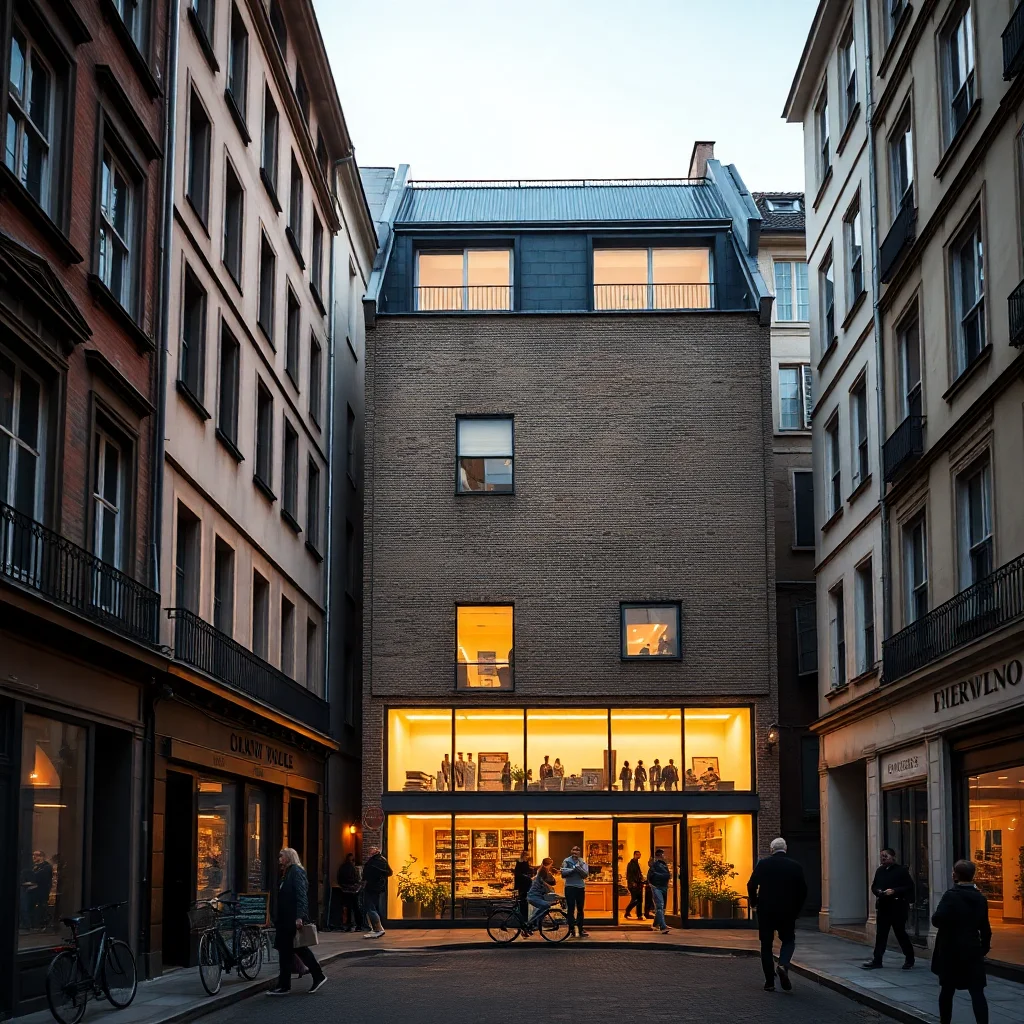
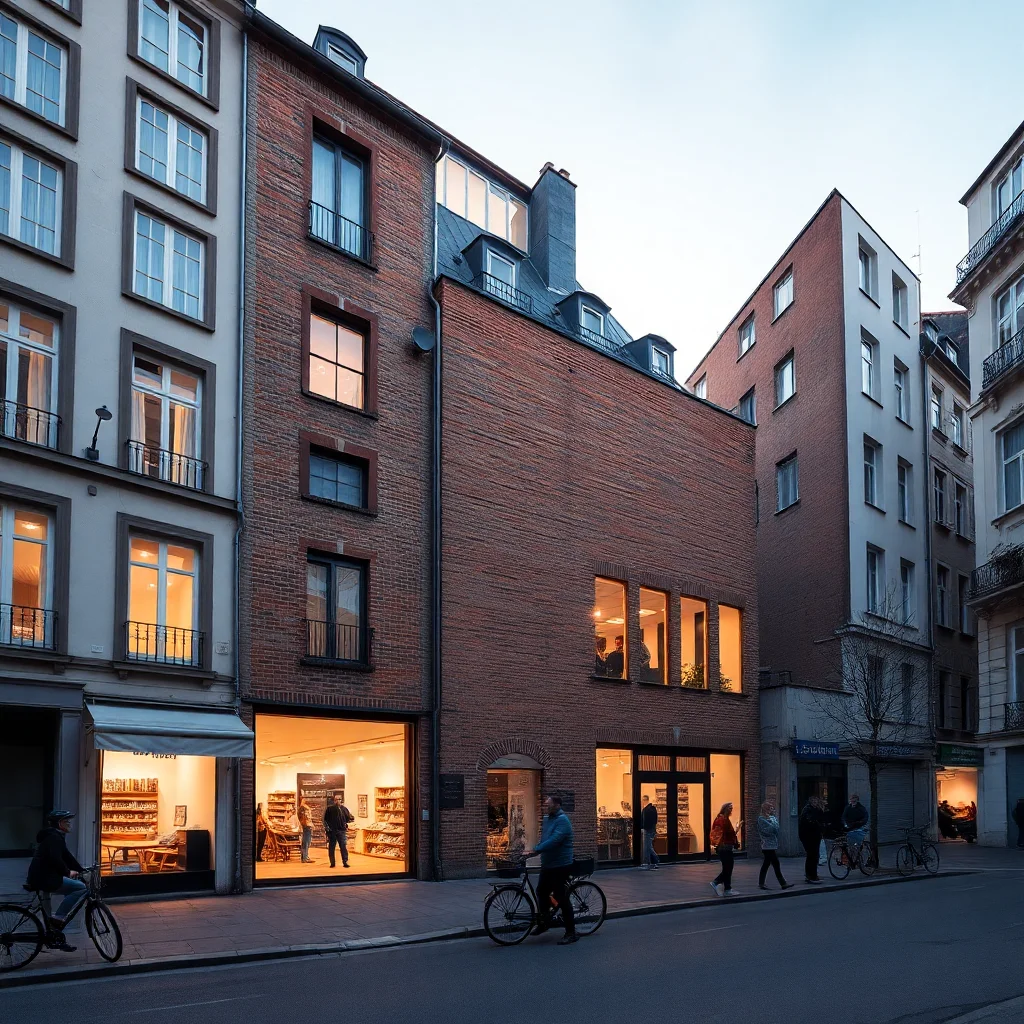
But adaptive reuse is not a universal virtue. Its biggest weakness is that it can become a moral alibi for design that has run out of ambition. Not every old building deserves to be saved, and not every reused building is better than a well-designed replacement. Some structures are so structurally inefficient, environmentally compromised, or spatially obsolete that preserving them merely prolongs mediocrity. Reuse can hide timidity behind the language of responsibility.
The spatial limits are real. Floor-to-floor heights may be too low for contemporary mechanical systems. Structural grids may frustrate flexible use. Deep floor plates can resist daylight and ventilation. Façade retrofits can improve performance, but they can also produce awkward compromises between thermal standards and architectural expression. The result is a familiar risk: the building is technically “saved” but spatially diminished. In elite terms, that is not luxury; it is managed scarcity.
There is also a question of authenticity. Adaptive reuse often promises continuity, but continuity is not always a value in itself. In some urban areas, preserving old office blocks or industrial shells can trap neighborhoods in outdated spatial logics. The fetishization of preservation can delay more equitable housing, better public infrastructure, or denser mixed-use development. The ethical argument for reuse must therefore be sharper than sentiment. It should ask whether the existing building can support contemporary life—not merely whether it can survive.
Technical compromise is the other unavoidable tax. Fire codes, accessibility, energy performance, seismic upgrades, contamination remediation, and structure all collide inside the reused envelope. These challenges are not abstract; they are expensive and often invisible to the public, which is why reuse can be over-romanticized from the outside. A project like Rue de l’Église succeeds because it accepts that the building must be reworked on multiple fronts. But not every client will pay for that level of complexity. In the wrong hands, reuse becomes a façade of virtue covering a compromised interior.
And there is a deeper contradiction: architectural culture loves reuse because it sounds mature, but it still rewards spectacle. If a reused building does not deliver image, atmosphere, and symbolic value, it can struggle to attract the same attention as a flamboyant new landmark. That means adaptive reuse can still be forced into the old logic of visibility, even when its intelligence lies in restraint. The market wants a story; the building wants patience. Those two demands are not always compatible.
CONTRA: The New Icon May Still Be the New Building
It would be naïve to claim that reuse can replace all forms of architectural ambition. Some programs require radical spatial freedoms that old buildings simply cannot provide. Laboratories, data centers, large-span cultural venues, and certain types of housing or mobility infrastructure may demand structural and environmental conditions that retrofit can only approximate. In those cases, replacement may still be the more honest environmental and functional answer, especially if the new building is designed for adaptability from the start.
The debate, then, is not reuse versus demolition as moral absolutes. It is whether we can stop treating new construction as the default expression of seriousness. A new building can still be extraordinary. But it should now have to justify itself against the possibility of reuse, not the other way around. That is a profound reversal of architectural prestige. The old hierarchy said that new was superior because it was unencumbered. The new hierarchy says that unencumbered design may simply be wasteful.
Adaptive reuse has become the real status symbol because it reveals who can operate under pressure: structurally, financially, politically, and culturally. It is a field for architects who understand that the city is not a tabula rasa but a dense archive of assets and liabilities. The best projects do not erase those conditions; they turn them into a richer public and spatial proposition. That is what makes reuse feel less like a compromise and more like a coup.
Still, the danger remains that reuse becomes a style. Once every conversion is automatically celebrated, the discipline risks replacing one orthodoxy with another. The real challenge is not to prefer old over new, but to insist on rigor. Sometimes the right move is conservation, sometimes transformation, and sometimes demolition. What matters is whether the decision is intelligent, not ideological.
List: Six Reasons Reuse Has Become Architecture’s Sharpest Form of Luxury
- It treats carbon as design material. Reuse acknowledges embodied carbon as part of the brief, not an afterthought. That makes the standing building a resource, not a burden.
- It delivers prestige through restraint. The most confident projects no longer advertise excess; they demonstrate control over complexity, memory, and code.
- It intensifies urban continuity. Projects like Rue de l’Église show how façade, ground, and roof can be reworked together to stitch a building back into the city.
- It forces formal intelligence. Inherited grids and structural limits can produce richer spatial solutions than a blank starting point ever would.
- It offers a stronger narrative to clients. Reuse allows owners to claim responsibility, speed, and cultural relevance in one move.
- It still demands hard judgment. Reuse is not automatically good; its value depends on whether the project can genuinely support contemporary life.
The new luxury is not new because the future of architecture will be judged less by how much it erases than by how well it edits. Adaptive reuse is the real status symbol because it proves that ambition does not require amnesia. But only if architects are willing to admit the harder truth: sometimes the most sophisticated act is to work within constraint, and sometimes the most courageous one is to refuse it.
FAQ
What makes adaptive reuse more valuable than demolition and rebuild?
Adaptive reuse preserves embodied carbon, often reduces construction time, and maintains urban continuity. It also allows architecture to work with existing structure and context rather than pretending they do not matter.
Does reuse limit architectural creativity?
It limits freedom, yes, but that can sharpen creativity rather than diminish it. Constraints such as existing grids, floor heights, and envelopes often produce more inventive and site-specific design responses.
When is demolition still justified?
Demolition can be justified when a building is structurally obsolete, environmentally inefficient beyond reasonable repair, or unable to support current safety and programmatic needs. The key is evidence, not habit.
Why are architects and clients attracted to reuse right now?
Because reuse answers several pressures at once: carbon reduction, faster delivery, urban regulation, and public legitimacy. It also offers a richer story than generic new construction.
Get the Mainifesto weekly — curated design debates, speculative ideas and the week's best articles every Saturday.
Editorial Perspectives
Questions and counterpoints developed by the Mainifesto editorial desk to extend the discussion.
Perspective 1
I think the article is right to treat reuse as a design ambition, not a compromise. If we’re serious about lower-carbon architecture, then the real measure of ambition should be how much of the existing city you can work with, not how much you can wipe away and replace.
Perspective 2
I’m not convinced “less erasure” is the right metric if the result is awkward for guests or expensive to run. Luxury still has to feel effortless, perform well, and justify the premium, so reuse only works when the constraints disappear in the experience.
Perspective 3
Yes, but only if we stop treating old buildings as raw material for a new aesthetic. Reuse should be measured by how much history, labor, and urban memory survives the intervention, because erasure is often just gentrification with a nicer façade.
Perspective 4
I’d be careful with calling reuse the new luxury, because the policy and economics still decide who gets access to it. The real ambition question is whether we can make reuse scalable without turning it into a niche product for high-end districts and flagship projects.
Perspective 5
From a development standpoint, reuse is attractive when it saves time, planning friction, and embodied carbon, not just when it sounds good in a presentation. Measuring ambition by how little gets erased makes sense, but only if the building still works for operations, leasing, and long-term maintenance.