
When Renovation Refuses to Start Over
What If the Best Renovation Is the One That Does Not Announce Itself?
Adaptive reuse is routinely sold as a moral victory: reuse the shell, save embodied carbon, respect the city, spare the landfill. Fine. But this language is too comfortable, too self-congratulatory. The harder question is not whether an old building should survive, but how much of it should remain legible once new life moves in. A renovation can be generous and still be violent; it can conserve structure while erasing meaning, or preserve patina while sabotaging performance. That tension is where architecture becomes interesting again.
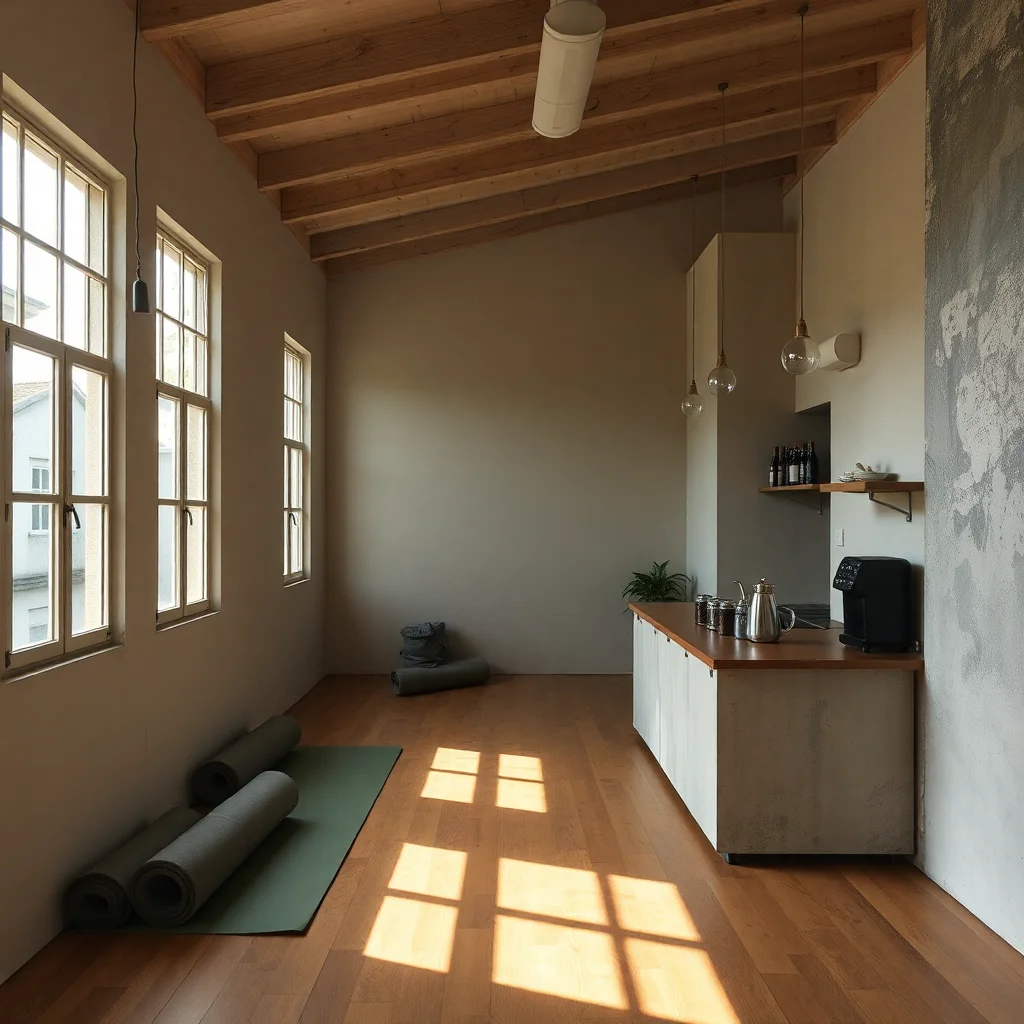
The Houm Yoga and Houm Coffee project, which repurposes an existing house into a communal hybrid of wellness and hospitality, begins from a position of restraint rather than spectacle. The building is not treated as a tabula rasa, nor as a museum relic. Instead, the designers work with what is already there, introducing only the interventions required for the new program to function. This is not nostalgia disguised as design. It is a deliberate refusal to over-explain the transformation.
There is an important difference between keeping a building and letting a building remain readable. The first is an ethical claim. The second is an architectural one. If a renovation becomes too smooth, too integrated, too “complete,” it risks becoming dishonest. Yet if it remains too visibly incomplete, it can fail the people who must use it every day. That is the knife-edge Houm’s project sits on.
PRO: Restraint Preserves More Than Materials

Those who argue for minimal intervention are not simply defending old walls out of sentiment. They are defending the intelligence embedded in a building’s existing form: its proportions, thresholds, circulation habits, and accidental spatial qualities. In the best adaptive reuse projects, these inherited conditions do more than survive—they shape the new program. The architecture does not pretend to have invented the place from scratch, because it hasn’t.
Think of Lacaton & Vassal’s transformation of the Tour Bois-le-Prêtre in Paris, where the existing tower was not demolished but expanded with winter gardens and balconies. Their radicalism lies in refusing the socially accepted violence of replacement. Or consider the idea behind David Chipperfield’s careful work at the Neues Museum in Berlin, where ruin and repair were left in visible tension rather than cosmetically unified. In both cases, the building’s old state is not hidden; it is edited. That editorial stance is precisely what makes the work intellectually credible.
Houm Yoga and Houm Coffee fits into this lineage of architectural discretion. A communal home for practice and conversation does not need to shout. In fact, a program built around slowness, ritual, and recovery benefits from continuity. Existing structure can provide a psychological anchor: the sense that the place was not made to impress first and serve second. When architecture is too eager to declare itself new, it can sterilize the very atmospheres adaptive reuse is supposed to protect.
There is also a political dimension. To preserve more of the existing fabric is to resist the modern developer’s reflex toward totalization. Demolition is easy to defend as efficiency; it is often just impatience with complexity. Retention forces compromise, and compromise is where architecture stops behaving like an image and starts functioning as a civic instrument. The old building remains legible as old, but that legibility is not an aesthetic pose. It is a record of continuity in a culture addicted to resets. This same logic is what often makes urban renewal without the grand plan feel more plausible than sweeping masterplans: change arrives by negotiation, not erasure.
But Legibility Can Become a Fetish
And yet the preservationist position has its own vanity. To insist that old structure must remain visibly old can turn into a kind of curatorial obsession, as if the architect’s job were to preserve evidence for a moral audit. Not every client wants a lesson in material stratigraphy. Not every program benefits from exposed scars, visible patching, or interpretive restraint. Some spaces require clarity, hygiene, acoustic control, code compliance, and comfort. If those demands are framed as betrayal, adaptive reuse becomes an aesthetic doctrine rather than a usable architecture.
This is where many celebrated renovations become evasive. They preserve fragments because fragments photograph well. They leave traces of the old building because traceability reads as authenticity. But authenticity is not the same as usefulness. A reused house that now hosts yoga classes and coffee service must operate as a disciplined interior environment, not merely a sentimental one. The architecture has to decide where continuity is meaningful and where it is simply lazy.
There are famous projects that expose this problem. Herzog & de Meuron’s conversion work in industrial and cultural contexts often balances roughness and precision so tightly that the old shell becomes a stage set for a highly controlled new order. Peter Zumthor, by contrast, can make preservation feel almost sacred, but sacredness can slide into exclusion: the space becomes so reverent that it is difficult to alter, occupy, or challenge. In both approaches, the old building is retained, but the question of who it is for becomes secondary to how beautifully its age can be framed.
The Houm project’s value lies in rejecting that fetish. The existing house is accepted as it is, but acceptance is not the same as worship. Certain elements are carefully redefined; others are left untouched not because they are inviolable, but because intervention would add noise without improving performance. That is the more mature architectural act: knowing that not every mark of age deserves preservation, and not every contemporary requirement deserves visible celebration.
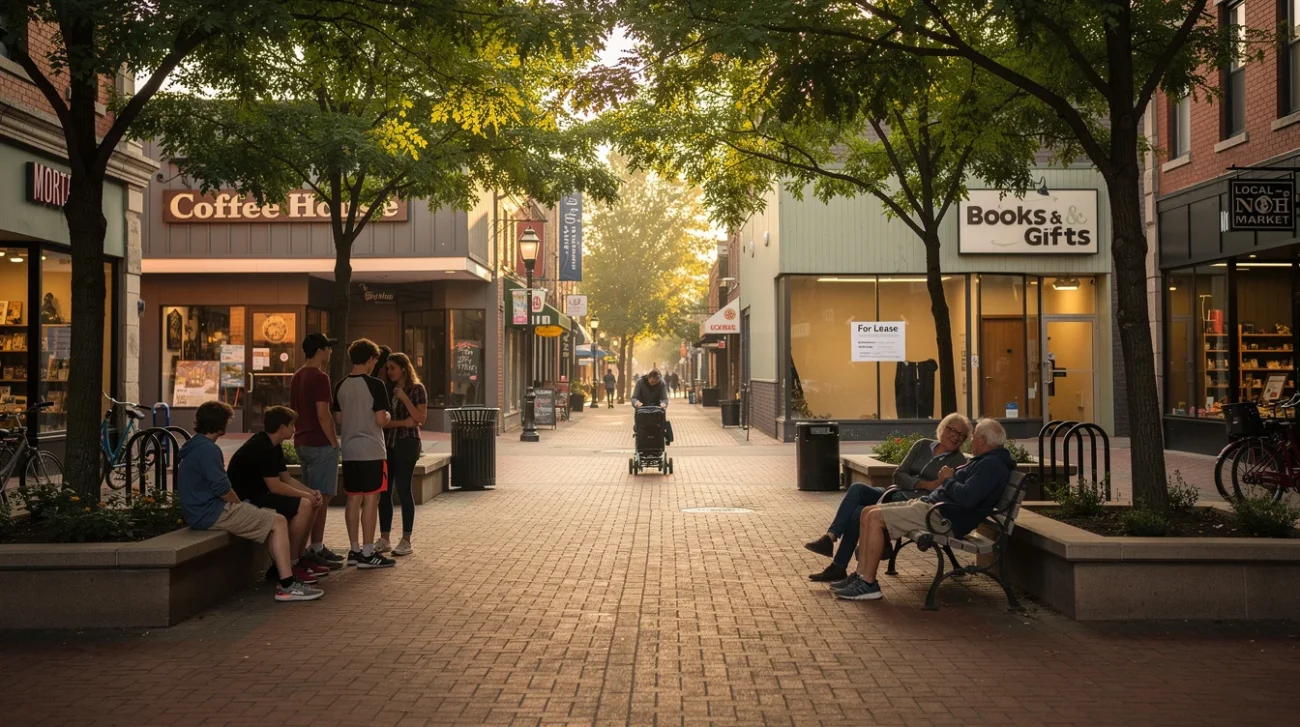
Seen this way, Houm is not unlike the logic behind boutique hotels that still feel human on tiny urban lots: the challenge is to compress multiple demands into a small footprint without flattening the atmosphere that makes the place worth inhabiting.
CONTRA: Contemporary Performance Cannot Be Handled by Courtesy Alone
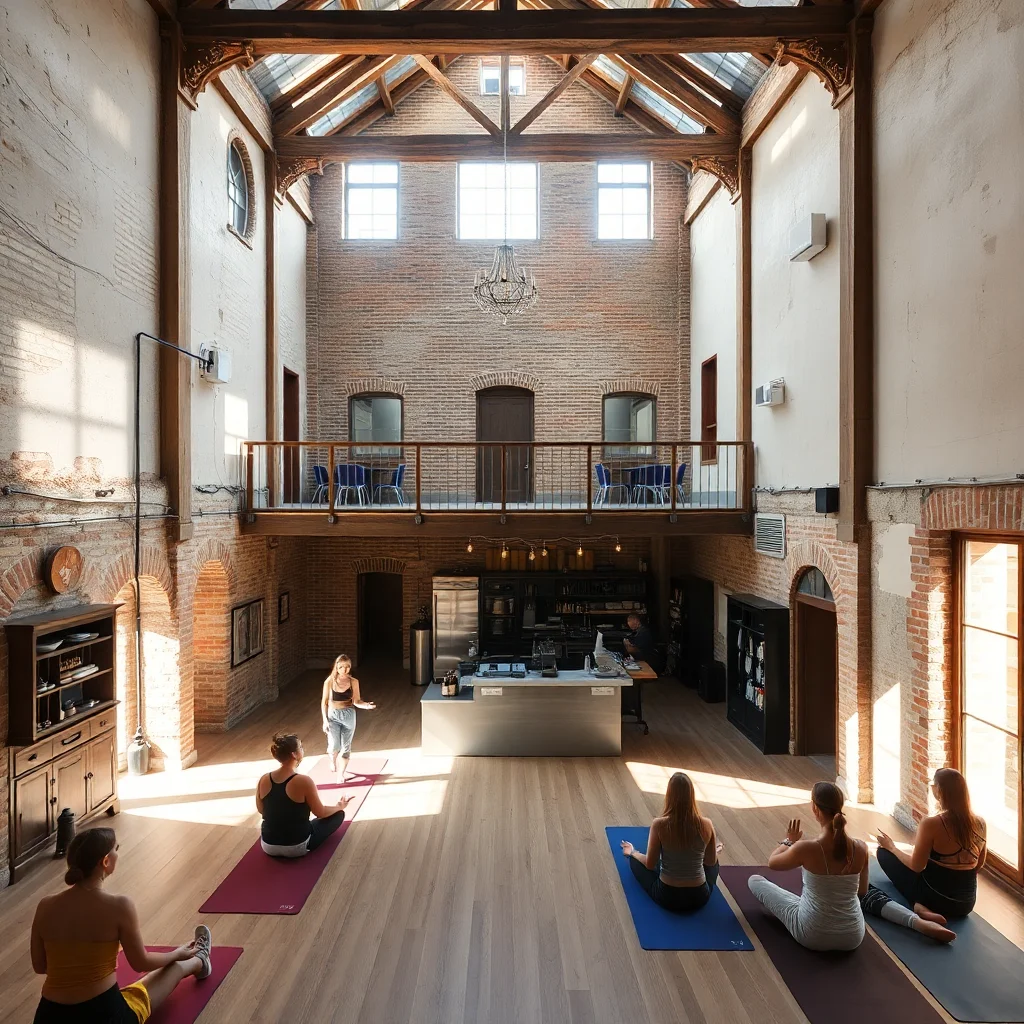
Minimal intervention sounds humane until you have to make it work. A reused house must answer to thermal comfort, humidity, accessibility, durability, circulation, and the messy overlap of different publics. Yoga asks for calm, even air, low visual distraction, and a precise acoustic condition. Coffee asks for service flow, storage, washing, cleaning, and a degree of operational roughness. If the original building is left too intact, the result can be picturesque failure: a charming shell incapable of supporting real use.
This is why contemporary renovation often requires decisive surgery. Caruso St John’s work at Nottingham Contemporary and the Newbury School of Art shows how insertion can be more than technical compliance; it can create new spatial logic without pretending the old structure alone is enough. Anne Lacaton and Jean-Philippe Vassal’s projects are often praised for light-touch thinking, but their work is rigorous precisely because it does not sentimentalize the original condition. They add what is needed. They do not apologize for that addition.
Houm Yoga and Houm Coffee belongs to this pragmatic tradition. The building is not simply inhabited; it is re-tuned. The challenge is not to preserve every historical datum but to calibrate the relationship between old and new so that the new program does not feel forced into a costume. Contemporary performance is not anti-heritage. It is the reality of use. If the house is to become a communal destination, it must accommodate bodies moving differently, people lingering differently, and a hospitality culture that is more demanding than a private residence ever was.
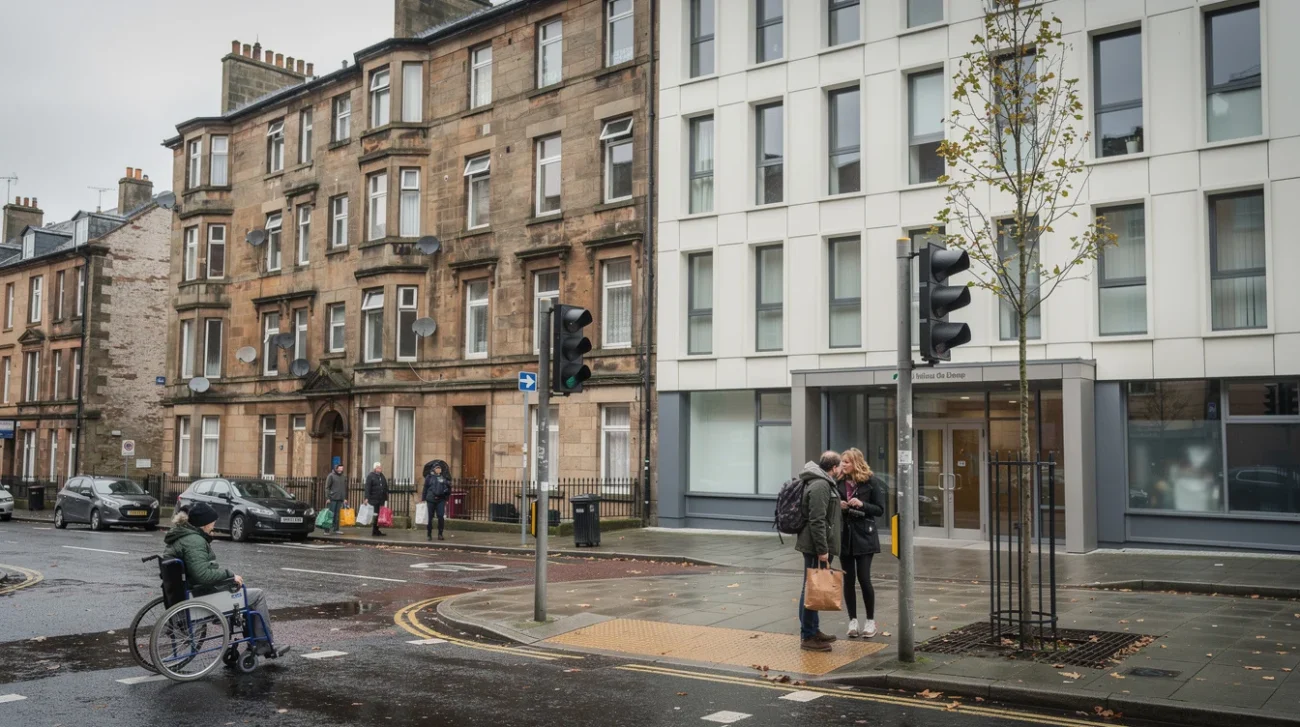
So yes, architecture must respect the existing structure. But respect is not passive. It may require cutting, lining, upgrading, and inserting with precision. The romantic myth of reuse imagines a building gently awakening into a second life. In reality, it often needs a hard negotiation between preservation and performance, one that produces visible seams. Those seams are not failures. They are evidence that the project has taken use seriously. In some cases, that practical ethic can resemble the spirit of public toilets as civic statements, where design is judged less by reverence for form than by whether it reliably serves ordinary bodies.
The Real Design Skill Is Choosing What Remains Readable
The most convincing adaptive reuse projects are not the ones that hide intervention, nor the ones that advertise it. They are the ones that know which parts of the old building should still be recognizable, and which parts must become quietly obsolete. This is a question of editorial discipline as much as design talent. You do not preserve everything. You do not erase everything. You choose what remains legible so the building can speak in two tenses at once.
In Houm’s project, that balance of control and restraint gives the renovation its force. The existing house is not neutral background; it is the material memory that shapes the atmosphere of the communal home. The new functions do not dominate the shell, but neither do they submit to it. Instead, they settle into it. That is the real achievement: not transformation as spectacle, but coexistence as an architectural argument.
Adaptive reuse becomes shallow when it is treated as automatic virtue. It becomes powerful when it accepts conflict. The old building should not be fully erased, because erasure wastes history and material intelligence. But it should not remain fully legible either, because contemporary life requires more than archival reverence. Architecture’s task is to decide where the past is allowed to remain visible, and where the present must take over without asking permission.
The refusal to start over is not a sentimental refusal. It is a design stance. It says that the best building is not the freshest one, but the one most capable of hosting contradiction without collapsing into either nostalgia or sameness.
FAQ
Why is adaptive reuse more complicated than simply preserving a building?
Because preservation alone does not solve program, comfort, code, or circulation. A reused building must still perform, and that often requires targeted interventions that change how the old fabric is read and used.
What does “legibility” mean in renovation?
Legibility is the degree to which the old structure remains understandable after new work is introduced. It is not just about visible history; it is about whether the relationship between old and new can still be sensed.
Why do some architects prefer visible interventions?
Visible interventions make the transformation intellectually honest. Designers such as Lacaton & Vassal and David Chipperfield often use this strategy to avoid fake seamlessness and to acknowledge the building’s previous life.
Can a renovation be too respectful?
Yes. Excessive respect can freeze a building into a fragile artifact, making it difficult to use, adapt, or upgrade. Good renovation protects meaning without sacrificing contemporary performance.
What makes the Houm project relevant to this debate?
It shows how a house can be repurposed without being overdesigned into oblivion. The project balances restraint and necessary change, making the existing structure part of the new communal identity rather than something to conceal.
Open question: when a building is reused, should architecture prioritize the visible continuity of the past, or the seamless performance of the present?
Get the Mainifesto weekly — curated design debates, speculative ideas and the week's best articles every Saturday.
Editorial Perspectives
Questions and counterpoints developed by the Mainifesto editorial desk to extend the discussion.
Perspective 1
If a reused building looks perfectly seamless, that often means the city has edited out the evidence of its own contradictions. I’m with visible continuity: the seams, scars, and grafts tell you who had power, who lost it, and what the next use is really buying.
Perspective 2
I don’t buy the idea that old fabric has to stay visibly “legible” to justify reuse. Too often that becomes a stylish way to freeze a building as a backdrop for new money, when the real ethical work is keeping it alive, functional, and accountable to the people already tied to it.
Perspective 3
The question is posed as if memory and performance were opposites, which is already a weak binary. Architecture has always worked through palimpsest: not a clean continuity, not a tabula rasa, but a negotiated arrangement of traces, use, and authority.