Can Cities Be Designed Before Culture Exists?
Trigger: the city as a brand before it is a place
Planned cities are sold to governments and investors as if they were products: scalable, legible, efficient, future-proof. In that logic, architecture is not only building; it is packaging. A masterplan becomes a promise that culture will arrive later, once the roads are laid, the icons are photographed and the marketing campaign has done its work. But this is where the fantasy turns brittle. A city can be surveyed before it is inhabited, but it cannot be truly designed before the social rituals that give it meaning have formed.
The question is not whether cities need identity. Of course they do. The question is whether identity can be authored from above without collapsing into branding. Alex Lampe, speaking in the context of the world’s fastest-growing new cities, points to a simple but uncomfortable truth: long-term success depends on clear identities rooted in geography, culture and the communities that will eventually make these places their own. That sounds obvious until you look at the many planned places that mistake visual coherence for civic life. Too often, the city is drawn first as a diagram, then dressed up with naming systems, logo-like skylines and tidy public realms that look convincing in renderings but remain emotionally unreadable in reality.
The trouble is structural. Urban branding can seed recognition, but belonging is not a graphic package. It is accreted through repetition, memory, friction, weather, informal occupation and the small permissions that allow people to make a place theirs. A square becomes civic not because a consultancy says so, but because people meet there after prayer, after school, after work, after a match, after a funeral, after a protest. Planned cities that ignore this are not neutral; they are unfinished in the deepest sense. They may be efficient on paper and vacant in spirit. For a contrasting view of how small-scale public infrastructure can shape civic identity, see Public Toilets as Civic Statements, where everyday facilities become part of the social contract.
From diagram to dwelling: why blank slates are never blank
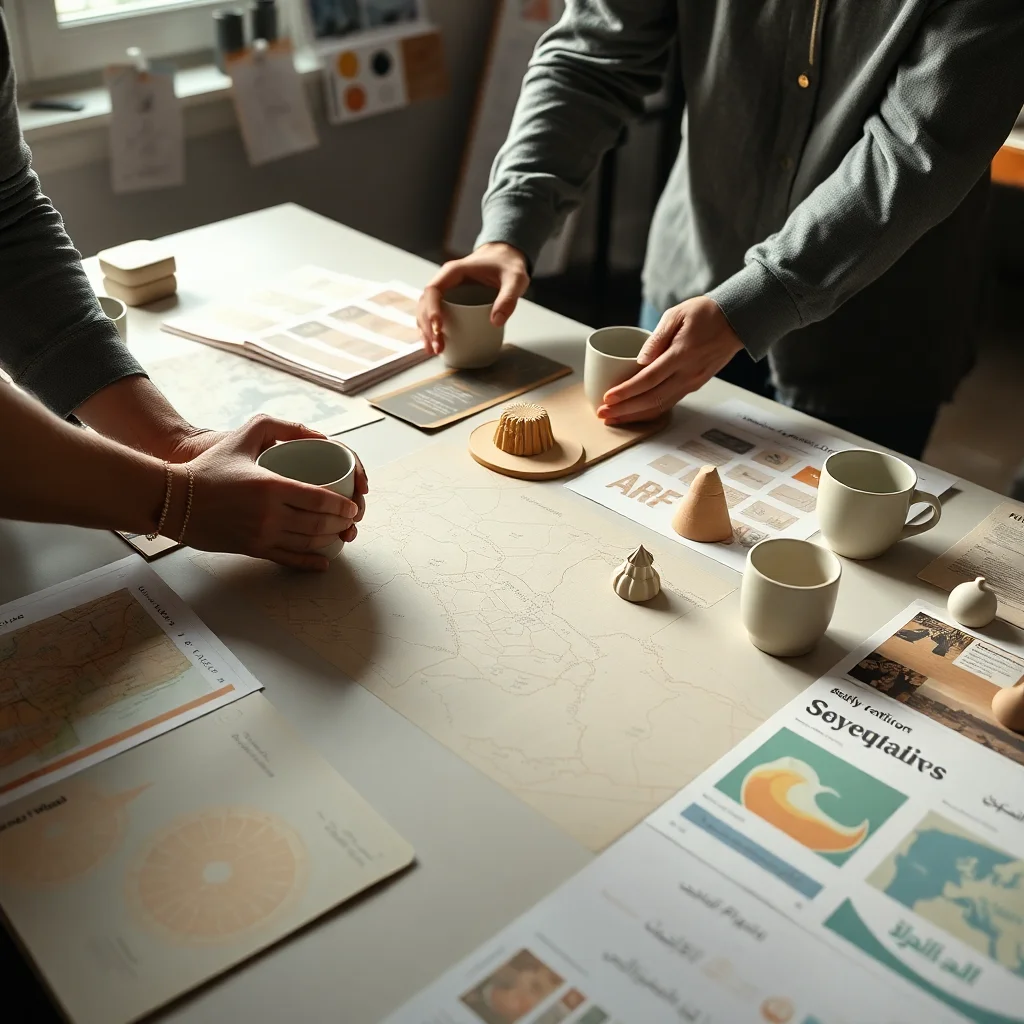
The modern impulse to design cities from scratch has always carried a messianic streak. From Le Corbusier’s radiant plans to Brasília’s monumental voids, the dream was that a city could be rationally composed and social life would obediently follow. Brasília remains the canonical warning: technically brilliant, symbolically potent, and yet forever accused of privileging the state over street life. Its scale, hierarchy and separation of functions made it iconic, but not easily intimate. The city proved that geometry can declare an ideology, but it cannot guarantee urban affection.
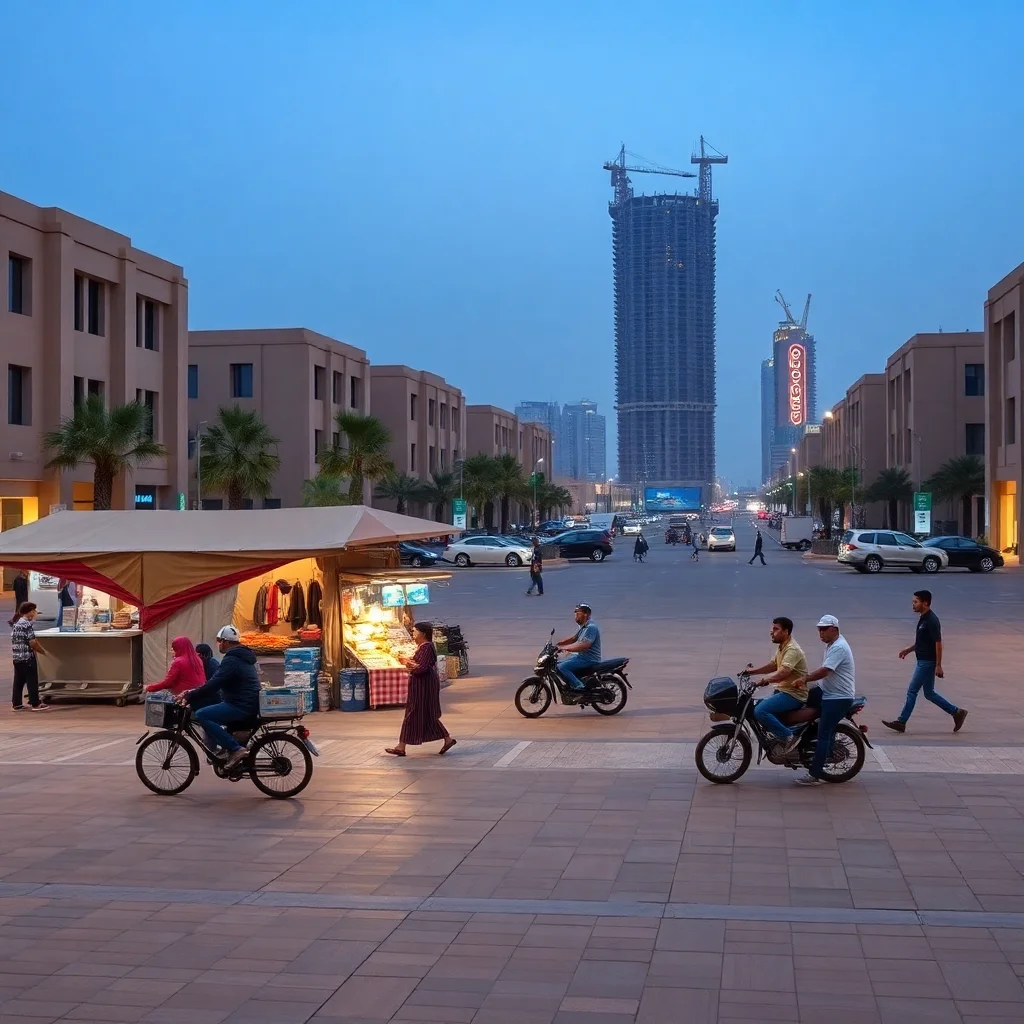
That lesson is newly relevant in projects such as Egypt’s New Administrative Capital, Saudi Arabia’s NEOM, and other fast-built urban ambitions in the Gulf, North Africa and South Asia. These are not merely settlements; they are geopolitical statements. They promise speed, climate control and economic diversification, but they also expose a brutal paradox: if you build a city before its culture exists, what exactly are you building for? The answer given by many developers is that culture can be manufactured by amenity, event programming and brand storytelling. A waterfront becomes “lifestyle.” A plaza becomes “activation.” A district becomes “a destination.” Yet these terms often operate as euphemisms for uncertainty.
Urban identity cannot simply be pasted on after the fact. You can commission a logo, a slogan, a wayfinding system and a placemaking strategy, but those are all thin forms of memory. They work best when they translate an already felt condition: a topography, a craft tradition, a social rhythm, a religious calendar, a local market ecology. In their absence, the result is what many residents instantly recognise as generic new-town syndrome: polished surfaces, weak edges, and spaces that appear public until you try to use them. That is why the debate over urban renewal without the grand plan matters: cities often become livable through incremental adjustment rather than total design.
Geography is not a backdrop; it is the first designer
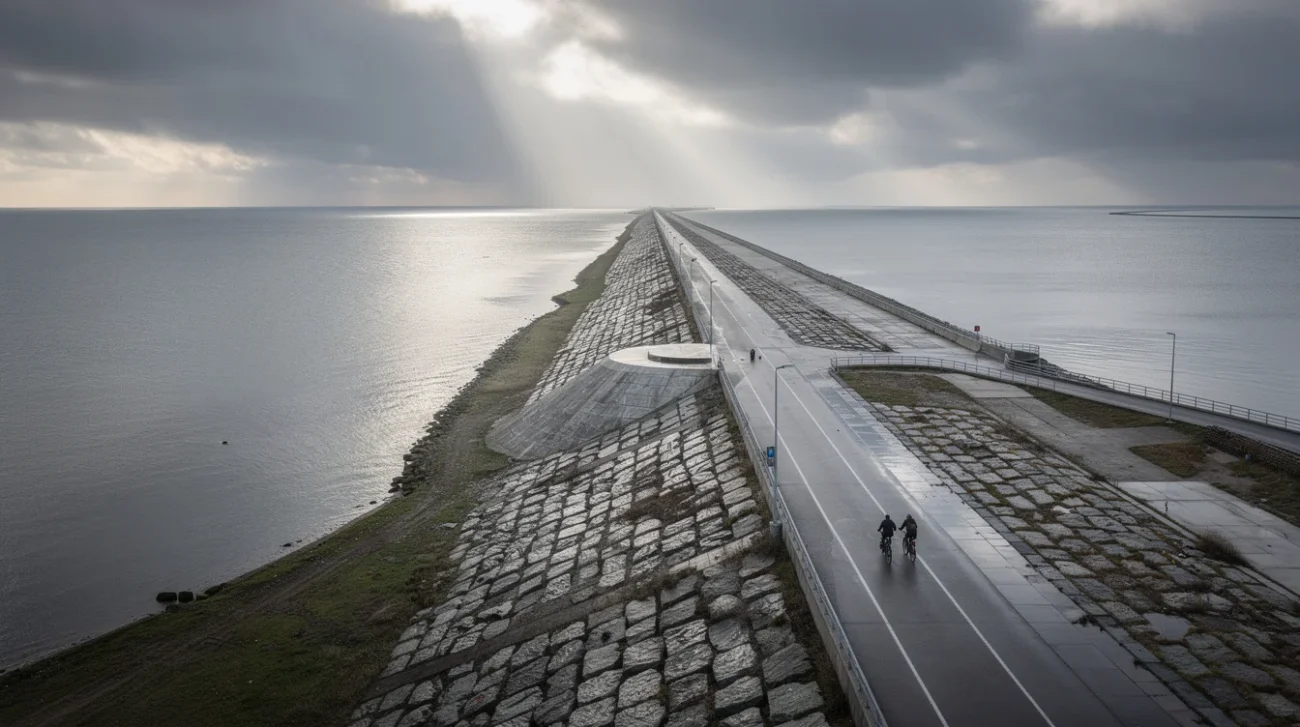
The strongest argument against identity-free urbanism is that place already contains the seeds of culture. Geography is not scenery. It is infrastructure, climate, material logic and collective constraint. Cities that emerge from deserts, coastlines, river deltas, volcanic fields or mountain valleys cannot be honestly designed as if they were interchangeable grids. The land writes conditions before architects add form.
Look at how successful urbanism often begins by listening to terrain. In Copenhagen, waterfront regeneration works because the city’s relationship to water is not decorative; it is civic and environmental. In Marrakech, the urban grain and courtyards respond to heat, privacy and social custom rather than abstract efficiency. In Singapore, often cited as the ultimate planned city, the state has managed to produce a robust urban culture not because it merely inserted towers, but because it embedded transit, greenery, food culture, housing diversity and strict public rules into a coherent civic machine. Even there, the success is less a triumph of branding than of relentless institutional alignment.
This is where design studios such as Wiedemann Lampe operate in an especially charged territory. Naming, identity and visual systems matter in new cities because they help make the unfamiliar navigable. But the best identity work does not invent a fiction detached from place. It distils the real: the horizon line, the local climate, indigenous settlement patterns, trade routes, craft motifs, even the typography of existing informal life. Branding becomes dangerous when it promises a ready-made soul. It becomes useful when it gives people something they can inhabit, contest and revise. For another example of place-led development, Cluj-Napoca waterfront urbanism and civic life shows how public edges can strengthen everyday attachment to a city.
Ritual, memory and the politics of everyday use
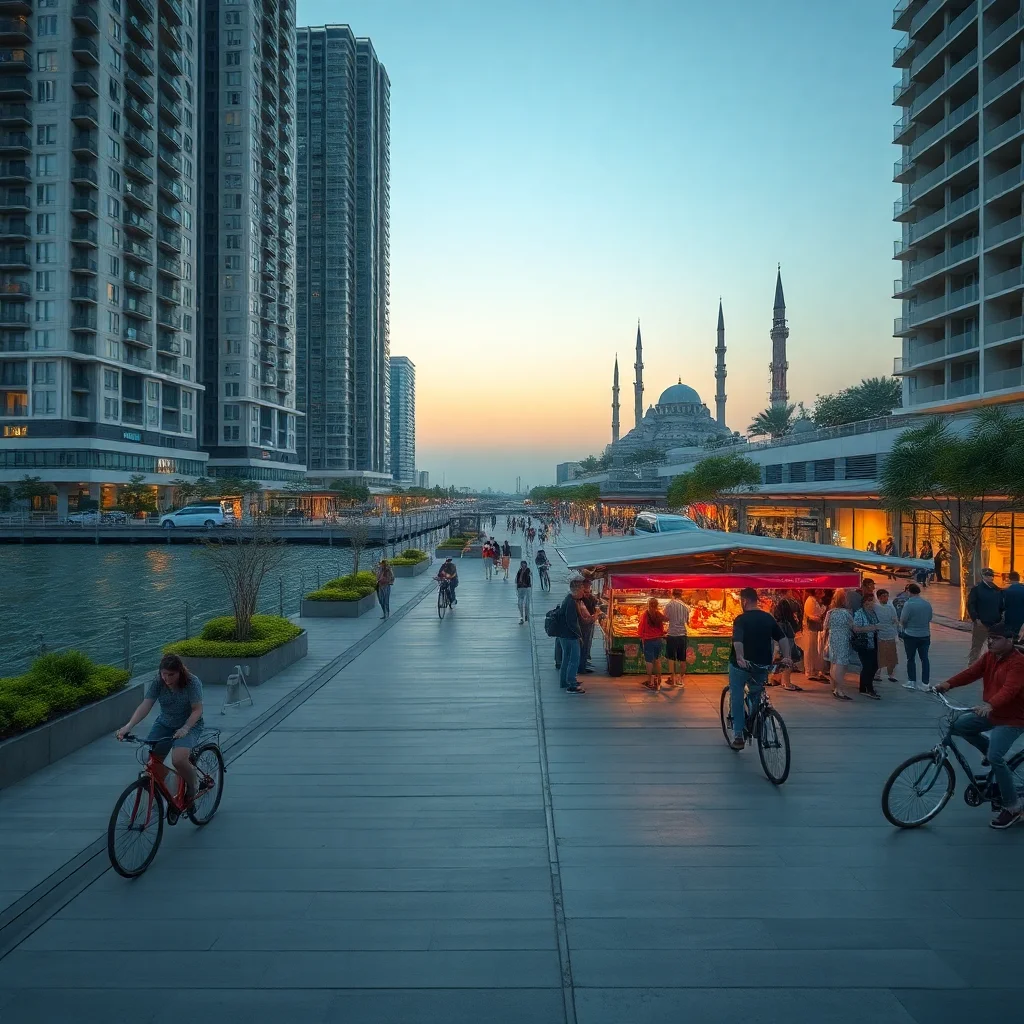
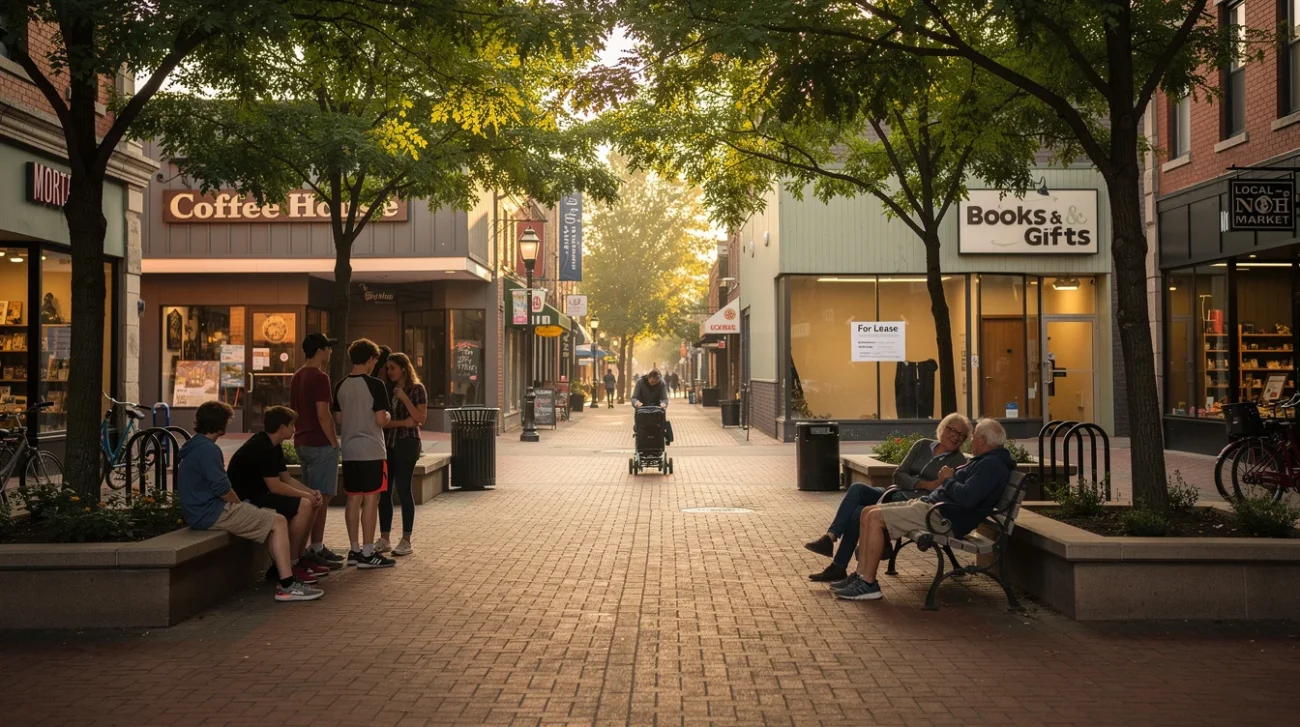
Cities are not held together by masterplans; they are held together by repeated acts. The morning queue at the bakery, the afternoon shade under an arcade, the evening gathering outside a mosque, church, temple or community hall, the weekly market that temporarily overrides traffic logic: these are the rituals that create belonging. Without them, even beautifully rendered public space remains socially thin.
This is why many planned districts fail not because they are visually ugly, but because they are over-specified. When everything is programmed, nothing is truly claimable. Real urban culture depends on a degree of slack: the bench that becomes a waiting point, the corner store that becomes an informal post office, the empty lot that turns into a football pitch, the curb that turns into a conversation threshold. Jane Jacobs understood this long before “placemaking” became a profession. So did Jan Gehl, whose work insists that human-scale attention is the real measure of city quality. Their arguments remain inconvenient to top-down development because they favour messy life over visual control.
Contemporary examples of place-making failure abound in zones built for speed. New capital districts can look immaculate on the day they open and still feel spiritually pre-solved, as though every possible use has already been anticipated by someone else. That is not belonging; that is simulation. The point is not to romanticise informality or to celebrate chaos for its own sake. It is to acknowledge that culture emerges through use, and use is never fully predictable. The better question is whether planners can create conditions where unexpected civic behaviour is possible. Can the city allow appropriation without immediately neutralising it?
Can branding seed belonging, or only manage doubt?
Urban branding has a legitimate role, but only if we stop pretending it is destiny. A city needs narrative as much as it needs drainage. People want to know what kind of place they are in, what values it projects, and what shared future it implies. Identity systems can help align transport maps, street furniture, public art, signage, policy language and development narratives. They can make a new district coherent enough to be memorable.
But there is a hard limit. Branding can assemble symbols; it cannot force attachment. At best, it can create a low-friction invitation to participate. At worst, it becomes a premium varnish on top of social vacancy. The difference lies in whether the identity system is grounded in lived reality. A city designed around local material culture, climate adaptation, public ritual and mixed-use thresholds is not “branded” in the shallow sense; it is legible. One that relies on imported aesthetics and interchangeable cosmopolitan imagery is performing a future it has not earned.
This is the crucial tension in speculative urbanism today. Developers want certainty, but cities are uncertainty machines. They absorb migration, political change, economic shocks and demographic drift. The best they can do is offer durable frameworks: streets that can be re-used, squares that can host multiple publics, buildings that can change tenancy and function without losing dignity. This is not anti-design; it is anti-illusion. The task is to design for cultural emergence, not to pretend the culture has already arrived. Even materials can become part of that debate, as explored in ocean plastic façades and green theatre, where sustainability claims are tested against lived urban value.
What truly gets built first: trust, permission and shared ownership
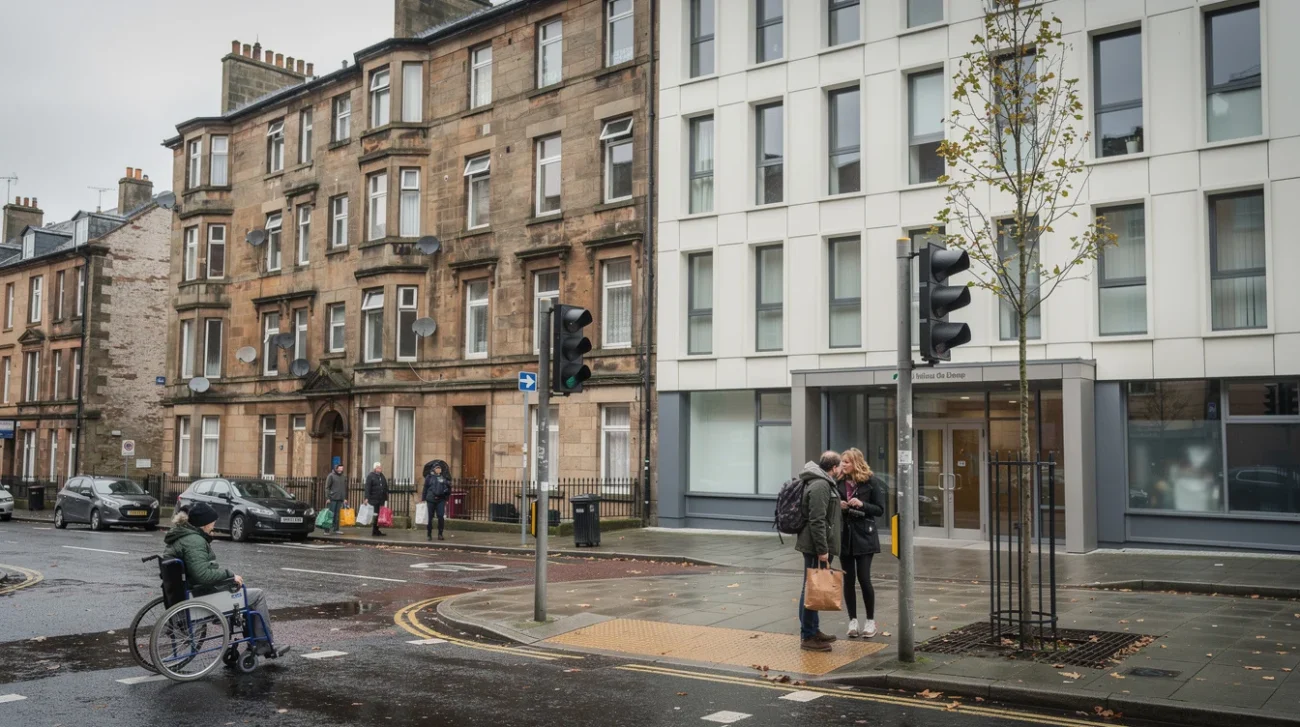
If a city is to precede its culture, then the first thing it must design is not form but trust. Trust between institutions and residents, between public and private actors, between imported expertise and local knowledge. That trust is built through participation, but not the performative kind where communities are invited after all key decisions are fixed. It is built when local builders, artisans, vendors, drivers, teachers and residents shape the city’s operating rules from the start.
Shared ownership is equally important. The most successful emerging urban districts are often those that allow different tempos of life to coexist: formal civic programs alongside spontaneous use, commercial development alongside low-cost access, spectacle alongside routine. In this sense, the city’s identity is not a singular image but a negotiated atmosphere. It becomes meaningful when people can recognise themselves in it without feeling that they are merely consumers of someone else’s vision.
And here lies the provocation: perhaps the problem is not that planned cities are made too early, but that they are made too complete. A city should not arrive as a finished statement. It should arrive as an argument, with enough coherence to invite participation and enough openness to let culture reorganise the script. Otherwise, the city becomes an immaculate shell waiting for a public that never fully materialises.
- Architects must design for appropriation, not obedience. Streets, thresholds and public spaces should be flexible enough to absorb markets, gatherings and improvised uses. If a design cannot be bent by daily life, it is too fragile to survive it.
- Identity should emerge from geography before graphic language. Climate, topography and local materials are not aesthetic accessories; they are the first layer of cultural meaning. Good urban branding translates these realities instead of masking them.
- Ritual matters more than visual coherence. Cities are remembered through repeated actions, not renderings. A place becomes beloved when it supports habits, not when it merely photographs well.
- Planned cities need institutional humility. No consultancy can predict how a community will evolve, so the governing framework must leave room for surprise. The best plans are confident about infrastructure and modest about social scripting.
- Branding can orient, but it cannot manufacture belonging. Visual systems help people navigate a new city, yet attachment comes from use, time and collective authorship. Without those, identity is just a slogan with better typography.
- The real test is whether residents can rewrite the city. When informal markets, local businesses and civic groups begin to reshape the plan, the city becomes real. Until then, it remains an expensive hypothesis.
Conclusion: the city as unfinished sentence
So, can a city be designed before its culture exists? Yes, but only in the narrowest technical sense. It can be mapped, branded, zoned and furnished. It can even be narrated with confidence. What it cannot be is complete. Culture is not a feature that can be delivered with the keys. It is a collective act of rehearsal, repetition and resistance.
Planned cities will continue to rise because states and investors need them to. The sharper question is whether their designers are willing to stop pretending that efficiency equals identity. The future belongs to cities that are capable of becoming themselves in public. Anything less is just a diagram with a skyline.
Get the Mainifesto weekly — curated design debates, speculative ideas and the week's best articles every Saturday.
Editorial Perspectives
Questions and counterpoints developed by the Mainifesto editorial desk to extend the discussion.
Perspective 1
You can’t script urban identity the way you script a masterplan, but you can make room for it. The useful move isn’t to design a fixed narrative; it’s to design a framework that can absorb local habits, conflict, and change without collapsing.
Perspective 2
This is exactly where so many planned districts go wrong: they arrive with a story, a logo, and no memory. If a city has to be lived before it can be branded, then planners should stop pretending culture is a finishing touch and start protecting the messy, uneven processes that actually produce belonging.
Perspective 3
Designing uncertainty is not a poetic slogan, it’s a systems requirement. In cities shaped by migration, informal economies, and political volatility, the best plans are the ones that can tolerate multiple futures instead of enforcing one polished identity from day one.
Perspective 4
The obsession with narrative is often a symptom of insecurity in the profession. A city is not a product launch; it becomes legible only through repetition, conflict, and time, which is precisely why branding it before it exists feels so provincial.
Perspective 5
I’m interested in the idea of designing uncertainty, but not as vagueness. Could we model spaces that allow rituals, appropriation, and even failure to emerge over time, instead of optimizing everything for a single predicted use?