
Can Tiny Boutique Hotels Still Feel Human?
Small Hotels Are No Longer Small Problems
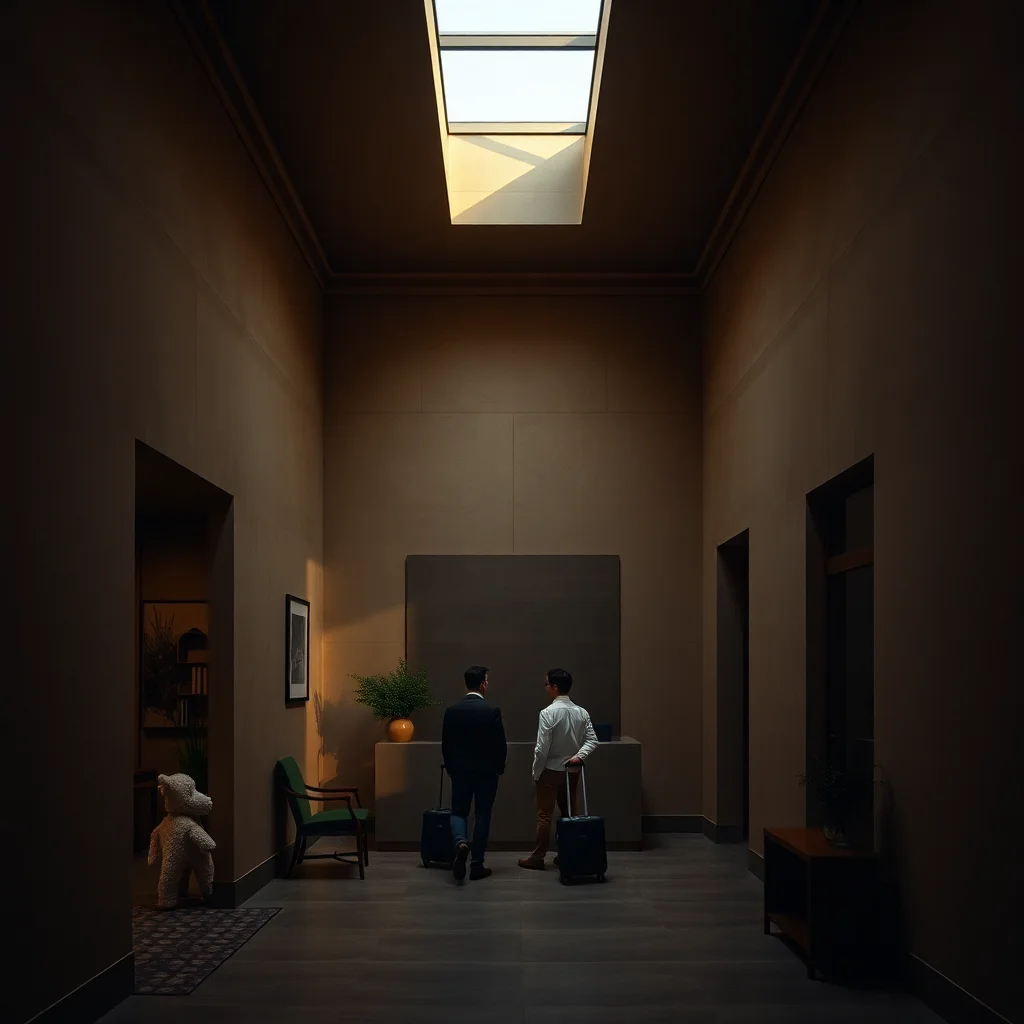
Lamartine in Mexico City’s Polanco district is not just another boutique hotel with a tasteful lobby and a polished marble checkout desk. It is a test case for a much harder question: can tiny urban hospitality still feel humane when every square meter is being asked to do the work of a view, a corridor, a social condenser, and a luxury signal? PPAA’s answer, through a 10-key new-build on a narrow lot, is to treat constraint not as an excuse for gimmickry but as the actual design brief. The central skylight is not a decorative flourish; it is the building’s spatial argument, pulling daylight into a footprint that might otherwise collapse into expensive darkness.
That matters because the boutique hotel industry has become addicted to compensatory gestures. When a lot is too narrow, designers often reach for theatrical circulation, compressed lobbies, mirrored surfaces, or highly stylized “moments” that photograph well but age badly. The result is a familiar contradiction: spaces that promise intimacy but behave like visual content. Lamartine suggests a more serious path. Discreet luxury does not have to mean spatial austerity, and efficiency does not have to mean emotional flatness. But to achieve that balance, architecture must become brutally precise about light, thresholds, and the choreography of movement.
The Narrow Lot Is a Design Argument, Not a Limitation

Urban hospitality on tight sites has always been a battle against the tyranny of lost area. In dense districts, the plan is typically squeezed by setbacks, fire codes, service requirements, and the commercial demand for enough keys to make the project viable. What is left is often a thin volume in which public and private life are forced into proximity. Lamartine turns that condition into a spatial ethic. The hotel’s narrow footprint intensifies the relationship between room, corridor, and shared core, forcing the project to earn every transition rather than hide them behind decorative noise.
This is where the comparison with other compact hotels becomes useful. Kengo Kuma’s boutique and hospitality projects often soften constraint with porous screens and layered filters; around the world, designers have used courtyards, atriums, and split-level sequences to prevent small footprints from feeling terminally cramped. But there is a danger in overengineering intimacy. If every movement is a reveal, the hotel becomes exhausting. Lamartine’s value is in how it suggests that compactness can be legible without being blunt. The building does not pretend to be larger than it is. Instead, it makes the dimensions feel intentional, calibrated, and almost domestic in their scale of experience.
That same tension between ambition and restraint shows up well beyond hospitality. In urban renewal without the grand plan, the argument is that incremental change often succeeds because it respects what is already working instead of replacing it with a heroic gesture. Small hotels operate by a similar logic: they have to make every square meter count without pretending that scale can be magically erased. The smartest projects are rarely the loudest; they are the ones that understand how much character can emerge from careful limits.
Daylight Is the New Luxury Amenity
In hotels, daylight is often treated like a bonus feature, a pleasant accident delivered by orientation rather than a primary design material. On a narrow lot, that mindset fails immediately. PPAA’s central skylight turns overhead illumination into the project’s organizing device, reducing dependence on artificial light while giving the interiors a temporal life that a standard narrow-plan hotel usually lacks. Morning, noon, and evening are allowed to register differently. That is not a minor atmospheric effect; it is the difference between a room that feels inhabited and one that feels staged.
There is a lineage here. The best small hotels and urban guesthouses have long relied on top light or internal courts to avoid the deadness of deep-plan planning. Tadao Ando’s spiritual use of light is a more extreme precedent, while Peter Zumthor’s hotels and baths demonstrate how daylight can be choreographed as a sensory event rather than a utility. But the lesson for boutique hospitality is less mystical: light makes smallness breathable. Without it, compactness becomes claustrophobia. With it, even modest circulation can feel generous because the eye is given distance where the body cannot have it.
And yet daylight is not free. A skylight can overpromise, creating glare, heat gain, and privacy conflicts if it is not carefully detailed. On a hotel where comfort is the business model, atmospheric ambition must be matched by thermal and acoustic discipline. The best small hotels do not merely “celebrate light”; they manage it. That is where Lamartine’s apparent restraint becomes consequential. Discreet architecture is not less technical. It is often more technical because every gesture must carry multiple jobs at once.
The same suspicion of visual theatre appears in debates far outside hospitality, including green walls and their climate claims, where an appealing architectural image can mask difficult questions about maintenance, performance, and long-term value. Lamartine’s skylight matters partly because it is not a gimmick: it is a functional device that also shapes experience. That distinction is crucial in compact buildings, where every expressive move has to earn its keep in use as well as in photographs.
Intimacy Works Only If Circulation Is Legible
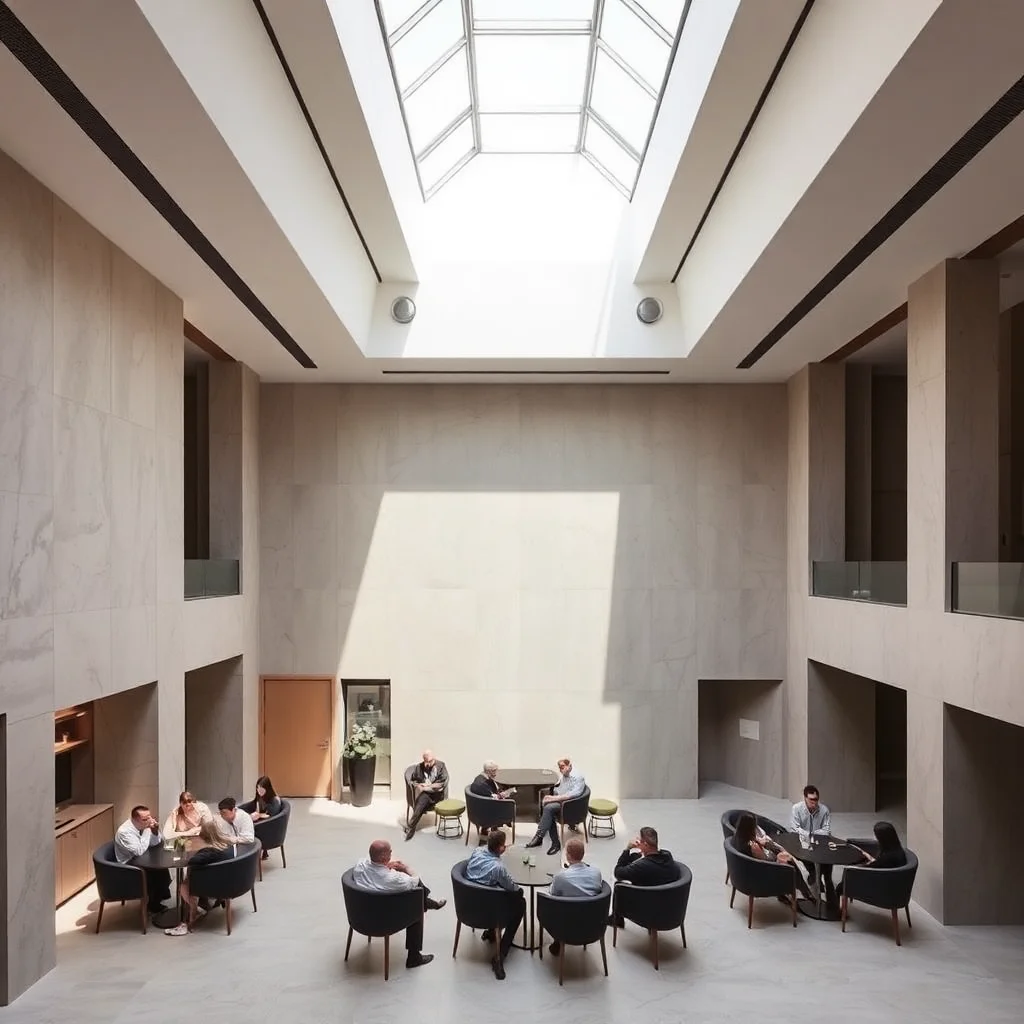
The romantic myth of the boutique hotel is that compression automatically produces coziness. In reality, bad circulation is what kills intimacy. Guests do not experience a building as a diagram; they experience it as a sequence of hesitations, dead ends, thresholds, and encounters with staff. A narrow hotel must therefore be ruthlessly clear about how one moves through it. If the route from entry to room feels improvised, the building reads as cheap. If the route is too choreographed, it reads as precious. The sweet spot is legibility with calm.
Lamartine’s compactness raises exactly this issue. The project has to balance the desire for a discreet, almost private atmosphere with the practical need to guide guests effortlessly through a thin urban volume. This is where many boutique hotels default to what can be called spatial tricks: mirrored lobbies to fake width, hidden doors that create a designer sense of discovery, or circulation folded into scenic detours. Those moves can be entertaining, but they often come at the expense of comfort, especially for visitors arriving with luggage, jet lag, or accessibility needs.
A more humane approach is visible in projects by studios such as Atelier Ace’s hotel work or in the calmer hospitality interiors of Studio MK27, where restraint, material coherence, and straightforward circulation often matter more than Instagram-ready surprises. The lesson is simple and unfashionable: people prefer to know where they are. Intimacy is not confusion. In the best small hotels, the guest feels held, not manipulated.
Discretion Is Not the Same as Minimalism
Lamartine has been described as “discreet yet powerful,” and that phrasing is more useful than it first appears. Boutique hospitality has spent years oscillating between minimalism and maximalism, as if a hotel must either vanish into its context or become a theatrical object. But discretion is a harder and more interesting category. It allows architecture to be memorable without becoming loud. It suggests a building that knows when to withdraw and when to intensify.
That distinction matters in affluent neighborhoods like Polanco, where the cultural expectation is not spectacle but control. Guests arriving at a hotel in this setting do not necessarily want visual aggression. They want calm, confidence, and the feeling that the building has resolved its own logistics so they do not have to. Material choices, proportion, and acoustic control become the real markers of luxury. A narrow lot can support this kind of sophistication because its limits force a coherent language. There is less room for arbitrary gestures, which means every surface counts.
This is why boutique hotels on tight sites should stop chasing the language of “micro-luxury” as if miniature were automatically desirable. The goal is not to create a tiny version of a grand hotel. It is to create an experience that respects the guest’s body, time, and attention. If the room is compact, the bed must be superb, the light controlled, the acoustics soft, and the transitions effortless. Everything else is decoration, and decoration alone cannot carry the emotional load of hospitality.
In that sense, hospitality design has more in common with civic architecture than with branding exercises. Even a project like public toilets as civic statements argues that the quality of an everyday spatial experience can signal whether a place respects its users. Small hotels work on the same premise: the details tell you whether the building understands people as occupants or as content generators. That is why discretion, when done well, feels less like absence than like confidence.
Efficiency Can Be Beautiful, But It Must Be Honest
The deeper issue raised by Lamartine is not whether small hotels can be beautiful. Of course they can. The question is whether beauty can be honest when budgets, floor area, and commercial pressure are all working against generosity. A compact hotel must often compress program into a geometry that leaves little slack. That can produce elegance, but only if the architecture refuses to lie about its own conditions. Honest efficiency means seeing service spaces as part of the experience, not shameful leftovers; it means understanding that a narrow section can still feel layered if the transitions are carefully tuned.
Design history is full of precedents that make this point. Japanese ryokan show how compact hospitality can feel expansive through sequencing rather than size. In contemporary practice, hotels by studios like Neri&Hu, especially those working with adaptive reuse and tight urban envelopes, demonstrate that atmosphere and efficiency are not opposites when the plan is disciplined. The real enemy is the false promise of abundance. Small hotels become memorable when they stop trying to mimic largeness and instead commit to an architecture of clarity.
Lamartine is important because it suggests that the future of boutique hospitality may be less about inventing ever stranger spatial tricks and more about refining a set of durable fundamentals: daylight, proportion, legibility, and acoustic calm. In other words, the human scale is not a nostalgic luxury. It is the most radical thing a hotel can offer in the age of compact urban development.
FAQ
What makes a boutique hotel feel human on a tiny lot?
A human-feeling boutique hotel on a small site depends on clear circulation, good daylight, controlled acoustics, and a sense of spatial coherence. Guests should feel guided, not manipulated, and comfort should never be sacrificed for visual drama.
Why is daylight so important in narrow hotels?
Daylight prevents compact interiors from feeling oppressive and gives rooms a sense of time, depth, and emotional variation. On narrow lots, skylights and internal courts often become essential architectural tools rather than decorative extras.
Do spatial tricks help small hotels?
Sometimes, but only when they serve comfort and legibility. Mirrored walls, hidden passages, and theatrical circulation can feel clever in photos but often make a hotel less usable and less welcoming in practice.
What is the future of compact luxury hospitality?
The future is likely to favor discreet, technically precise designs that prioritize comfort over spectacle. Small hotels will succeed when they stop imitating grand hospitality and instead refine intimacy, clarity, and material quality.
So the real measure is not how much hotel you can squeeze onto a lot, but whether the compression still leaves room for dignity—what should architecture refuse to sacrifice when space gets brutally tight?
Get the Mainifesto weekly — curated design debates, speculative ideas and the week's best articles every Saturday.
Editorial Perspectives
Questions and counterpoints developed by the Mainifesto editorial desk to extend the discussion.
Perspective 1
In tight urban markets, the first thing architecture should refuse to sacrifice is legibility: you need to understand where you are, where light enters, and how the building breathes. If a tiny hotel becomes just an efficiency machine, it’s not hospitality anymore—it’s storage with linen service.
Perspective 2
The interesting question is whether compression can be made elastic through section, voids, and gradients of privacy rather than simple area. I’d argue dignity comes from environmental performance and spatial choice—can the guest decide to be alone, seen, cooled, or exposed without the plan falling apart?
Perspective 3
From a guest-experience point of view, don’t sacrifice arrival, acoustics, or the sense that someone thought about your body in the room. People forgive small if it feels calm and easy; they don’t forgive a cramped layout that makes every movement feel like a compromise.
Perspective 4
You can squeeze hard and still keep dignity, but only if you stop pretending every square meter needs to be monetized. The non-negotiables are daylight, practical circulation, and rooms that work without gimmicks—once those go, the operator just inherits complaints.
Perspective 5
The article gets at an old truth: compression is not the enemy, vulgarity is. Architecture should refuse to sacrifice proportion and repose, because without them even the most efficient boutique hotel becomes merely a well-dressed corridor.