
Public Toilets as Civic Statements
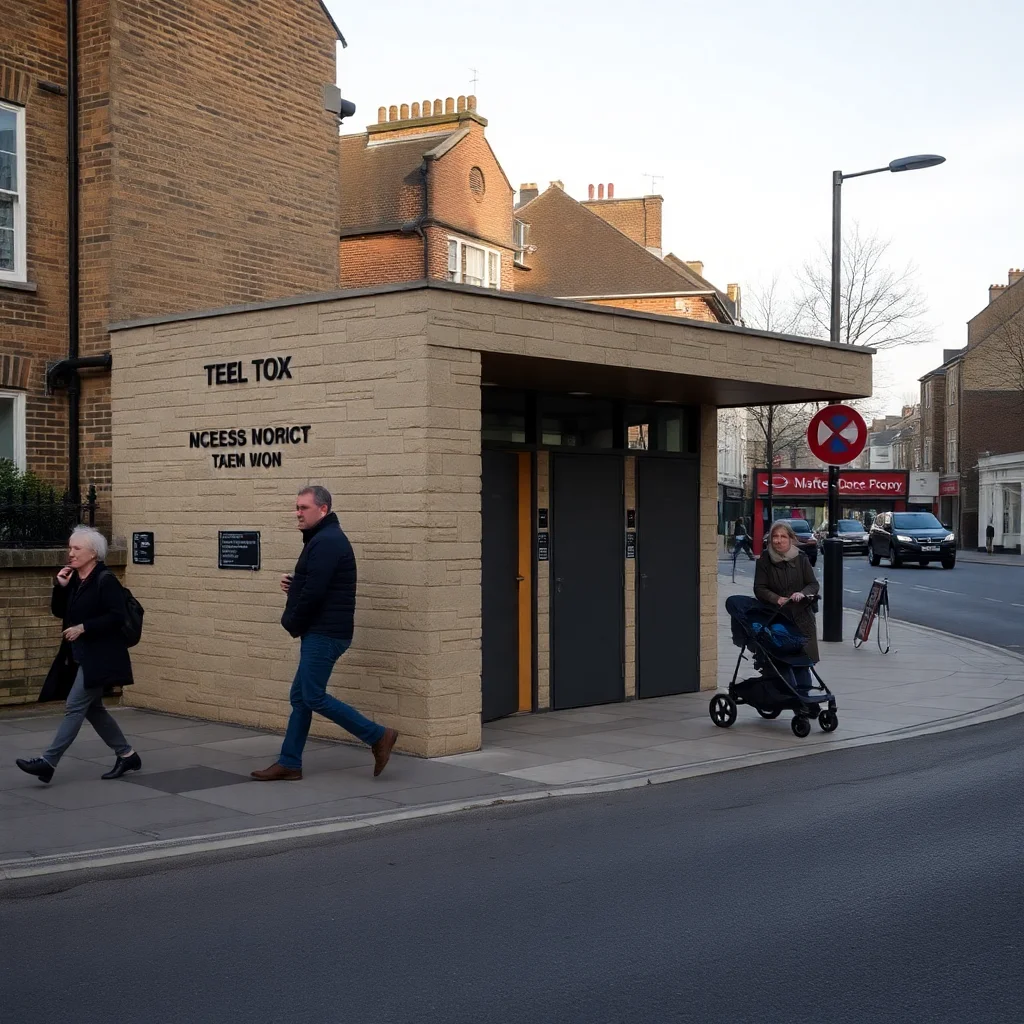
The public toilet is the most politically charged room in the city, precisely because it is so easily dismissed. It sits at the intersection of biology and bureaucracy, intimacy and access, care and control. In most cities, it is where civic promises go to disappear: locked doors, broken fixtures, hostile layouts, anti-homeless spikes by another name. That is why a new toilet block in Maida Hill, North Paddington, designed by Studio Weave for Westminster City Council, matters far beyond its modest footprint. Built with stone salvaged from a demolished office building, the pavilion does not merely replace a failing underground toilet. It stages an argument about what public architecture is for, and who it is meant to serve.
Call it a small building if you want. That would be technically accurate and morally evasive. Small buildings are where cities often reveal their true values, because there is nowhere to hide in a lavatory, a kiosk, a bus shelter, or a public bench. These are the spaces most likely to be value-engineered into submission and then blamed for the social problems they were never permitted to solve. But they can also become laboratories for a different urban ethic: one in which dignity is not an amenity, inclusion is not an add-on, and reuse is not aesthetic garnish but a civic discipline.
Why the toilet block is a democracy test
Democracy is often discussed as abstraction: voting systems, institutions, representation, public debate. Yet it is also lived through access to ordinary things. Can a parent with a stroller enter without hassle? Can an older person reach the door without descending into a damp underground chamber? Can a disabled person use the space without asking permission from hostile architecture? Can a person in distress, or without a fixed address, exist in the public realm without being treated as a threat?
That is why the Maida Hill project should be read not as a quaint local upgrade but as a civic test. The previous underground arrangement was difficult to access and, predictably, attracted antisocial behaviour. This is the urban lie we keep repeating: neglect creates disorder, then disorder is used as evidence that public investment is impossible. In reality, bad design produces its own social fallout. The answer is not punishment disguised as planning; it is architecture that makes care legible.
Studio Weave’s move is significant because it treats the toilet as a public building rather than a service afterthought. The difference matters. A public building says: this place belongs to you, and the city is willing to be judged on how it handles your basic needs. A service afterthought says: get in, get out, do not linger, and preferably do not notice the architecture at all.
Material reuse as civic language
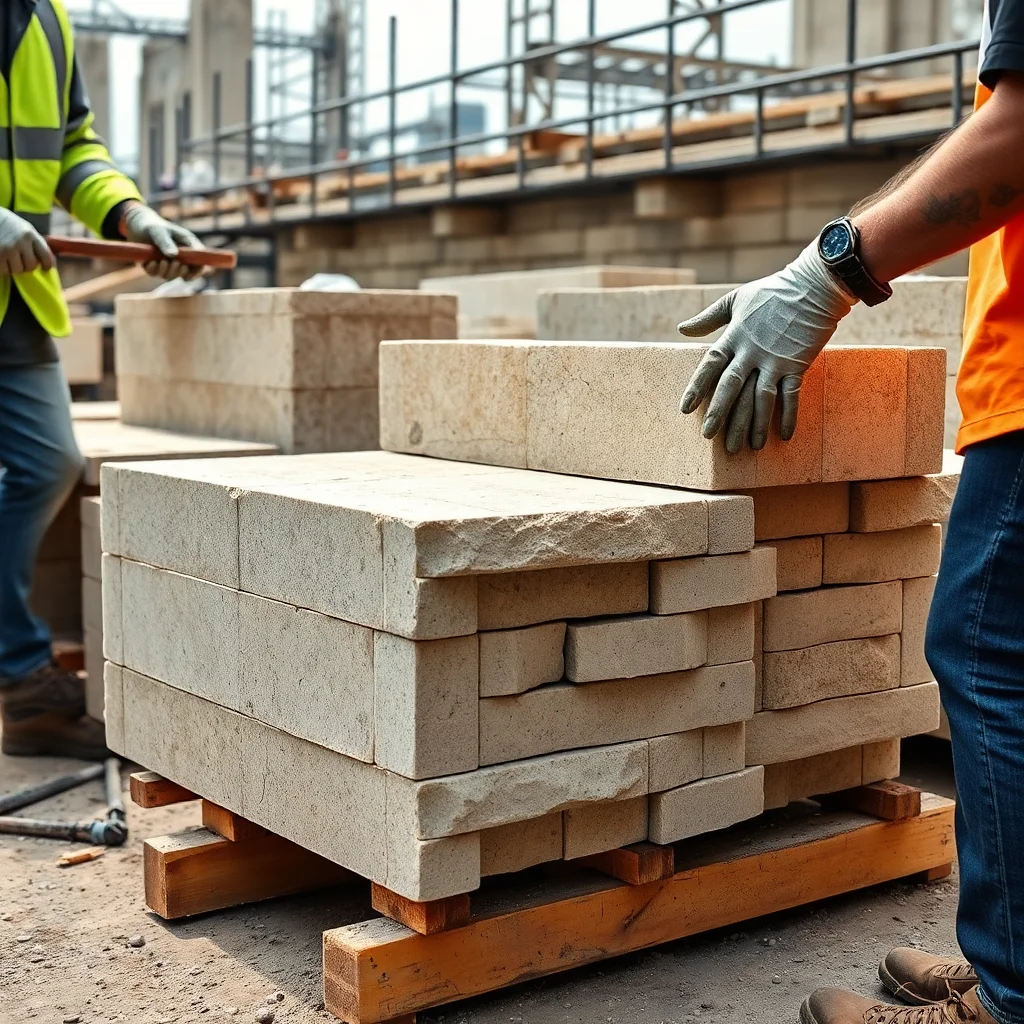
The reuse of stone from a demolished office building is not just an ecological gesture; it is a political one. Salvage has become fashionable across architecture, but too often it is framed as surface intelligence: a way to add texture, authenticity, or carbon conscience to a project. In a public toilet block, reused material becomes more pointed. It suggests that the city’s discarded matter still has value, and that public infrastructure can be built from what the commercial cycle throws away.
This is where the project sits in the lineage of serious reuse rather than decorative recycling. Think of Lacaton & Vassal’s insistence that demolition is often a moral failure before it is an economic one. Think of Assemble’s work with existing materials and everyday repair logics, where the right intervention is often the one that preserves more than it replaces. Or consider how Carlo Scarpa treated old and new as a productive tension rather than a clean break. Studio Weave’s toilet block belongs to that conversation, even if on a smaller scale: it gives the salvaged stone a new public life without pretending that reuse is neutral.
There is also a symbolic inversion at work. Offices are the architecture of administration, profit, and extraction from public space. Toilets are the architecture of bodily necessity and collective accommodation. To move stone from one to the other is to reroute the building economy’s leftovers into a structure of service. That is a powerful civic image, and one that architecture needs more often: not the heroic new object, but the redeemed fragment operating in the common good.
In that sense, the project also echoes the broader argument made by urban renewal without the grand plan: meaningful change often comes from modest interventions that repair everyday life rather than announce themselves as sweeping visions. The toilet block does exactly that, working at the scale where cities are actually felt.
When inclusion is designed, not declared
Too many public projects announce inclusion as branding while preserving exclusion in plan, threshold, and maintenance. The real question is not whether a building is “for everyone,” but whether it can handle difference without embarrassment. Public toilet design is unforgiving in this respect. If the entrance is hidden, the route is unclear, the lighting is poor, the finishes feel punitive, or the space invites surveillance more than use, then the rhetoric collapses.
This is where the lesson extends beyond one block in North Paddington. Inclusive design is not a matter of symbolic diversity; it is a matter of choreography. The approach, the door swing, the sightlines, the ease of cleaning, the durability of the surface, the readability of the plan, the relationship to the street: these are the politics. Projects such as the Changing Places movement in the UK have made the argument that accessibility means more than minimum compliance. Likewise, Jan Gehl’s urbanism has long insisted that the quality of public life depends on the dignity of small encounters, not grand masterplans.
A good public toilet does not merely avoid excluding people. It reduces the social penalty of having a body in public. That may sound modest, but it is revolutionary in cities that increasingly police comfort itself. We should be suspicious of any urbanism that celebrates sociability while denying the infrastructure that allows people to remain outside long enough to participate in it.
Seen from that angle, the project belongs in the same conversation as women’s-only sports venues and civic space, where design decisions shape who feels entitled to occupy public space in the first place. Inclusion is never just declared; it is built into thresholds, routines, and the everyday experience of belonging.
Against the cult of the invisible utility
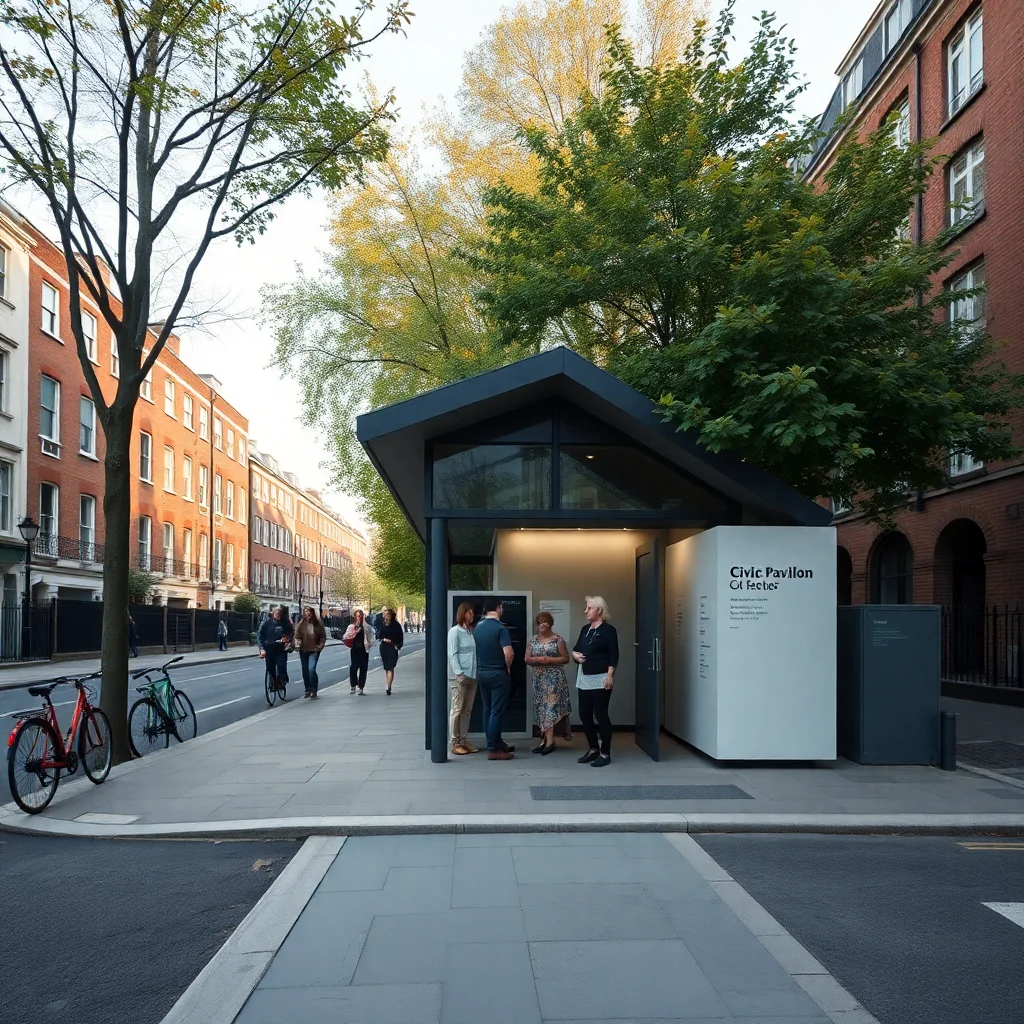
For decades, civic infrastructure has been trained to disappear. Toilets, substations, drainage works, refuse systems, storage rooms: these are typically asked to be mute, efficient, and visually obedient. But invisibility is not a neutral design goal; it often masks a refusal to invest imagination where the public need is greatest. If a building is there anyway, why should it not speak?
Studio Weave’s project suggests that an infrastructure building can be formally legible without becoming self-important. The point is not spectacle for its own sake. It is recognition. Citizens should know when the city has spent effort on their comfort. They should feel that the building has a face, a material presence, and a clear relationship to the street. That message matters most in neighborhoods where public amenities are routinely underfunded and then stigmatized as sources of nuisance.
There is a reason many of the strongest recent discussions around civic architecture have focused on tiny programs: public loos, kiosks, bike shelters, street furniture, modular libraries, even bus stop redesign. These are the places where design can still be read without layers of procurement theater. If architects want to argue that the built environment shapes belonging, they should be willing to prove it where the stakes are mundane and immediate.
That focus on atmosphere and daily perception is also why the project resonates with when architecture becomes atmosphere: the best civic spaces are not only functional, but felt. A public utility that communicates care can change how a street is experienced long before anyone names the architecture behind it.
The bigger urban question: can small buildings carry public trust?
The Maida Hill toilet block opens a larger challenge for architects, councils, and developers: can minor civic programs be elevated from afterthought to evidence of a city’s character? The answer should be yes, but only if public authorities stop treating maintenance as a nuisance and design as a luxury. A democracy that cannot fund toilets is a democracy announcing its own discomfort with embodiment.
Across Europe, the best civic interventions in recent years have understood that public dignity is cumulative. A well-handled square, a clear crossing, a generously scaled threshold, a seat in the right place, a toilet that feels safe: together these are not marginal gestures. They are the physical grammar of inclusion. The same logic appears in successful adaptive reuse projects, where the ethics of keeping, repairing, and reprogramming existing fabric often produce more social value than glossy replacement ever could.
So yes, one small building can carry weight. Not all the weight of democracy, because no building can substitute for policy, budgets, or political courage. But it can carry enough to expose whether those larger systems are sincere. That is the challenge and the opportunity of the public toilet: it is small enough to be ignored, and therefore powerful enough to reveal what a city really thinks about the people who use it.
- What this project proves: that material reuse can be an ethic of public service, not just carbon accounting.
- What it challenges: the habit of designing civic infrastructure to be hidden, neglected, and then blamed.
- What it asks of architects: to treat bodily needs as design priorities, not embarrassments.
- What it asks of cities: to fund the ordinary spaces where public life becomes credible.
FAQ
Why are public toilets such an important architectural issue?
Because they reveal whether a city is willing to support basic bodily needs in public. Their design shows how seriously a municipality takes accessibility, safety, maintenance, and dignity.
How does material reuse strengthen the civic value of a small building?
Reused material makes the building a visible statement about stewardship rather than waste. It connects environmental responsibility to public benefit instead of treating sustainability as a private aesthetic.
What makes a public toilet inclusive beyond legal compliance?
Inclusive design considers approach, legibility, lighting, cleanliness, accessibility, and the emotional experience of using the space. It should be easy to find, easy to enter, and easy to use without stigma.
Why do small civic buildings matter in architectural discourse?
Because they are among the clearest places to see whether design principles are real. In a small structure, there is less room for rhetoric and more pressure for the building to perform socially.
Get the Mainifesto weekly — curated design debates, speculative ideas and the week's best articles every Saturday.
Editorial Perspectives
Questions and counterpoints developed by the Mainifesto editorial desk to extend the discussion.
Perspective 1
A public toilet is one of the clearest tests of whether a city actually believes in equal access. If the design ignores maintenance, visibility, and safety, the rhetoric about dignity in the public realm is mostly decorative.
Perspective 2
People notice toilets immediately because they decide whether a place feels usable or hostile. If a city can't get that right, it’s telling visitors and residents that their time, comfort, and basic needs are low on the priority list.
Perspective 3
This is not a minor amenities issue; it’s a governance issue. A city that can’t deliver a clean, safe toilet is usually also failing at maintenance budgets, accountability, and the unglamorous systems that make public life possible.
Perspective 4
What interests me is that the toilet becomes a measurable interface between civic values and daily behavior. The open question cuts to the bone: if dignity isn’t designed into the smallest public threshold, then the larger realm is probably performing inclusivity rather than building it.
Perspective 5
We keep pretending public infrastructure is neutral, but toilets are where exclusion becomes material. A dignified toilet block says the city understands maintenance, memory, and use; a neglected one says public space is for display, not for people.