

Ferrari Luce and the Luxury Mobility Debate
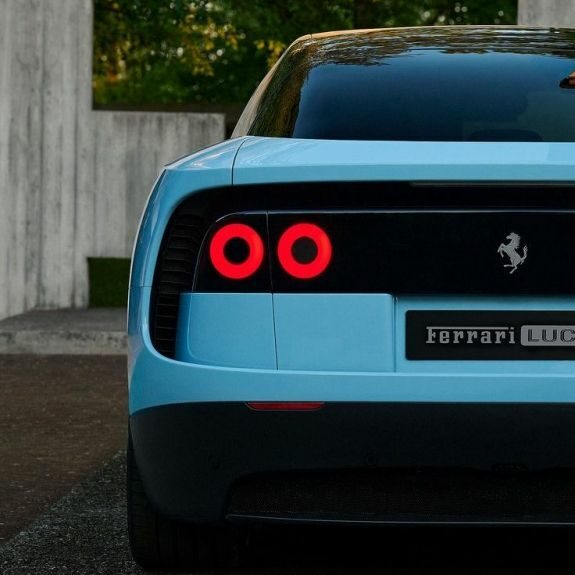
Ferrari has built a provocation, not just a car
Ferrari’s first electric model, the Luce, does what the best product design should do: it destabilises the category it enters. Unveiled in Rome and shaped with LoveFrom, the studio of Jony Ive and Marc Newson, the car is not merely an electrified replacement for a combustion icon. It is a manifesto in sheet metal and glass, arguing that the future of luxury mobility may be less about mechanical theatre and more about inhabitable comfort.
That is a dangerous proposition for a brand founded on speed, spectacle, and the myth of the driver as hero. The Luce introduces rear-hinged doors, a five-seat layout, and a sweeping glasshouse that makes the cabin feel more lounge than cockpit. In another category, these would be obvious upgrades. In a Ferrari, they read like a challenge to the company’s own identity. If a car can now accommodate family, conversation, and spatial ease, does it still belong to the cult of the red-blooded performance machine?
This is the real argument: Ferrari is no longer just selling acceleration. It is testing whether desirability in the EV era is measured by velocity or by the quality of the interior world.
PRO: the electric Ferrari as a total design object
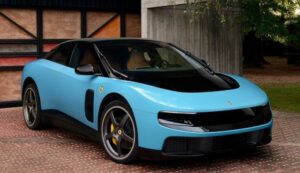
The strongest case for the Luce is that Ferrari finally recognises what many luxury brands have been slow to admit: in an electric future, the cabin is the product. When engines stop monopolising the emotional script, the architecture of seating, visibility, touchpoints, and interface becomes the primary theatre of desire. LoveFrom’s involvement matters precisely because Jony Ive and Marc Newson have spent decades turning objects into rituals. Their work at Apple taught an entire industry that interface is not decoration; it is the experience of trust, clarity, and restraint.
The Luce’s five-seat layout is radical not because it is oversized, but because it broadens Ferrari’s audience without immediately flattening its status. It suggests a grand touring logic closer to the elegant permissiveness of a luxury salon than the rigid isolation of a track tool. One can read this alongside the design intelligence of the Porsche Taycan, which proved that an electric performance car could still feel premium, and the Rolls-Royce Spectre, which framed silence itself as a luxury material. Ferrari is entering a conversation already opened by those cars, but it is choosing a more provocative route: not just quiet refinement, but sociable spaciousness.
The rear-hinged doors are especially revealing. They are theatrical, yes, but also functional in a way that changes how one enters and inhabits the car. They recall the ceremonial access of luxury limousines and the architectural gesture of an opening that makes space feel generous rather than defensive. In design terms, that is not a compromise. It is a declaration that the Ferrari owner of the future may want arrival to feel as curated as performance.
That logic also echoes broader conversations in why iconic objects still rule design culture, where recognisability and authorship remain powerful even as technology changes the terms of value. Ferrari seems to be betting that the badge still matters, but only if the object beneath it feels newly legible.
PRO: Jony Ive’s language makes the interface the new engine note
For decades, Ferrari has cultivated a sensory hierarchy dominated by sound, vibration, and the emotional violence of the combustion engine. But electric mobility forces a different kind of charisma. The Luce’s design language, shaped by LoveFrom’s instinct for disciplined surfaces and minimal visual noise, suggests that the new engine note may be interface itself: the sequence of touch, light, response, and spatial calm that defines the driver’s relationship to the machine.
This shift is not trivial. The best product design of the last twenty years has moved from ornament toward orchestration. Think of how Apple turned the smartphone into a landscape of gestures, or how Dieter Rams’ logic at Braun redefined technological dignity through reduction. Ferrari, by collaborating with LoveFrom, appears to be chasing a similar form of authority: not the noisy declaration of power, but the confidence to remove excess and let precision speak. In a world where EVs often look interchangeable, this level of authorship is a competitive weapon.
And yet, this is where the Luce becomes more than branding. A Ferrari interface designed with Jony Ive’s sensibility could force the industry to confront a deeper question: if speed is no longer the only emotional currency, what replaces it? The answer may be tactility, legibility, and a kind of quiet drama that transforms everyday use into an elevated ritual. The car becomes less about a singular heroic drive and more about repeated, intimate encounters.
CONTRA: a Ferrari that risks becoming too polite
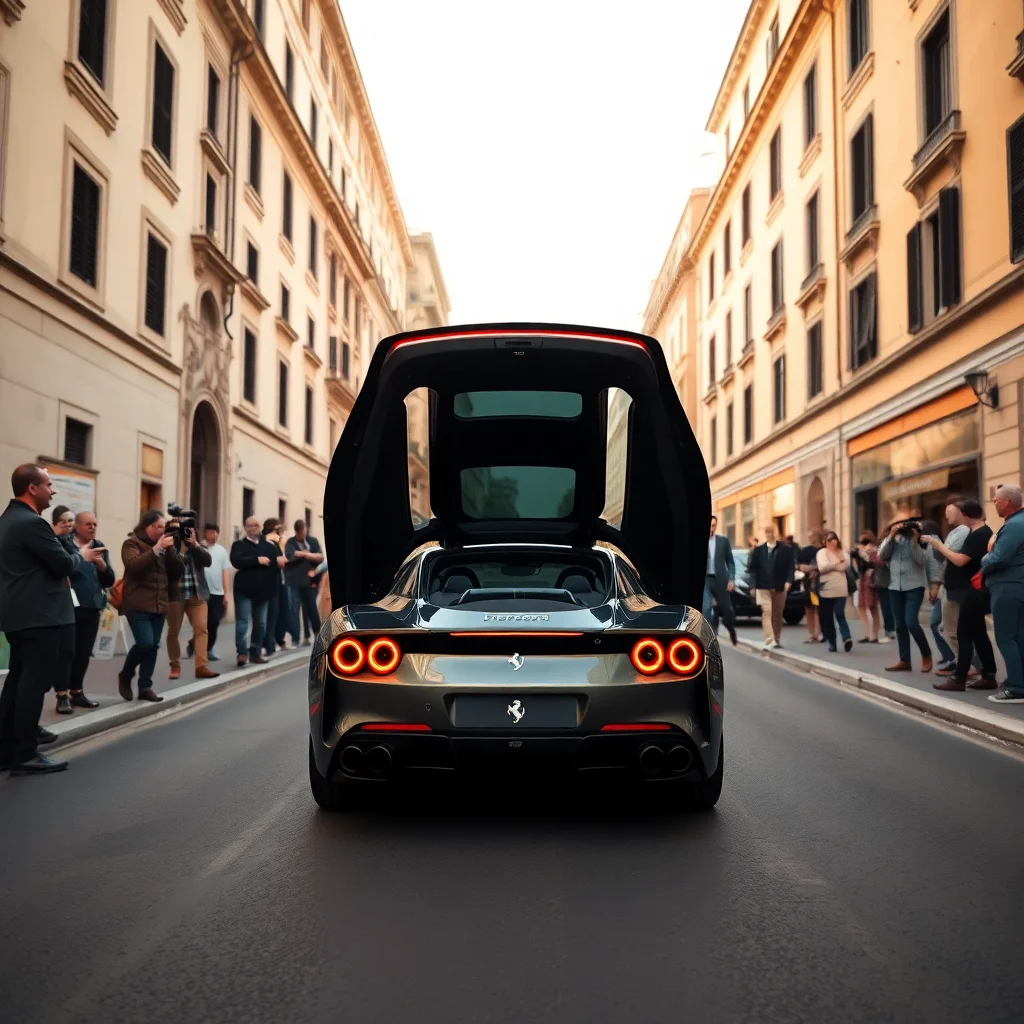
But there is a reason enthusiasts will bristle. Ferrari is not Bentley, and it is certainly not a Scandinavian furniture showroom on wheels. The brand’s aura has always depended on a certain compressive intensity: limited space, focused ergonomics, and the sense that the car is a machine that asks something of you. A five-seat configuration and a broad glasshouse may improve comfort, but they also threaten to dilute the singularity that makes a Ferrari feel special in the first place.
The danger is not simply that the Luce becomes luxurious. The danger is that it becomes generic in the wrong way — a premium EV with a famous badge, but without the taut aggression that has made Ferraris unforgettable. Rear-hinged doors can signal welcome, but they can also signal theatricality without necessity. The same goes for a large, airy cabin. Space is not automatically sophistication; sometimes it is just space. If the brand’s emotional core has been translated into a softer, more domestic register, the car may end up pleasing design critics while unsettling its most loyal drivers.
This is where the comparison to other luxury EVs becomes critical. The Taycan succeeded because it kept Porsche’s athletic grammar intact. The Spectre succeeded because Rolls-Royce never pretended to be a sports car. Ferrari, however, is entering with a more dangerous contradiction: it wants to be both a performance icon and an inhabitable object. That tension could produce genius, but it could just as easily produce indecision.
CONTRA: the living-room temptation may be the wrong future for Ferrari
The phrase “living room on wheels” sounds seductive because it captures a cultural shift already underway: cars are becoming places where we sit, work, wait, and retreat. But for Ferrari, that might be precisely the wrong model. A living room is defined by permanence, relaxation, and social looseness. A Ferrari is supposed to be the opposite: urgent, focused, and slightly dangerous. The more the cabin resembles domestic comfort, the more the brand risks losing the friction that produces desire.
There is also a broader industry problem hidden inside this design move. As EVs converge on similar platforms, brands often try to differentiate themselves through interior hospitality — better screens, larger glass areas, softer materials, more seats, more convenience. Yet mobility does not automatically become more meaningful when it becomes more domestic. Sometimes the most powerful design statement is refusal. Ferrari could have doubled down on radical lightness, the sort of extreme discipline associated with Gordon Murray’s engineering philosophy, or the purposeful sparsity of a racing cockpit. Instead, it seems to be betting that indulgence can carry the brand forward.
That gamble may succeed commercially. But culturally, it changes Ferrari’s position. The company once sold the fantasy of mastery over motion. The Luce suggests a new fantasy: mastery over atmosphere. That is a fundamentally different promise.
It also places Ferrari in the same territory explored by When Architecture Learns to Wait, where spaciousness and stillness are treated as aesthetic values rather than mere comforts. The problem is that a car brand built on velocity may not be able to borrow those values without muting its own voice.
The deeper issue: who is the Ferrari driver now?
The most interesting thing about the Luce is not whether it is beautiful, and not even whether it is fast enough. It is the implied redefinition of the Ferrari customer. A five-seat EV designed with LoveFrom does not simply attract the old collector who wants another red object in the garage. It speaks to a more hybrid lifestyle: the executive, the design-minded family, the urban buyer who wants the emotional prestige of Ferrari without the social or physical inconvenience of a strict two-seat supercar.
That shift mirrors what has happened across design culture more broadly. Products are no longer judged only by performance specifications, but by how seamlessly they integrate into the textures of life. The best kitchens, headphones, watches, and electric cars all now compete on the same terms: emotional clarity, material intelligence, and the ability to make user behaviour feel effortless. Ferrari may be wise to notice this. The risk is that, in trying to become more livable, it loses the abrasion that made it legendary.
In that sense, the Luce is a test of whether heritage can survive comfort. Can Ferrari become a place one inhabits, not just a machine one commands? Or does inhabitable luxury, once fully embraced, erase the very extremity that made the badge matter?
That tension is familiar to anyone following can a sports car still be an object of desire in the age of proof, where emotional attachment has to compete with evidence, usability, and shifting definitions of performance.
FAQ
Is Ferrari’s first EV still a real Ferrari? It depends on whether you believe Ferrari is defined by engine character or by emotional intensity. If the brand’s identity lives in speed, drama, and design authority, the Luce can still qualify even without combustion.
Why does the five-seat layout matter so much? Because it changes the social logic of the car. Ferrari has traditionally sold scarcity and driver focus; five seats imply a broader, more inhabitable luxury experience and a new kind of customer use.
What does Jony Ive bring to the project? A language of restraint, clarity, and ritual. His influence suggests that the Luce may treat interface, touch, and spatial calm as central parts of the driving experience rather than afterthoughts.
Could this set a new standard for luxury EVs? Yes, if Ferrari proves that a performance brand can make comfort feel as emotionally charged as acceleration. If it succeeds, the Luce may push luxury mobility toward architecture, not just horsepower.
What Ferrari is really asking the market
The Luce is not just a vehicle launch. It is a philosophical split screen between two futures of mobility. One future still worships speed as the ultimate sign of engineering seriousness. The other treats the car as an inhabitable interior, a moving room whose value lies in comfort, control, and design intelligence. Ferrari has chosen to stage that conflict in public, and that is why the car matters.
Whether the Luce becomes a triumph or a betrayal will depend on whether buyers accept a Ferrari that is less predatory and more domestic, less visceral and more refined. The company has made its move. Now the only question is whether the world wants Ferrari as a performance icon, or Ferrari as a luxury environment — and whether those two things can still be the same object.
Can Ferrari remain Ferrari if the future of desire is no longer speed, but space?
Get the Mainifesto weekly — curated design debates, speculative ideas and the week's best articles every Saturday.
Editorial Perspectives
Questions and counterpoints developed by the Mainifesto editorial desk to extend the discussion.
Perspective 1
If Ferrari becomes a living room on wheels, I’d call that a loss of discipline. Luxury should be felt in the precision of the object, the honesty of its materials, and the way it serves the body — not in how many soft surfaces it can imitate.
Perspective 2
I don’t see the point of turning a car into a lounge when cars are already expensive, heavy, and too often overcomplicated. If Ferrari wants to stay relevant, it should focus on usability, range, and ownership costs — not selling a fantasy that looks good in a render.
Perspective 3
This feels less like surrender and more like a necessary pivot. If performance can be redefined through quiet power, cleaner systems, and a better relationship to the city, Ferrari could actually expand what luxury means instead of repeating the old track-only script.
Perspective 4
The real question is whether Ferrari is designing for a future mobility system or just rebranding comfort as innovation. In cities already choking on congestion and land-use absurdity, a luxury EV has to prove it does something beyond becoming a high-end private room in public space.
Perspective 5
I’d judge it by what it’s made of and how long it lasts, not by whether it feels like a lounge. If Ferrari’s EV reduces impact, uses repairable components, and respects the life cycle of the product, then evolution is the right word.