
The Office Returns on Sound and Privacy
PRO: The office is not dead; it was simply made unbearable
Framery’s latest message lands because it names the real failure of the open-plan era: not flexibility, but noise. For years, workplaces were stripped down in the name of collaboration, then employees were told to improvise concentration through headphones, performative desk etiquette, and an almost absurd tolerance for interruption. The return to the office, in this light, is not a nostalgic rebound. It is a demand for acoustic dignity and for the basic right to think without being publicly overheard.
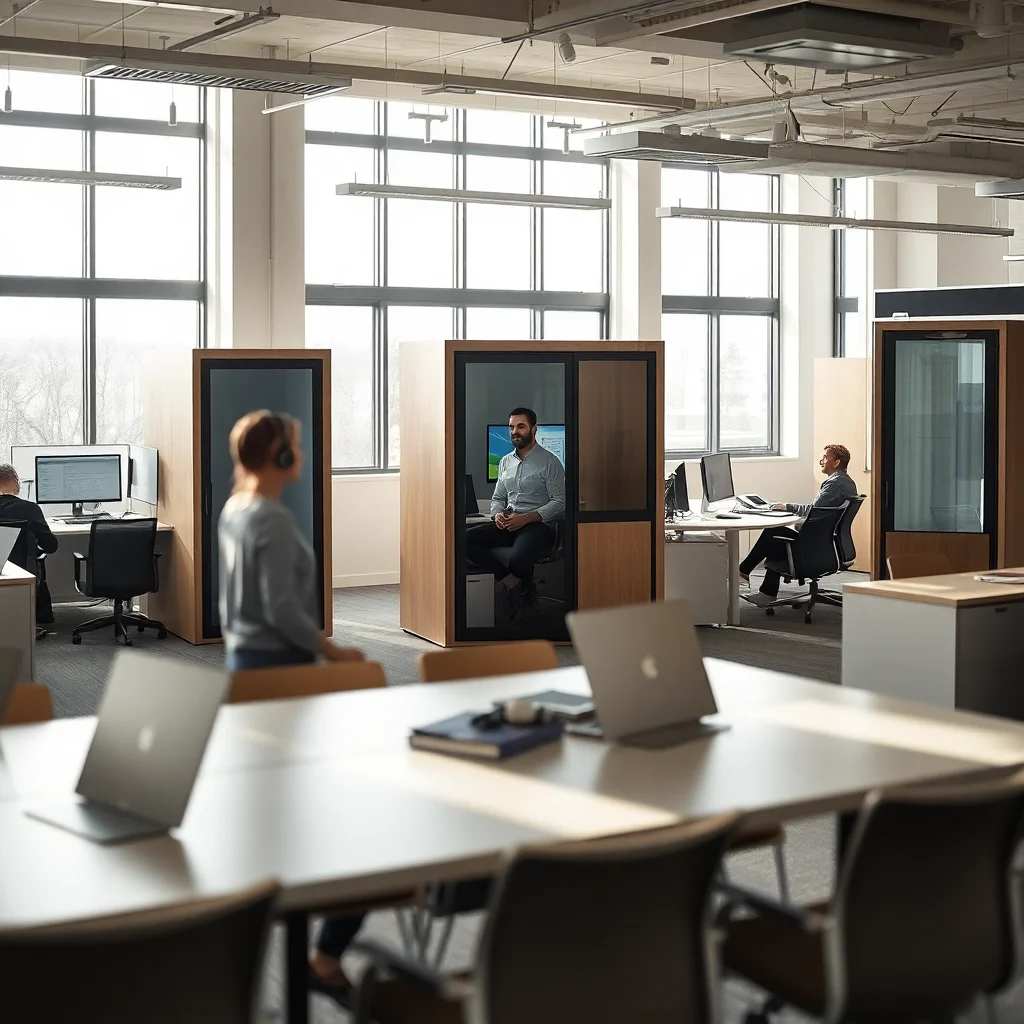
That demand is increasingly visible across the market. Quiet rooms, focus booths, and modular phone pods have moved from fringe accessories to core infrastructure, and Framery’s pitch from Tampere is a sharp example: if you make the office work acoustically, people will come back voluntarily. The claim that 400 employees are returning without a hard attendance rule is not a triumph of corporate discipline; it is evidence that the office has been redesigned around a humane premise. Workplaces such as Microsoft’s New York hub, Deloitte’s hybrid campuses, and the proliferating “library” zones in post-pandemic headquarters all point in the same direction: privacy is no longer a perk. It is the currency of participation.
Trigger: The new workplace bargain is built around choice
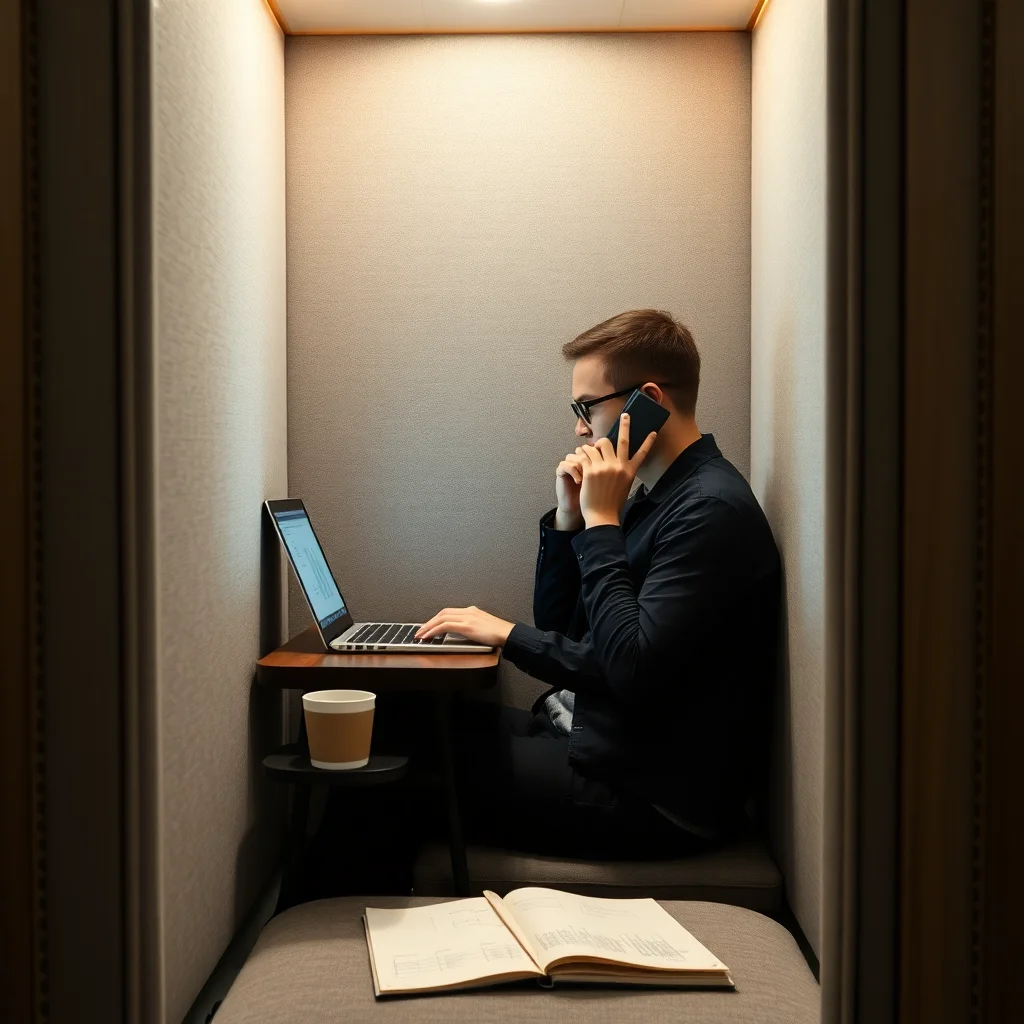
The deeper shift is not simply that employees want silence. It is that they want control over when to be available and when to disappear. The most persuasive offices of the moment are those that acknowledge a basic truth the open plan denied: creative and administrative work are not performed in the same acoustic condition. A sales call, a sensitive HR conversation, a design review, and a half-hour of strategic writing all need different spatial settings. The office becomes appealing again when it offers a menu rather than a mandate.
This is why the current boom in booths and pods feels larger than product design. It is a rebuttal to a managerial ideology that treated exposure as productivity. In a world of hybrid schedules, the office must now justify itself against the home, the café, and the train carriage. The winning argument is no longer proximity alone, but autonomy. A place where one can choose solitude, collaboration, or retreat on demand has a stronger claim to relevance than a vast field of desks pretending to be social.
PRO: Better tools can fix what architecture got wrong
There is nothing cynical about a tool that genuinely improves conditions. Soundproof booths from manufacturers like Framery, along with office ecosystems from brands such as Hushoffice, Zenbooth, and Nook, are not gimmicks; they are spatial corrections. They absorb what the open plan exported into the human nervous system: distraction, glare, surveillance, and the constant possibility of being interrupted. In that sense, the pod is a design apology made physical.
Architecture has always adapted to the failure of previous ideals. The 20th-century office went from cellular rooms to open landscapes, and now is moving toward layered interiors that resemble civic buildings more than factory floors. The best recent examples understand this. In Herzog & de Meuron’s interiors for the VitraHaus additions, or in workplace projects by Gensler and Studio 9, one sees a renewed attention to thresholds, retreat, and the microclimates of work. The pod is not the whole solution, but it is the right kind of solution: reversible, compact, and specific. It addresses a problem that sweeping floorplates could not solve.
More importantly, acoustic privacy changes behavior. People speak more freely when they are not performing for an audience. Concentration becomes less theatrical. Sensitive work can happen without migrating to the stairwell or the car park. In this respect, the office booth is a democratic object: it restores to ordinary workers what only senior staff once had behind closed doors.
That same logic is visible beyond offices too, especially in spaces where comfort has become a form of recovery. As explored in When Interiors Become Repair Mechanisms, the best interiors increasingly operate like systems for restoring attention rather than merely displaying taste. The pod is part of that broader shift.
CONTRA: A pod is not culture, and it may be a beautifully upholstered symptom
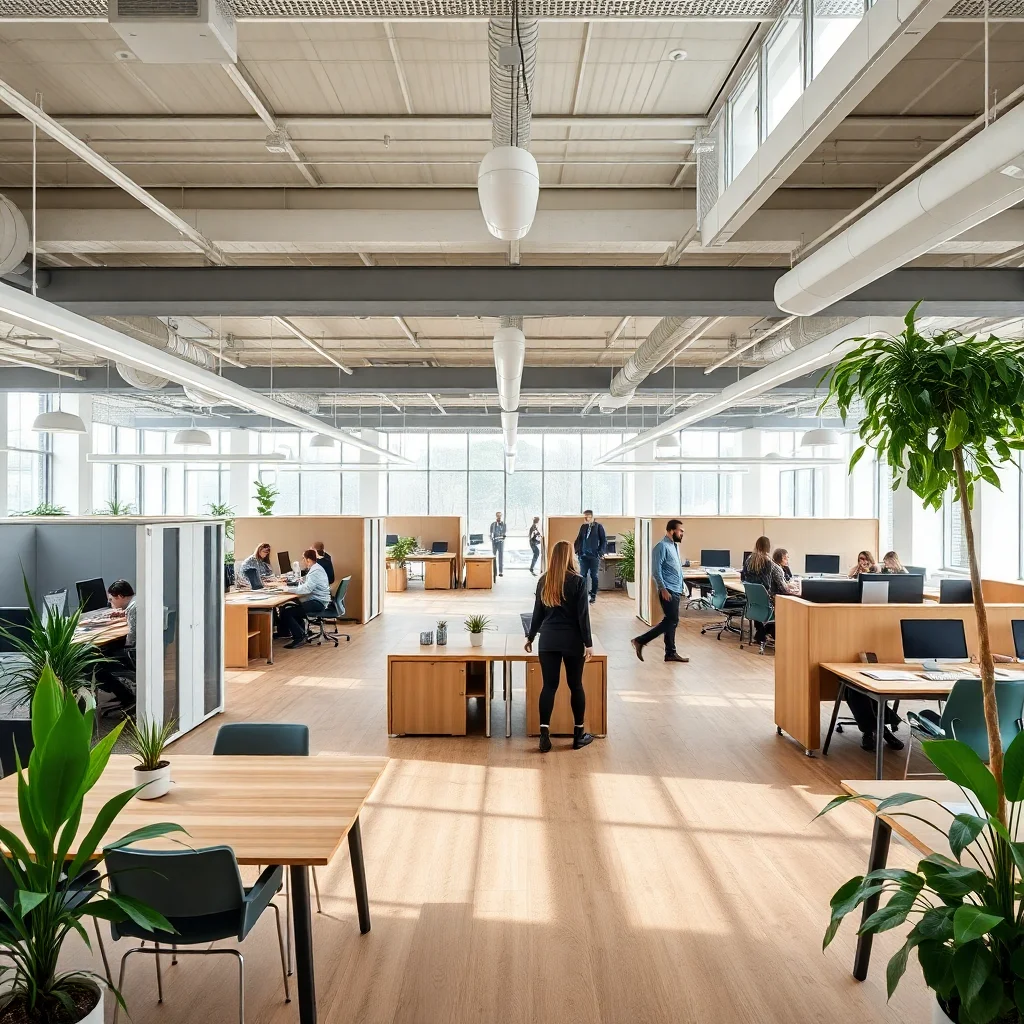
And yet the applause should stop at the product brochure. The rise of booths and pods can also be read as an admission that the office has failed at a more fundamental level. If a workplace must be retrofitted with dozens of miniature sanctuaries, what exactly was the original design optimizing for? Cheap density? Visibility? A managerial fantasy of spontaneous innovation? The pod can look less like progress than a costly workaround for a bad plan.
This is where the industry’s rhetoric becomes suspicious. “Giving people the right tools” is a seductive phrase because it shifts responsibility from organizational culture to equipment. But bad meeting culture does not disappear inside a booth. Nor does overwork, performative responsiveness, or the pressure to be continuously legible to supervisors. Acoustic privacy can protect a conversation; it cannot guarantee trust. A company may install 400 pods and still maintain a culture of interruption, presenteeism, and burnout. The technology resolves the symptom while leaving the disease intact.
There is also a spatial inequality embedded in the pod boom. The most prestigious workers get quiet rooms, while others remain in a noisy field of calls, messaging, and movement. In that sense, the booth can reinforce hierarchy even as it claims universality. It may be the contemporary office’s version of first class: a premium enclosure inside a supposedly egalitarian system. The question is not whether a pod is useful. It is whether its usefulness is being used to excuse a workplace that should have been redesigned more radically in the first place.
PRO: The office is becoming an acoustic landscape, not a single room
The most convincing argument for this new office model is that it finally rejects the fantasy of universal space. Workplaces are not more alive because everyone hears everyone else; they are more alive when sound is choreographed. The future office is not a giant conversation pit. It is a sequence of conditions: open zones for encounter, enclosed pods for calls, soft nooks for reading, and shared tables for brief collisions. This is an interior logic closer to a hotel lobby, a library, or a museum than to the old bullpen.
Designers have been moving in this direction for years. Workplace strategies by Neri&Hu, Ilse Crawford, and HOK increasingly treat comfort as infrastructural rather than decorative. Material choices matter here: upholstered surfaces, baffles, felted finishes, and timber slats are not aesthetic flourishes but tools for shaping audibility. The office that returns on the basis of sound is also the office that admits atmosphere is not a luxury. It is a performance condition.
Seen this way, Framery’s pitch is less about pods than about a corrected social contract. Employees do not want to be managed into attendance; they want environments that respect their attention. That is a much tougher challenge for employers, because it forces them to spend money on dignity rather than symbolism. But it is also the only serious argument for the office in 2026: if you want people to come in, make the place materially better than staying home.
CONTRA: The pod era may slow the urgent reckoning the office still needs
Still, the danger is complacency. Once the industry can point to a wall of sleek capsules and declare the problem solved, it may avoid asking harder questions about density, commuting, energy use, and the social purpose of gathering in the first place. A booth can make an office tolerable without making it meaningful. It can preserve the ritual of attendance while leaving the underlying logic of work untouched.
That is why the resurgence of privacy infrastructure should be read with suspicion as well as admiration. Are companies investing in better interiors because they have learned from the chaos of open plan, or because modular fixes are cheaper than rethinking how and why space is used? There is a difference between making workers comfortable and making them stay. The first is ethical. The second is tactical. Too many workplaces are confusing the two.
Ultimately, the return of the office on the terms of sound and privacy is a corrective, not a resolution. It suggests that employees will come back when workspaces stop behaving like fish tanks. But it also exposes how much damage the last design regime did by treating openness as an ideological good. The new office may be quieter, softer, and more selective. The real test is whether it also becomes more honest.
FAQ
Why are office pods and booths suddenly so popular?
Because hybrid work made concentration and private calls non-negotiable. Companies are realizing that acoustic privacy is one of the few office features people will actively travel for.
Do booths solve the problems of open-plan offices?
Only partly. They improve focus and privacy, but they do not fix poor management, constant messaging culture, or the social pressure to be always available.
Is Framery’s success unique?
No. It reflects a wider shift across workplace design, where quiet rooms, focus spaces, and modular enclosures are becoming standard in premium offices.
Are pods a sign of better office culture or a workaround?
Both. In strong workplaces, they are a genuine improvement. In weak ones, they can become a polished bandage over deeper design and cultural failures.
List: Six lessons from the acoustic office comeback
- Privacy is now a workplace feature, not a luxury. The modern office must offer spaces for calls, thought, and recovery, not just visibility. Employees increasingly judge offices by whether they can actually work there.
- The open plan has lost its moral authority. Once sold as collaborative, it is now widely understood as noisy, surveillant, and psychologically draining. Its legacy is a generation of workers who equate office time with interruption.
- Booths are an infrastructure fix. Products from companies like Framery, Hushoffice, and Zenbooth address the immediate acoustic failure of open offices. They are practical, but they also reveal how badly the original planning went.
- Design alone cannot repair culture. A quiet pod does not end burnout, coercive attendance, or bad meetings. If the organizational logic remains broken, the furniture only makes the dysfunction more comfortable.
- The best offices now behave like landscapes. Successful workplaces mix open, semi-open, and enclosed zones so that sound, privacy, and social contact can all coexist. This is the new baseline of serious interior design.
- The real question is political, not just spatial. Are companies building better offices to support autonomy, or to extract attendance more efficiently? That distinction will determine whether the pod boom marks progress or merely a more elegant form of control.
Open question: If the office returns only when it finally protects silence and privacy, are we witnessing a genuine correction of workplace culture—or just a sophisticated patch on a design failure that should never have happened?
Get the Mainifesto weekly — curated design debates, speculative ideas and the week's best articles every Saturday.
Editorial Perspectives
Questions and counterpoints developed by the Mainifesto editorial desk to extend the discussion.
Perspective 1
This feels less like a correction than a long-delayed return to basic dignity. Offices were stripped of thresholds, pauses, and acoustic refuge in the name of efficiency, and now we’re pretending pods are a breakthrough rather than a repair kit for a bad ideology.
Perspective 2
If a workplace needs booths and pods to make people tolerate being there, that’s not a culture win—it’s a design workaround for management failure. Silence and privacy matter, sure, but they shouldn’t be the premium add-on that proves the office finally learned how humans work.
Perspective 3
The evidence on open-plan offices has been messy for years: collaboration claims are easy, but noise and distraction are harder to ignore. So yes, acoustic fixes can improve the office, but calling that a cultural correction is too generous unless the organization also changes how it schedules, supervises, and shares space.
Perspective 4
From a developer’s point of view, this is a practical correction, not a philosophical one. If people come back because the building finally gives them places to call, think, and not be overheard, then the design has earned its keep—even if the original fit-out got the basics wrong.