

The Return of Soft Architecture
Architecture Has Become Too Hard for the Climate We Now Live In
For more than a century, architecture has been trained to behave like geology: heavy, permanent, defensive, and proudly indifferent to mood. Concrete became morality. Steel became inevitability. Glass became transparency theater. But the climate crisis has exposed the arrogance of this logic. Cities now need shelters that can adapt to heat, flood, crowding, boredom, grief, celebration, and repair. In that context, softness is not decorative weakness; it is a tactical refusal of the obsolete cult of permanence.
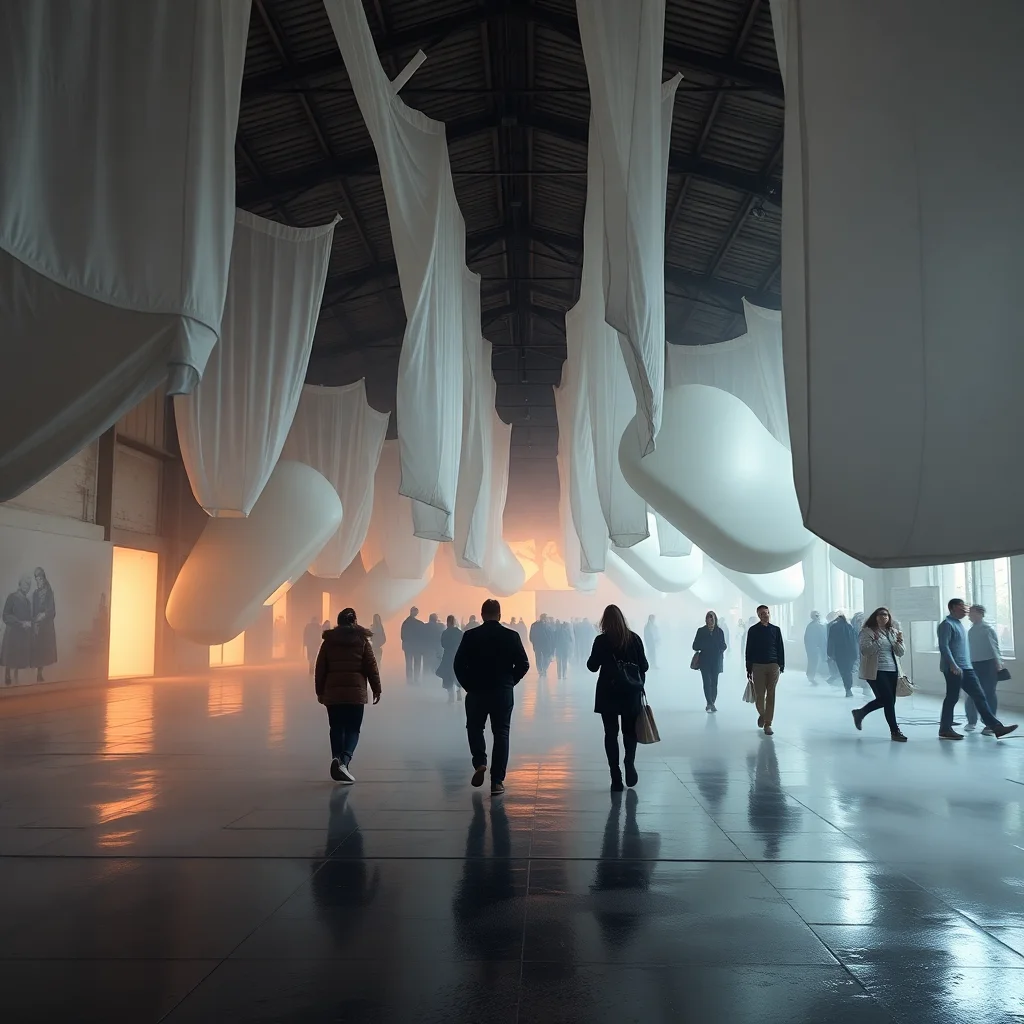
The return of soft architecture is not a nostalgic revival of tents and pavilions. It is a reprogramming of space through air, membrane, suspension, and atmosphere. The original designboom context around artists and architects using inflatables, fog structures, and suspended worlds makes the point forcefully: air is no longer a void around architecture, but a medium of construction. Once air becomes structural, architecture can become porous, temporary, and emotionally tuned to the people inside it.
This shift matters because the future city will not be judged only by how much it can withstand, but by how intelligently it can modulate experience. A soft room can cool a square, dampen a crowd, absorb noise, invite play, or create ritual. That is a serious spatial language, not a gimmick. The question is no longer whether softness is architectural. The real question is whether hard architecture has become the exception. This perspective also connects to broader debates about how architecture reveals its ecology, rather than disguising its environmental costs behind polished surfaces.
From Inflatable Utopias to Atmospheric Protest
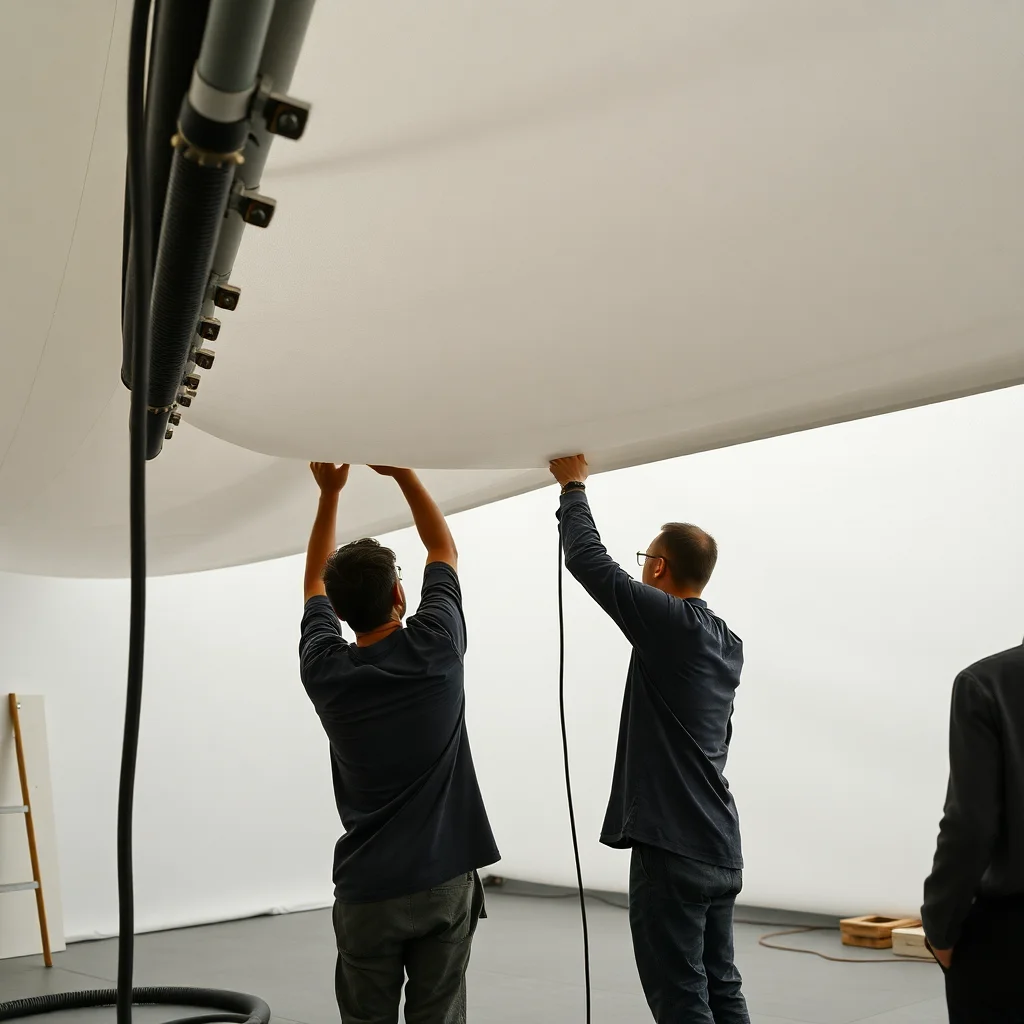
Soft architecture has a history sharper than many architects would like to admit. In the 1960s and 70s, groups such as Archigram and Ant Farm treated inflatable environments as counter-design, a challenge to the authoritarian monument. Their proposals—mobile pods, instant cities, and pneumatic fantasy—made a radical claim: buildings should be as changeable as culture. These were not merely playful forms; they were anti-bureaucratic propositions about freedom, movement, and collective inhabitation.
That lineage continues today in work that is less about sci-fi spectacle and more about atmospheric agency. A.A. Murakami, for instance, has made fog, vapor, and suspended kinetic elements feel like spatial protagonists rather than effects. Their installations transform the room into an event of weather. Similarly, the use of inflatable architecture in festivals, exhibitions, and emergency contexts has moved from novelty toward practice. Air structures are fast, lightweight, and logistically democratic; they can be deployed where permanent buildings are too slow, too expensive, or too politically impossible.
What changes in this transition is the aesthetic argument. Earlier inflatable culture often sold liberation through novelty. Today, softness is tied to resilience, participation, and care. In an era of heat waves and overstressed public interiors, atmospheric architecture can function as a civic interface. It can invite bodies in without demanding submission. It can also make environmental conditions visible, turning comfort itself into a designed experience rather than an invisible privilege.
Fog, Membrane, and the Architecture of Uncertainty
Fog is one of the most radical materials in contemporary spatial practice because it denies the stable outline that architecture usually depends on. In a fog-based environment, edges dissolve and perception becomes active. This is not just aesthetic ambiguity; it is a re-education of the body. You move differently when the room is incomplete. You listen more closely. You slow down. You become aware that space is not only what is built, but what is sensed.
That makes atmospheric works especially potent in an era dominated by hypervisual urbanism. Cities are increasingly designed for image circulation: clean façades, branded plazas, iconic silhouettes. Fog and soft membranes oppose that regime by refusing the crisp, sellable contour. They create conditions rather than objects. In the language of performance and installation, this is where architecture becomes temporal art. But unlike a gallery gesture, these atmospheres can also indicate practical futures: shading canopies that ripple with wind, mist systems that cool pedestrian zones, pneumatic roofs that open and close with weather.
In speculative terms, softness introduces uncertainty as a feature rather than a flaw. That is politically important. Hard architecture often pretends to resolve every problem in advance. Soft architecture admits that the world is unstable and designs for that instability. It does not promise finality. It promises responsiveness. The more volatile the climate becomes, the more valuable this honesty looks.
The Public Realm Needs Atmosphere, Not Just Infrastructure
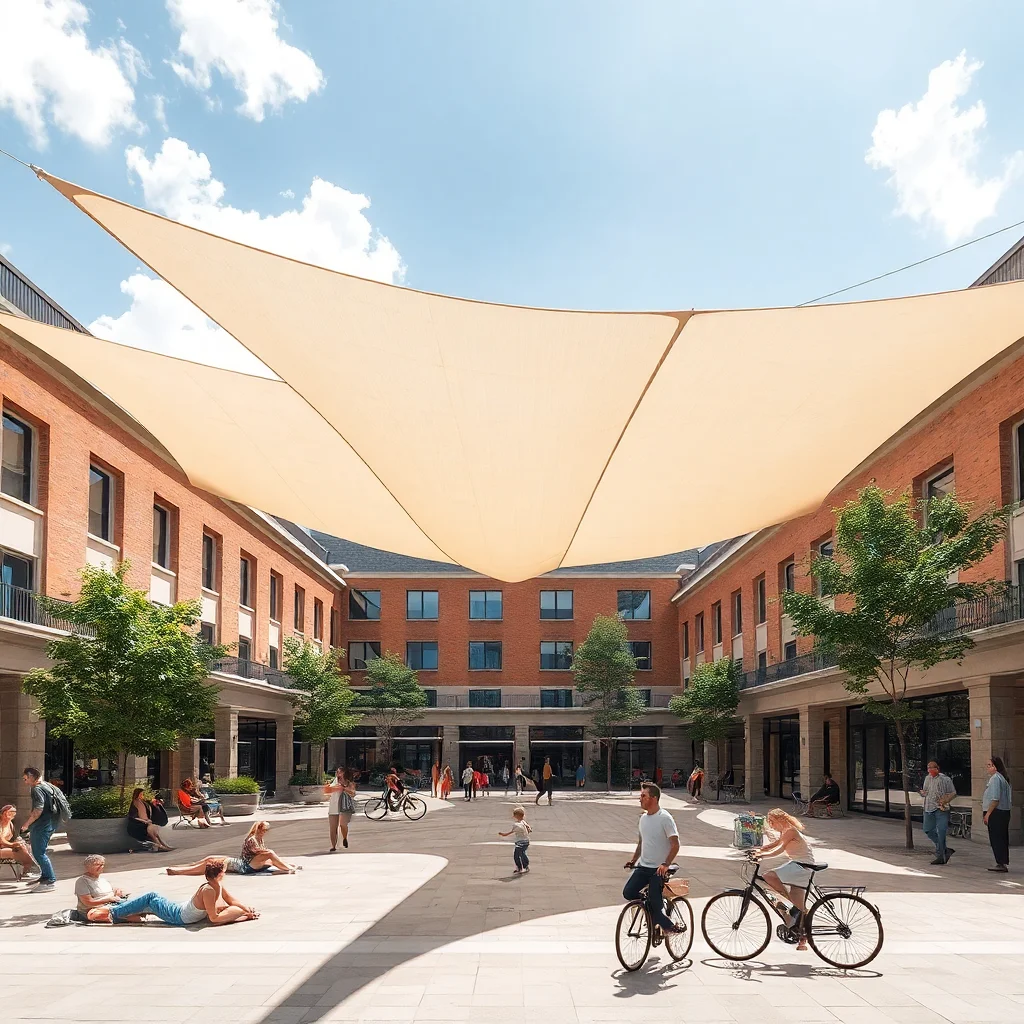
If architecture is to matter beyond elite interiors, softness must prove itself in the public realm. This is where the concept becomes more than a poetic exercise. Consider how inflatables and suspended systems can reshape plazas, stations, schoolyards, waterfronts, and emergency shelters. Their value lies in speed of deployment, low material intensity, and the ability to transform a space without erasing its previous life. A hard building replaces. A soft intervention overlays, amplifies, or temporarily reprograms.
That distinction is crucial for climate adaptation. Urban heat islands, sudden storms, and shifting patterns of public gathering call for structures that can behave more like responsive equipment than fixed architecture. Shade canopies in tensile fabric, mist corridors in hot cities, and temporary pavilions for cultural congregation are already testing this logic. They do not solve the climate crisis, but they make survival more breathable. They also allow the city to offer dignity during conditions of stress, rather than only resistance.
There is a deeper cultural issue too. Public space has become over-scripted by surveillance and overbuilt by infrastructure. Soft architecture offers a counter-model of shared ambiguity. It can host rituals, protests, performances, and care networks without reducing every use to a single program. In this sense, softness is not anti-public; it is anti-rigid. It makes room for collective improvisation, which may be the most underdesigned civic resource of all. For cities thinking about long-term support systems, this overlaps with questions raised by the future of aging at neighborhood scale, where care, access, and adaptability must be built into everyday environments.
Why the Industry Still Distrusts Softness
For all its promise, soft architecture still triggers suspicion inside the profession. Architects are taught to valorize durability, legibility, and control. Soft systems can appear flimsy, temporary, or unserious—dangerous adjectives in a field obsessed with liability. There is also a deeper prejudice at work: softness is often feminized, treated as secondary to the supposedly rational world of hard construction. That bias has shaped the discipline for decades.
Yet this skepticism is partly rooted in outdated assumptions about performance. Modern membranes, textile composites, pneumatic supports, and hybrid suspended systems are not the fragile novelties their detractors imagine. They can be engineered for load, weather, and long-term maintenance. The real weakness is often conceptual: architects struggle to accept that an emotionally responsive environment can be technically rigorous. In reality, softness requires precision. A fog field must be calibrated. An inflatable must be safe. A suspended canopy must negotiate tension, movement, and failure. There is nothing casual about that.
The stronger objection is ideological. If buildings can be temporary, adaptable, and demountable, then architecture loses some of its old authority as a monument to ownership and permanence. That is precisely why softness matters. It redistributes power from the object to the condition, from the signature to the atmosphere, from the fixed form to the lived encounter.
Soft Architecture Is Not a Style. It Is a Future Operating System.
The biggest mistake would be to reduce soft architecture to an aesthetic trend: pastel membranes, blobby forms, and a few photogenic clouds. That would be a surrender to Instagram, and architecture has already suffered enough from image addiction. The real opportunity is infrastructural and cultural. Softness can become a method for building climate-adaptive public rooms, temporary civic thresholds, and emotionally intelligent environments that change with weather, use, and collective need.
Think of it as an operating system rather than a style. In this system, architecture is less about fixed enclosure and more about calibrated conditions. Temperature, humidity, acoustics, permeability, and light become design materials. Time becomes visible. Occupancy becomes part of the architecture rather than a threat to it. The building no longer stands apart from life; it modulates life directly.
That is why the return of soft architecture should be understood as a challenge to the discipline’s deepest habits. It asks architects to design not only objects, but moods; not only structures, but atmospheres; not only permanence, but permission. In a century defined by instability, this may be the most rigorous form of seriousness available. The same pressure to make buildings more flexible is also reshaping domestic expectations, as seen in discussions about whether we still need a universal home.
- What is soft architecture? Soft architecture uses air, membranes, textiles, fog, and suspended systems to create temporary or responsive spatial conditions rather than fixed, heavy buildings. It prioritizes atmosphere, adaptability, and embodied experience.
- Is soft architecture practical or just artistic? It is increasingly practical. Inflatable shelters, tensile canopies, misting systems, and modular membranes are already used in event spaces, climate mitigation, emergency response, and public infrastructure.
- How does softness help with climate adaptation? Soft systems can be deployed quickly, cool overheated areas, provide shade, reduce material use, and adjust to changing conditions. They are particularly useful where permanent construction is too slow or too rigid.
- Why is the topic politically significant? Because it challenges architecture’s obsession with permanence and ownership. Soft architecture shifts value toward shared atmosphere, temporary care, and collective use, which has real implications for public space and civic life.
FAQ
How is soft architecture different from temporary architecture? Temporary architecture is defined mainly by duration. Soft architecture is defined by its material and experiential logic: it uses pliable, atmospheric, or suspended systems to create space that feels responsive rather than fixed, even when it lasts for a long time.
Can soft architecture survive harsh weather? Yes, when properly engineered. Modern membrane systems, tension structures, and pneumatic elements can be designed to handle wind, rain, and repeated use. Their success depends on calibration and maintenance, not on fragility.
Where is soft architecture already being used? It appears in festival pavilions, exhibition environments, emergency shelters, shaded civic spaces, and atmospheric installations by artists and architects working with fog, inflatables, and suspended forms. It is also increasingly relevant in urban cooling strategies.
Does soft architecture replace conventional buildings? Not entirely. Its power lies in complementing or challenging conventional buildings where rigidity fails. In many cases, softness can be layered onto existing structures as an environmental and social upgrade rather than a full replacement.
Conclusion
Soft architecture is returning because the world demands a different kind of built intelligence: one that can adapt without pretending to control everything, and one that values atmosphere as seriously as structure. The future may not belong to the hardest building, but to the most responsive one.
What if the most advanced architecture of the next decade is the kind that can disappear, breathe, and change mood with us?
Get the Mainifesto weekly — curated design debates, speculative ideas and the week's best articles every Saturday.

Olivier Dubois May 21, 2026
The fascination with air and fog is not new; the avant-garde has long dreamt of dematerializing architecture, from the utopians to the more recent theatrical follies of our profession. What is interesting here is less the spectacle of disappearance than the idea that space might become a matter of atmosphere and duration, though one must be careful not to confuse fragility with intelligence.
Karim Haddad May 21, 2026
If architecture can breathe, it also has to survive heat, dust, power cuts, and politics — not just produce a nice mood in a render. The real challenge is whether these soft systems can be maintained, repaired, and deployed at scale in cities that are already overstressed; otherwise they stay as luxury prototypes for people with stable grids.