
Carbon Storage or Forest Burial?
The viral image that broke the spell
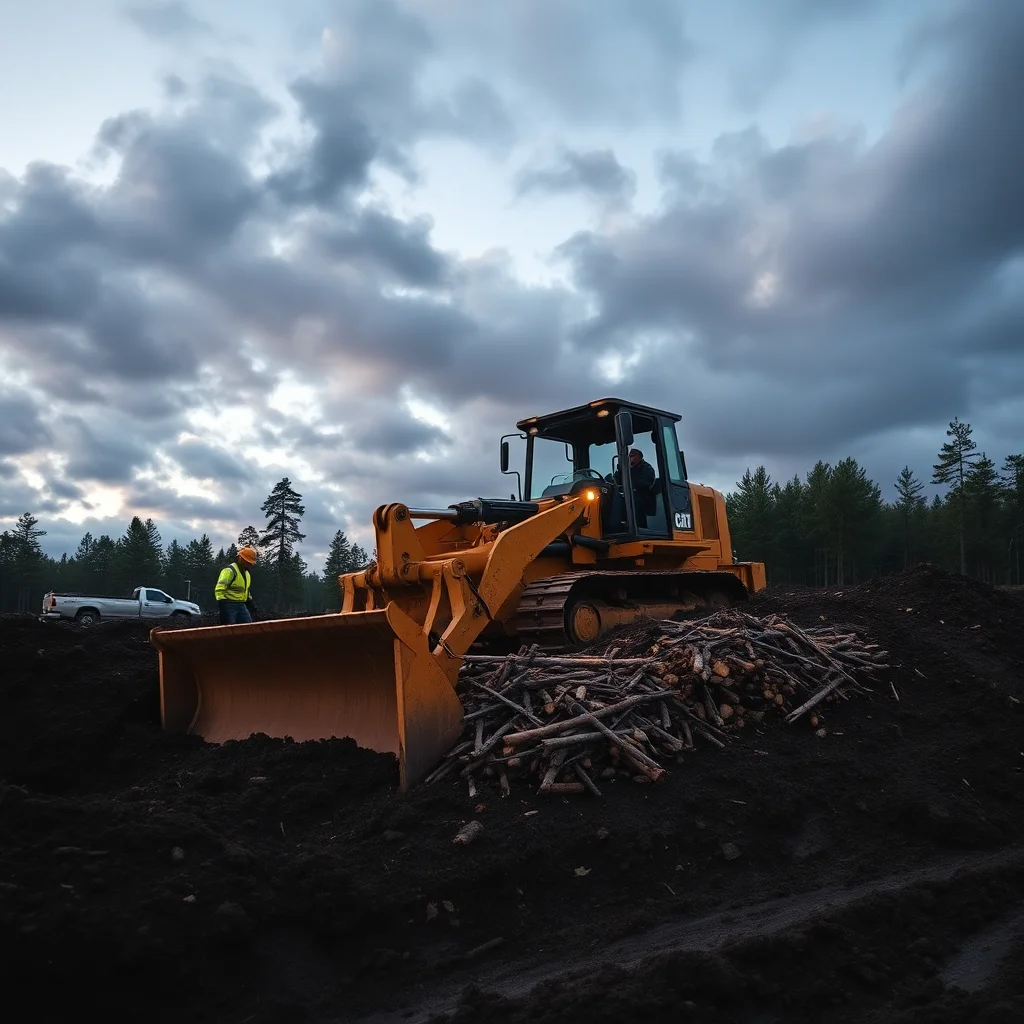
A bulldozer pushing heaps of timber into a pit is not supposed to look like climate action. Yet that is exactly the image that detonated the controversy around wood vaulting: a practice in which biomass is buried underground, sometimes in pits lined to keep carbon out of the atmosphere, and then sold as a carbon removal credit. The visual is brutally simple and therefore politically lethal. If architecture and design have spent the last decade selling timber as a regenerative material, then this scene feels like the inversion of that promise: forests reduced to fill, waste disguised as virtue, and a machine doing the burial work of an environmental market.
The source video that circulated on LinkedIn made the practice legible to a public that may never have heard of durable biomass storage, biochar, or engineered carbon removals. It showed what climate accounting often hides: a material story with no clean edges. On paper, the argument is elegant. Trees absorb carbon while they grow; if some of that biomass is locked away for centuries instead of being burned or decomposed, emissions are effectively removed from circulation. In practice, the optics are savage. It is one thing to talk about sequestration in a spreadsheet. It is another to watch a forest’s worth of timber disappear under soil.
Architecture should care about this because timber is now the most politically loaded material in contemporary building culture. Mass timber towers, CLT campuses, and wooden civic halls are sold as proof that the built environment can decarbonize without surrendering ambition. But the wood-vaulting debate exposes the dark underside of that enthusiasm: once carbon becomes a commodity, the line between stewardship and stripping starts to blur. The question is not whether carbon storage can work technically. It is whether a market can reward a practice that many people instinctively read as destruction. As When Architecture Stops Hiding Its Ecology argues, the built environment increasingly has to face the material consequences it once preferred to conceal.
How carbon markets turn burial into a climate product
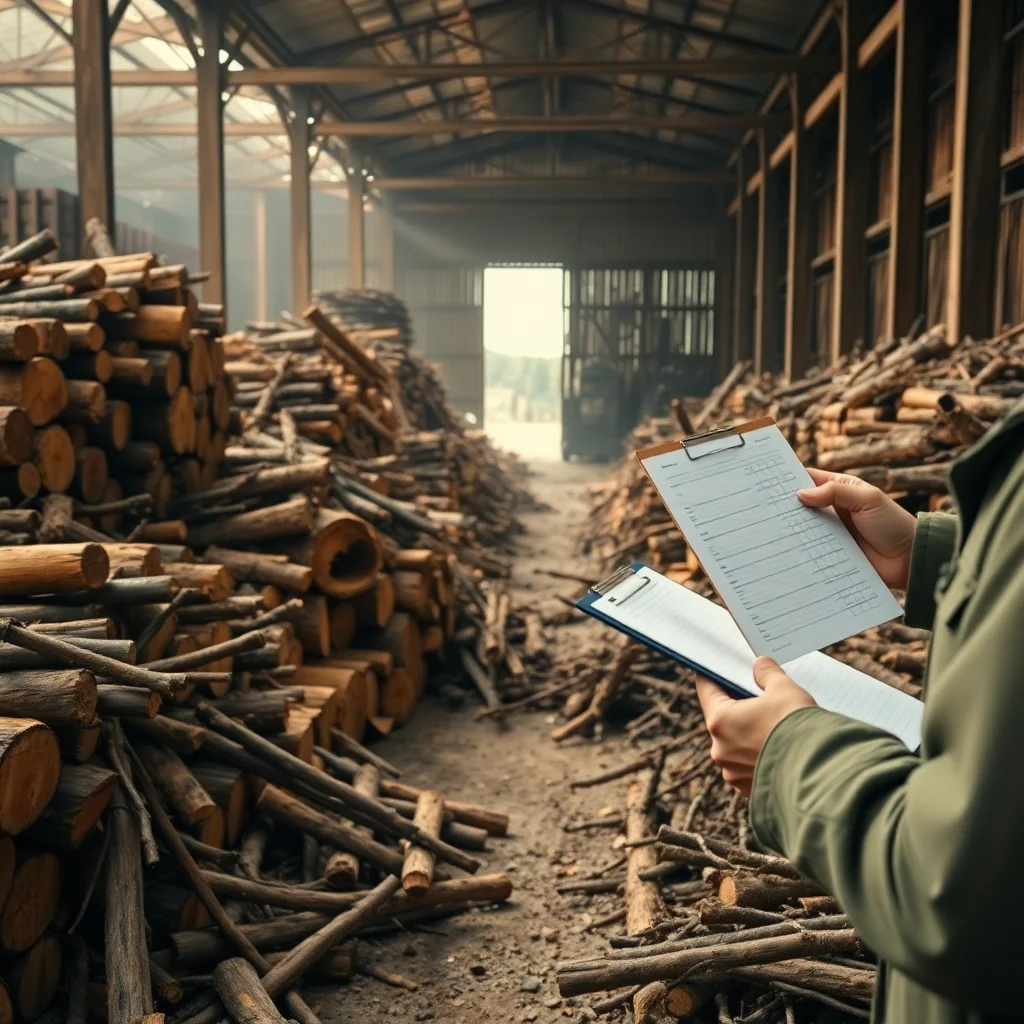
Wood vaulting sits inside the expanding universe of carbon dioxide removal, or CDR, where companies buy credits to compensate for their emissions by funding interventions that pull carbon from the air. Unlike the vague promises of offsetting a rainforest somewhere else, CDR sells specificity: a quantified ton of carbon, a monitored pathway, a market price. That precision is seductive. It gives corporations a way to narrate decarbonization without immediately cutting production, and it gives new ventures a revenue model for methods that would otherwise be too expensive to scale.
That is why the controversy matters beyond one viral clip. The carbon-credit economy has already normalized ideas that once sounded absurd: setting fire to waste to create char, injecting CO2 into concrete, mineralizing emissions into rocks, or storing biomass in subterranean vaults. In the best version, these methods are carefully measured and transparently verified. In the worst version, they become abstraction machines, laundering industrial appetite through a halo of climate virtue. The danger is not only fraud. It is moral camouflage.
Architecture has seen this logic before in a different register. Green roofs promised urban repair but were often reduced to branding. LEED became a language of virtue that could be gamed by developers who wanted a sticker more than transformation. Carbon credits can do something even slipperier: they can transform the very image of environmental responsibility. A bulldozer burying trees can be framed as climate service if the accounting is persuasive enough. That should unsettle anyone who thinks design is more than optimization.
It also echoes the way public-facing institutions can become instruments of climate storytelling, a theme explored in When Museums Become Climate Machines. In both cases, the architectural image can obscure the machinery underneath.
PRO: why supporters call it a necessary carbon sink
Advocates of wood vaulting argue that the climate emergency demands blunt instruments. The atmosphere does not care whether a carbon atom is stored inside a hillside or in a cathedral ceiling beam; it cares only that it is not back in circulation. In this logic, buried biomass is not destruction but deferred decomposition. Forest residues, sawmill waste, and low-value timber can be sequestered in engineered pits where they will decay much more slowly than they would in open air or in a landfill. For a system racing toward net zero, “slow” can be enough to matter.
There is also a hard ecological argument. If the alternative is burning slash, chipping residues for low-grade energy, or allowing organic matter to rot rapidly, then some biomass may indeed be better stored than used. Proponents point out that not all wood is equal. Bark, branches, storm-felled trunks, and diseased material can be locked away without necessarily competing with high-value construction timber or intact forests. In the strongest version of the case, vaulting is a transitional sink for waste streams that already exist, not a license to cut down healthy forests.
This is where the technical distinction between “waste” and “feedstock” becomes decisive. Climate innovators have long relied on materials that were formerly discarded: municipal organic waste for biogas, agricultural residues for biochar, captured CO2 for synthetic fuels. Companies like Drax have made biomass a central, if fiercely contested, component of energy strategy; biochar advocates have turned charred biomass into a soil amendment and carbon store; and durable storage startups now pitch burial as a form of negative emissions with measurable permanence. The broader system wants carbon removal to be legible, bankable, and scalable. Wood vaulting offers all three.
For architecture, that pro argument is seductive because it preserves the fantasy that material flows can be neatly managed. Wood harvested in one place, stored in another, counted in a third. The carbon ledger becomes the new design brief. If the numbers are robust, supporters say, the visceral discomfort is just aesthetic squeamishness standing in the way of climate pragmatism.
CONTRA: why it looks, and may be, like ecological vandalism
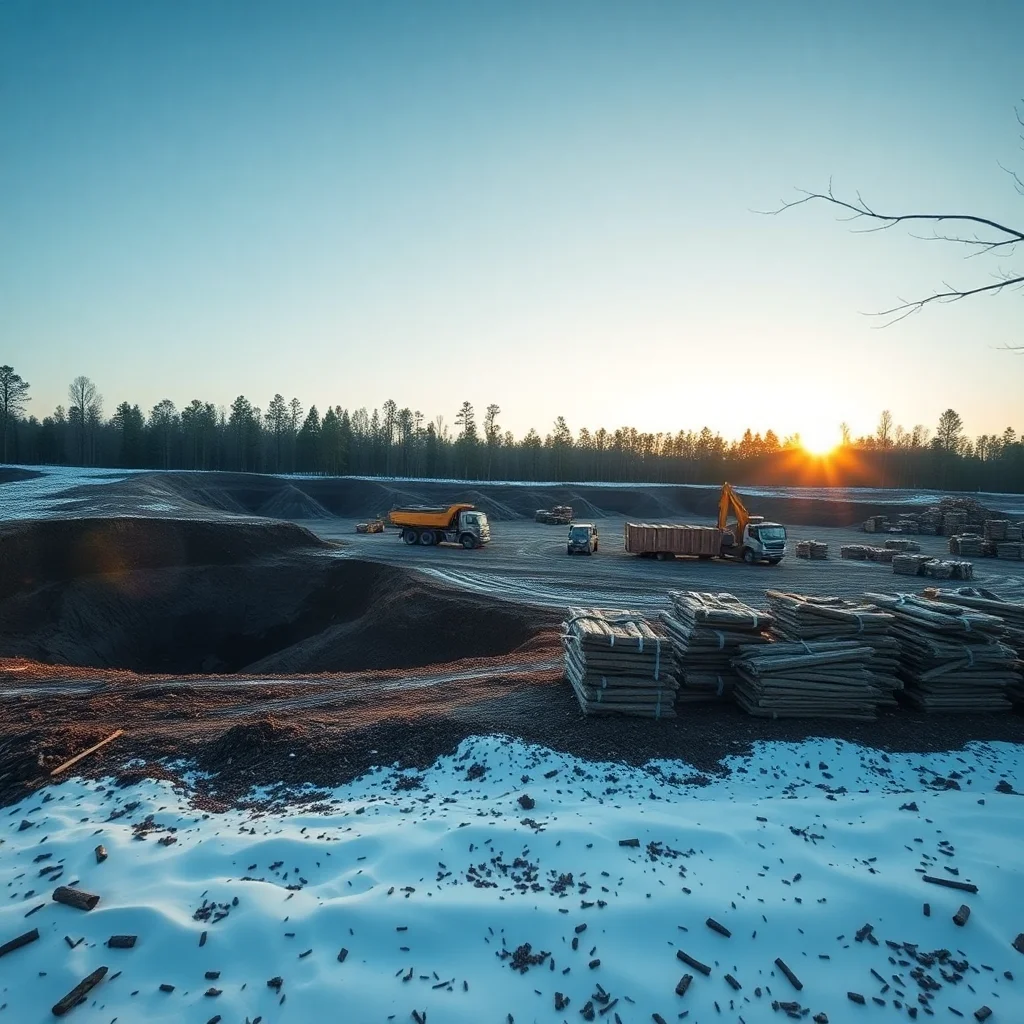
But the objection is not mere squeamishness. The image of forests being buried by bulldozers cuts to the moral core of the practice: it looks like a civilization so desperate to appear responsible that it will turn living matter into burial cargo. Even when the wood is waste, the spectacle can feel like a funeral staged as finance. And if the source material is not waste but harvestable timber, the practice risks sliding toward a perverse incentive structure in which trees are cut not to build homes or furniture, but to become ledger entries underground.
That is the scandal at the heart of carbon markets. The more elegant the accounting, the easier it becomes to ignore the upstream damage. Who owns the wood? Was the forest managed sustainably? Would the biomass have decomposed anyway? How long is long enough? These are not trivial questions; they are the difference between credible removal and a story told to satisfy investors. When a market pays for buried carbon, it may reward the appearance of permanence while obscuring the messy politics of land use, harvesting, transport, and monitoring. The climate benefit can shrink fast once those variables are included.
Architecture should be especially wary because timber has become a moral brand. Mass timber is often presented as the opposite of concrete: warm, renewable, humane. Yet if the industry’s appetite expands without strict ecological discipline, the material could become a new extraction engine dressed in natural aesthetics. The examples are already visible in broader design culture: recycled content touted as sustainability while supply chains remain opaque; “bio-based” products scaled before their true impacts are understood; speculative climate solutions financed faster than they are governed. The danger is not just greenwashing, but woodwashing: the transformation of a physical resource into a moral shortcut.
And there is a cultural dimension that cannot be reduced to carbon accounting. Many people understand forests as living systems, not as carbon banks. To bury them, even in the name of sequestration, is to intensify a long-standing industrial habit: treating the natural world as something valuable only when immobilized, monetized, or hidden. The aesthetics of burial matter because they reveal the politics of disposal. A bulldozer-driven pit may be efficient in climate terms, but it also stages a grim truth: in the age of markets, even environmental salvation can look like a landfill.
What architecture should demand before applauding
The answer is not to reject carbon storage outright. That would be intellectually lazy and politically useless. The answer is to insist that every removal scheme be judged by the same brutal standards we apply to architecture itself: material honesty, lifecycle clarity, and public legibility. If a project claims to lock away carbon, then the source material must be audited, the land-use consequences disclosed, the permanence verified, and the visual rhetoric stripped of propaganda. A carbon credit that depends on public misunderstanding is not a climate solution; it is a confidence trick.
Design culture can help by refusing the fantasy that metrics alone settle ethical questions. The same rigor that architects bring to structure, fire safety, and detailing should be brought to carbon storage claims. Who benefits? Who bears the ecological cost? What is the counterfactual? What happens if the pits leak, if the market collapses, if biomass demand changes, or if forests are harvested more aggressively to feed removal schemes? These are design questions as much as policy questions, because they determine what kind of landscape the built environment is willing to authorize.
There is also a more ambitious lesson here. If architecture wants to participate in carbon removal, it should do so by shortening supply chains, valorizing unavoidable residues, and making the system visible rather than mystical. That means fewer theatrical claims, more public accountability. It means using timber for long-life structures first, burial only as a last resort, and never confusing a buried tree with an ecological triumph. The difference between stewardship and destruction is not only in the chemistry. It is in the ethics of what we choose to celebrate.
- Visible carbon beats invisible guilt. If a climate solution cannot survive public scrutiny, it should not be sold as virtue.
- Waste is not the same as timber. A residue stream can be managed responsibly; cutting living forests to bury them is something else entirely.
- Carbon accounting is not morality. A valid ton of removal does not automatically produce a valid social or ecological outcome.
- Architecture must resist green spectacle. The more a solution depends on aesthetic ambiguity, the more carefully it should be questioned.
FAQ
What is wood vaulting?
Wood vaulting is a form of carbon storage in which biomass, often timber or forest residues, is buried underground to slow decomposition and keep carbon out of the atmosphere.
Why is it controversial?
Because the practice can look like environmental destruction when bulldozers bury wood that resembles forests, and because carbon-credit markets may reward the image of removal without fully addressing land-use impacts.
Is buried biomass always a bad climate solution?
No. If the material is genuine waste and the storage is verified, it may remove carbon. The controversy is about sourcing, permanence, transparency, and whether the practice incentivizes harmful harvesting.
What does this mean for architecture and timber construction?
It challenges the assumption that all timber-based climate narratives are inherently good. Architects and designers must ask where the wood comes from, what happens to byproducts, and whether carbon claims are materially and ethically credible.
Get the Mainifesto weekly — curated design debates, speculative ideas and the week's best articles every Saturday.



Marcus Reed May 21, 2026
If the image is a bulldozer flattening a forest, the brand story is already broken. I don’t care how elegant the accounting is if the customer sees destruction first and carbon math second.
Tom Brightwell May 21, 2026
I’d trust the numbers only if they stand up in a proper lifecycle comparison and a clear chain of custody. If a solution needs a burial metaphor to sell itself, it probably needs more scrutiny, not less.
Elena March May 21, 2026
Architecture shouldn’t ignore accounting, but it also shouldn’t outsource judgment to it. If the physical intervention looks ecologically absurd, that’s a signal to test the assumptions, not to dress them up in better graphics.
Karim Haddad May 22, 2026
This is exactly the kind of carbon loophole thinking that lets wealthy markets hide extraction behind spreadsheets. If the system requires bulldozing living landscapes to claim storage, then the accounting is serving the market, not the climate.
Olivier Dubois May 22, 2026
A project that must call itself storage while resembling burial has already admitted its unease. Architecture should distrust any carbon narrative that asks aesthetics to anesthetize violence; the ledger is never innocent, but neither is the image.