

Shanghai Malls and Civic Memory
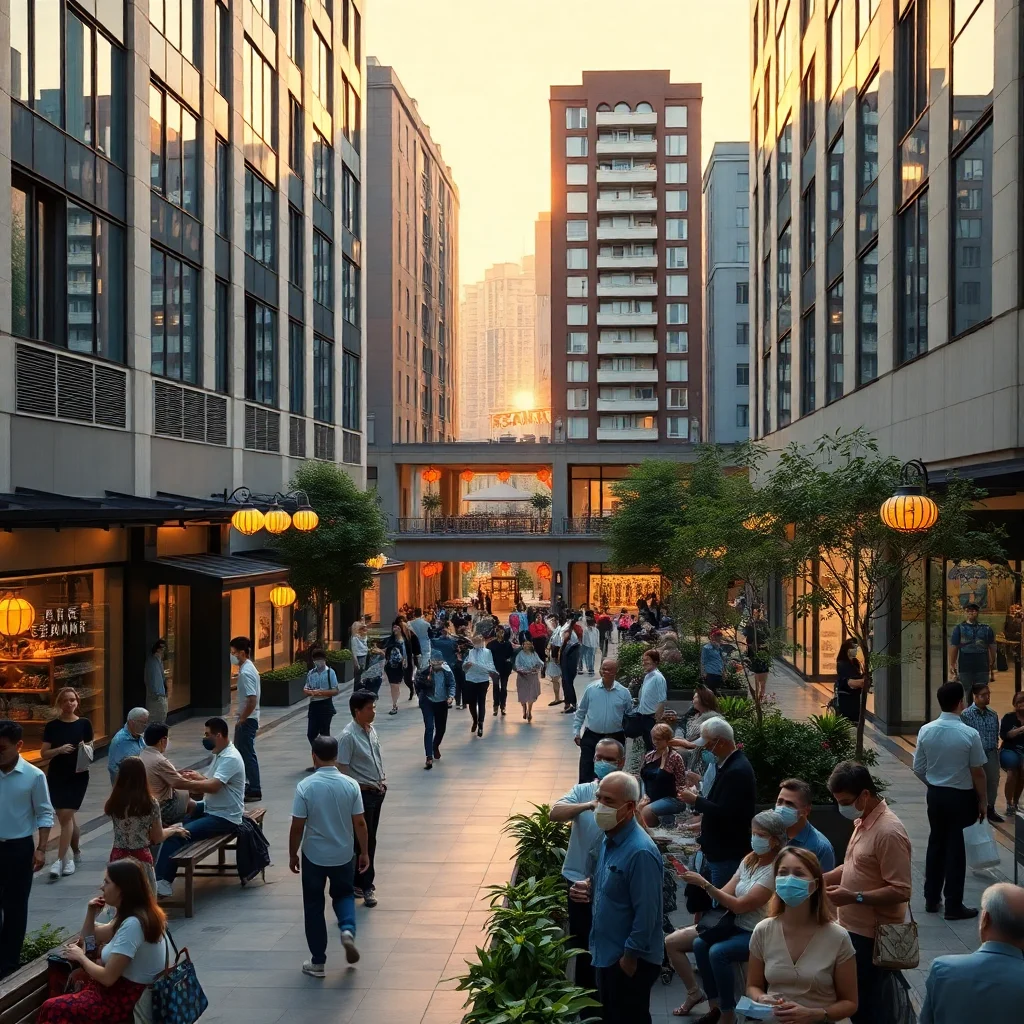
The mall is no longer just a machine for consumption
Shanghai is quietly turning one of capitalism’s most disciplined typologies into something far more unstable: a substitute public realm. At Xintiandi Dongtaili, retail is not presented as a closed commercial container but as a walkable urban field, stitched into daily life with courtyards, passages, thresholds, and edges that mimic the social porosity of streets and squares. This is the critical shift now spreading across the city. The mall is no longer content to be a place where people buy things; it wants to absorb the rituals that once belonged to civic space: meeting, lingering, browsing, watching, protesting, celebrating, and simply being seen.
That ambition matters because it reveals a deeper urban condition. In dense Chinese мегacities like Shanghai, the commercial district has become the easiest sponsor of public life, often because the state, developers, and consumers have converged on a familiar bargain: if the square is privately managed, at least it will be clean, safe, programmed, and profitable. But what is gained in polish is often lost in autonomy. A mall can host crowds, but can it host citizenship? Xintiandi Dongtaili, linked to the broader Xintiandi district’s long-running reinvention of memory into destination, makes that question unavoidable.
Dongtaili turns nostalgia into infrastructure
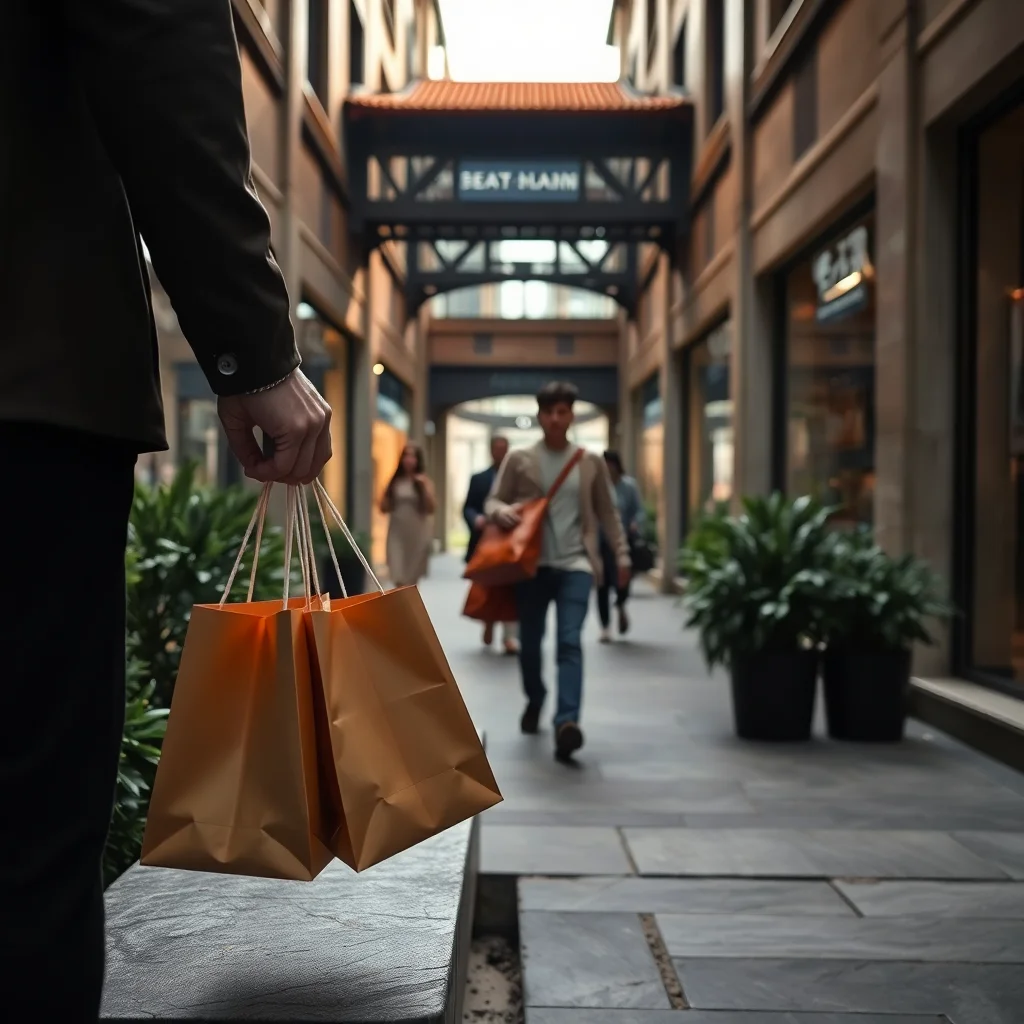
The project’s real provocation lies in its understanding of memory as spatial infrastructure rather than decorative reference. Xintiandi has spent years trading on the aura of Shanghai’s shikumen fabric: the lane-house morphology, the compressed thresholds, the domestic scale that once produced intense neighborly life. Dongtaili extends that logic, but it does so in a thoroughly contemporary key. Instead of freezing heritage into a museum façade, it uses urban design to create the feeling of continuity through movement, sequence, and encounter. This is why the project reads less like a mall retrofit and more like an argument about how cities remember.
That argument is not unique to Shanghai, but Shanghai executes it with particular force. The city has long treated architectural memory as an active commercial resource, from the preservation-led reinventions around Tianzifang to the luxury urbanism of HKRI Taikoo Hui and the layered redevelopment patterns around the Bund. The difference is that Dongtaili pushes beyond the old formula of “heritage plus consumption” and toward a more ambitious civic simulation. It invites the public in not just to spend, but to inhabit. The question is whether that invitation is generous or strategic.
Seen this way, Dongtaili also belongs to a broader conversation about retro-futurist heritage interiors, where memory is no longer preserved as a static shell but recoded as an experience to be moved through, consumed, and updated. The line between preservation and reinvention becomes blurry by design, and that blur is exactly what gives projects like this their appeal.
The public realm, privately choreographed
Here is the paradox at the center of the contemporary urban retail project: the more convincingly it imitates public life, the more tightly it tends to regulate it. In the best-known precedents from the region and beyond—Piuarch’s luxury retail environments in Milan, OMA’s shopping and mixed-use studies, or the dense pseudo-urban interiors of Singapore’s malls—the trick has always been to borrow the spatial logic of the city while retaining the behavioral control of the institution. Shanghai has taken this logic to an advanced stage. A mall can now feel like a neighborhood, complete with benches, planting, layered facades, and pedestrian continuity, while still retaining private rules about duration, occupation, and acceptable behavior.
That does not make the project false by default. It makes it politically charged. A privately managed district can absolutely host culture: exhibitions, performances, seasonal markets, public art, culinary events, and informal social mixing. But it does so on terms that are rarely symmetrical. The management decides what counts as culture, when it happens, how loud it is, and whether it can disrupt sales. Civic life is admitted, but only after being edited. In that sense, the mall is not the replacement of the street; it is the street with the rough edges shaved off.
Why architecture is the real battleground
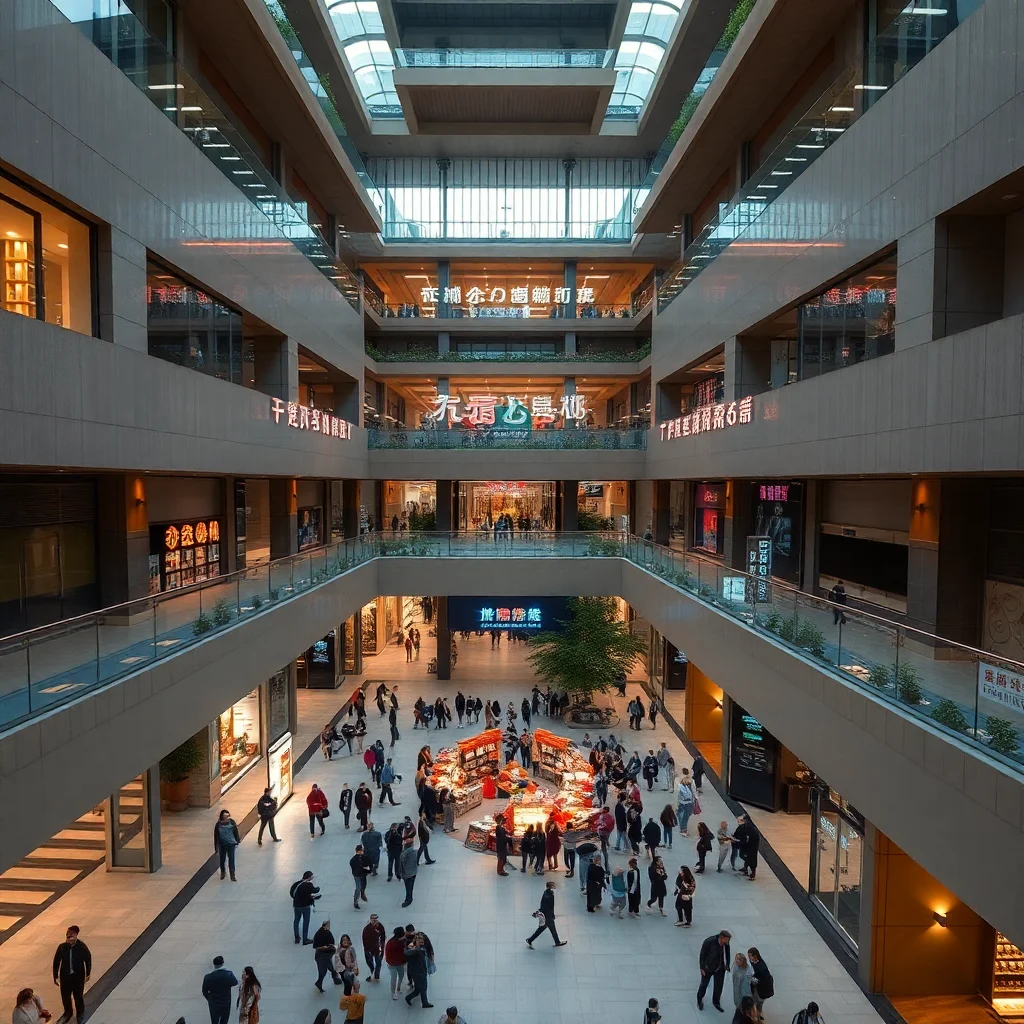
Architecturally, the significance of Xintiandi Dongtaili lies in its refusal to separate interior from urbanism. The project uses integrated architecture, interior, and urban strategies to produce an environment where circulation itself becomes a social act. That approach echoes a lineage from the European arcade to the Japanese department store to the contemporary lifestyle district, where the plan is less about efficiency than about prolonged occupancy. The result is a carefully sequenced urban theater: light wells, pedestrian connectors, layered shopfronts, and transitional voids that encourage detours rather than direct exits.
This matters because architecture is where commercial control either becomes visible or disappears. If the project were simply a glossy retail box, the politics would be obvious and the criticism easy. But when a development deploys the visual grammar of neighborhood life—narrow passages, varied scales, stone-like surfaces, planted pockets, humanized frontages—it becomes harder to distinguish authenticity from performance. The strongest retail districts today do not announce themselves as commercial first; they produce a feeling of urban legitimacy. Dongtaili is powerful precisely because it understands that legitimacy is built by design.
It is also why these projects increasingly resemble buildings that function as interfaces, mediating between commerce, circulation, and collective behavior. The architectural envelope is no longer just a container; it is an active social prompt, shaping who pauses, who passes through, and what kinds of gathering feel natural inside the project.
From spectacle to urban usefulness
For decades, mall design chased spectacle: atriums, escalators as choreography, digital screens, brand cathedrals. That model still exists, but in Shanghai it is being overtaken by a more nuanced ambition: urban usefulness. People no longer flock only for novelty; they come for convenience, micro-climates, shade, seating, social density, and the promise that the space will do what the street increasingly cannot. The city’s commercial projects are now competing with parks, plazas, and alleys by offering a controlled version of their benefits.
Global precedents make this clear. Google’s Bay View campus in California, though not a mall, shows how private development now recruits public-like circulation and amenity to shape behavior. In Asia, urban retail districts such as the Jewel at Changi Airport have turned movement, leisure, and spectacle into a seamless continuum. But Shanghai’s case is sharper because it overlays this new urbanism onto a city deeply marked by lane-house memory and pedestrian intensity. Dongtaili does not invent the appetite for mixed-use sociability; it monetizes an urban culture already accustomed to porous edges and everyday encounter.
Can a managed district produce real civic culture?
Yes—but only partially, and only if we stop confusing access with democracy. A privately managed district can offer the conditions for public culture: visibility, safety, maintenance, programming, and spatial generosity. It can even become a site of genuine social mixing, especially in cities where public space has been degraded by traffic, scarcity, or neglect. But it cannot fully replace the civic role of uncontrolled space, because its deepest obligation is not to the public but to the tenant mix, the brand narrative, and the asset value of the site.
That tension should not be dismissed as a flaw to be fixed. It is the defining political question of contemporary urbanism. Projects like Xintiandi Dongtaili show that commercial development has become the primary producer of urban collectivity in many Chinese cities. The danger is not merely that the mall becomes the city. The danger is that the city itself begins to think of public life as a curated experience, something to be leased, zoned, and scheduled. When that happens, authenticity is no longer a matter of preserving old walls; it becomes a struggle over who gets to shape collective memory.
What Dongtaili reveals about Shanghai’s future
Shanghai has never been a city of pure preservation. It is a city of reinvention, where layers of colonial, socialist, and neoliberal urbanism overlap in ways that are often uncomfortable but rarely dull. Xintiandi Dongtaili fits squarely into that tradition, but it also sharpens the stakes. The project suggests that the mall is becoming a civic interface: not just a place of exchange, but a surrogate ground for urban belonging. In the best case, that produces walkability, encounter, and a renewed sense of place. In the worst case, it produces an immaculate simulation of the city that leaves no room for conflict, spontaneity, or dissent.
The future of Shanghai’s urban retail will not be judged by sales alone. It will be judged by whether these developments can host life that is not entirely pre-scripted. Can they tolerate ambiguity? Can they allow strangers to gather without converting every gathering into brand theater? Can they carry civic memory without turning it into a backdrop? Xintiandi Dongtaili is important because it does not let us answer these questions with easy optimism. It insists that the mall has become urban, but also that urbanity may be losing something essential in the conversion.
That concern extends beyond retail and into the architecture of everyday life, including debates over when the home becomes a master plan, where private design frameworks increasingly organize how people live together, move, and encounter one another.
FAQ
- What makes Xintiandi Dongtaili different from a conventional mall?It is designed as a walkable urban environment rather than a sealed shopping container. Its passages, courtyards, and layered public-facing edges aim to simulate street life and neighborhood encounter.
- Why is Shanghai a key city for this trend?Shanghai has a strong culture of dense, pedestrian-oriented urbanism and a long history of adaptive redevelopment. That makes it a prime laboratory for commercial projects that borrow the form and feel of civic space.
- Can privately managed public space be truly public?Only partially. It can host public culture and social mixing, but it remains governed by commercial priorities, rules of conduct, and curated programming that limit freedom compared with open civic space.
- Is this trend good or bad for architecture?It is architecturally sophisticated but politically ambiguous. The danger is not poor design; it is the normalization of controlled urbanity as a substitute for genuine public life.
Get the Mainifesto weekly — curated design debates, speculative ideas and the week's best articles every Saturday.


Karim Haddad May 18, 2026
What you’re describing is not just retail absorption, it’s a redistribution of urban authority. In cities where the street has been overmanaged or politically weakened, the mall becomes the default civic infrastructure — which tells you less about architecture than about governance.
Olivier Dubois May 18, 2026
This is the familiar spectacle of the privatized agora, except now it arrives polished as urban authenticity. The mall performs memory the way a museum gift shop performs culture: selectively, safely, and always with a lease attached.
Marcus Reed May 18, 2026
People vote with their feet, and they clearly want places that feel legible, comfortable, and programmed without chaos. The real question is whether the mall can keep doing that while still supporting local identity instead of flattening it into brand theater.
David Lim May 19, 2026
If the mall is now doing the work of the street, then we should ask which spatial algorithms are being optimized: access, dwell time, surveillance, or belonging. Civic memory doesn’t just get preserved in facades; it gets encoded in circulation patterns, thresholds, and who is allowed to linger.