

Courtyard Living as Climate Strategy
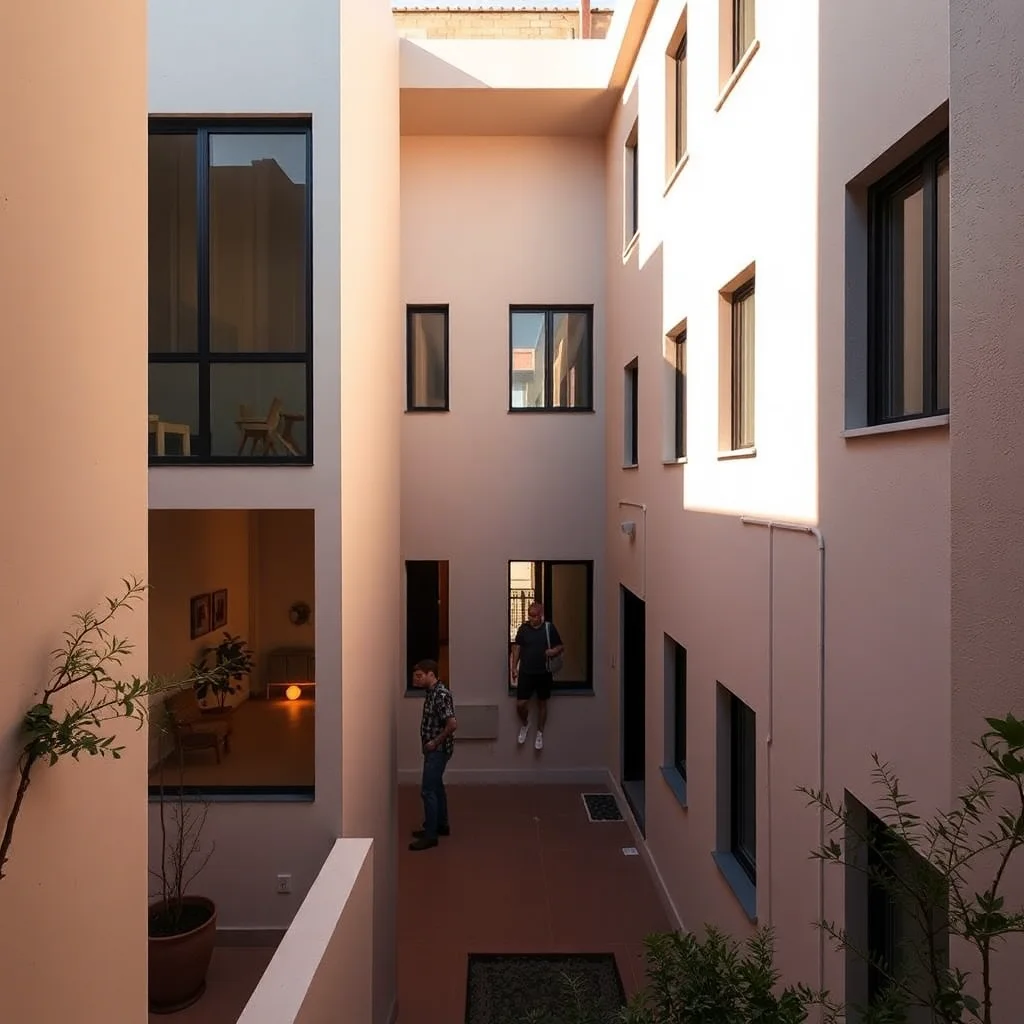
Courtyard living is back, but the comeback has nothing to do with yearning. It is not a decorative revival of Mediterranean romance, nor a tasteful callback to patios, cloisters, or bourgeois urban nostalgia. It is a design response to the blunt realities of contemporary life: hotter cities, denser plots, compromised privacy, and homes that must now mediate social intensity rather than simply dissolve into it.
The renewed interest in enclosed and semi-enclosed courtyards marks a decisive correction to decades of architectural orthodoxy that treated openness as a virtue in itself. Open-plan interiors promised freedom, flexibility, and visual continuity; in practice, they often produced acoustic stress, thermal inefficiency, and a humiliating lack of refuge. By contrast, the courtyard reintroduces control. It makes shade deliberate, air negotiable, and domestic life legible. The house no longer performs as a transparent box. It becomes a climate machine with a social agenda.
PRO: The Courtyard Is the Most Honest Form of Openness
Architects have rediscovered what traditional builders never forgot: enclosure is not the opposite of openness. In hot, dense, or noisy contexts, true domestic generosity comes from filtered exposure, not from uninterrupted glazing. A courtyard allows light to enter without surrendering privacy, and air to circulate without exposing every room to street life. That is exactly why the logic behind houses such as Casa Violetas in Madrid feels so current. Its semi-enclosed center creates calm by folding the domestic program inward while still preserving a visual and atmospheric connection to the outside.
This is not a retreat from modernity. It is a more sophisticated modernity, one that understands comfort as choreography rather than volume. In climates under pressure, a courtyard can cool through shade, support cross-ventilation, and temper thermal swings more effectively than a fully exposed façade. In dense neighborhoods, it also resolves the problem of living close without feeling watched. The courtyard makes sociability selective. It permits gathering without obligation and solitude without severance.
There is a long lineage here, and it matters. The courtyard is not an imported aesthetic accessory; it is a device refined across cultures and climates. From the riads of Marrakech to the patio houses of southern Spain, from Roman domus to contemporary houses in Latin America and the Middle East, the central void has historically organized domestic life around microclimate, orientation, and ritual. Today’s version does not need to imitate those precedents literally to learn from them. It needs to accept their core lesson: architecture should mediate weather and behavior, not pretend they can be abolished.
Contemporary designers have been making that argument in different registers for years. Tadao Ando’s housing and religious projects demonstrate how voids can intensify perception. Peter Zumthor’s work shows how enclosure can deepen sensory experience rather than diminish it. In domestic architecture, practices such as Studio Mumbai, Office KGDVS, and talented regional firms across the Mediterranean and Latin America have increasingly treated courts, patios, and internal gardens as instruments of environmental intelligence. The result is a house that breathes strategically instead of displaying its entire life to the world.
That same instinct appears in broader debates about housing scale and urban form, where projects are increasingly judged by how well they balance individual refuge with collective structure. Articles like When the Home Becomes a Master Plan explore how domestic design can shape wider patterns of living, rather than merely enclosing them.
CONTRA: Courtyard Living Can Become a Very Expensive Myth
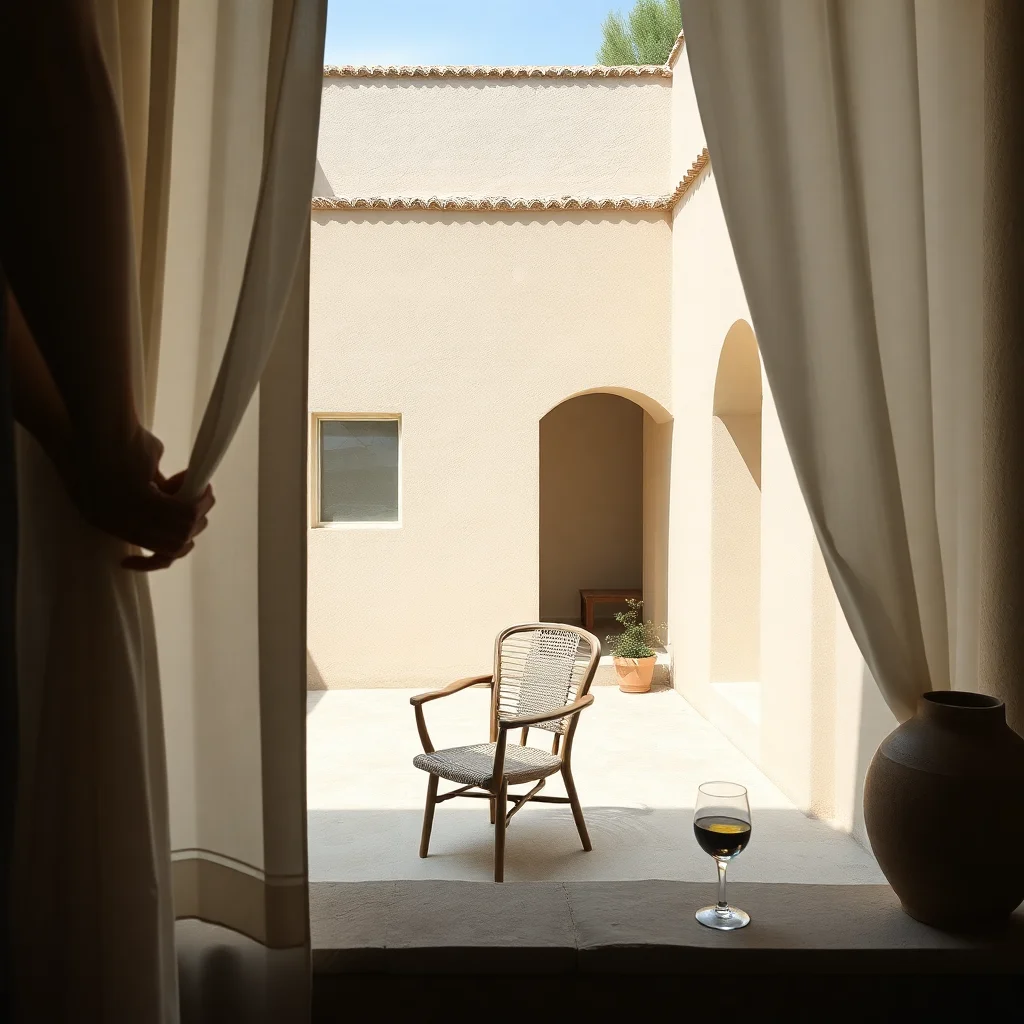
But let’s not romanticize the square of sky. Courtyard living can also become the latest architecture-world fetish: a highly photogenic solution that flatters magazines, inflates budgets, and ignores the fact that many households do not have the space, money, or maintenance capacity for it. In a market dominated by land scarcity and financial pressure, the courtyard can become a spatial luxury disguised as a climate ethic. It is easy to praise enclosure when the plot is large enough to waste area on void.
There is also a political risk in celebrating the inward turn. A house organized around an interior court can quietly intensify separation from the city just when urban life requires more permeability, more shared ground, and more collective infrastructure. The architecture of retreat can become the architecture of insulation. If every domestic response to heat and density is to retreat behind walls, then the burden of adaptation is shifted from public space and civic policy onto private real estate. That is not a design victory; it is a privatized survival strategy.
The aesthetic danger is equally real. Courtyards can be turned into a style package: pale plaster, oversized openings, filtered sunlight, a plant in a sculptural pot, and a set of carefully distressed chairs. Such spaces often photograph beautifully while doing very little operational work. The climate argument gets diluted into mood. The architecture becomes a backlit scene of well-mannered withdrawal, especially in projects that rely on symbolism without seriously addressing shade depth, ventilation pathways, or thermal mass.
And yet the strongest criticism may be more social than technical. Courtyard living can choreograph distance, yes, but it can also choreograph exclusion. The inward-facing plan can police access, hide labor, and turn domestic life into a curated performance for insiders only. In contexts where housing is already unequal, the most seductive version of courtyard calm may be available only to those who can afford to turn privacy into an architectural feature. That should make us suspicious of any blanket celebration. The courtyard is not inherently democratic just because it is old.
Between Shelter and Exposure, a New Domestic Contract
The real significance of courtyard living is not that it revives tradition, but that it updates a deeper contract between building and environment. Houses are being asked to work harder: to remain habitable during heat spikes, to buffer noise in overcrowded cities, and to support a life that is neither fully public nor fully private. The courtyard answers by making the middle zone—threshold, edge, void, semi-outdoor room—central again. It is a spatial compromise with teeth.
This matters because the old binary of open versus closed is failing. The fully glazed house performs openness but often delivers glare and overheating. The sealed box promises control but can feel airless and disconnected. Courtyard layouts split the difference without being weak. They create gradients: street to threshold, shade to sun, private room to shared void, interior to atmosphere. That gradient is what contemporary domesticity now needs. Not transparency as ideology, but calibrated permeability.
Look closely and you’ll see that this shift is already visible beyond single-family houses. Housing blocks with shared gardens, cluster developments, and hybrid domestic compounds all borrow the courtyard principle when they are serious about climate and social life. Even office and cultural buildings are adopting versions of it, because the demand for respite has become universal. The courtyard is no longer a quaint typology. It is a transferable environmental logic.
And that is why Casa Violetas resonates. Its appeal is not that it looks traditional, but that it understands enclosure as a tool of comfort and composure. The folded geometry and semi-enclosed center do something many contemporary houses fail to do: they let domestic life happen at a human pace. In a time of overheating cities and overstimulated interiors, that may be the most radical gesture available.
That logic also connects to a wider material shift in architecture, where comfort is increasingly tied to resource-conscious construction rather than visual effect alone. For a related angle, see Heritage Materials and Lower-Carbon Architecture, which examines how old building traditions are being retooled for contemporary climate demands.
A Design Language for Heat, Density, and Social Distance
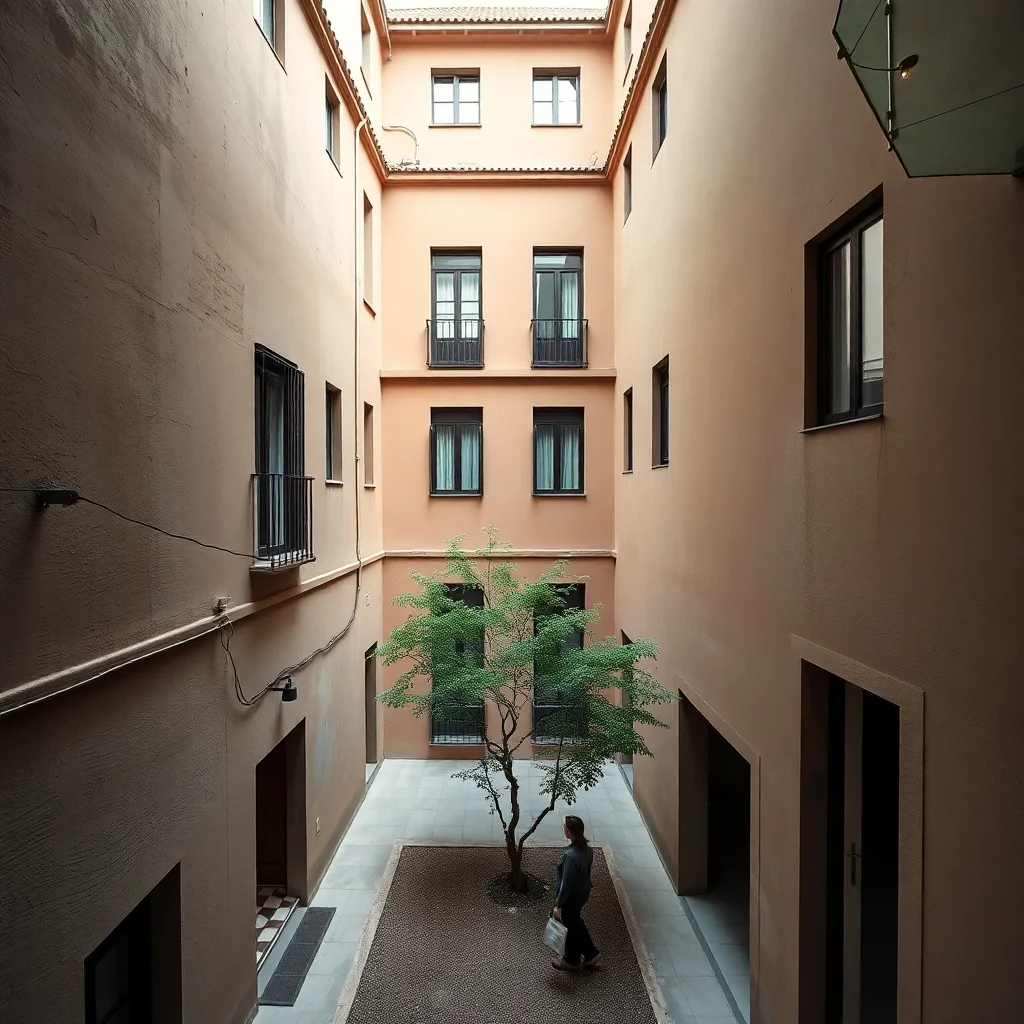
If the last era of domestic design prized flow, the next one may prize buffering. This does not mean building barricades. It means designing rooms, courts, arcades, screens, and planted edges that modulate attention and climate rather than flattening everything into one continuous field. The best courtyard houses feel generous because they are selective. They offer shade where the day is harsh, brightness where the eye wants relief, and separation where modern life has become too exposed.
That is a different architectural morality. It says that comfort is not the same as visibility, and that privacy can be a public good when it prevents burnout. It also suggests that the most relevant domestic innovations are not necessarily digital or smart in the narrow sense. Sometimes intelligence looks like a wall positioned to cast a shadow, a void sized to catch a breeze, or a plan that lets neighbors coexist without overexposing each other.
Courtyard living, then, should be understood less as a style than as an argument. It argues that the house is still an environmental instrument, not merely a container for lifestyle imagery. It argues that being enclosed does not mean being cut off, and that being open does not automatically mean being generous. Most provocatively, it argues that architecture can choreograph social distance without turning life sterile. In an era of climate stress and urban compression, that is not nostalgia. It is necessity.
That argument is also shaping how designers think about the home’s relationship to its surroundings, especially when the boundary between private life and larger systems becomes harder to define. The essay When Buildings Become Interfaces offers a useful companion reading on how architecture can mediate collective and individual experience at once.
- Privacy is now a climate issue. As cities heat up and density increases, the ability to live without constant exposure becomes part of domestic resilience, not just personal preference.
- Courtyards create microclimates. Shade, airflow, thermal mass, and planted edges can make a house more habitable than a fully open-plan or fully glazed alternative.
- Enclosure can be generous. Properly designed, a semi-enclosed court offers sociability, daylight, and refuge without the visual overstimulation of endless transparency.
- Tradition is being retooled, not repeated. Contemporary courtyard architecture borrows from long-standing typologies but uses them to address heat, privacy, and urban stress today.
- The typology exposes inequality. Courtyard houses can be luxurious, but their environmental logic also points to broader housing strategies that cities should adopt more democratically.
- Flow is no longer enough. The future domestic interior may need gradients, buffers, and thresholds more than it needs seamless continuity.
FAQ
Why are courtyards returning in contemporary architecture?
Because they solve problems that have become urgent: overheating, privacy loss, noise, and the need for flexible social distance. They are useful, not merely historic.
Are courtyards only relevant in warm climates?
No. They are most obvious in hot regions, but the same principles—light control, privacy, and spatial gradation—also help in dense, temperate cities.
Is courtyard living always more sustainable?
Not automatically. A courtyard can improve passive performance, but only if it is carefully designed for orientation, ventilation, shading, and material thermal behavior.
Does courtyard architecture oppose openness?
Not at all. It redefines openness as selective permeability rather than total exposure, which is often a better fit for real domestic life.
The New Domestic Question
Courtyard houses are returning because the open-plan fantasy has collided with climate reality. The deepest question is no longer whether homes should be open or closed, but how they can regulate exposure with intelligence and care. If architecture can turn privacy into comfort and enclosure into atmosphere, what else in domestic design have we mistaken for progress simply because it looked more open?
Get the Mainifesto weekly — curated design debates, speculative ideas and the week's best articles every Saturday.


David Lim May 18, 2026
I’m glad the article frames the courtyard as a climate device rather than a nostalgic gesture. In dense cities, enclosure can be more adaptive than exposure: if we tune void size, aspect ratio, and porosity carefully, the courtyard becomes a passive regulator instead of just an aesthetic symbol. The deeper question is whether we’ve been designing for visibility when we should have been designing for thermal intelligence.
Ricardo Estévez May 18, 2026
Courtyards are not a new invention, and calling them a return is only half the story. In places like Mexico City, they were always a way to mediate heat, air, noise, and social life; what’s changed is that we keep treating openness as a default good, even when it produces glare, insecurity, and uncomfortable interiors. I’m wary of projects that package enclosure as lifestyle branding while ignoring the older, more complex domestic logics that made these spaces work.
Elena March May 18, 2026
The article makes sense, especially if we stop pretending that more glazed area automatically means better living. In hot, dense contexts, the data usually points the other way: shade, cross-ventilation, and controlled openness outperform the heroic open-plan fantasy. What we’ve mistaken for progress is often just convenience for rendering and marketing, not for climate or daily comfort.
Tom Brightwell May 19, 2026
From a delivery point of view, courtyards can be a smart move because they improve privacy and make units feel more valuable without relying on expensive façade tricks. But they only work if the scheme is planned around maintenance, daylight, and circulation from the start; otherwise you end up with an attractive void that’s hard to manage. I’d challenge the idea that open always means better—sometimes the market rewards spaces that feel protected, quiet, and usable.