
After the Signature Brand in Luxury Design
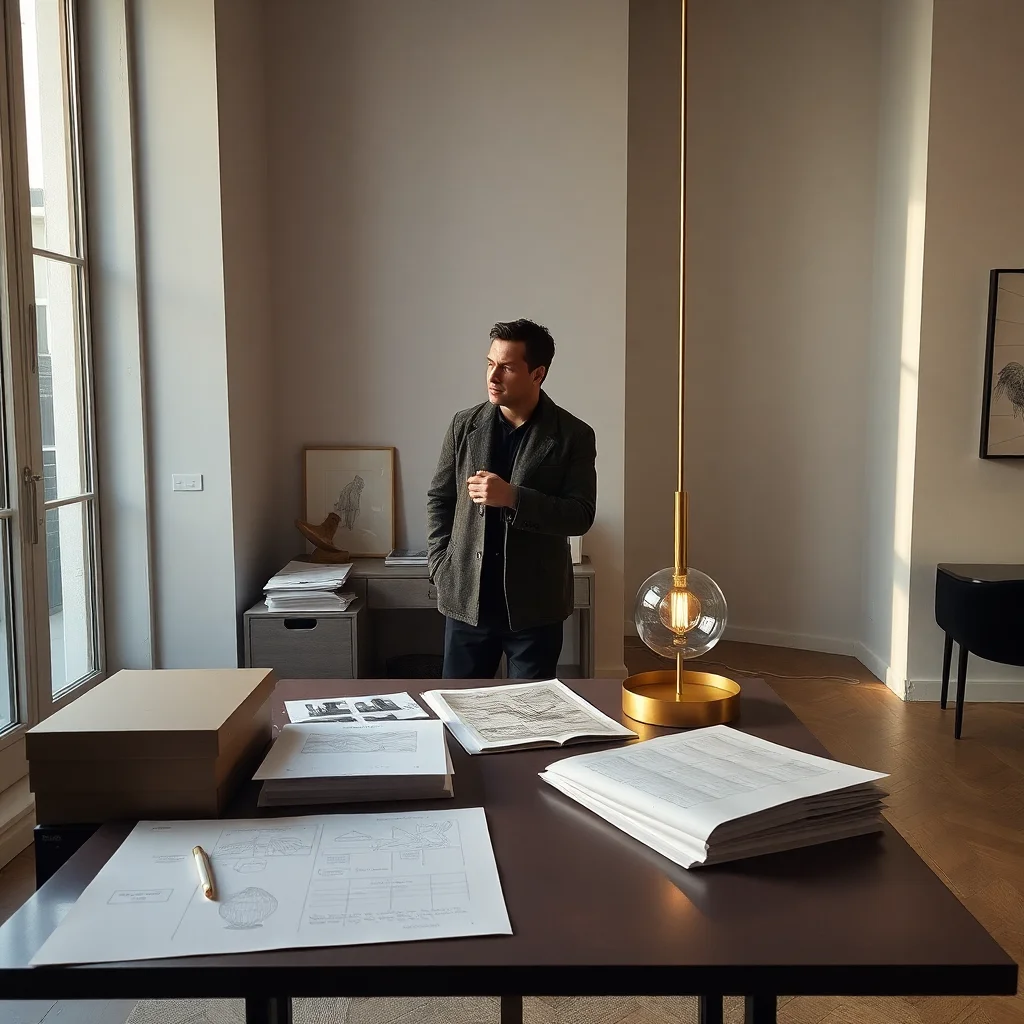
The End of the Eponymous Studio Is Not a Retreat. It Is a Challenge.
When Michael Anastassiades announces the closure of his lighting brand, the move should not be read as a graceful exit or a sentimental ending. It is a strategic rupture. The designer, whose work has become synonymous with restrained elegance and exacting precision, has effectively argued that the name on the box may have become a constraint on the thinking in the studio. In his own words, the next phase means a deeper focus on the creative process and the freedom to explore new directions in all forms of design. That line matters because it reframes the entire luxury-design economy: not as a system that rewards consistency, but as one that may now punish it.
For decades, the eponymous brand has functioned as the cleanest possible proof of authorship. The name itself was the product. In lighting, furniture and collectible objects, this model helped turn designers into cultural figures and manufacturers into narrative vessels. Think of the way Faye Toogood’s name carries sculptural irreverence, how Tom Dixon has turned material experiment into a recognisable visual code, or how Patricia Urquiola has moved fluidly between interior, object and textile without losing identity. Yet Anastassiades’ decision suggests the opposite conclusion: the more successful the signature brand becomes, the more it can narrow the designer’s range. The signature, once a guarantee of coherence, becomes a cage. For many studios, the pressure is not unlike what we see in beauty’s shift toward evidence-led luxury: proof can strengthen a brand, but it can also harden it into a formula.
Why the Signature Became So Powerful in the First Place

The eponymous brand rose because it solved a trust problem. In luxury design, where objects can cost as much as small artworks, buyers want not only quality but narrative legitimacy. A designer’s name compresses all of that into a single label: authorship, taste, scarcity, and a promise of consistency. The rise of studios such as Jasper Morrison, Barber Osgerby, and Nendo shows how strongly the market values an identifiable hand, even when the hand is deliberately quiet. The designer-brand model also makes cultural reporting easy. A show at Milan Design Week, a new bronze finish, a lamp family in hand-spun glass: all of it can be narrated as a chapter in one coherent authorial project.
But that coherence has a cost. Once the studio name becomes the commercial engine, the designer is pressured to keep producing objects that look like the brand already defined them. Innovation becomes a negotiation with recognisability. The market asks for continuity, not risk. It rewards the repetition of a visual sentence the audience already knows how to read. That is precisely why Anastassiades’ closure feels radical: it rejects the idea that the most valuable thing a designer can do is continue to resemble themselves.
And in product categories built on longing, that tension is familiar. The same logic that keeps a lighting house legible can also shape the desirability of a machine or an object built for aspiration, as explored in Can a Sports Car Still Be an Object of Desire? Here too, identity and proof can pull in opposite directions.
From Authorship to Mobility: The Real Stakes of Walking Away
The more interesting reading of this closure is not “what brand comes next?” but “what does freedom look like when it is no longer tethered to a retail identity?” Designers increasingly operate across scales and disciplines: lights, chairs, architecture, scenography, even rituals of display. Yet the eponymous brand often forces a hierarchy, making the market treat every move as an extension of a core product language. By stepping away from that structure, Anastassiades is not abandoning authorship. He is separating authorship from production, which may be the more powerful move.
There is precedent here. In fashion, Martin Margiela transformed anonymity into a theory of design, proving that absence of the designer’s face can sharpen, not weaken, the work. In product design, Enzo Mari’s manifesto-like projects challenged authorship as ownership, arguing that intelligence could be shared rather than branded. More recently, Jony Ive’s post-Apple trajectory hinted at a different kind of mobility: the freedom to move between objects, systems and cultural institutions without being locked into a single commercial machine. Anastassiades’ closure pushes this logic into luxury design, where the designer’s name has become one of the most lucrative materials of all.
That is the provocation Mainifesto should not soften: perhaps the boldest move now is not to build a stronger designer-brand, but to refuse the idea that the designer must be the brand at all. In an era of overexposure, the name can become a branding tax on imagination.
The Luxury Market Has Created a Paradox It Can No Longer Hide
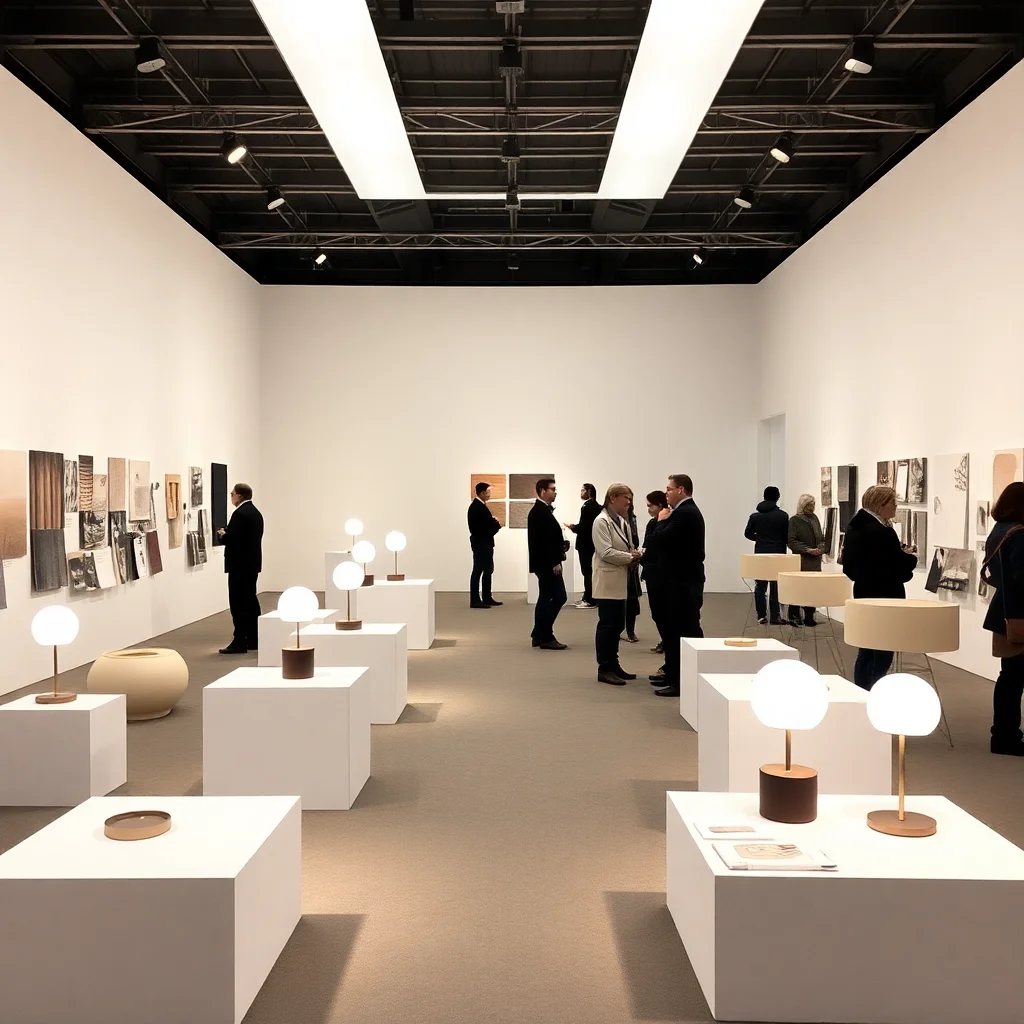
Luxury design claims to celebrate scarcity, discernment and intellectual depth. Yet its commercial machinery increasingly depends on scale, visibility and product expansion. Signature studios are expected to provide endless newness while preserving an instantly recognisable language. This is the paradox at the heart of the sector. The more a designer becomes a luxury brand, the less room there is for genuine drift, contradiction or failure. And without drift, design risks turning into style management.
Consider how many celebrated studios now operate like cultural lifestyle labels. A table becomes a chair becomes a lamp becomes a hotel interior becomes a gallery installation, all bound by the same carefully managed tone. This has produced a generation of highly legible practices, but also a subtle sameness. The danger is not that these studios are weak; it is that the market has made them too efficient at being themselves. Anastassiades’ move refuses that efficiency. It says: what if the next chapter requires not more coherence, but less?
This is where the story becomes uncomfortable for luxury buyers. They often purchase an object because it performs the designer’s identity as much as their own. To collect the work of a signature studio is to buy into a social script. If that script dissolves, the buyer must confront the object directly. No shorthand. No celebrity halo. Just material, proportion, light, and use. That is a severe test, and perhaps design should welcome more of it. The same insistence on material presence is shaping conversations around texture reshaping design, where surface and tactility are becoming as important as the name attached to the work.
PRO: Why Walking Away From the Name Can Be a Creative Advance
On the affirmative side, ending the eponymous brand can restore the studio as a site of inquiry rather than brand maintenance. Freed from the obligation to produce marketable continuity, a designer can take risks that would otherwise threaten commercial identity. Anastassiades’ own practice has always been strongest when it balances poetic minimalism with almost nervous precision; closing the brand may allow that intelligence to move into other fields without being forced into a single object language.
It also restores design to process. The best work in the discipline often emerges from iteration, collaboration and uncertainty, not from the execution of a preloaded aesthetic formula. Designers like Hella Jongerius and Formafantasma have built reputations by treating materials, production systems and ethics as open questions rather than closed signatures. Their value lies not in sameness but in adaptive thought. The eponymous brand can flatten that complexity into logo-friendly recognisability. Letting it go can make room for genuine development.
Finally, the move has a political dimension. In a culture that equates visibility with value, refusing to center the designer’s name can redistribute attention to the object, the material and the collaborators who actually make the work possible. That may be the most quietly radical outcome of all: less ego, more intelligence.
CONTRA: Why the Designer-Brand Still Matters
Against that optimism, there is a hard truth: the eponymous brand also protects design from becoming anonymous commodity culture. It gives independent studios leverage against larger manufacturers and keeps experimental work visible in a crowded marketplace. Without the recognition attached to a designer’s name, many delicate or costly projects would never reach production. The signature, in this sense, is not narcissism. It is infrastructure.
There is also a cultural loss to consider. Names carry memory. A studio like Michael Anastassiades has helped define a certain era of lighting design because its identity is easy to cite, archive and debate. Remove the name, and the field risks becoming harder to map, not easier. Patrimony in design is already fragile; the eponymous studio can function as a readable lineage in a market that often erases process entirely.
And we should not romanticize the disappearance of the author. Anonymity is not automatically more ethical or more inventive. It can also be a convenient way for capital to absorb labor without attribution. If the designer steps away from the brand, who controls the narrative next? Production partners? Retail groups? Investors? The post-signature future could liberate creative work, but it could also make it more extractable. The question is not whether the name disappears. The question is who benefits when it does. Questions of attribution and material authorship also surface in transparent terracotta and embedded glass, where technique changes how we understand value and origin.
What Comes After the Signature Brand
The most compelling future may be neither the old designer-brand nor a total erasure of authorship, but a looser, more plural model: designers moving between labels, temporary studios, collaborations and research-based commissions, with the freedom to appear and disappear as the work demands. This would bring design closer to contemporary art, architecture and even music, where one identity can contain multiple modes of production without needing to turn every output into a branded extension.
That future would require both manufacturers and audiences to mature. Manufacturers would need to stop treating the designer’s name as the sole guarantee of value. Audiences would need to learn how to evaluate work beyond the convenience of the signature. And designers themselves would need to accept a terrifying proposition: that their best work might not always look like their previous work. For luxury design, this would be a rupture with the cult of consistency, but it might also be the condition for relevance.
Michael Anastassiades has not simply closed a lighting brand. He has exposed the fragility of a whole operating system in which the designer must also be the product. The deeper question is whether the sector has the courage to follow him beyond the comfort of the signature. If design wants to remain intellectually alive, it may need fewer heroic names and more room for reinvention.
FAQ
Why is Michael Anastassiades’ brand closure significant?
Because it challenges the assumption that a designer’s name must function as a permanent commercial identity. It suggests that creative freedom may require stepping away from the brand structure that once enabled success.
Is this part of a wider trend in product design?
Yes. More designers are working across disciplines, formats and collaborations, which makes rigid brand identities feel increasingly limiting. The market is slowly being asked to support mobility rather than repetition.
Does an eponymous brand still matter in luxury design?
Absolutely. It remains a powerful tool for visibility, trust and cultural memory. The issue is that it can also lock designers into a narrow visual language that discourages experimentation.
Could design thrive without designer-led brands?
Yes, but only if manufacturers, collectors and audiences learn to value ideas, processes and materials as much as names. Without that shift, removing the signature could simply hand power to other forms of branding.
Open question: if the designer’s name is no longer the most radical asset in luxury design, what should replace it?
Get the Mainifesto weekly — curated design debates, speculative ideas and the week's best articles every Saturday.



Ricardo Estévez May 12, 2026
The name on the object has always been a poor substitute for the intelligence behind it. If luxury design is looking for a new radical asset, I’d say it should be longevity: repairability, material honesty, and the ability to age without becoming decorative rubble for the next trend cycle.
Nora Vidal May 12, 2026
The cult of the signature was always a bit of a feudal trick—very efficient, very lucrative, and often artistically thin. What should replace it is not anonymity, which is just another branding exercise, but a harder measure: whether the work can carry meaning once the ego is removed from the label.
Marcus Reed May 12, 2026
From the client side, the name matters less than whether the thing actually works in a room and keeps working after the first press photo. If designers want freedom, fine—but what replaces the signature has to be performance, consistency, and a process we can trust at scale.