
A Permanent City Should Not Mean Permanent Refugee Status
A Permanent City Should Not Mean Permanent Refugee Status
The scandal of refugee accommodation is not that people stay too long. It is that governments plan as though they will leave tomorrow, then allow that fiction to organise decades of life. BIG’s Refugee Cities proposal, featured in Wallpaper, brings a necessary architectural ambition into this territory: displacement deserves durable urban thinking, not an endless succession of emergency fixes. But a city can be permanent without its inhabitants being permanently classified as outsiders. That distinction—not the persuasiveness of a masterplan—should decide whether this vision deserves support.
PRO: Stop building the fiction of a temporary life
Temporary infrastructure becomes punitive when it outlasts the emergency it was designed to address. A household cannot indefinitely postpone schooling, earning, caring or repairing. Proper drainage, dependable electricity, shaded streets and homes that can accommodate changing families are not extravagant rewards for settlement. They are the physical foundations of an ordinary life. The strongest case for BIG’s proposition is therefore straightforward: architecture should acknowledge time rather than collaborate in its denial.
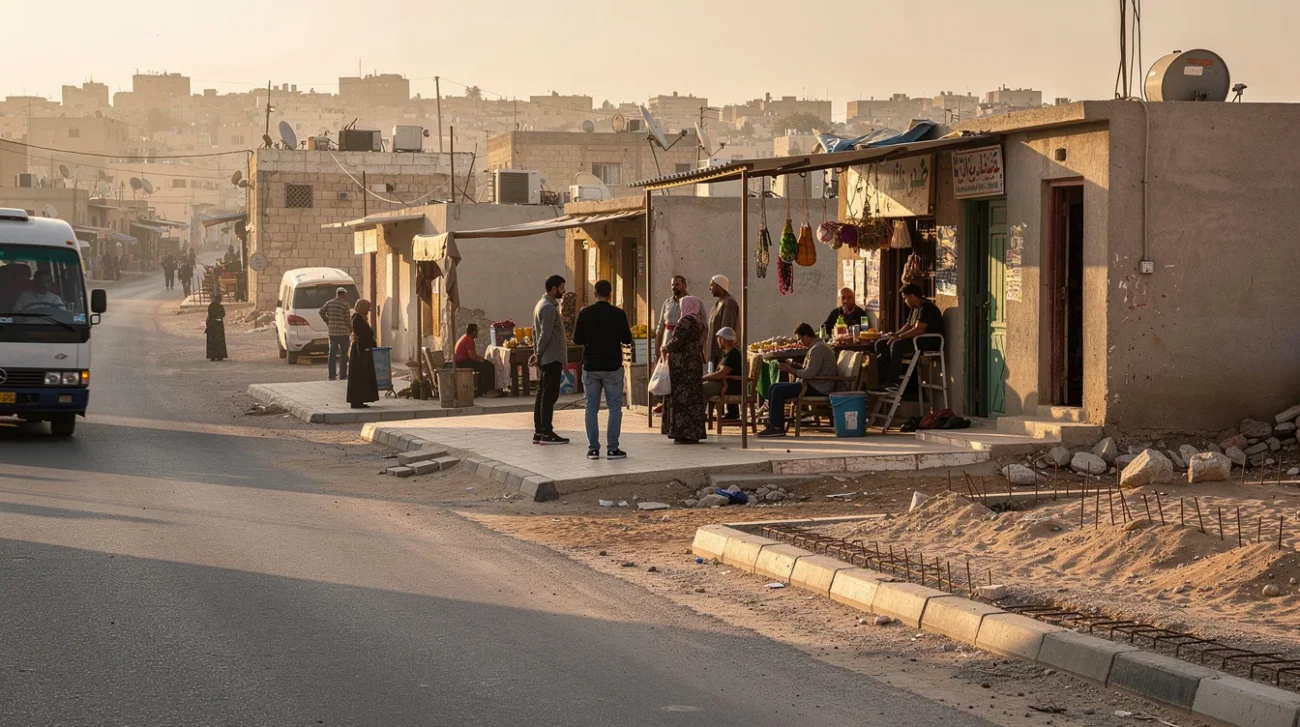
Zaatari in Jordan, established in 2012 for people fleeing Syria, demonstrates how quickly the category of camp becomes inadequate. Residents developed shops, services and social networks within an environment initially organised around humanitarian provision. Its commercial life does not prove that camp conditions are acceptable. It proves that residents are urban actors, capable of producing economic and civic complexity despite restrictive circumstances. Planning should support those capacities instead of treating every activity beyond shelter as an exception.
There is a useful, limited parallel in ELEMENTAL’s Quinta Monroy housing in Iquique, Chile. Completed in 2004, the project accommodated future household expansion rather than pretending that an initial dwelling was a finished answer. It was not refugee housing, and its model should not be transplanted uncritically. Its relevant lesson is that permanence can mean capacity for change. For displaced households, secure occupancy, adaptable buildings and maintainable infrastructure would offer a much stronger starting point than structures designed to remain administratively temporary.
PRO: Make the investment belong to a shared city
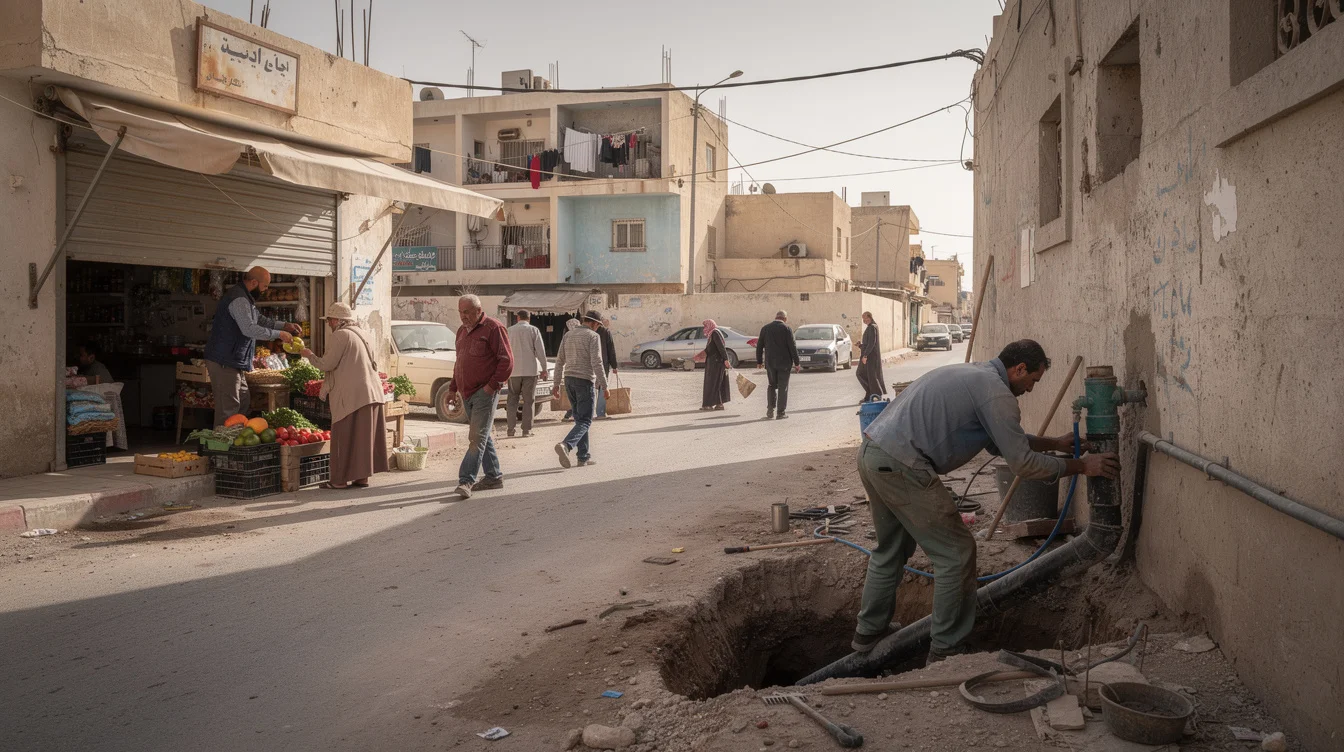
The urban promise becomes more convincing when infrastructure serves refugees and their neighbours together. A hospital connected to a regional health system is more valuable than an isolated clinic dependent on a short funding cycle. A bus route reaching employment districts matters more than a picturesque internal boulevard. Shared water networks, markets and schools can turn humanitarian expenditure into public investment, addressing the resentment that arises when neighbouring communities experience assistance as a parallel system from which they are excluded.
Kalobeyei in Kenya, established in 2016 near Kakuma, is an important reference because its planning agenda explicitly links refugee and host-community development. It is not proof that integration has been achieved: livelihoods, water availability and the wider economic setting remain difficult constraints. But it changes the question from how to service a contained population to how settlement investment might strengthen a region. BIG’s vision should be assessed against that more demanding territorial scale.
Resident governance would make this argument stronger still. Give neighbourhood bodies authority over maintenance priorities, public-space budgets and the allocation of community premises. Pay residents for technical and organisational work rather than repeatedly extracting unpaid consultation. Connect those bodies to host municipalities wherever the legal framework permits. A durable settlement can then become a platform for political and economic participation, not merely better accommodation. The positive case is not for a perfected camp. It is for infrastructure that helps dissolve the distinction between humanitarian space and the ordinary city.
CONTRA: A complete settlement can become a complete enclosure
The danger begins when urban completeness is mistaken for urban freedom. A settlement can contain schools, workplaces, gardens and attractive housing while leaving residents unable to choose where they live or work. Indeed, providing everything inside can become the argument for allowing almost nothing outside. Architecture then supplies a polished alibi for containment: why demand access to the host city when the designated refugee city supposedly meets every need?
Dadaab in Kenya exposes the inadequacy of judging permanence through buildings alone. Its camps have existed since the early 1990s, generating markets, institutions and generations of lived experience. Yet decades of occupation have not automatically produced ordinary membership in the surrounding political community. Policies and reform efforts change, but the central lesson survives: accumulated urban life does not itself deliver freedom of movement, secure legal status or equal access to opportunity. A permanent address and a durable solution are different things.
This is where the word “city” needs scrutiny. Does it describe a municipality connected to a wider system of rights and responsibilities, or simply a large settlement administered through a special regime? The relevant boundary may be a checkpoint, but it may also be a permit requirement, an unaffordable journey or a rule tying assistance to residence. None can be solved by architectural form alone. A permeable street plan means little if the legal border travels with the resident.
CONTRA: Participation is not power, and services are not rights
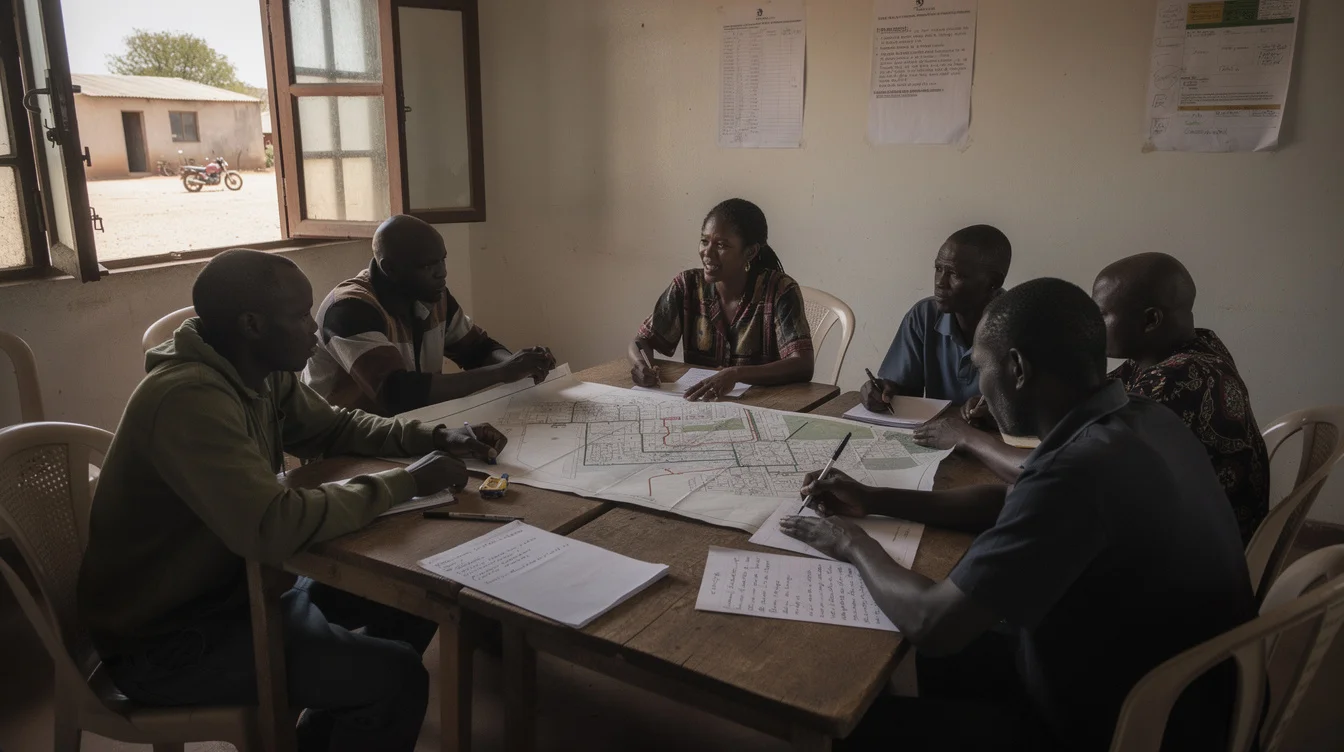
Resident governance also has a counterfeit version. A committee may choose playground equipment while an external authority controls land, policing, business licences and eligibility to remain. That is consultation within dependency, not meaningful urban self-government. For BIG’s proposition to avoid institutionalising exclusion, governance must be judged by decisions residents can actually make, contest and overturn—not by the presence of a community room in the programme.
Berlin’s use of the former Tempelhof airport for emergency accommodation offers a different warning. Being physically inside a major city does not automatically produce integration when people remain housed in exceptional institutional conditions. Conversely, an outlying neighbourhood need not be exclusionary if affordable transport, accessible services and enforceable rights connect it to the wider metropolis. Distance matters, but administrative separation can be just as decisive. Location and legal status must therefore be evaluated together.
Before celebrating a dedicated refugee city, ask who owns its land, whether residents can obtain secure tenure, and whether leaving means losing essential support. Ask whether its schools and qualifications connect to national systems, and whether its economy offers access to customers and employers beyond humanitarian procurement. Most importantly, ask whether residents retain meaningful routes towards local integration, voluntary return when safe, or resettlement where available. These are political commitments that a design proposal cannot guarantee. Without them, the ambitious masterplan risks giving permanence to the wrong thing: not the home, but the exception under which its occupants are governed.
FAQ: When does a refugee city become an ordinary city?
What is the central issue raised by BIG’s Refugee Cities proposal?
It brings the need for durable urban infrastructure into tension with the danger of permanent separation. The decisive test is whether long-term investment expands residents’ choices and connections or makes a distinct, restricted settlement easier to sustain indefinitely.
Does permanent housing make refugee status permanent?
No. Building lifespan does not determine legal status. Durable housing can support stability while people pursue local integration, voluntary return or resettlement. Nor should improvements to accommodation be treated as evidence that someone no longer needs international protection.
What connections to host cities matter most?
Affordable transport, access to employment, shared education and health systems, and functioning infrastructure networks are essential. They must be accompanied by practical freedom of movement. A bus stop is not meaningful integration if residents cannot legally or affordably make the journey.
What would meaningful resident governance involve?
Residents need representative institutions with defined powers, transparent budgets and ways to challenge decisions. Women, minorities and people with disabilities must be able to participate. Advisory meetings alone are insufficient when external agencies retain control over every consequential aspect of daily life.
If a refugee city offers a permanent home but not the freedom to leave, work elsewhere or shape its government, should we call it a city—or a camp that architecture has made easier to accept?
Watch the Mainifesto Short
Get the Mainifesto weekly — curated design debates, speculative ideas and the week's best articles every Saturday.
Editorial Perspectives
Questions and counterpoints developed by the Mainifesto editorial desk to extend the discussion.
Perspective 1
The article gets the distinction right: buildings should endure, not the legal category that keeps their residents outside civic life. Working with existing neighbourhoods teaches you that a city depends on overlapping lives and claims—not a pristine enclave where refugees remain guests forever.
Perspective 2
I’d still call it a city, albeit a badly governed one; calling it a camp understates what permanent homes, utilities and infrastructure actually deliver. Build those improvements now, while pressing for mobility and employment rights—people shouldn’t have to wait for a political settlement to get a functioning bathroom.
Perspective 3
Show me the resident journey, not just the masterplan: can someone take a job across town, move closer to family or challenge a housing decision? If every route ends at a permission desk, better architecture has improved the accommodation without giving residents control over their lives.
Perspective 4
We can optimise density, daylight and infrastructure, but who gets to change the model after people move in? I’d want BIG’s proposal tested against a resident who leaves, starts a business elsewhere or organises to replace the governing authority—not just one who occupies the housing as designed.