
Who Is the New San Siro Really Being Built For?
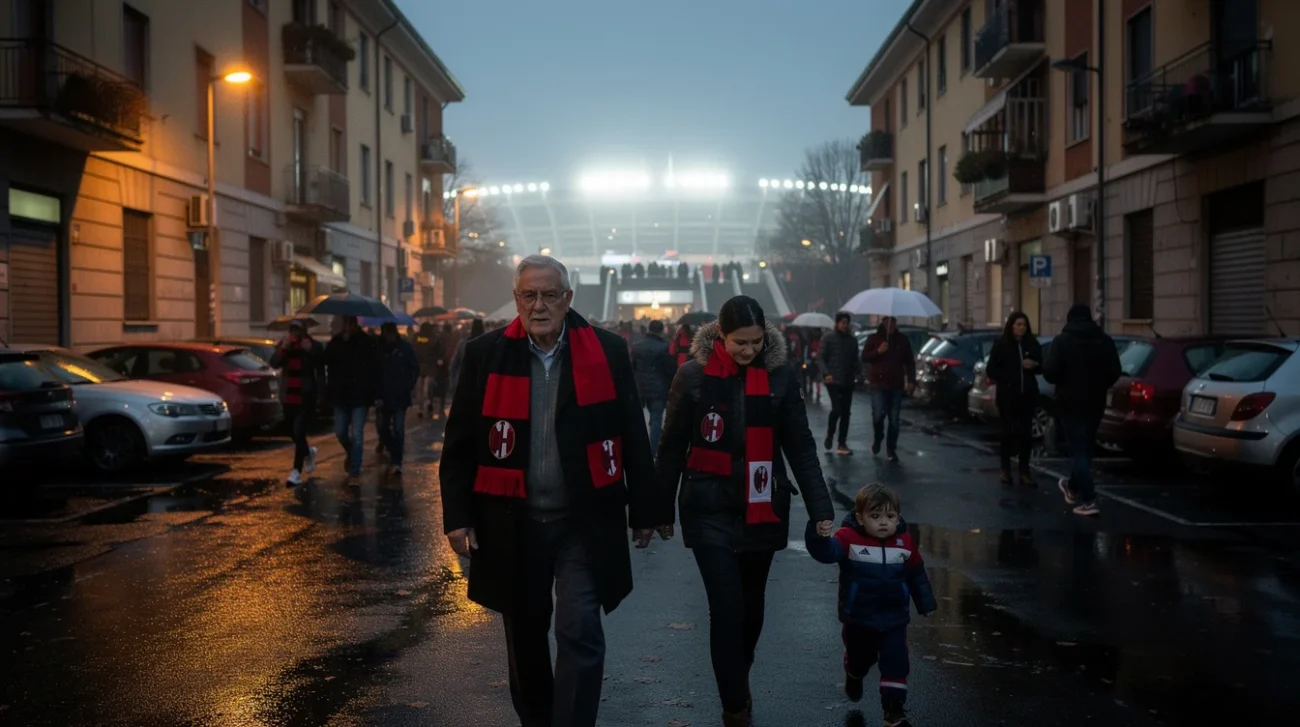
A stadium can improve almost everything measurable and still become a worse place to watch football. Seats can be more comfortable, queues shorter, hospitality more elaborate—and the people who made the ground matter can find themselves priced out. That is the uncomfortable test facing Foster + Partners and Manica’s proposed Generali Stadium for AC Milan and Inter Milan, unveiled as a replacement for Milan’s landmark San Siro.
Dezeen’s report of 29 October 2026 identifies the architects, clubs and replacement project. The source context available here does not establish ticket prices, the allocation of supporter accommodation or detailed matchday transport arrangements. Those gaps matter: architectural imagery cannot answer a question that ultimately concerns who gets through the gates.
The new San Siro should be judged not by how convincingly it represents football, but by how generously it accommodates football’s public. There is a serious case for replacement. There is an equally serious case that the contemporary stadium business model could squander its benefits.
PRO: Better Facilities Are Not a Luxury
The strongest argument for a new stadium begins with ordinary bodies, not corporate boxes. A supporter using a wheelchair needs an enjoyable sightline, not merely an accessible entrance. A parent needs toilets that do not consume most of half-time. An older fan needs manageable gradients, places to pause and clear routes between public transport and the seat. These are architectural obligations, not optional upgrades.
Replacement offers an opportunity to coordinate these systems from the outset. Step-free circulation, shelter, acoustics, sanitation and emergency movement can be designed together rather than negotiated around inherited constraints. That does not prove demolition is necessary; it establishes why a new building might offer genuine public value.
Foster + Partners’ Wembley Stadium, designed with HOK Sport, now Populous, demonstrates the practice’s experience with the enormous circulation and structural demands of a national football venue. Manica brings specialist sports-design experience, including its work on Allegiant Stadium in Las Vegas. Neither precedent guarantees affordability in Milan. Both make it reasonable to expect sophisticated technical delivery.
The critical distinction is between universal improvement and selective comfort. A roof that protects ordinary seats delivers differently from a spectacular hospitality lounge. Generous concourses matter when their usable space survives the insertion of bars and retail counters. If the cheapest ticket buys a substantially better matchday, modernisation has a defensible social purpose.
PRO: Commercial Income Could Support Collective Experience
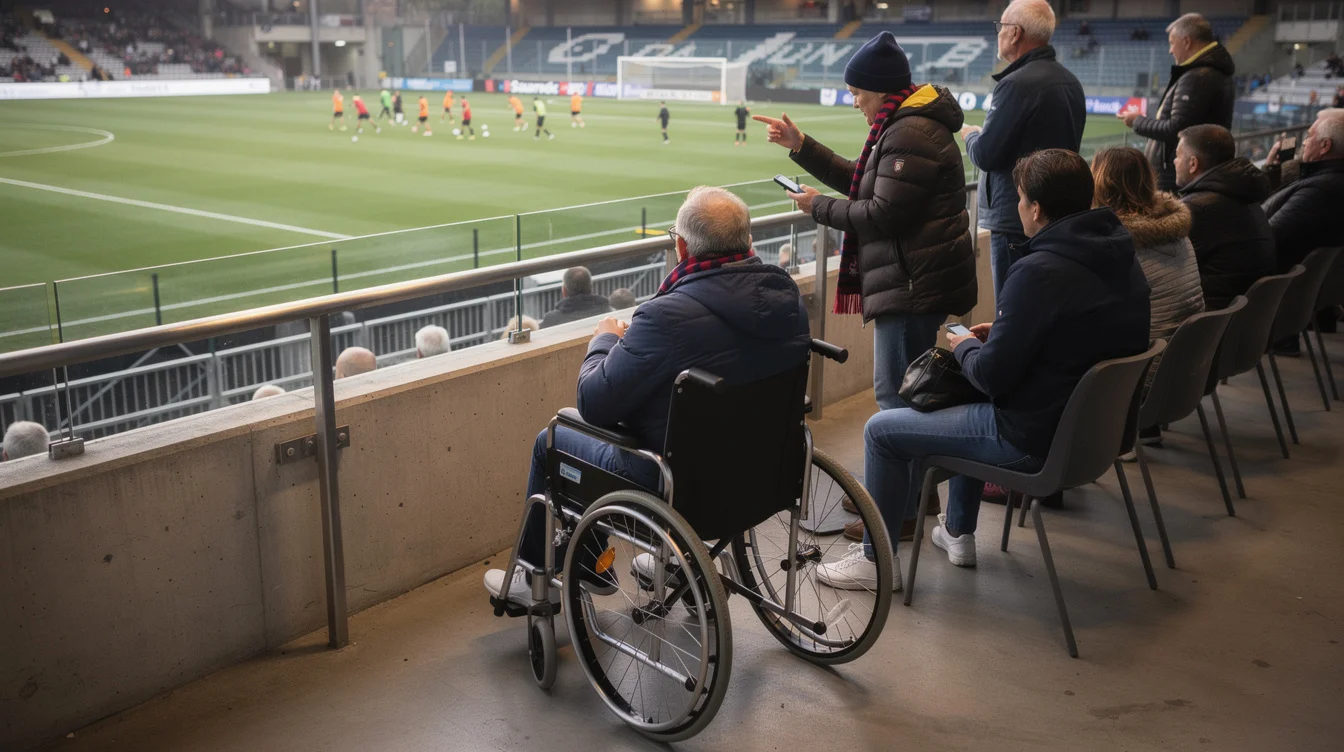
Premium hospitality is not inherently the enemy of accessible football. In principle, income from suites, sponsorship, food and events can reduce pressure to extract more money from every ordinary seat. The problem is not that a stadium earns revenue; it is whether that revenue supports access or simply establishes a higher target for the next financial year.
Populous’s Tottenham Hotspur Stadium offers a useful spatial reference. Its approximately 17,500-seat single-tier South Stand shows that a commercially ambitious new venue can still give collective support a prominent architectural position. A large, continuous supporter stand is not a ticket-pricing policy, but it demonstrates that atmosphere need not be treated as a leftover between premium products.
For Milan’s two clubs, the opportunity would be to protect the distinct identities of their home support through meaningful consultation: contiguous supporter sectors, practical storage arrangements for approved banners, suitable gathering areas and rules that recognise organised support rather than merely marketing its image.
Matchday access could also become a design priority rather than an operational afterthought. The San Siro district already has the M5 metro connection. A replacement project could improve the walking environment around that existing public investment, with legible routes, weather protection where feasible and spaces that accommodate people waiting after the final whistle. The question echoes the challenge of keeping a car-free Oxford Street accessible: improving a destination must include making it practical to reach.
These benefits remain conditional. But conditions can become commitments: a published affordable-ticket allocation, accessible seating across price bands and a transport strategy tested against a full crowd. Commercial ambition would then have something concrete to offer the collective.
CONTRA: The Cheapest Seat Can Become an Alibi
The opposing argument starts with a familiar sleight of hand: calling a stadium accessible because some inexpensive tickets exist. A small allocation can produce an attractive headline while most supporters face higher costs, restrictive eligibility or scarce availability. The relevant measure is not the lowest advertised price. It is how many people can regularly attend at a price they can sustain.
Any assessment of Generali Stadium therefore needs the distribution of prices across the ground, not a reassuring entry point. How many seats would remain available at lower prices? Would those seats have acceptable views? Could friends obtain adjacent tickets? Would domestic league fixtures remain affordable without mandatory bundles or additional purchases?
Premium accommodation also consumes more than floor area. Its entrances, kitchens, servicing and circulation can shape the entire building. Where privileged routes receive direct, sheltered access while ordinary supporters face longer perimeter walks, commercial hierarchy becomes physical geography.
Arsenal’s move from Highbury to Emirates Stadium, designed by HOK Sport, remains a useful reference for the difference between building a larger commercial platform and preserving the experience of an older ground. It is not evidence that Milan’s outcome is predetermined. It is a warning against presenting greater capacity or improved infrastructure as proof of social continuity.
There is no automatic mechanism that turns hospitality income into cheaper admission. Without a durable commitment from the clubs, cross-subsidy is a possibility, not a benefit that the architects or promoters can legitimately claim in advance.
CONTRA: Atmosphere Cannot Be Bought Back as Décor
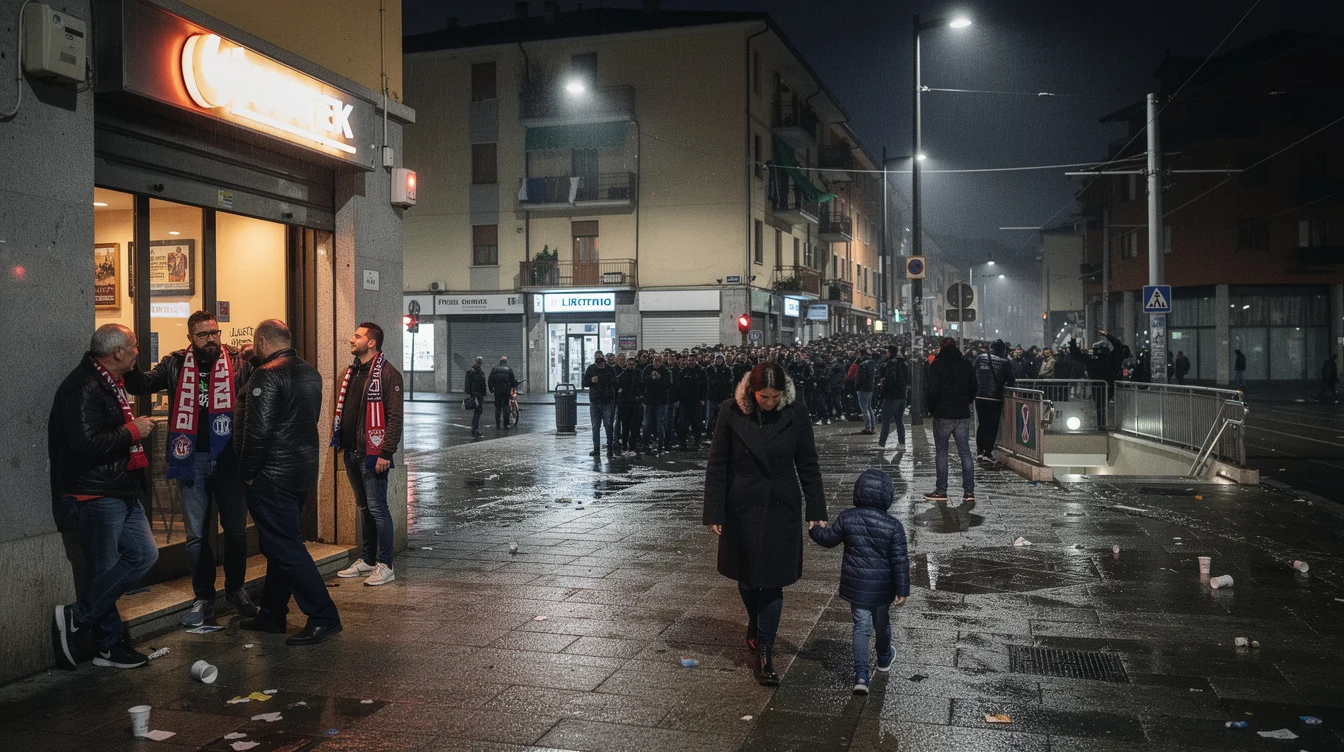
Football’s collective experience begins before the turnstile. It includes meeting at a familiar bar, approaching with friends, recognising regular faces and occupying space without constantly making a purchase. A replacement can preserve the outline of a football ritual while transferring its informal life into managed commercial territory.
This is where supporter space must mean more than a branded fan zone. A plaza lined with outlets is not necessarily a civic room. As with Plaza Salamero’s park above a car park, the test is whether the space works as a public place. Can people gather there without buying anything? Are there places to sit? Can supporters display their identity within reasonable safety rules? Does the space remain welcoming when there is no match?
Herzog & de Meuron’s Allianz Arena in Munich is a useful reminder to examine the stadium and its approach as one experience. Its relationship with Fröttmaning station makes the pedestrian journey an essential part of matchday. In Milan, assessing the proposed replacement requires equivalent attention to walking distances, crossing points, crowd dispersal and interchange capacity—not simply a metro symbol on a location diagram.
Those practical questions carry cultural consequences. If families must arrive much earlier to negotiate queues, if disabled supporters take circuitous routes, or if late departures become difficult, apparently improved facilities can impose new burdens.
Nor does placing vocal supporters together guarantee their survival as a community. Pricing, ticket-transfer rules and everyday management can fragment a group that the seating geometry appears to protect. Architecture can provide the conditions for atmosphere. It cannot reconstruct a displaced public by turning up the sound system.
The Verdict: Access Must Become a Design Deliverable
The strongest position is neither automatic preservation nor unconditional enthusiasm for replacement. It is to refuse the idea that social performance sits outside architectural judgment. Ticketing, supporter accommodation and matchday access determine how the building actually works.
Before the proposal earns praise as an improvement for fans, its promoters should publish a credible access framework: ticket quantities by price band, accessible viewing choices, protected supporter areas and independently scrutinised arrival and departure plans. Supporters should help define those measures, not merely respond to a finished presentation.
The existing San Siro should not be romanticised into immunity from criticism. Equally, its replacement should not receive social credit on the strength of technical competence. A successful new stadium would make a better experience ordinary, rather than make ordinary attendance a premium purchase. That is the standard Foster + Partners, Manica and the two clubs should be pressed to meet.
FAQ: What Would Make the New San Siro Fairer?
Who is designing the proposed San Siro replacement?
Foster + Partners and Manica have unveiled the proposed Generali Stadium for AC Milan and Inter Milan. According to the supplied Dezeen report, the project is intended to replace Milan’s existing San Siro stadium.
Will tickets at the new stadium be more expensive?
The available source context does not establish future ticket prices. A meaningful affordability assessment would require published price bands, the number of tickets in each band, eligibility rules and any mandatory additional charges—not just the cheapest advertised ticket.
Can premium hospitality benefit ordinary supporters?
Yes, if its revenue helps fund affordable admission and improvements available throughout the ground. That outcome requires explicit club commitments. Hospitality income alone does not guarantee lower prices, better supporter facilities or a fair distribution of investment.
What should a fair matchday access plan include?
It should coordinate metro capacity, safe walking routes, step-free journeys, clear wayfinding and crowd dispersal. Supporter involvement and testing under full-attendance conditions are essential; proximity to a station does not by itself establish convenient access.
If Milan gets a more comfortable, more profitable stadium but fewer ordinary supporters can make it their regular home, who should be allowed to call that progress?
Get the Mainifesto weekly — curated design debates, speculative ideas and the week's best articles every Saturday.
Editorial Perspectives
Questions and counterpoints developed by the Mainifesto editorial desk to extend the discussion.
Perspective 1
If regular supporters are priced out, that is displacement dressed up as renewal. San Siro’s heritage lives in repeated visits as much as in concrete; I’d back upgrading what exists before treating demolition and premium seating as the obvious future.
Perspective 2
I’d back the replacement: keeping an ageing stadium is not automatically the cheaper or fairer option, and better hospitality can help fund facilities everyone uses. Judge the proposal on its costs and binding commitments to affordable tickets, not on whether it makes more money.
Perspective 3
Comfort matters, but a supporter who can only afford to come twice a season hasn’t necessarily had their experience improved. Show me the ticket mix, renewal prices and concourse provision for ordinary fans—not just the lounges—and then we can talk about a better stadium.
Perspective 4
Follow the land deal, transport spending and operating revenue: who pays, who captures the upside, and who gets a say? If Milan is contributing public value, affordable access needs to be an enforceable obligation, not something the clubs can quietly drop when revenues disappoint.