
A Car-Free Oxford Street Still Needs a Way In
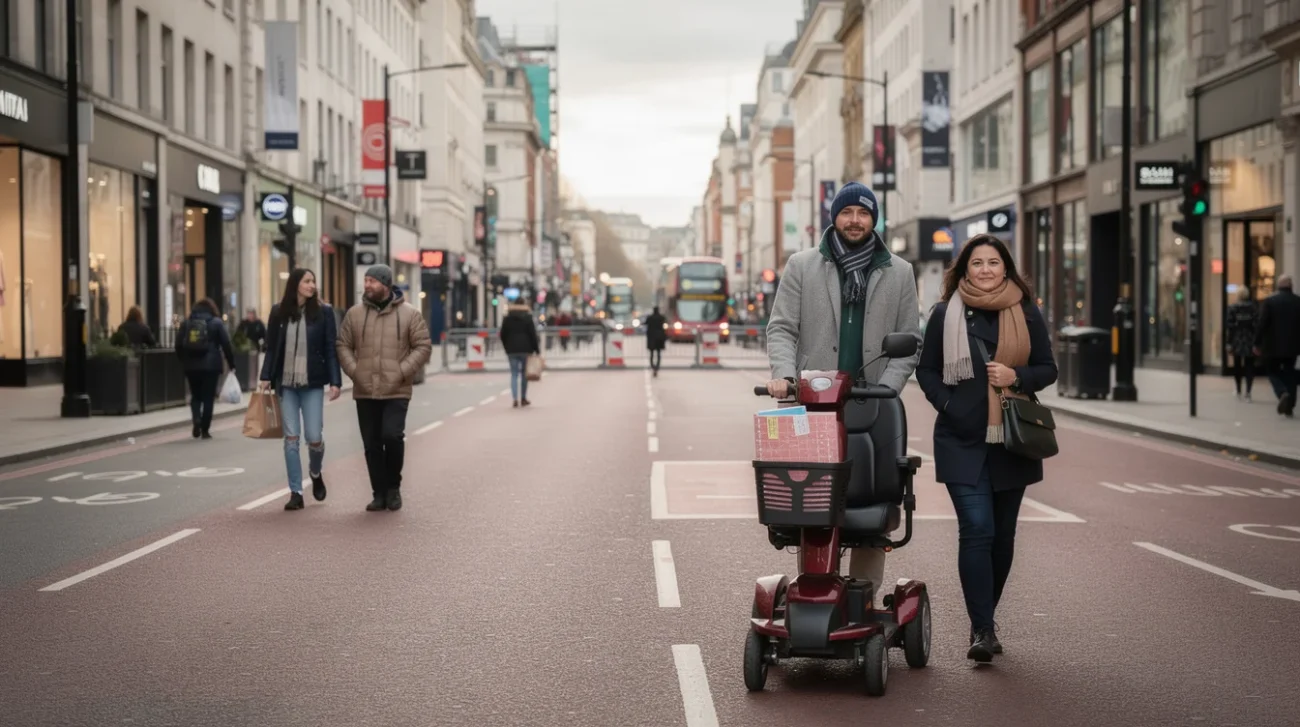
A street without cars can still tell people they do not belong. It can do so with a long walk from the nearest usable drop-off, a bench without a backrest, or a step-free station exit that deposits passengers on the wrong side of an exhausting detour. Oxford Street’s pedestrianisation deserves support. It does not deserve an accessibility certificate simply because the traffic has disappeared.
Dezeen’s report of 27 October 2026 describes almost a kilometre of the central London shopping street permanently closed to vehicle traffic as the first phase of pedestrianisation began. That is a consequential change to one of Britain’s most recognisable commercial landscapes. But the report’s headline fact establishes a traffic condition, not a complete account of the access arrangements. The necessary next step is scrutiny, not an assumption that the scheme has either solved or ignored them.
The provocation is straightforward: Oxford Street should be judged from the point where someone arrives, not from the point where a photographer finds an empty carriageway. For someone with limited stamina, chronic pain or a mobility impairment, the decisive design might sit a side street away from the celebrated transformation.
The pedestrian is not a single kind of body
Pedestrianisation has a persuasive architectural image: people reclaiming space previously allocated to engines. Copenhagen’s Strøget, pedestrianised in 1962, remains a foundational reference. Jan Gehl’s subsequent work helped establish public life, lingering and human-scale movement as serious subjects of urban design rather than decorative consequences of traffic engineering.
Oxford Street needs that tradition, but it also needs to challenge the frictionless figure who haunts its imagery: the pedestrian who can walk indefinitely, stand while waiting and negotiate crowds without difficulty. Walking ability is not a binary distinction between wheelchair users and everyone else. Someone may manage a short shopping trip only if the bus stop, entrance, seat and toilet form a reliable sequence.
Removing traffic can deliver substantial access benefits. It can reduce vehicle conflicts, release space for wheelchairs and mobility scooters, and make crossing the street less intimidating. Those gains matter. They do not cancel the costs of moving an arrival point farther away.
The right question is not whether pedestrianisation is accessible in principle, but which journeys become easier and which become harder. An average improvement can conceal a severe loss for a smaller group. A public street cannot treat that group as an acceptable rounding error.
Design the arrival before celebrating the destination
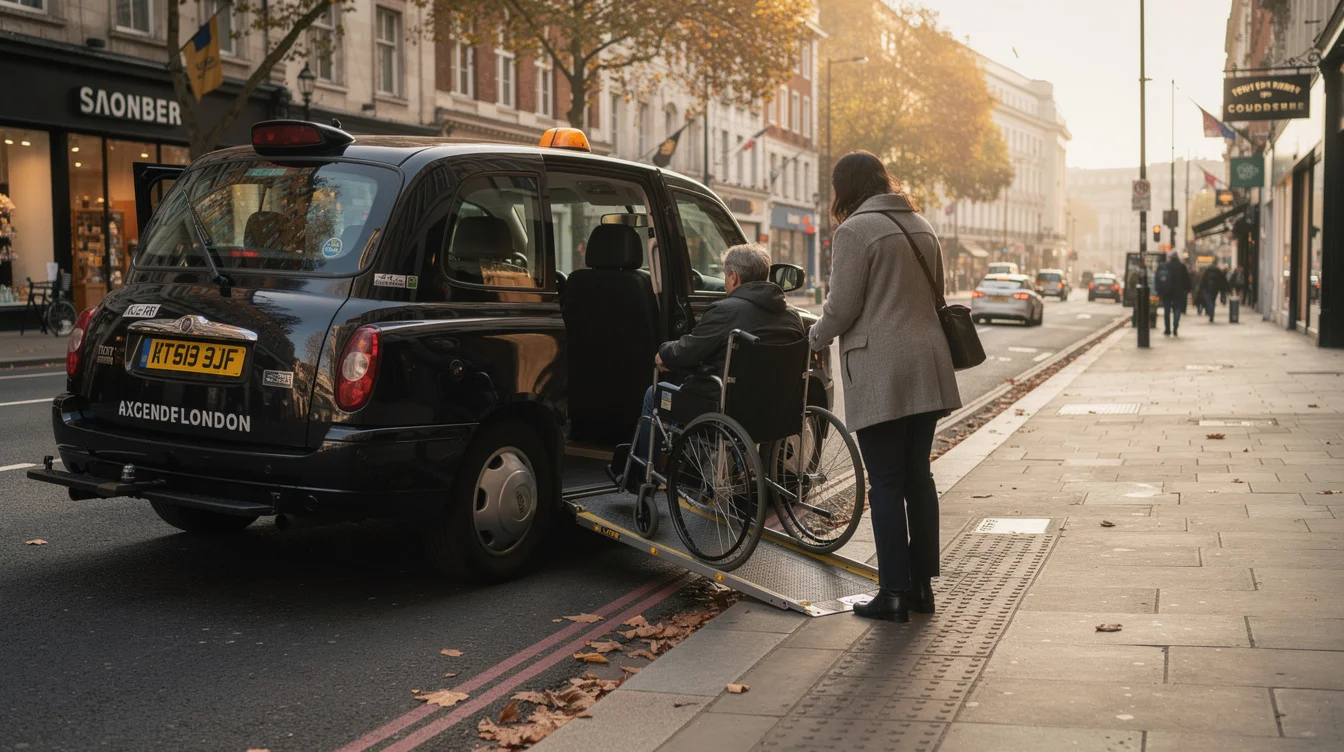
The first access drawing should extend beyond the pedestrianised boundary. It should connect bus stops, taxi and private-hire drop-offs, accessible parking, station lifts and shop entrances. Crucially, it should measure actual routes rather than optimistic circles on a map. A crossing, queue or missing dropped kerb can turn a short distance into a difficult journey. The consequences of distance extend beyond shopping streets, as the debate over cheap housing and expensive distance in Santiago makes clear.
Bond Street’s Elizabeth line facilities offer a relevant local reference: step-free rail infrastructure can make central London more reachable. But a lift journey is only one component of access. The usable exit, pavement conditions and distance to a particular destination still determine whether someone can complete the trip. A station symbol cannot stand in for a door-to-door assessment.
Oxford Street’s perimeter should therefore be treated as a series of arrival rooms, not a defensive edge. A usable drop-off needs enough space to deploy a wheelchair ramp, a clear connection to the footway and somewhere nearby to sit. It must not become a loading bay by default whenever enforcement relaxes.
Publish the resulting distances and test them with disabled users, including people who walk but cannot walk far. Where a journey deteriorates, identify a remedy. Moving a bus route is not merely a transport decision when it changes who can reach a shop independently.
Seating is infrastructure, not visual clutter
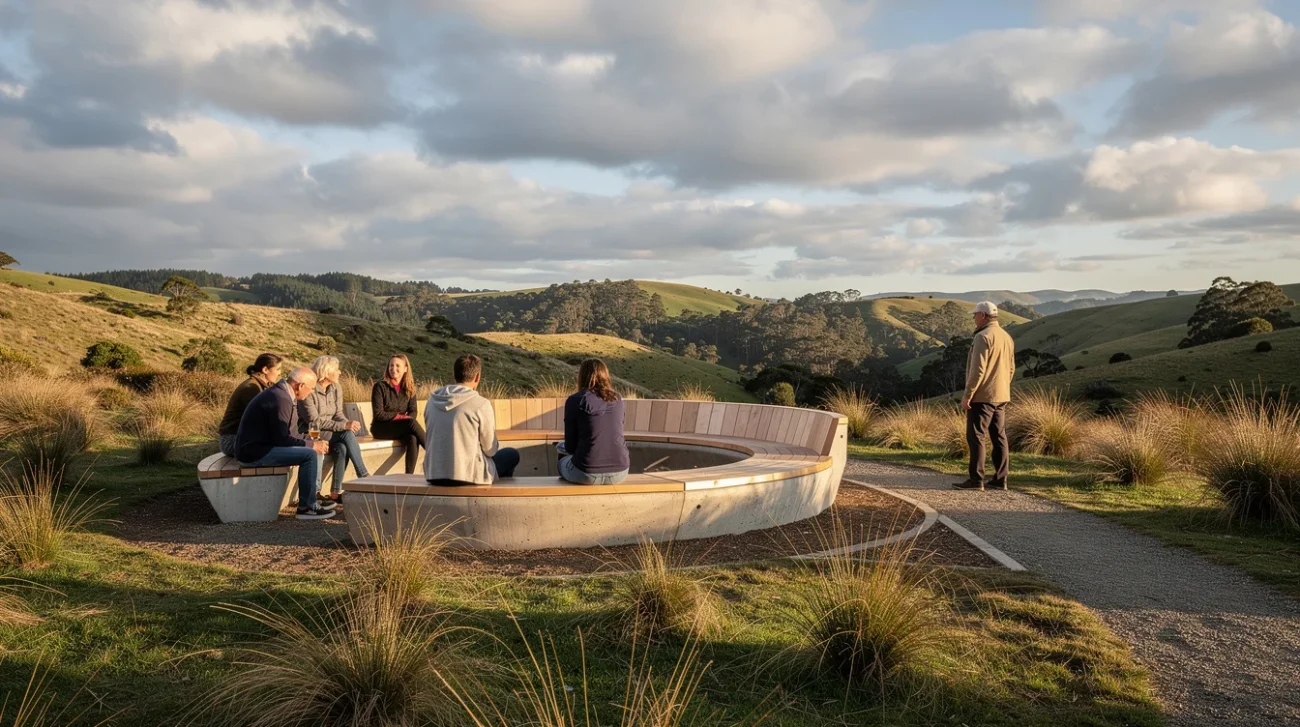
Seating is where the rhetoric of welcome becomes physical. A beautifully detailed stone block may photograph well while being difficult to rise from, uncomfortable in cold weather and useless to someone who needs back support. A café chair is not equivalent public provision if occupying it requires buying something.
William H. Whyte’s observations of New York’s public spaces made the apparently obvious point that places to sit help produce places where people stay. Oxford Street should take that insight further: seats also allow some people to move. For a visitor managing fatigue, the next resting point can be what makes the next stretch possible.
The redesign needs a legible network of free seating, with supportive backs and armrests among a varied range of options. Adjacent spaces should allow wheelchair users to sit with companions rather than behind them. Some seats should support sociability; others should offer a quieter position away from the busiest pedestrian stream.
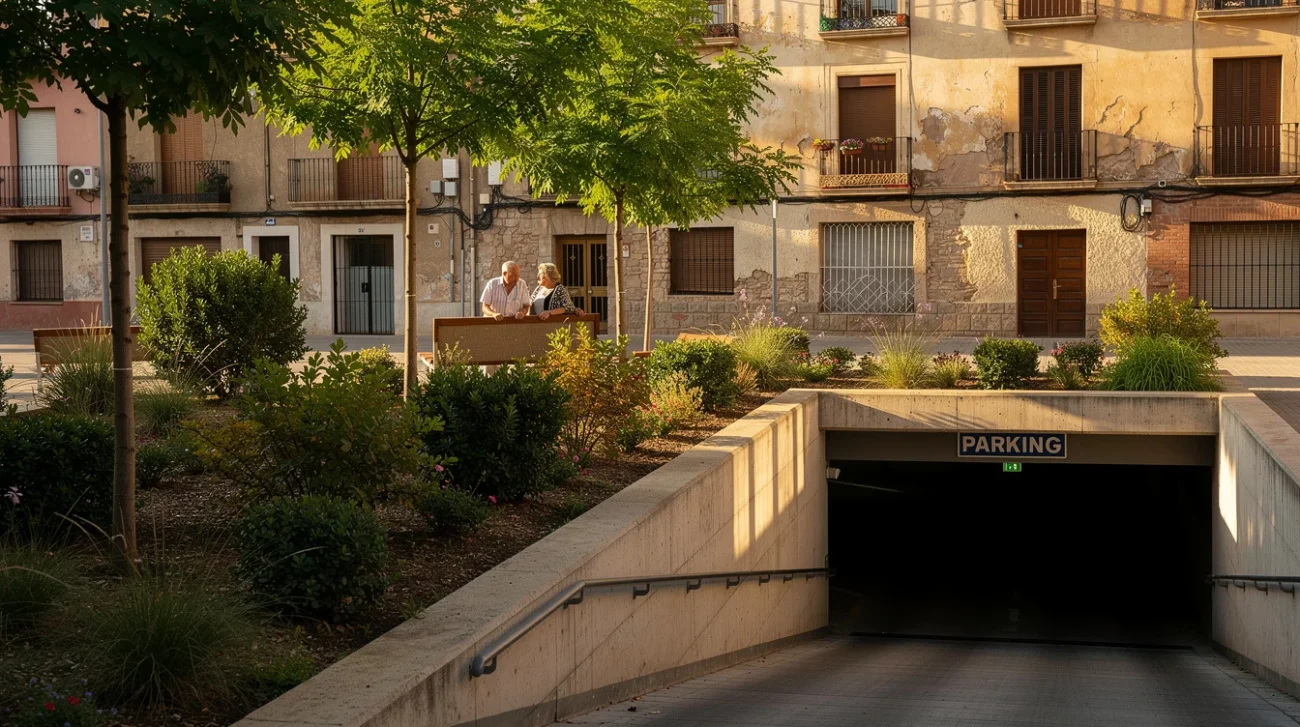
Spacing should follow access testing, not the rhythm of retail frontages or a designer’s preference for an uncluttered vista. Trees, shade and shelter can improve comfort, but planters must not narrow the route. A bench is not an obstacle to commercial success. The absence of one can be an obstacle to participation. Projects such as Plaza Salamero’s park above a car park raise a related question: what makes reclaimed public space genuinely usable?
Step-free must also mean readable and continuous
A level surface is useful, but a visually seamless surface is not automatically inclusive. Blind and partially sighted people may need detectable boundaries and consistent navigational cues. Wheelchair users need smooth connections without abrupt upstands. These requirements demand coordination, not a simplistic choice between conventional kerbs and an undifferentiated plaza.
London’s Exhibition Road, redesigned by Dixon Jones, is a useful cautionary reference. Its shared-surface approach helped expose the tension between visual continuity and the need for legible separation. Oxford Street should not import the assumption that removing visual distinctions makes a space equally understandable to everyone.
A continuous clear route should survive shop queues, temporary displays, street furniture and maintenance work. Tactile information and tonal contrast need to form a coherent system, with drainage details that do not introduce wheel traps or awkward crossfalls. Shop thresholds matter too: an accessible public realm ending at an inaccessible doorway is an unfinished project.
The same discipline applies to information. Visitors should be able to locate lifts, accessible toilets, seating and usable crossings before committing to a route. Digital maps can help, but they cannot be the only answer. Batteries fail, mobile connections falter, and not everyone navigates through a screen. Legibility belongs in the street itself.
Deliveries are part of the access design
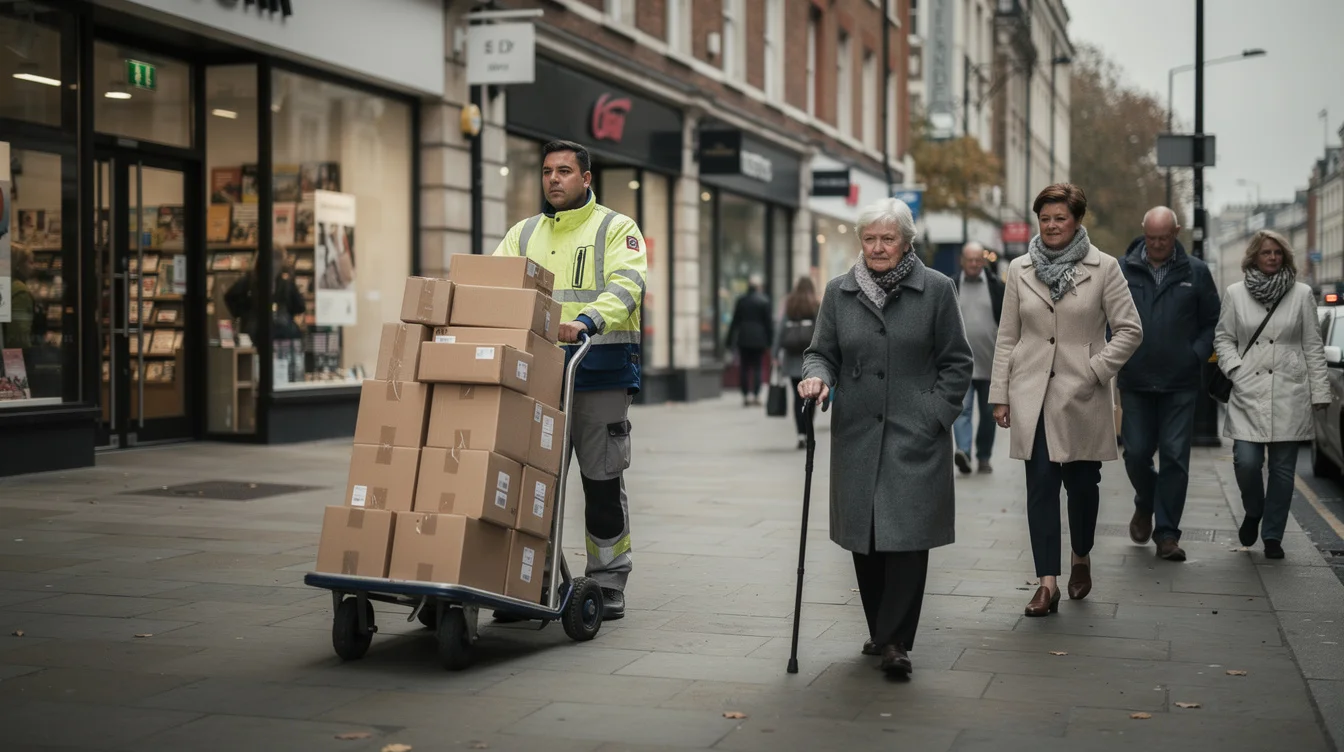
A retail street does not stop receiving goods when it stops receiving ordinary traffic. Parcels, food, waste collections, maintenance equipment and emergency access still require workable arrangements. If servicing is treated as an embarrassing technical appendix, it will return as pavement obstruction and conflict.
Barcelona’s superblocks provide a relevant comparison at the level of principle: reducing through-traffic does not remove the need to organise essential access. Oxford Street similarly needs an explicit account of where goods transfer, when servicing occurs and how routes remain clear. Whether any vehicle access is permitted within the closed section must be established through the actual scheme rules, not assumed from a rendering.
Where vehicles remain outside, perimeter loading and onward movement need enough capacity to prevent vans colonising accessible drop-offs. Cargo cycles and smaller delivery equipment can reduce some vehicle movements, but they are not weightless or conflict-free. A loaded trolley pushed through a crowd still needs a safe route and a worker with manageable conditions.
Time windows, consolidation and managed loading space are tools, not magic words. Their effectiveness depends on enforcement and daily operation. The access plan should identify who intervenes when a delivery blocks a clear route—and how quickly that blockage must be removed.
Make the first phase an accountable test
The strongest argument for this first phase is that it can establish a better standard than the traffic-dominated street it replaces. That requires evidence from ordinary days: wet afternoons, busy weekends, disrupted lifts and the periods when deliveries arrive. Opening-day photographs cannot supply it.
Transport for London’s Legible London wayfinding programme demonstrates the value of treating pedestrian navigation as a coordinated system. Oxford Street needs comparable coherence across arrival information, resting places, clear routes and servicing rules. These cannot be separate commissions whose contradictions are left for users to negotiate.
Publish an access baseline and repeat the assessment after occupation. Measure usable walking and wheeling distances from arrival points, seat availability, route obstructions and the reliability of step-free connections. Pay disabled participants to test real errands rather than asking them merely to endorse drawings. Record journeys abandoned as well as journeys completed.
Car-free should describe a means, not a moral finish line. The ambition is worth defending precisely because it can make Oxford Street more generous. But a generous street does not simply offer more space to those already able to reach it. It designs the way in, the pause along the way and the journey home.
FAQ
Does pedestrianisation automatically make Oxford Street accessible?
No. Removing vehicle traffic can reduce conflicts and create more usable space, but accessibility also depends on arrival distances, step-free connections, seating, toilets and unobstructed routes. These need to work as a continuous journey.
What should happen to accessible drop-offs?
They should be located and managed as essential infrastructure, with safe boarding space and a direct, usable route to destinations. Their suitability should be tested with disabled passengers rather than judged solely by distance on a map.
What makes seating genuinely inclusive?
Free access, reliable availability and a choice of configurations matter. Supportive backs and armrests, companion space for wheelchair users, and locations outside the main pedestrian flow can make resting practical rather than merely possible.
Can deliveries coexist with a pedestrianised shopping street?
Yes, through arrangements suited to the closure rules, potentially including perimeter loading, consolidation and controlled servicing periods where permitted. The test is whether goods and waste move without blocking accessible arrivals or pedestrian routes.
If Oxford Street becomes easier to stroll along but harder for some people to reach, what should the city change before calling it a success?
Get the Mainifesto weekly — curated design debates, speculative ideas and the week's best articles every Saturday.
Editorial Perspectives
Questions and counterpoints developed by the Mainifesto editorial desk to extend the discussion.
Perspective 1
I'd model the whole journey, not just pedestrian flow along the shopping frontage: gradients, lift outages, crossing waits and distances between seats. Does the scheme still count as accessible when the nearest step-free arrival point is unavailable?
Perspective 2
Oxford Street is a working piece of the city, not a heritage backdrop waiting to be cleared for shoppers. Keep deliveries practical, provide places to sit without buying anything, and watch whether smaller businesses can survive the changes—otherwise pedestrianisation becomes another way of deciding who belongs.
Perspective 3
I'm happy to lose the cars, but the budget has to cover usable bus stops, accessible drop-offs and workable loading arrangements, not just paving. Agree who pays for maintenance and delivery management before opening day, or neighbouring streets and shop operators will inherit the bill.
Perspective 4
Walk the route from the bus stop with someone who needs frequent rests, then try it with luggage or a pushchair. If reaching a shop is exhausting or confusing, you've lost the customer before the front door; fund seating and clear, step-free connections before the launch campaign.
Perspective 5
The flâneur is a seductive figure, but a poor universal design brief: not everyone has the time or stamina to wander. Before celebrating Oxford Street as reclaimed public space, ask whose arrival has become more difficult—a handsome promenade can still be selective about its public.