

Cooling Offices Is Now a Design Problem
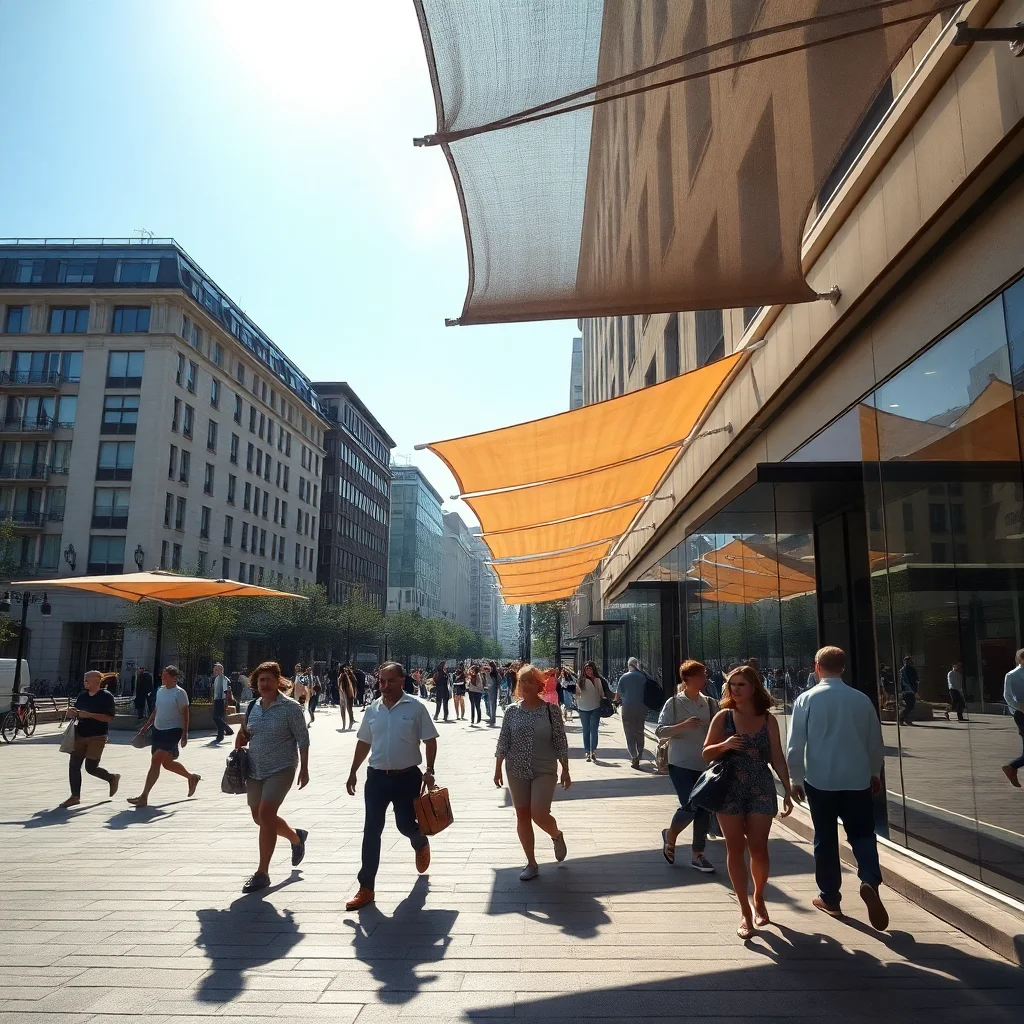
The office has a new climate politics
Air conditioning used to be an invisible perk, the humming backdrop to a normal workday. That era is over. As heatwaves intensify from Paris to Perth, from Phoenix to Nagasaki, cooling is no longer a comfort amenity that can be added late in the budget. It has become an architectural prerequisite, an operating cost, and a civic argument about who gets to stay productive when the mercury climbs. The central question is no longer whether offices should be cooled, but how much cooling a city can absorb before the cure becomes part of the disease.
This is why the debate has moved beyond energy bills. In a hot office, output drops, mistakes rise and absenteeism follows. In a hot city, the pressure spills outward: grid demand spikes, peak electricity prices jump, landlords upgrade mechanical systems, and public infrastructure is stretched by millions of individual responses to the same heat event. Monocle’s framing of keeping “the economy – and the office – cool” is not a nostalgic plea for chilled comfort. It is a warning that productivity now depends on thermal design, and thermal design determines carbon emissions. Those are no longer separate conversations.
Architecture has spent decades treating mechanical cooling as a technical afterthought, a service core hidden behind ceiling tiles. That is now a strategic failure. If offices are to remain usable in a warming climate, designers must think like engineers, operators and climate planners at once. The real challenge is to cool spaces without locking cities into higher power demand, more waste heat, and another generation of sealed glass boxes that depend on machines to correct their own mistakes.
Why heat turns office design into infrastructure
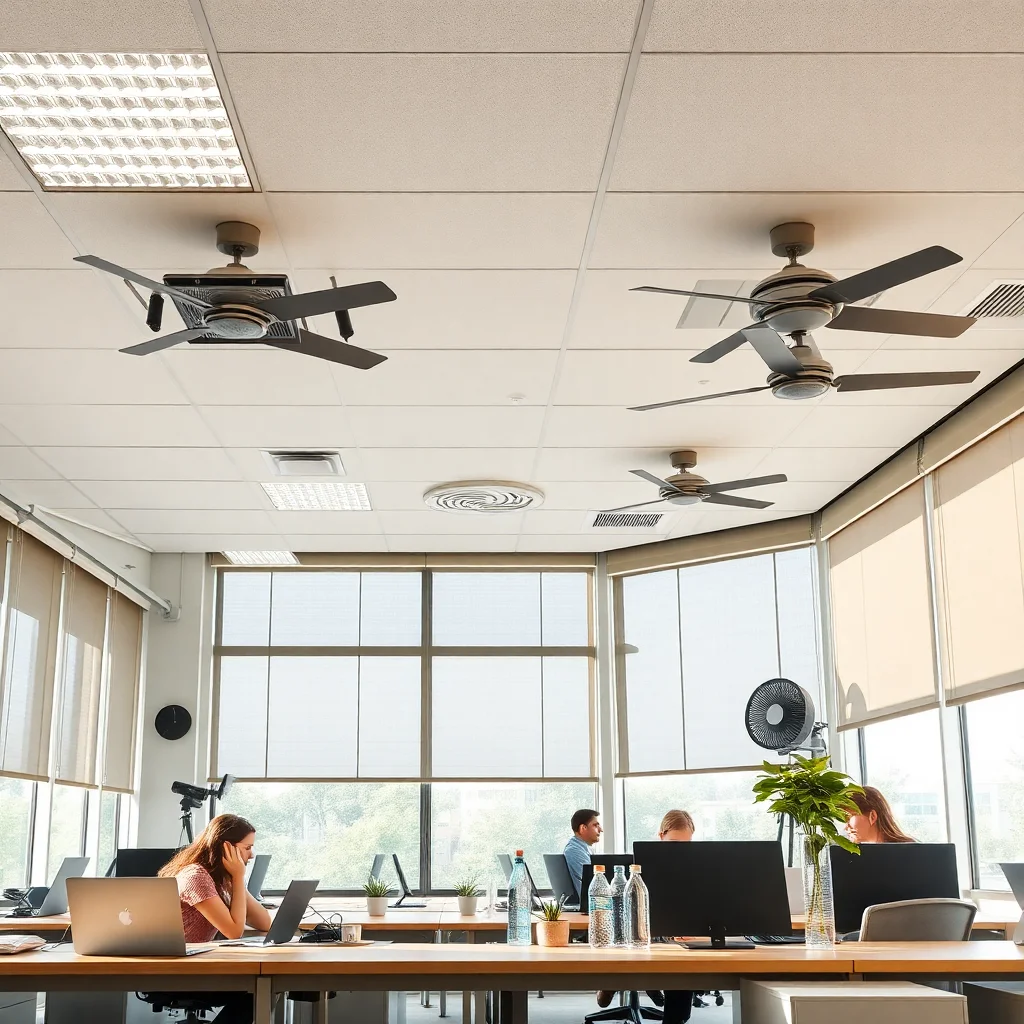
Heat changes how buildings are used long before it changes their forms. In cities such as Munich and Mulhouse, public agencies have already found themselves responding to heat alerts with practical instructions that sound less like lifestyle advice than emergency management. In offices, this translates into a harder metric: can a workplace still function during a prolonged heatwave without creating a comfort hierarchy, where only the most expensive tenants or best-served districts get proper cooling?
The problem is structural. Dense commercial districts concentrate internal loads from people, computers, lighting and equipment. Add sun-exposed façades, deep-plan floor plates and poorly shaded glazing, and the thermal burden becomes enormous. A building that “looks” efficient in winter can become a liability in summer, when its envelope admits too much solar gain and its ventilation strategy cannot purge the trapped heat. This is why the office must now be designed as an environmental system, not just a real-estate commodity.
Some of the most instructive precedents come from climates that have long treated heat seriously. In Singapore, office towers such as the CapitaSpring complex show how mixed-mode thinking, planting, shaded external circulation and high-performance systems can reduce the tyranny of the sealed box. In Australia, the Index Building in Melbourne — designed by 6+ b architect and celebrated for its passive-first logic — proved years ago that commercial architecture could reduce reliance on conventional air conditioning by using orientation, ventilation and material discipline. These are not aesthetic gestures. They are proof that comfort can be engineered differently. The same logic appears in broader debates about how cities grow and adapt: systems perform best when they respond to changing conditions instead of freezing them into one rigid model.
The carbon trap hidden inside comfort
Here is the uncomfortable truth: most office cooling is still a carbon amplifier. Even where electricity grids are decarbonising, peak demand during heatwaves can force utilities to call on the dirtiest generation available, or to expand infrastructure that sits idle most of the year. A more aggressively cooled office may lower short-term discomfort while increasing long-term emissions. In other words, the building solves a human problem by worsening a planetary one.
That tension is especially sharp in glass-heavy commercial architecture. The postwar fantasy of transparency remains seductive to developers and branding teams, but large glazed façades often create heat gains that must be fought with mechanical systems. The result is a vicious loop: more sun, more cooling; more cooling, more energy; more energy, more waste heat outdoors. Cities then warm further, which drives even more cooling demand. The office district becomes its own small climate machine, one that leaks heat into the street and intensifies the very conditions it is trying to survive.
Designers already have a language for escaping this trap, but it requires discipline. Shading, operable windows, thermal mass, daylight control, external blinds, night purge strategies and better zoning are not glamorous, but they reduce dependence on brute-force refrigeration. The best examples of contemporary climate design do not treat comfort as a single temperature number. They treat it as an adjustable range, with air movement, humidity, glare and material feel all part of the experience. That is a more humane office, not a less luxurious one.
The same trade-off between convenience and control appears in other technologies too, from wearables to surveillance systems. As one recent discussion asked, who owns the face when smart glasses become luxury? In both cases, the real issue is not the gadget itself but the rules built around it: access, visibility, and who gets to set the terms of comfort.
What the next cool office should actually do

The next generation of offices should be judged by how intelligently they manage heat, not by how cold they can become. That means moving from blanket cooling to targeted cooling, where zones are conditioned according to occupation, orientation and time of day. It means using work patterns to inform plant operation: meeting rooms, hot-desking areas and enclosed collaboration spaces all have different needs. It also means acknowledging that not every square metre deserves the same thermal treatment, especially in speculative office buildings that waste energy on underused circulation and oversized lobbies.
There is also a cultural question here. Many offices still overcool interiors to satisfy a narrow, outdated comfort norm that assumes a very specific body, suit, gendered dress code and activity level. This is not neutral; it is a design convention disguised as science. A more humane office broadens the acceptable thermal band, allows for seasonal adaptation, and provides microclimates: cooler focus areas, shaded breakout terraces, filtered fresh-air zones and material choices that make warmth feel tolerable rather than hostile. Thermal comfort should be designed for the real diversity of bodies and tasks, not for an idealized corporate standard.
Material and form matter as much as equipment. Deep reveals, external louvers, ceramic façades, fritted glass and high-albedo roofs all reduce cooling loads before machines are switched on. Interior planning matters too: a compact core, reduced atria where they are not needed, and daylighting that avoids solar punishment can dramatically improve performance. This is why cooling belongs in the same conversation as workplace strategy, tenant wellbeing and asset value. The question is not only how much energy the HVAC system uses, but how the building’s geometry makes that system necessary in the first place.
Office cooling is becoming a civic design test
Once cooling becomes normal everywhere, cities inherit the consequences. Peak demand forces utilities to invest in oversized grids. Waste heat from compressors pours into already hot streets. Small firms and older buildings are left at a competitive disadvantage if they cannot afford retrofits. Meanwhile, the office as a social space becomes more unequal: some workplaces become artificially cool islands, while others turn into summer liabilities. That is a design failure with economic consequences.
There is a more ambitious alternative. Offices can be conceived as part of a district-wide thermal strategy: shared cooling loops, heat recovery, district energy, planted public realm, shaded transit routes and buildings that reduce rather than multiply demand. In this model, the office does not hoard its own climate. It participates in one. Cities such as Copenhagen and parts of Paris have already shown that urban comfort can be distributed through design rather than left to individual mechanical excess. The same logic should apply to business districts now under stress from recurrent heatwaves.
The provocative point is simple: cooling is no longer about indulgence. It is about whether the office can remain a viable workplace in a warming century without accelerating the conditions that make it impossible to work. Architects, developers and policymakers must stop treating AC as a postscript. It belongs at the centre of design briefs, planning codes and corporate climate strategies. If the next office cannot stay cool intelligently, it has not been designed for the present, let alone the future.
FAQ
Why is office cooling suddenly a design issue?
Because heatwaves now affect productivity, tenant comfort, and building economics at the same time. Cooling is no longer just a mechanical add-on; it shapes façade design, planning, and energy demand across whole districts.
Can offices stay comfortable without heavy air conditioning?
Yes, but only if they are designed for it from the start. Shading, ventilation, thermal mass, better orientation, and occupant zoning can all reduce dependence on conventional cooling systems.
Does more cooling always mean more emissions?
Not always, but it often increases peak electricity demand, which can push grids toward dirtier backup generation. Even with cleaner electricity, waste heat and overcooling can still worsen urban temperatures.
What is the most realistic path forward for existing offices?
Retrofits that combine shading, controls, air-tightness improvements, efficient systems, and smarter zoning. The goal is not to eliminate cooling, but to make it precise enough to avoid carbon waste and thermal inequality.
So what should office design owe the city: perfect comfort for a few, or livable heat resilience for everyone?
Get the Mainifesto weekly — curated design debates, speculative ideas and the week's best articles every Saturday.
Editorial Perspectives
Questions and counterpoints developed by the Mainifesto editorial desk to extend the discussion.
Perspective 1
This is exactly where office design has to stop pretending comfort is a private perk and start acting like civic infrastructure. If the building can’t help the city stay cooler, it’s just exporting the problem somewhere else.
Perspective 2
I like the refusal of the usual smart-building fantasy here, because sensors and dashboards don’t solve a bad climate logic. The real question is whether we design offices that adapt to heat, or keep burning energy to preserve a fantasy of perfect air.
Perspective 3
The article points to a bigger spatial question: should thermal comfort be treated as a fixed target or as a variable condition across the day? I think offices owe the city resilience first, then comfort where it can be achieved without locking in higher emissions.
Perspective 4
Perfect comfort for a few is an expensive spec, and it ages badly when energy prices, regulations, and heatwaves all move at once. I’d rather see designs that are easier to maintain, easier to retrofit, and honest about what level of cooling is actually necessary.
Perspective 5
This is not a design debate, it’s a resource allocation debate dressed up as interiors. Office cooling should serve public resilience, because every oversized chilled lobby means more load on a city that already has too little capacity.