

Adaptive Reuse Is Now a Code Reform Fight

The real battleground is not style. It is the code.
Adaptive reuse used to be sold as a tasteful architectural virtue: keep the shell, save the embodied carbon, add a new program, and call it sustainable. That framing is now too timid. Across studios, schools, and policy forums, reuse is mutating into something more confrontational: a direct challenge to the regulations that still treat old buildings like liabilities and new construction like default progress. The question is no longer whether architects like reuse. The question is whether building codes, zoning ordinances, fire rules, and accessibility standards are written to protect the climate or to protect demolition as business as usual.
This is the pivot visible in the wave of student proposals and policy-focused essays circulating in architecture discourse. They do not merely celebrate conversion projects. They argue that safe, structurally sound existing buildings are climate assets with material value, social memory, and carbon already invested in them. Demolishing them prematurely is not just wasteful; it is a regulatory failure disguised as development logic. The code, in other words, has become the real design brief.
That is why the debate has sharpened around carbon accounting and ESG performance. Corporations and institutions now publish carbon-neutral targets, buy offsets, and calculate operational footprints with grim seriousness. Yet the biggest carbon leak in the built environment often happens before a tenant ever turns on the lights: the decision to erase and rebuild. If the profession is sincere about decarbonization, it must stop treating the existing city as an obstacle course and start treating it as infrastructure already paid for in carbon.
Why reuse keeps colliding with regulation

Anyone who has tried to convert an old factory, office tower, warehouse, or school knows the pattern. The structure may be sound, but the code can make it feel unusable. Stair widths, egress counts, sprinkler requirements, thermal standards, seismic upgrades, accessibility provisions, and energy rules can each be defensible in isolation. Together, they often create a trap: the more ambitious the reuse, the more it becomes cheaper and faster to demolish than to adapt. The code, intended to protect life, ends up pricing life-cycle intelligence out of the market.
This is where architects are shifting from problem solvers to policy operators. Rather than designing around regulations, they are beginning to question the regulatory hierarchy itself. A number of recent student projects do exactly that: they do not merely reimagine a building; they reimagine the rulebook that decides whether the building may survive. These proposals are radical because they understand that architectural form is only half the struggle. The other half is administrative. A reused building can be visionary on paper and still die in permitting.
Named references across the field help make this point concrete. The transformation of industrial and office stock into housing, cultural space, and mixed-use environments has long been celebrated in projects by studios such as Lacaton & Vassal, whose work repeatedly demonstrates that retaining structure is not a compromise but a superior urban ethic. The same logic appears in more tactical conversions worldwide: warehouses into schools, churches into libraries, department stores into food halls, and parking garages into workspaces. But each success story hides a backstage fight with standards written for a different century.
That tension also explains why some designers are now looking beyond pure preservation and into the messy territory of material change. An existing building is not a museum piece; it ages, cracks, and adapts. In that sense, reuse begins to overlap with a broader question about whether architecture should accept decay as design material rather than treat it as a defect to be erased. Once that mindset shifts, regulation is no longer just a brake on creativity but part of the design problem itself.
From sustainability slogan to carbon ledger
The new seriousness around reuse is inseparable from carbon accounting. The climate argument is no longer a soft appeal to conservation; it is becoming an audit. Demolition discards embodied carbon that has already been mined, manufactured, transported, and assembled into the built environment. New construction then adds a fresh wave of emissions through materials, labor, and logistics. In a world of ESG reporting, that is not an abstract moral issue. It is a balance-sheet problem.
This matters because institutions are under pressure to show measurable progress. Universities, developers, hospitals, and corporate landlords increasingly need carbon benchmarks, net-zero plans, and governance narratives they can defend to investors and the public. Adaptive reuse offers a persuasive answer because it can lower emissions before occupancy even begins. But if codes make reuse functionally impossible, then the profession’s carbon logic is exposed as rhetorical rather than structural.
Policy essays and studio projects have begun to exploit this contradiction. They argue for performance-based codes, differentiated pathways for existing buildings, and “whole-life carbon” frameworks that compare the climate consequences of reuse versus replacement. The key move is conceptual: a code should not ask only whether a building meets a standard. It should ask whether demolition itself can be justified against the carbon, cultural, and social cost of retention. Once that question is asked, the default answer becomes much harder to defend.
That is also why some adaptive reuse arguments now overlap with more ambitious urban logics. If the building already exists, the surrounding block becomes part of the equation: sunlight, public life, and shared space all shape whether retention is worth defending. In that sense, reuse can connect to ideas explored in housing density and the return of the courtyard, where compact form is framed not as sacrifice but as social repair.
The student project as code insurgency
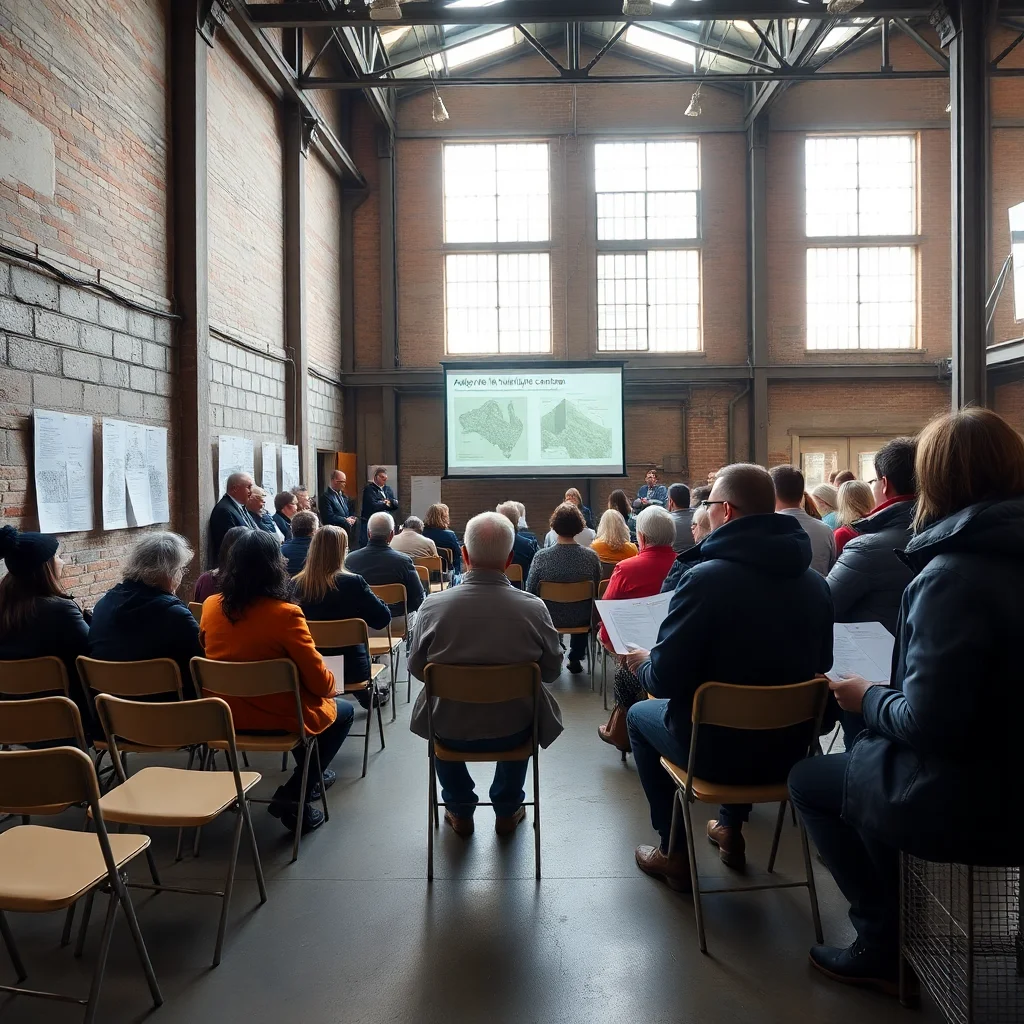
There is a reason this shift is coming so visibly from students. Schools remain one of the few places where architects can speculate without immediate liability. A proposal can suspend current code logic and ask what would happen if existing buildings were granted presumption of value. In that setting, code reform becomes an architectural proposition rather than a bureaucratic footnote. Students are proposing tiered compliance systems, adaptive occupancy categories, and building passports that document what can safely remain, what must be upgraded, and what should never be gratuitously removed.
These ideas are not naïve. They borrow from real policy trends. Several jurisdictions have already experimented with alternative compliance pathways for existing structures, acknowledging that a 1920s building cannot be judged as though it were poured yesterday. But the student work pushes further, treating this flexibility not as an exception but as the future baseline. It asks why codes reward tabula rasa development when the climate crisis requires the opposite: careful reuse, incremental retrofitting, and architectural restraint.
The provocative part is that this insurgency reframes professional ambition. To save a building is not to preserve the past in amber. It is to argue that the most advanced architectural move may be to negotiate with regulation, to rewrite standards so they distinguish between dangerous obsolescence and valuable inheritance. That is a political act, not just a design one.
Seen this way, the issue is not limited to buildings alone. It extends to the way architecture handles transformation at every scale, including the reuse of infrastructural shells and obsolete program types. Projects that turn stranded assets into productive systems show how radical adaptation can be. The logic is echoed in articles such as when a resort becomes a power plant, where repurposing is not a novelty but a climate strategy.
Two futures: reform or retreat
PRO: codes can be rewritten to make reuse the default. The strongest argument for reform is pragmatic. Existing buildings already occupy land, hold embodied carbon, and anchor communities. If codes are calibrated to performance rather than rigid typology, architects can convert more stock safely and cheaply. This would reduce waste, accelerate decarbonization, and produce more varied cities than the monotonous output of speculative new construction. The profession would finally align its rhetoric about circularity with an enforceable regulatory framework.
CONTRA: loosening codes risks turning climate ambition into selective enforcement. The opposing argument is not trivial. Codes exist because past shortcuts killed people, and there is no guarantee that a reuse-friendly regime will be applied equitably. Flexibility can become a luxury product for well-funded developers while smaller owners face inconsistent approvals and hidden upgrade costs. If reform is not paired with clear standards, public oversight, and funding support, it may simply replace one form of exclusion with another.
The point is not to choose sentimentality over safety. It is to admit that the current system already makes a choice: it often privileges demolition because new construction is easier to classify, insure, and finance. That bias is not neutral. It is a climate decision masquerading as administrative common sense.
What a genuine reuse agenda would demand
A serious reuse movement would change more than form. It would demand new metrics, new approvals, and new institutional habits. First, governments would need to require whole-life carbon analysis before demolition permits are granted. Second, codes would need graduated pathways for existing buildings, allowing function-based performance targets instead of one-size-fits-all dimensional rules. Third, planning departments would need to treat existing structures as civic assets with embodied environmental value, not leftovers from a previous market cycle.
Design culture would also have to grow up. Architects cannot keep treating reuse as a charming aesthetic of exposed brick and salvaged beams. The real work is legal, financial, and technical. It involves code consultants, fire engineers, accessibility specialists, and policy advocates as much as it involves spatial imagination. The most consequential projects may be the least photogenic: a revised ordinance, a more intelligent permitting matrix, a city that finally stops assuming replacement is the highest form of ambition.
If adaptive reuse is becoming a code reform movement, that is because the profession has realized a hard truth: climate action will not be won solely in renderings or competition boards. It will be won in the dry, consequential language of standards. The future of architecture may depend less on inventing new buildings than on changing the rules that decide which existing ones are allowed to live.
FAQ
What makes adaptive reuse a regulatory issue now? Because climate pressure, carbon accounting, and ESG reporting have exposed demolition as an emissions decision. Architects are pushing codes to recognize existing buildings as valuable assets rather than outdated obstacles.
Why do current codes make reuse difficult? Many standards were designed for new construction and can penalize older buildings through strict requirements for egress, accessibility, energy performance, and fire safety, even when the structure itself is sound.
How are students influencing this debate? Student studios and research projects are proposing alternative compliance systems, performance-based codes, and building passports that challenge the assumption that demolition is the most efficient path.
What would code reform change in practice? It would make it easier to keep and upgrade existing structures by evaluating them through whole-life carbon, functional performance, and graduated safety pathways instead of rigid new-build benchmarks.
Open question: If codes start treating existing buildings as climate assets, what other architectural “defaults” should be rewritten next?
Get the Mainifesto weekly — curated design debates, speculative ideas and the week's best articles every Saturday.


Karim Haddad June 19, 2026
This is the right fight because code is never neutral; it decides whose city gets to stay standing and whose gets erased. If existing buildings become climate assets, the next default to kill is the fantasy of tabula rasa planning—especially in places where demolition is still treated like progress.
David Lim June 19, 2026
What interests me is whether codes can move from optimizing new-build compliance to measuring retained value, embodied carbon, and adaptability over time. If we’re rewriting defaults, floor-to-floor heights and structural grids should be treated as long-term civic infrastructure, not just developer math.
Elena March June 19, 2026
Adaptive reuse makes sense, but only if the code changes are based on evidence, not just climate rhetoric. The next defaults to challenge are minimum parking requirements and overly rigid accessibility interpretations that sometimes block sensible retrofit solutions without actually improving performance.
Tom Brightwell June 19, 2026
From a delivery point of view, codes need to recognize that demolition and rebuild are not automatically the cheaper or cleaner answer anymore. If we’re changing defaults, simplify change-of-use approvals and make fire, energy, and structural pathways predictable for existing buildings, or nothing will scale.
Ricardo Estévez June 20, 2026
Existing buildings are not raw material waiting to be cleared; they’re evidence, labor, and memory. The next default that needs rewriting is the assumption that “improvement” means replacement, because that logic is exactly how neighborhoods get flattened, commodified, and sold back at a premium.