

Can Taste Survive AI? Strategy vs Beauty

Taste Was Never Just Taste
The design industry likes to talk about taste as if it were a rare spiritual gift: an instinct, a sensibility, a human glow that cannot be reverse-engineered. But Sterlin L Mosley’s critique cuts through that vanity. What we call “good taste” is often just a bundle of coded preferences disguised as universal truth, and once AI can imitate style at scale, those preferences stop looking sacred and start looking brittle.
This matters because design culture has long treated beauty as proof of intelligence. A polished identity system, a restrained editorial grid, a carefully underplayed palette: these are often read as evidence that someone “gets it.” Yet AI is now very good at producing exactly that kind of visual fluency. It can mimic minimalism, generate convincing type hierarchies, and spit out moodboards that look expensive before a human has even opened Figma. The question is not whether AI can counterfeit taste. It already does. The question is whether taste was ever more than a highly efficient form of social coordination.
That is Mosley’s provocation: the industry should care less about whether something feels refined in the abstract and more about whether it is coherent, strategic, and useful in context. In other words, the deeper issue is not beauty versus ugliness. It is discernment versus decoration.
When AI Makes Style Cheap, What Still Has Value?
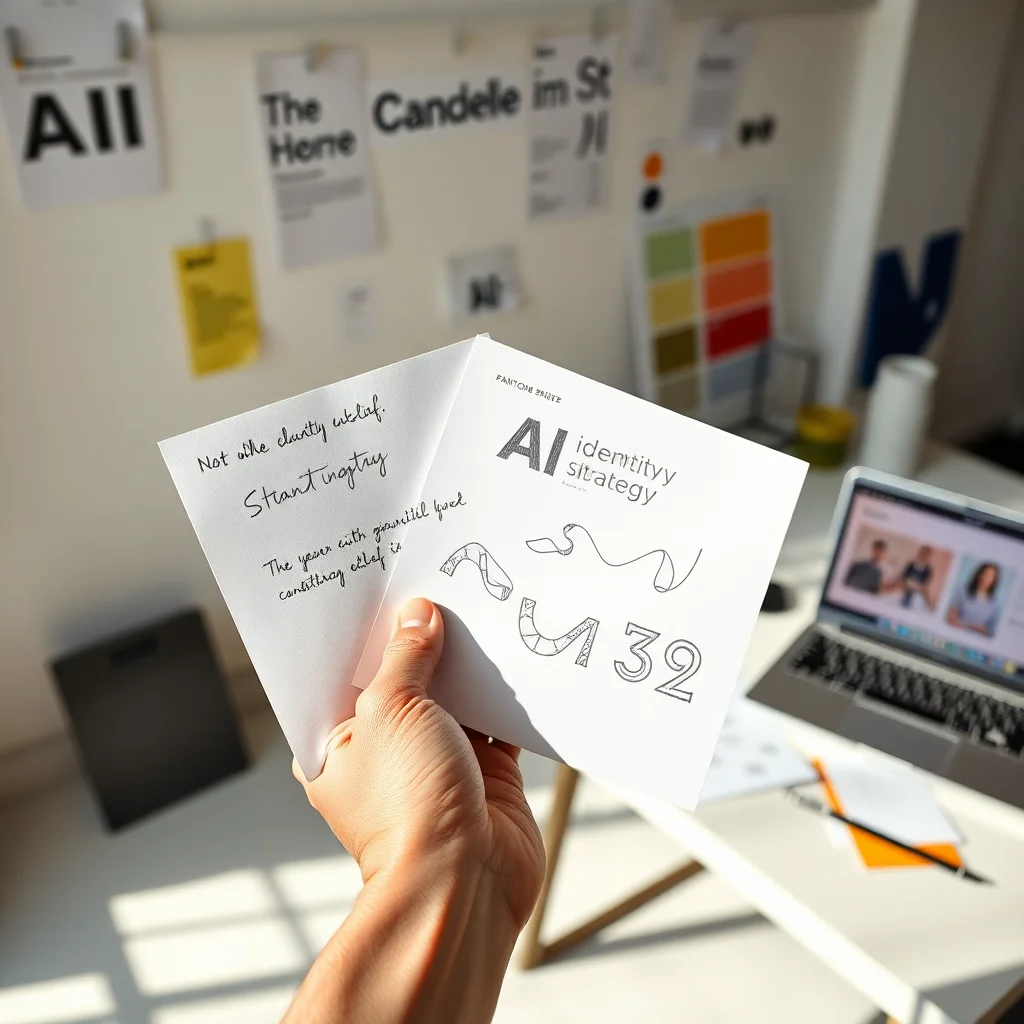
For years, design culture rewarded the ability to make things look inevitable. The best identities felt as if they had always existed. Think of the long shadow cast by Dieter Rams, Wim Crouwel, or the Swiss grid tradition: not just clarity, but moral clarity; not just order, but the impression that order itself was virtue. That inheritance still shapes contemporary branding, editorial design, and digital products. But AI changes the economics of looking competent.
Now style is abundant. A prompt can yield a dozen “premium” directions in minutes. Entire visual territories can be explored before a strategist has written the brief. This does not mean taste is dead; it means taste has become inflationary. When everyone can generate polished surfaces, surface polish no longer distinguishes anything. The real differentiator shifts to judgment: what should exist, for whom, under what constraints, and with what long-term logic?
This is why Mosley’s argument lands as a rebuke to a design culture that still fetishizes the artisan’s eye while underestimating systems thinking. Apple’s reputation, for example, was never built on pretty objects alone. It was built on ruthless coherence between product, software, packaging, retail, and messaging. The same is true of brands like Muji, which made minimalism feel like a worldview rather than a style effect. Their strength was never merely good taste; it was disciplined alignment.
That logic shows up just as clearly in contemporary branding debates, including the question of whether brand identity can survive the AI aesthetic. Once generative tools can mimic polish on demand, the real challenge becomes preserving a recognizable point of view.
The Fault Line Between Intuition and Systems Thinking
Designers have always loved to romanticize intuition. The story goes like this: a brilliant mind senses the right solution before logic catches up. But intuition is not magic. It is pattern recognition accelerated by experience, and experience is shaped by institutions, class signals, cultural memory, and access. What we often call taste is usually a trained response to a specific set of values. That makes it powerful, but also contingent.
AI exposes that contingency. If a machine can generate elegant outcomes that resemble the work of the “good taste” class, then the authority of intuition is weakened. What remains defensible is not “I know it when I see it,” but “I can explain why this decision supports a strategy.” This is a brutal shift for design educators and creative directors who have built careers on opacity. The old mystique was: trust my eye. The new demand is: show me the system.
Look at the rise of design systems in digital product work, from Google’s Material Design to IBM’s Carbon and Shopify’s Polaris. These are not examples of beauty winning over strategy; they are examples of strategy becoming the aesthetic. Their visual language is inseparable from consistency, scalability, accessibility, and governance. The surface is the system made visible. In that sense, design has already moved beyond taste as a final authority. Taste now operates inside a larger framework of operational intelligence.
That same shift from form to infrastructure also shapes bigger urban questions, like whether AI can learn to design like cities grow. The most enduring environments are rarely the most immediately stylish; they are the ones that adapt over time.
Beauty Still Matters — But It No Longer Gets to Rule
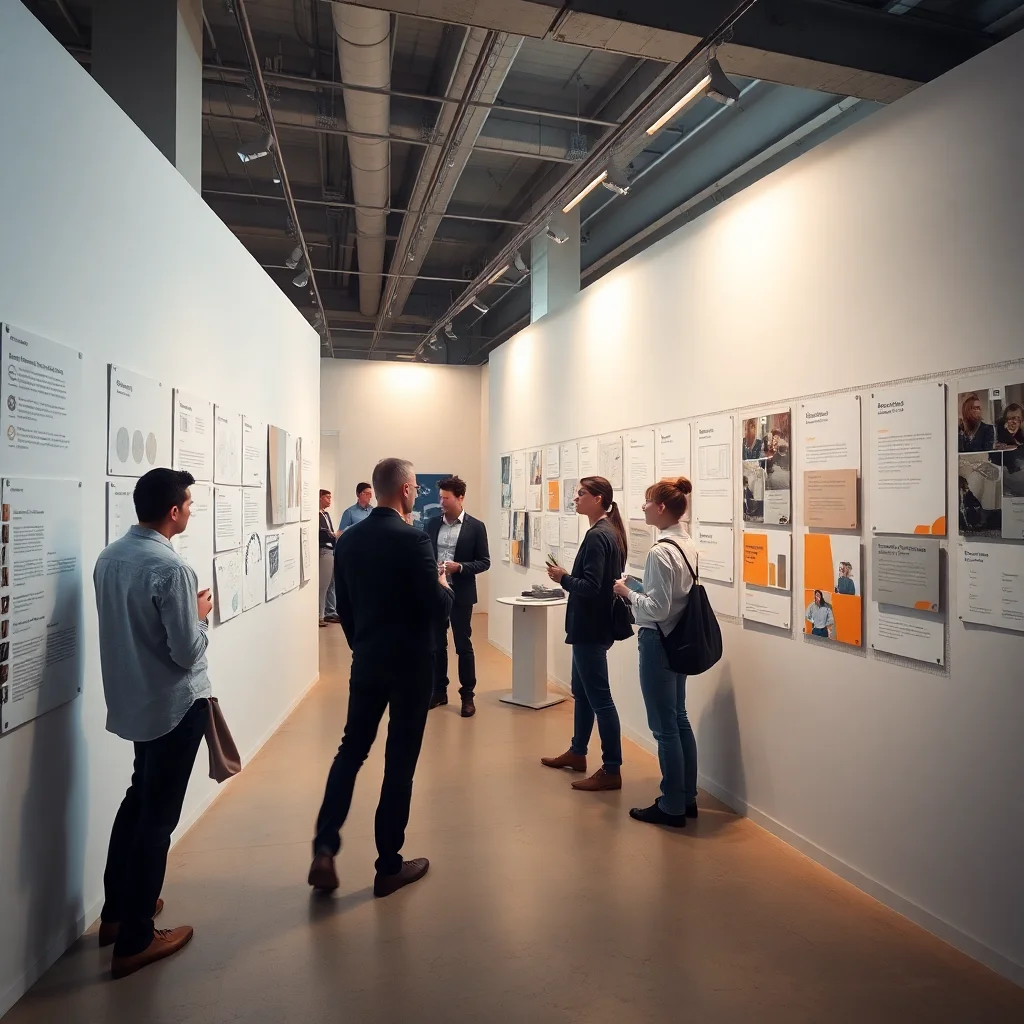
To say strategy matters more than beauty is not to claim beauty is irrelevant. That would be the lazy, startup-era mistake: the idea that anything can be justified if the spreadsheet is strong enough. Beauty still matters because humans do not experience strategy in the abstract. We encounter it through interfaces, spaces, objects, and atmospheres. A hospital waiting room that is legible but cruel has failed. A public service website that is efficient but demeaning has failed. A city square that is well programmed but emotionally dead has failed.
But beauty is now a dependent variable, not the sovereign one. The best work in architecture and design increasingly understands this. Consider the recent wave of adaptive reuse projects, where the appeal is not a pristine formal gesture but the intelligence of keeping embodied carbon in play, the tactility of old materials, and the cultural memory of a site. Or look at brands like Aesop, whose spaces are often discussed as if they were pure aesthetic objects, when in fact their success lies in a remarkably consistent choreography of retail, scent, language, and material restraint. Their “taste” works because it is operationally coherent.
AI intensifies this reality. It can fabricate the look of sophistication, but it cannot yet replace the full chain of judgment linking a product to a market position, a civic brief to a spatial response, or an editorial identity to a publishing stance. Beauty becomes meaningful only when it is accountable to something larger than itself.
That’s especially clear in speculative infrastructure projects such as data centers as the next civic monuments, where the question is no longer just what something looks like, but what role it plays in public life.
Design Culture Loves Taste Because Taste Hides Power
“Good taste” is often a polite way of enforcing hierarchy. It decides who belongs inside a cultural field and who gets dismissed as too loud, too commercial, too regional, too decorative, too ambitious, too unfamiliar. In architecture and design, taste has long served as the velvet rope. It flatters the insiders while pretending to be neutral. Mosley’s intervention is sharp precisely because it names taste as a system of judgment rather than a pure aesthetic faculty.
That system becomes more visible in the age of AI. When software can approximate the look of legitimacy, we are forced to confront how much legitimacy has always been performed through style. The carefully muted portfolio, the monochrome deck, the “clean” brand language: these can be signals of competence, but they can also be signals of exclusion. They tell clients and peers that a project belongs to the right tribe.
This is why many of the most consequential contemporary design moves are not the most photogenic. The best civic wayfinding systems, service design frameworks, and accessibility-first interfaces may look almost boring compared with a hyper-stylized campaign. Yet they often produce better outcomes for more people. If design culture cannot value that, then it is not defending taste; it is defending aesthetic privilege.
Strategy Is Becoming the New Aesthetic Language
There is a reason the most forward-thinking studios speak less about “style” and more about positioning, narrative, behavior, and systems. In an environment saturated by generative visuals, the distinctiveness of a project increasingly comes from what it does, not only how it looks. Strategy becomes visible in consistency, in friction removed, in values made legible across multiple touchpoints.
This does not produce ugliness. On the contrary, it can produce a sharper, more honest beauty: one that emerges from fit. The design of the information architecture, the exhibition journey, the service flow, the material palette, and the tone of voice all reinforce one another. The result is not mere coherence for its own sake; it is a designed argument. The work persuades because every decision points in the same direction.
That is where AI may have its most profound effect. Not by killing taste, but by demoting it from throne to tool. In the near future, taste will still matter as a filter, a sensibility, a way of editing options. But it will no longer be enough. A beautiful system that lacks strategic rigor will look decorative. A strategically brilliant one, even if visually modest, may now be the more culturally intelligent object. The industry should be ready to admit that the new aesthetic may be coherence itself.
Conclusion: The Real Test Is Whether Design Can Think
AI forces design to answer an uncomfortable question: if style can be synthesized, what exactly are designers for? The answer cannot simply be “for better style.” That job is already being automated, scaled, and commodified. The stronger answer is that designers are responsible for making decisions under uncertainty, translating values into systems, and turning strategy into lived form.
That is a harder standard than taste. It is also a more serious one. Taste can impress. Strategy endures. Taste can seduce clients. Strategy can survive contact with reality. And in a design culture increasingly awash in generated elegance, the most radical position may be to stop pretending beauty is the final proof of intelligence.
The future will not belong to those with the prettiest eye. It will belong to those who can defend why something exists, how it works, and what it is trying to change.
FAQ
Does AI make taste obsolete?
No. AI makes style more abundant, which means taste loses some of its exclusivity. It becomes an editing skill rather than a source of authority.
Why is strategy becoming more important in design?
Because design outcomes increasingly need to scale across platforms, audiences, and contexts. Strategy helps keep visuals, messaging, and systems aligned.
Can beauty and strategy still coexist?
Yes, but beauty is no longer the sole measure of quality. The strongest work tends to be beautiful because it is strategically coherent, not beautiful instead of strategic.
What does Mosley’s critique change for designers?
It shifts the conversation from “Do I like the look?” to “Does this decision serve a clear purpose?” That is a major change in how work is judged and justified.
Get the Mainifesto weekly — curated design debates, speculative ideas and the week's best articles every Saturday.


Daniel Okonkwo June 15, 2026
AI can absolutely mass-produce the look of taste, but that doesn’t mean taste itself disappears. It just shifts the pressure onto curators, editors, and clients to decide what matters when the surface is cheap to generate.
Karim Haddad June 15, 2026
This reads like a reminder that beauty has always been downstream of power, budgets, and institutions. If AI is manufacturing taste on demand, then strategy becomes the real filter because it decides whose needs, markets, and politics get translated into form.
David Lim June 15, 2026
I don’t think strategy replaces beauty so much as it frames the terms of beauty. The deeper question is whether AI can help us test more design hypotheses faster without flattening the judgment that makes a project meaningful in the first place.
Mei Chen June 16, 2026
From a manufacturing angle, pure aesthetics has always been fragile once you hit tooling, cost, tolerances, and supply chains. If AI can generate elegant-looking options instantly, the valuable design act is choosing what can actually be built, scaled, and maintained without becoming waste.