

The New Luxury: Staying Home in Style
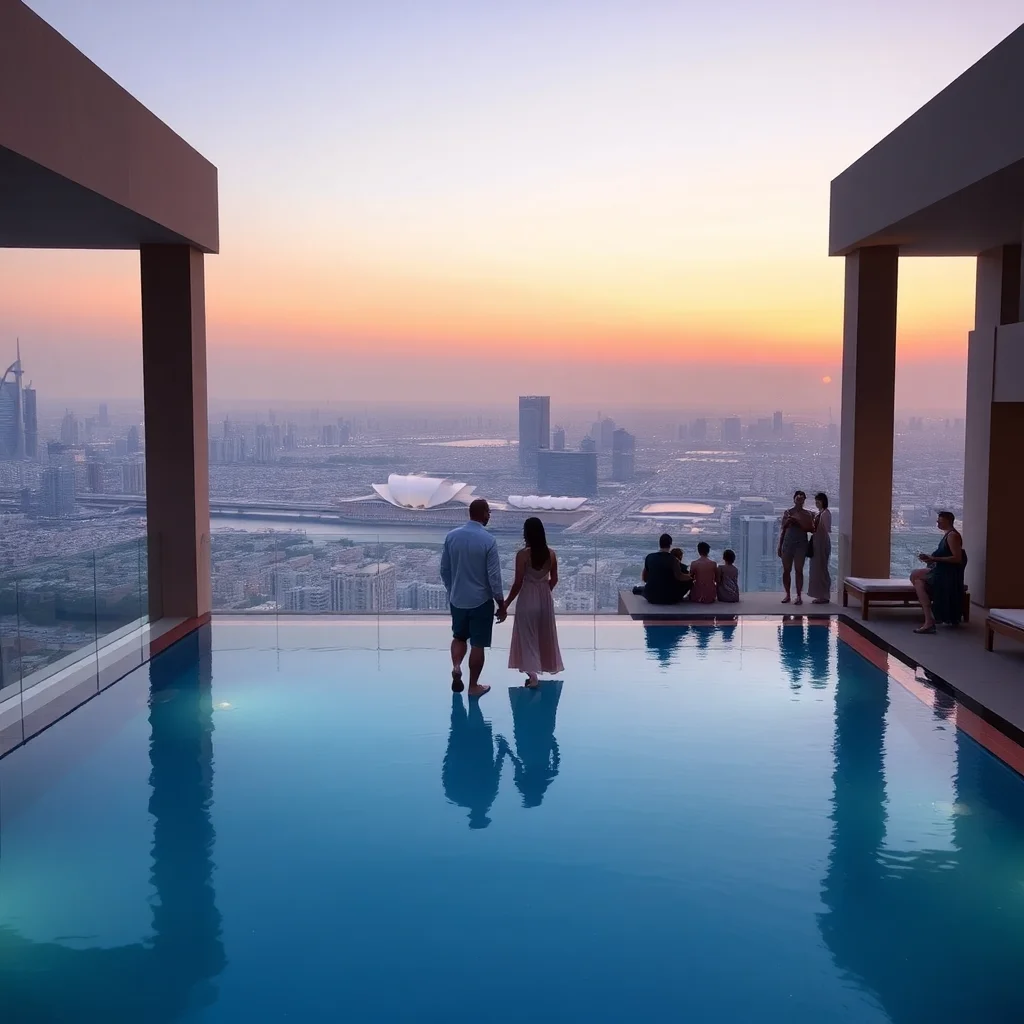
The holiday that no longer needs a passport
For decades, the Gulf’s summer story was written in departures: airport lounges, boarding passes, and social feeds from Tuscany, the Côte d’Azur, London, and Australia. To leave was to arrive socially. But rising travel costs, volatile borders, and the nervous arithmetic of a region shaped by geopolitical uncertainty are rewriting the script. The new luxury is not the long-haul escape. It is the ability to remain within reach of home, family, and control while still accessing comfort, privacy, and the seductive feeling of being elsewhere.
This is not a small cultural adjustment. In the UAE, Saudi Arabia, Qatar, Bahrain, and beyond, staycations are shedding their old status as a second-best option. They are becoming a signal of discernment: I can disappear without crossing a border. I can consume hospitality without surrendering time to airports, delays, visas, or the theatre of international travel. The question for architecture is no longer whether domestic leisure exists, but whether it can carry the same aspirational charge as flight.
Why the staycation is gaining power
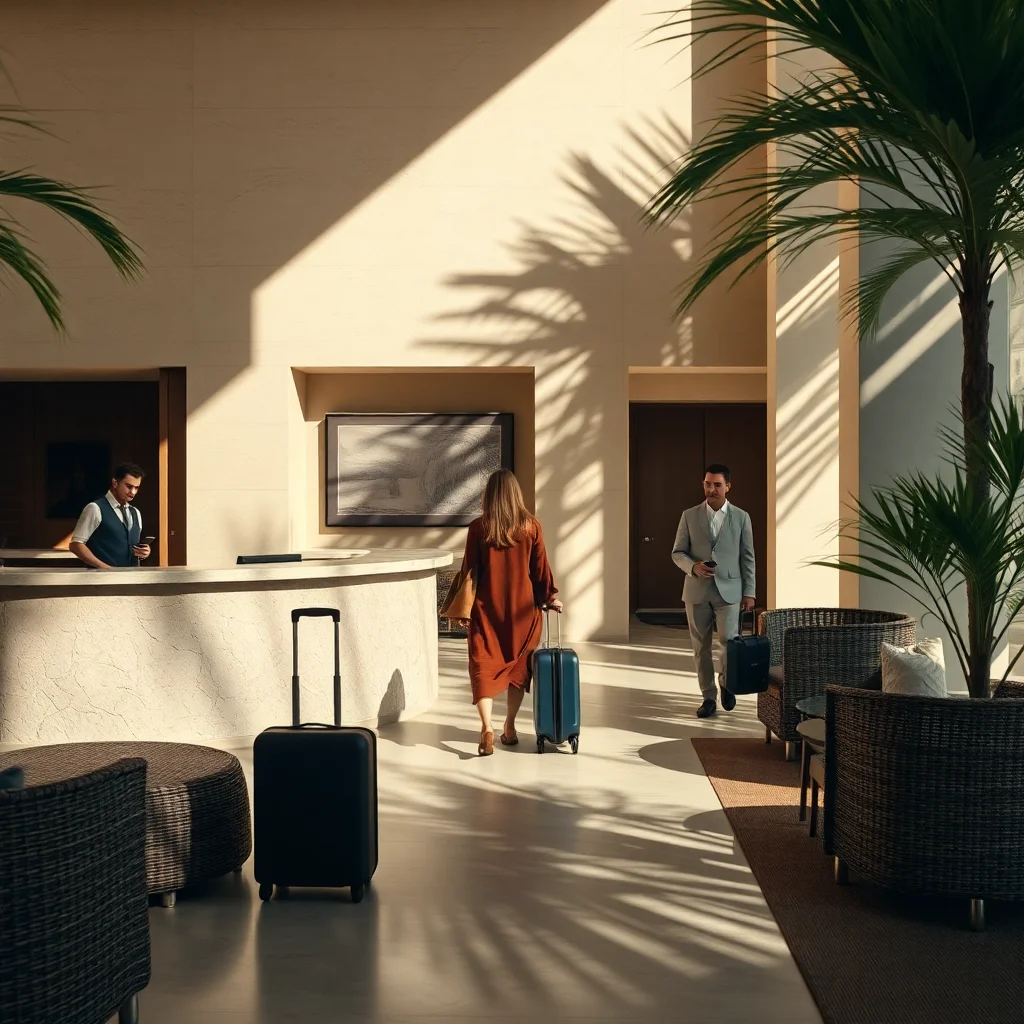
The economic case is obvious. Airfares have climbed, premium cabins are often absurdly priced, and the true cost of travel now includes more friction: insurance, currency volatility, uncertain itineraries, and the anxiety tax of a region where escalation can redraw plans overnight. Yet economics alone do not explain the shift. The staycation is also psychological. It offers the illusion of retreat without the vulnerability of distance. In an era of hyperconnectivity, proximity feels like power.
That is why the best domestic hospitality is no longer competing on convenience alone. It is competing on atmosphere, design, and narrative. The strongest examples in the Gulf understand that guests are not looking for a downgraded vacation. They are looking for a re-scripted life. A night at Atlantis The Royal in Dubai, with its architectural excess and skyline drama, is not merely “local”; it is a performance of abundance that would not look out of place in a global luxury circuit. In Riyadh, boutique hospitality has begun to tap heritage and craft rather than mimic imported resort tropes. In Qatar, a generation of visitors now expects destination-making at the level of museums, beaches, and cultural districts, not just rooms. For a wider look at how climate shapes these expectations, see when architecture becomes climate infrastructure.
Architecture has to do more than decorate boredom
Most staycation properties fail because they confuse familiarity with comfort. They offer large rooms, polished lobbies, and an infinity pool, then wonder why guests still compare them to the Amalfi Coast. The problem is architectural imagination. Domestic hospitality must create a sense of threshold: a clear break from daily life that does not require leaving the country. Without that spatial drama, the staycation remains what it was always accused of being—a compromise.
The best architects and designers know this. Think of how desert landscapes are framed at AlUla’s emerging hospitality projects, where the point is not to overpower the site but to intensify it. Think of how the low-rise, courtyard logic of many Gulf homes already understands privacy as luxury. Or consider how Yas Island in Abu Dhabi turns leisure into an orchestrated environment, where water, shade, and spectacle are carefully edited into a single continuous experience. These places succeed when they build a mood, not just a room inventory. A staycation becomes aspirational when architecture delivers separation, ritual, and a sense of being temporarily rewritten. That same logic appears in broader debates about environmental comfort, from can design save us from the air conditioner? to the way buildings can shape temperature, light, and habit.
From imported glamour to local confidence
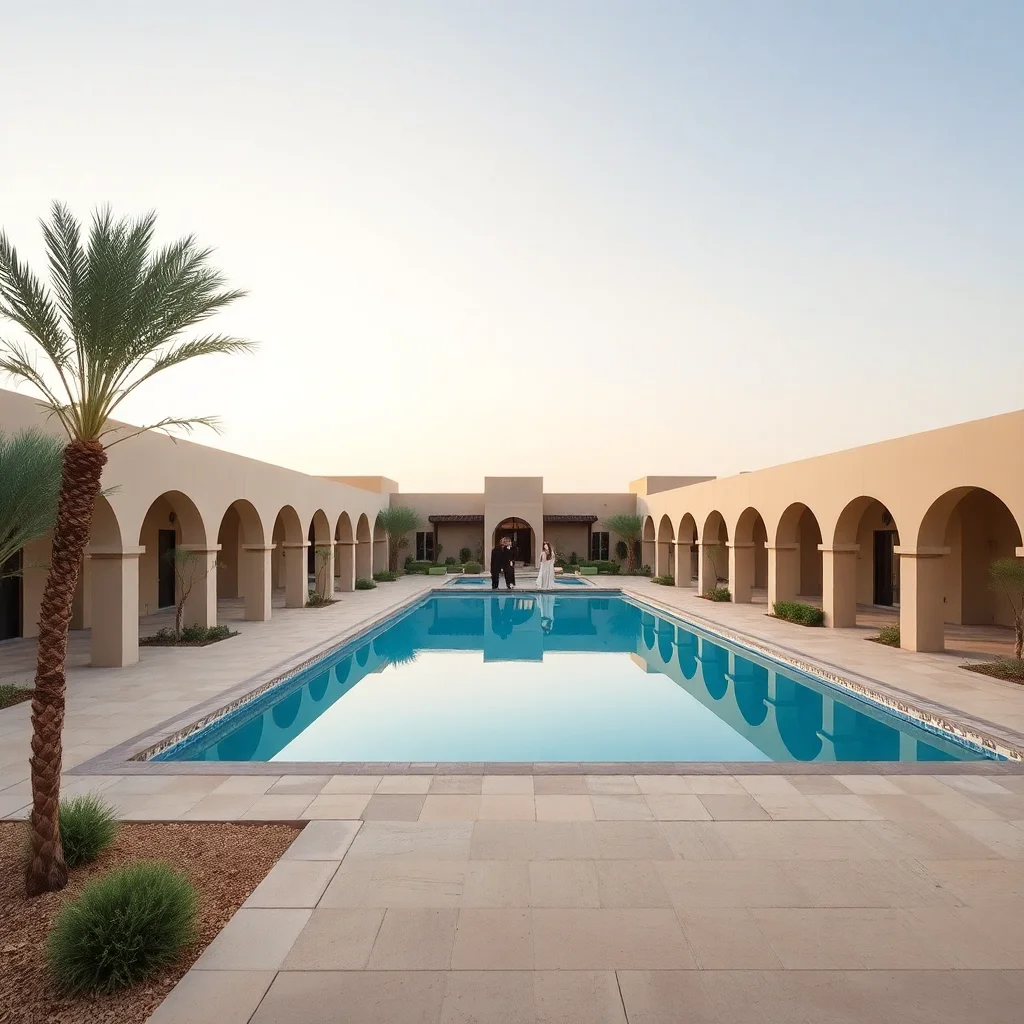
For too long, luxury leisure in the region was measured by its proximity to foreign reference points. The ideal hotel felt European. The ideal restaurant looked like a concept flown in from Paris or London. The ideal summer was elsewhere. That dependence on imported glamour is now harder to sustain, and not only because of cost. There is a growing appetite for hospitality that feels rooted in place rather than borrowed from it.
This is where domestic hospitality can become culturally serious. In Saudi Arabia, the rise of AlUla as a hospitality and cultural destination has shown that landscape, archaeology, and contemporary design can work together without feeling theme-park artificial. In Sharjah, quieter forms of cultural tourism have long suggested that depth can be more valuable than spectacle. In Dubai, the most interesting new hotels are those that understand the city as a laboratory of density, verticality, and controlled excess rather than simply a tax-free playground. When local hospitality is confident, it does not imitate the world. It edits it through regional conditions: climate, hospitality codes, privacy, and the social architecture of family life.
The politics of staying put
It would be naïve to pretend that the staycation is only about taste. It is also about geopolitics. In a region where travel can be disrupted by airspace closures, security alerts, and unstable diplomatic conditions, staying close is not merely prudent—it is rational. This changes the meaning of luxury. Traditionally, luxury was freedom of movement. Now it is the freedom to remain unbothered by movement’s risks.
That shift has architectural consequences. Hotels and resorts in the Gulf are being asked to behave more like self-contained worlds, with better acoustics, stronger shading, layered privacy, and programming that can absorb an entire family for days. A successful staycation property has to be a climate machine, a social condenser, and a psychological firewall all at once. The pool deck, spa, restaurant, and lobby become not amenities but stages for a domestic fantasy. This is where design must be ruthless: if the building does not transform time, it has failed. The same imperative is changing how cities think about shared services and everyday comfort, as explored in the new public utility aesthetic.
Can domestic hospitality become truly aspirational?
Yes—but only if it stops apologizing for being local. The future of staycations in the Gulf will not be won by copying Bali villas or Alpine chalets. It will be won by inventing a regional vocabulary of leisure that treats shade, sequence, privacy, majlis-like sociability, and climate adaptation as luxury assets. The most persuasive hospitality projects will not ask guests to forget where they are. They will make them grateful they stayed.
That means more than pretty interiors and curated brunches. It means architecture with confidence: courtyards that cool, façades that filter, arrival sequences that slow the body, and landscapes that make heat legible rather than merely avoided. It means designers who understand that the contemporary affluent traveler is no longer impressed by distance alone. They want meaning, ease, and status that can survive a turbulent world. In that sense, the staycation is not a fallback. It is a test. If domestic hospitality can make people feel that remaining close is a choice rather than a limitation, then it will have achieved something far more radical than convenience: it will have turned staying home into a marker of cultural power.
FAQ
Why are staycations becoming more popular in the Gulf? Rising travel costs, geopolitical uncertainty, and logistical friction are making local escapes more attractive. They reduce risk while still offering comfort, privacy, and prestige.
What makes a staycation feel luxurious rather than compromised? Strong architecture, clear separation from everyday life, climate-responsive design, and a compelling sense of place. Without these, it feels like a hotel stay, not an escape.
Which regional destinations are shaping this shift? Dubai’s high-concept resorts, AlUla’s landscape-led hospitality, Doha’s cultural infrastructure, and quieter heritage-oriented destinations across Saudi Arabia and Sharjah all point in different directions.
Will domestic hospitality ever replace international travel? Not entirely. But it can become a more desirable and culturally specific form of leisure, especially when global travel becomes expensive, unstable, or simply less appealing.
Can staycations carry the same status as overseas holidays? Yes, if they are framed as intentional and design-led rather than as a consolation prize. Status now often comes from control, discernment, and access to comfort without friction.
Get the Mainifesto weekly — curated design debates, speculative ideas and the week's best articles every Saturday.

Elena March June 9, 2026
What interests me here is less the glamour of staycations than the urban failure they reveal: if people are choosing domestic leisure because mobility is too expensive or too tense, that’s a planning issue as much as a lifestyle trend. Home can offer comfort, sure, but it still can’t replace public life unless cities start performing better.
Ricardo Estévez June 9, 2026
This is the old story of retreat becoming a product, except now it’s wrapped in hospitality language and sold back as aspiration. What remains compelling about leaving home is complexity, friction, encounter—the things that make a place legible over time. If every domestic interior is polished into a resort, we lose the roughness that actually gives cities character.
Olivier Dubois June 9, 2026
There is something faintly depressing about discovering that leisure has finally been fully absorbed by interiors. The modern apartment becomes the villa, the hotel, the club—an old fantasy of total enclosure, but without the drama of travel or the cultural risk of elsewhere. One leaves home not merely for comfort, but to be displaced; that is still the condition of experience.
Tom Brightwell June 10, 2026
I get the appeal, but most people are not choosing staycations as a philosophical position—they’re responding to cost, convenience, and stress. If the home can deliver a proper reset for less money, with better sleep and no airport misery, that’s not a downgrade; that’s just sensible. The challenge for the market is to make it feel considered without pretending it’s something it isn’t.
David Lim June 10, 2026
The open question is whether we’re designing for escape or for resilience. If domestic space can now simulate status and comfort, then the next frontier is not more visual luxury but more adaptive spatial performance—air, light, thermal control, acoustic privacy, flexibility. Leaving home stays compelling only if the outside world offers experiences that cannot be replicated by better systems at home.