
The New Civic Monument Is Quietly Taking Over
The civic building is no longer pretending to be neutral
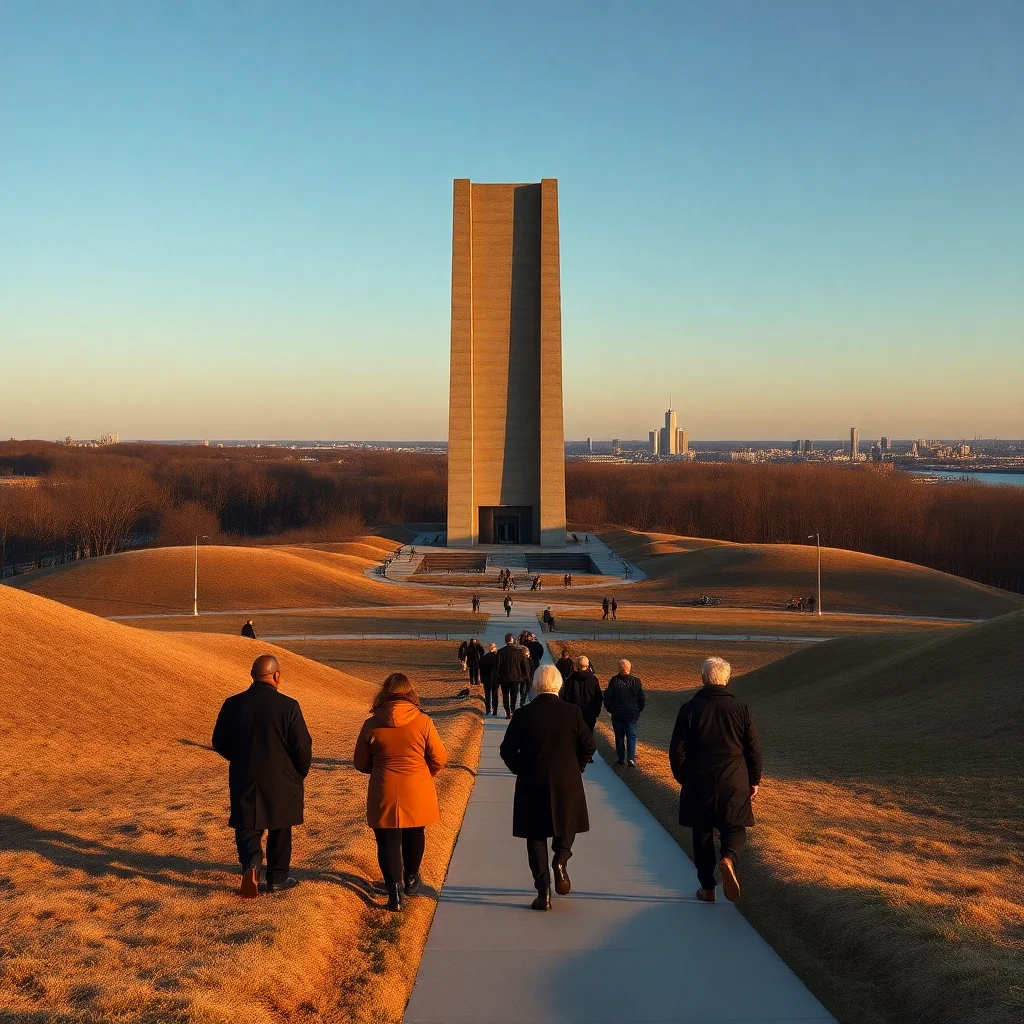
The most interesting public buildings of the moment are abandoning the old fantasy that architecture should dissolve into the background. They are becoming legible, memorable, and in many cases explicitly symbolic: not just containers for democracy or culture, but arguments about who gets to define them. The completed Obama Presidential Center in Chicago, with its 225-foot granite tower and artificial hills, is the clearest sign yet that the civic monument has returned—not as bronze-hero nostalgia, but as a carefully authored object of identity and memory.
This is not simply a style shift. It is a political and cultural reordering. For decades, public architecture was supposed to be restrained, efficient, and broadly “accessible,” which often meant visually timid. Today, institutions want something else: a building that can carry narrative weight, produce instant recognition, and generate an image powerful enough to circulate before anyone has visited. The public building is now asked to perform legitimacy in one gesture.
1. The new monument is a media object first
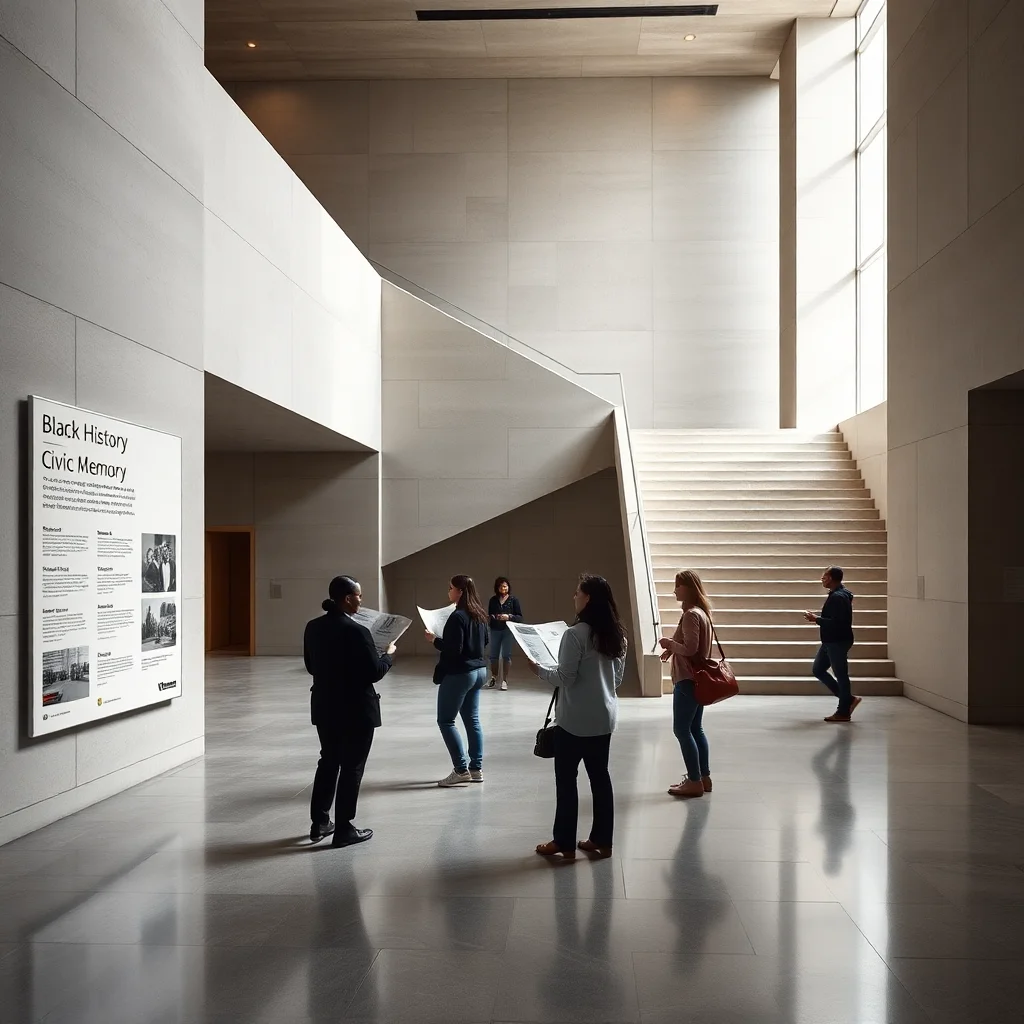
Obviousness is the new prestige. The Obama Presidential Center does not hide its intentions: it uses a tower, granite cladding, and a landscaped rise to create a civic symbol that can be read from afar. This is architecture designed not only to house archives or exhibitions, but to become the visual shorthand for a political legacy.
The trigger is contemporary culture’s dependence on images. If a public building cannot be recognized instantly on a phone screen, it risks becoming invisible in the attention economy. That pressure pushes architects toward forms that are singular enough to travel—whether a sculptural museum, a museum campus, or a cultural pavilion staged as a landmark rather than a background object.
2. From neutral box to authored icon
The old civic ideal was discretion. Libraries, town halls, museums, and cultural centers were often treated as neutral envelopes: a stable box, a rational plan, a façade that promised seriousness without theatrics. That model still has value, but it now competes with a different ambition: the building as authored symbol, unmistakably tied to a narrative and often to a patron or institution’s identity.
The Obama center is part of a broader lineage. Think of Frank Gehry’s sculptural institutions, or the long-standing influence of museum-as-landmark culture in projects by Herzog & de Meuron, Diller Scofidio + Renfro, and SANAA. Even when these buildings are technically complex and programmatically careful, they still operate as signatures. The public no longer only consumes services inside them; it also consumes the image of the building itself.
3. Landscape is now part of the monument
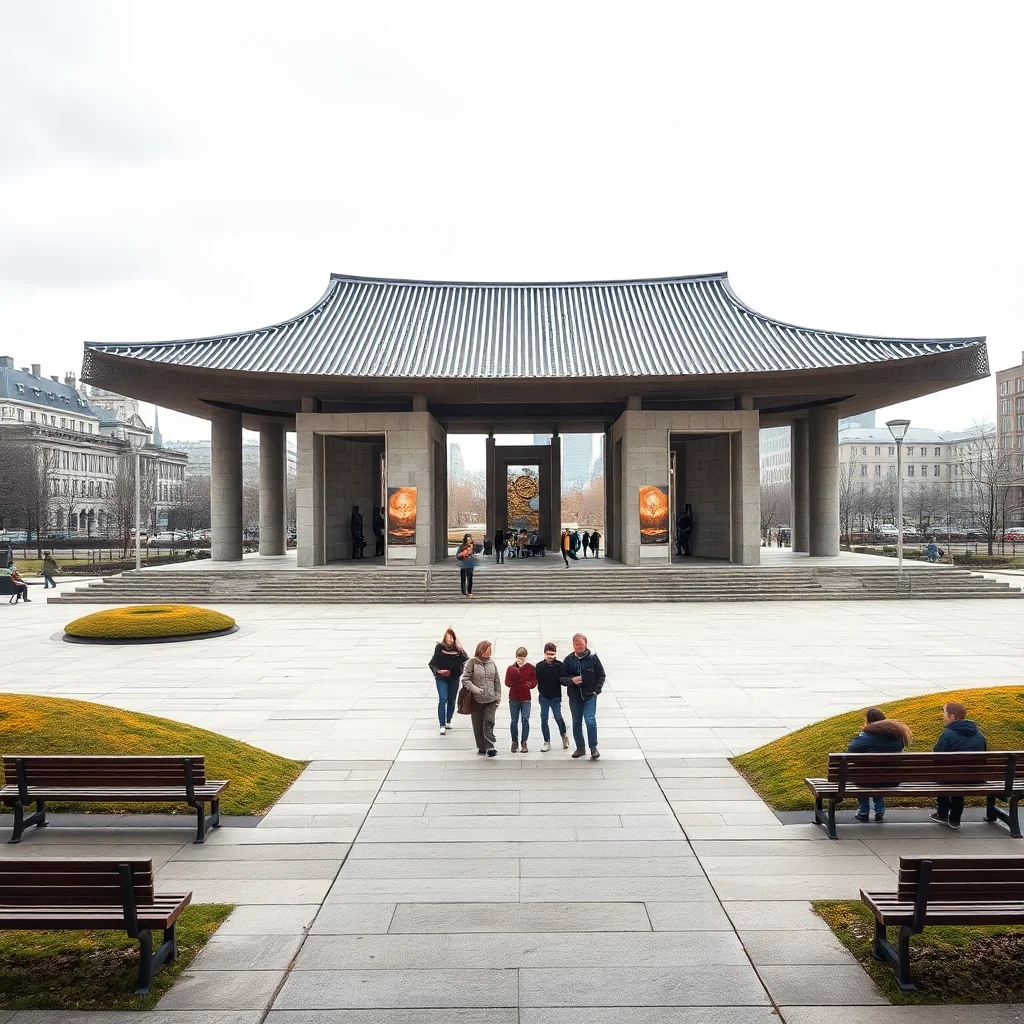
The monument has learned to sprawl. What used to be a plinth, pedestal, or hard urban edge is increasingly replaced by terrain, gardens, berms, and artificial topography. At the Obama Presidential Center, the hills are not decorative extras; they are part of the symbolic frame, softening the tower while enlarging the experience of arrival.
This is a crucial change in civic rhetoric. Landscape allows a public building to feel civic without appearing authoritarian. It offers softness, ecology, and accessibility while still creating hierarchy. That mix is attractive to institutions that want grandeur without the visual language of conquest. The result is a monument that presents itself as humane, but remains unmistakably staged.
4. The museum has become a civic brand engine
Illustration museums, design museums, and cultural pavilions are all playing the same game. The building is no longer just a vessel for collections or programs; it is the institution’s most persuasive argument for relevance. A museum with a strong silhouette, distinctive materiality, or theatrical section can claim public attention in ways that an ordinary box never could.
Consider the strategic appeal of projects by David Chipperfield, Tadao Ando, or Lina Ghotmeh. Their work often turns material restraint into a kind of moral authority. Even when the forms are quiet, they are authored with precision, and that precision produces legitimacy. In this climate, silence is not the same as neutrality. It is a highly curated form of power. For a related example of how institutions use the built environment to project public value, see When Architecture Becomes Climate Infrastructure.
5. Spectacle is no longer a guilty pleasure; it is policy
Public institutions now understand that architecture must campaign for them. Philanthropic campuses, cultural districts, and civic memorials are expected to generate tourism, fundraising, local pride, and media attention simultaneously. A building that looks too modest can appear indecisive; a building that looks too assertive can be accused of vanity. The contemporary public project must therefore occupy a dangerous middle ground: symbolic enough to matter, controlled enough to seem responsible.
This is why sculptural architecture keeps winning commissions. It can compress multiple messages into a single image: innovation, dignity, remembrance, progress. But that compression comes with risk. The more a building tries to embody identity, the more it can flatten the complexity of the public it claims to serve. When architecture becomes the face of civic legitimacy, it can also become a substitute for civic action.
6. The real battle is over memory
What public architecture looks like now is inseparable from what it wants history to remember. A monument is not only a marker of the present; it is a script for the future. Buildings like the Obama Presidential Center are designed to stabilize a narrative before time has had the chance to complicate it. The architecture says: this is the form our collective memory should take.
That ambition is both powerful and dangerous. On one hand, public architecture finally admits that neutrality was always a fiction. On the other, it risks turning memory into branding, and civic identity into visual consensus. The new monument does not simply honor history; it competes to author it. That tension is also central to debates about Can Public Art Memorialize Migration?, where remembrance is never just aesthetic but political.
FAQ
- Why is civic architecture becoming more symbolic? Public institutions need buildings that can communicate identity, legitimacy, and relevance instantly in a media-driven culture. Symbolic forms help a project circulate as an image before it is experienced as a place.
- Does a strong monument always mean bad architecture? No. Strong symbols can produce civic attachment, clarity, and collective memory. The problem is when symbolism replaces public value, making the image more important than access, program, or social usefulness.
- What does the Obama Presidential Center represent in this trend? It represents the shift from discreet public architecture toward authored civic landmarks. Its tower and landscape frame a political legacy as an architectural event, not just a functional facility.
- Is neutral architecture still relevant? Yes, but it is no longer the default measure of seriousness. Neutrality can still be powerful when it is deliberate, but today it must compete with buildings that are designed to stand for something immediately and unmistakably.
The new civic monument is not trying to disappear. It is trying to define what matters, who it belongs to, and how it will be remembered. If that is the future of public architecture, are we building more democratic cities—or just more persuasive ones?
Get the Mainifesto weekly — curated design debates, speculative ideas and the week's best articles every Saturday.
Editorial Perspectives
Questions and counterpoints developed by the Mainifesto editorial desk to extend the discussion.
Perspective 1
I keep coming back to the tension between symbolism and accessibility. A civic building can be legible and memorable without becoming a sealed object of authorship, but that depends on whether the form grows out of public use, not just a narrative image. If the monument is quietly taking over, I’d ask who gets to read it, and who gets left outside the story.
Perspective 2
Symbolic architecture isn’t the problem; symbolic architecture that crowds out function is. In practice, the buildings that work best for democracy are the ones that perform well every day, not just in renderings or at ribbon cuttings. If a civic project needs to be iconic to survive politically, that says more about our institutions than about design.
Perspective 3
This is what happens when cities compete for attention like brands: the building becomes a logo, and the public becomes the backdrop. You can call it democratic, but if the monument is doing all the talking, participation is mostly theater. Real civic power comes from systems people can access and maintain, not just forms they can photograph.