When Architecture Becomes Product
Architecture no longer stays put
Once, architecture was understood as the opposite of the portable. It was fixed to land, bound to civic memory, and too heavy with meaning to be casually removed from the world. Now the landmark is increasingly a thing you can assemble on a kitchen table, stack on a shelf, wear on your wrist, or display in a glass case. The latest and most telling example is Lego’s massive interpretation of the Sagrada Familia: over 12,000 pieces translating Antoni Gaudí’s still-unfinished cathedral into a collectible object for adult consumers. It is not merely a souvenir. It is a symptom.
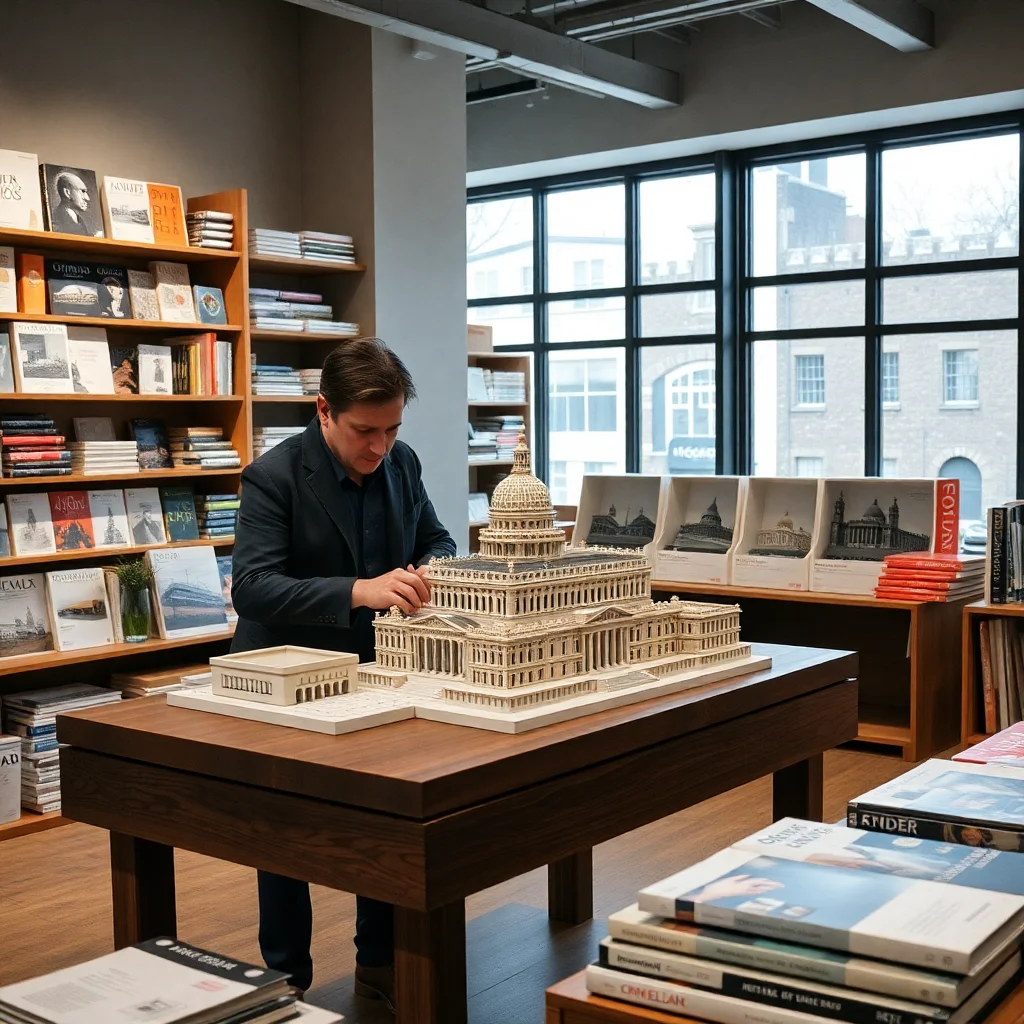
We are watching architecture shift from public inheritance to consumer interface. Landmark forms are being miniaturized, licensed, and re-authored as products, and the process is no longer marginal. It extends from toy ecosystems to furniture, from luxury collaborations to branded electronics, from museum shops to designer editions that borrow the authority of monuments. The cultural logic is obvious: in a saturated attention economy, buildings are recognizable, emotionally charged, and instantly legible. They are the perfect raw material for merchandising. This is part of the broader pull of iconic objects in design culture, where familiarity itself becomes a market advantage.
But if architecture becomes product, it also becomes ideology. The question is not whether this is clever branding. It clearly is. The real question is what happens when collective memory is converted into an object of private possession. Who gets to own the aura of a cathedral, a museum, a skyline, a national monument? And what disappears when the encounter with architecture is replaced by purchase?
From civic symbol to retail object
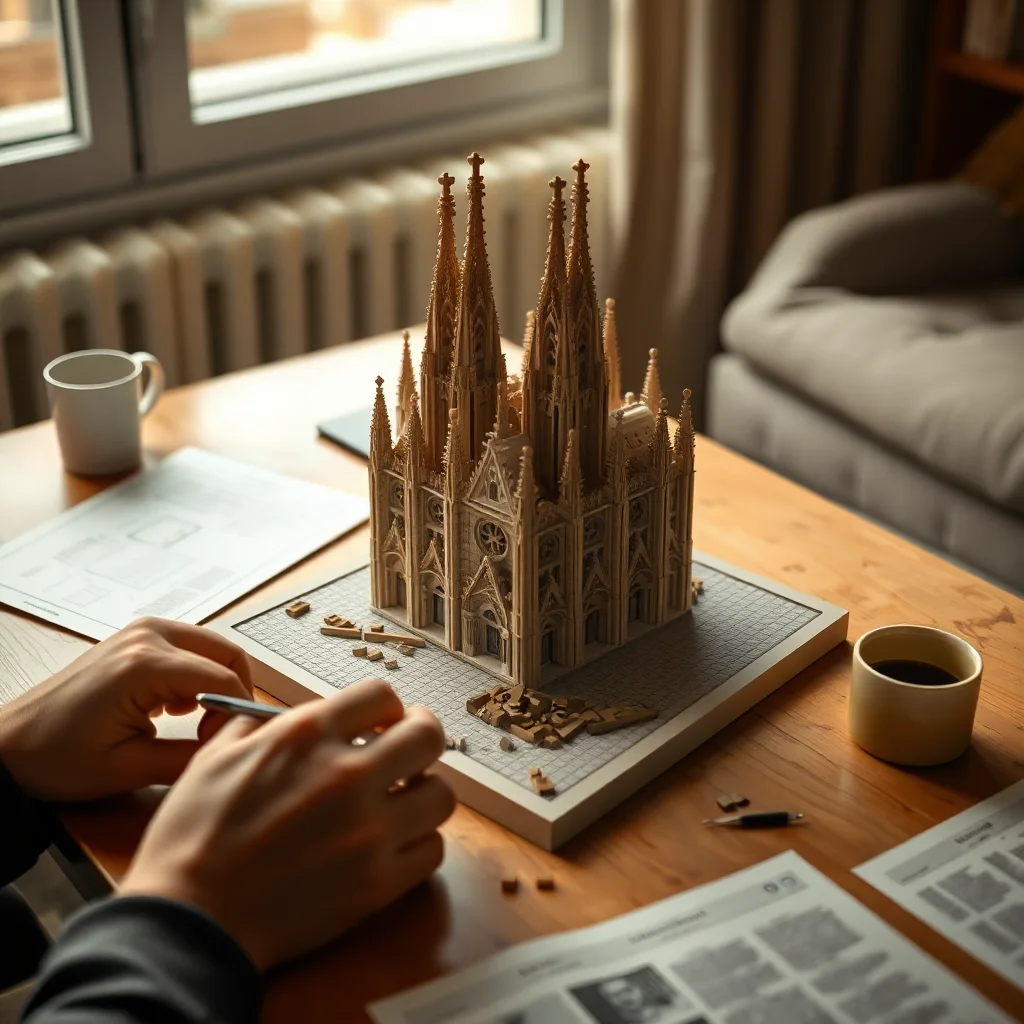
The transformation begins with scale. Miniaturization makes architecture legible as an object of consumption, but it also drains it of friction. The Sagrada Familia Lego set is technically impressive because it compresses Gaudí’s dense symbolic universe into a buildable model. Yet the very act of reduction converts a sacred urban presence into an evening’s entertainment. The cathedral becomes a kit, the pilgrimage becomes a project, and the public monument turns into an item of leisure culture.
This is not an isolated case. Architecture-themed products have proliferated through design retail for years: the LEGO Architecture series, Frank Lloyd Wright-inspired accessories, model kits of museums and skylines, and collectible objects that turn buildings into desk-scale trophies. The format matters. Once a building is translated into a purchasable object, it can circulate in a market that values recognition over spatial experience. The point is no longer to inhabit the work, but to own its image.
That shift is seductive because it democratizes access in one sense. Not everyone can travel to Barcelona, enter the great nave, or grasp the full labor of a monument in situ. A model can act as an invitation, a teaching tool, even a memory device. Yet democratization is only half the story. The other half is monetization, and the two are too often confused. When heritage becomes merchandise, access arrives bundled with extraction. The same tension appears in debates over whether recycled materials can become luxury again, where value is rebuilt from what once seemed ordinary or discarded.
The genius of the collectible building
Collectors love architecture for the same reason brands do: it carries prestige without needing to be invented from scratch. A cathedral, tower, or museum already comes with authorship, mythology, and visual authority. By licensing iconic forms, manufacturers buy into a narrative that has already been culturally validated. For designers, the temptation is just as strong. Architecture offers an inexhaustible library of geometries, silhouettes, and symbolic references that can be mined for products that feel immediately elevated.
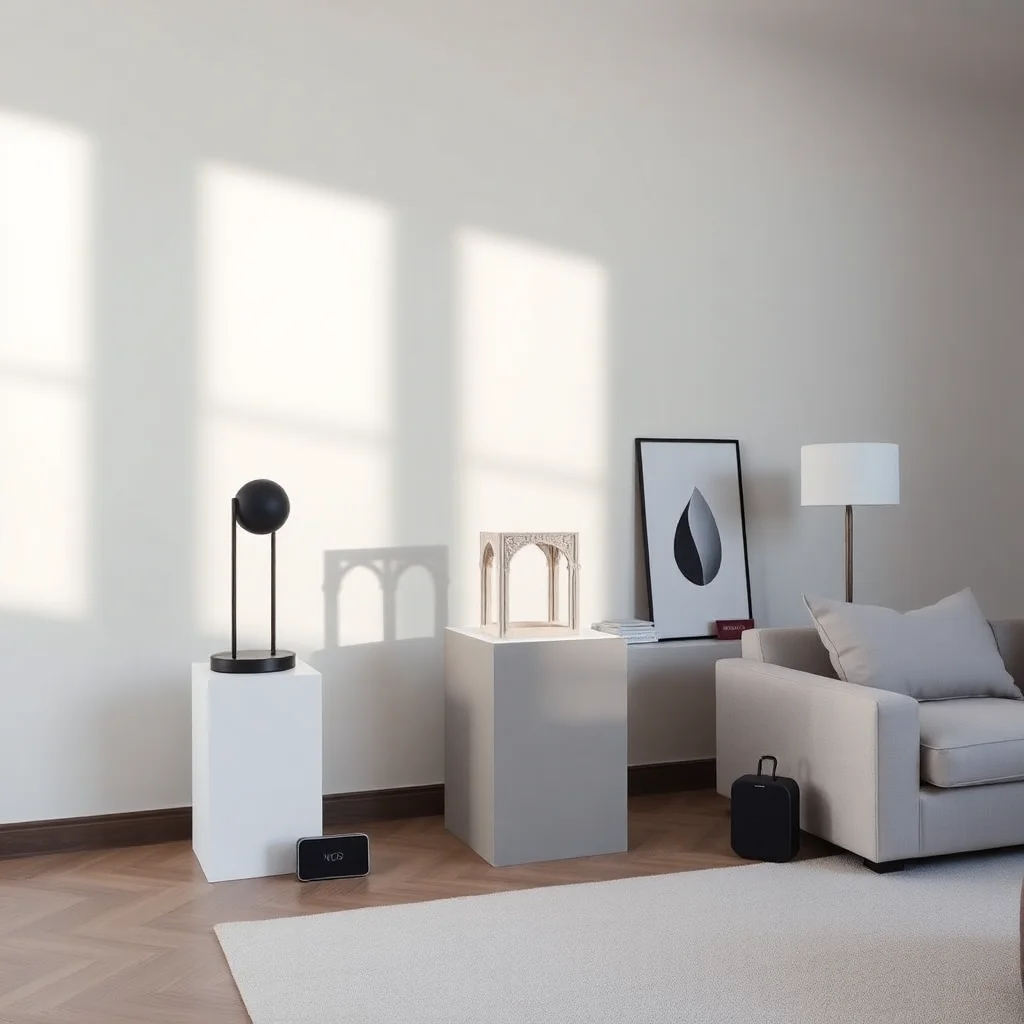
Consider the furniture world’s long flirtation with architectural citation. Mario Bellini’s modular systems, Eileen Gray’s house-derived spatial thinking, and the many contemporary tables, shelving units, and lighting objects that mimic vaults, arches, and facades all exploit the same impulse: to make the domestic interior feel as if it has borrowed prestige from the city. Even when the reference is abstract, the message is clear. Your sofa can carry the aura of a monument. Your lamp can behave like a public sculpture. Your home can be made to feel like a museum in miniature.
Luxury tech has taken the logic further. Special-edition devices, architectural phone docks, and premium headphones framed by sculptural industrial design increasingly operate as lifestyle talismans. Their value lies not in performance alone, but in what they signify: taste, cultural literacy, and proximity to design history. The object is sold as an experience, but the experience is really a status narrative. Architecture becomes a shorthand for seriousness, and the market weaponizes that seriousness.
What gets lost in the translation
The danger is not that architectural references are used in product design. Design has always borrowed from architecture, and architecture has always learned from products. The danger is that the relation becomes one-way and extractive. In the collectible version of architecture, the building is stripped of weather, scale, labor, and politics. It loses its friction with the city and becomes a pure image, ready to be shuffled into a lifestyle mood board.
This matters because architecture is never only form. A cathedral is also ritual and craft. A civic building is also governance, public access, and contested history. A housing block is also policy, class, and maintenance. When these are flattened into merchandise, the hard questions vanish. You can admire the silhouette of a monument without confronting the labor, colonial histories, or institutional power that produced it. The object becomes innocent by design.
Even in the best cases, abstraction has a cost. A model teaches proportion, structure, and composition, but it cannot teach atmosphere in full. It cannot reproduce acoustics, civic scale, or the social theater that gives architecture its force. The miniature is useful precisely because it is incomplete. Trouble begins when incompleteness is mistaken for adequacy. As recent arguments about architecture learning to wait suggest, the built environment often matters most when it resists instant consumption and unfolds over time.
Licensing heritage, selling familiarity
Licensing iconic architecture is now one of the most efficient ways to manufacture desire. Brands do not need to persuade consumers from zero; they leverage familiarity. The more culturally embedded the form, the easier it is to sell. A recognizable building becomes an interface between memory and ownership. The buyer is not just purchasing an object but participating in a shared symbolic economy, one that trades on collective admiration while privatizing the reward.
This is why the architecture-to-product pipeline is so effective in museum shops, premium retail, and design collaborations. It feels educational, tasteful, and accessible. Yet it is also highly selective. Not every building is merchandised equally. The canon gets reproduced, while the marginal, vernacular, and politically inconvenient remain invisible. Iconic forms become the commercial face of architecture, and architecture itself is narrowed to whatever can be instantly recognized and monetized.
There is a deeper irony here. Buildings once served as public anchors precisely because they resisted easy possession. Their meaning expanded through use, interpretation, and collective memory. Now the market teaches us to treat them as intellectual property to be packaged, editioned, and optimized for shelf appeal. The result is a new kind of cultural ownership, one in which heritage survives as brand equity.
Designers are already exploiting the condition
Some designers embrace this condition with intelligence rather than nostalgia. They understand that the copy is not simply a copy; it is a new site of interpretation. A model cathedral, a facade-like lamp, or a chair that quotes an arcade can work as a critical device if it reveals how architecture is consumed. The best of these objects do not merely celebrate the original. They expose our hunger for symbolic compression.
Think of the way contemporary collectible design often behaves like architecture in reverse. Instead of building up from program and site, it begins with image recognition and then seeks function as an afterthought. This is especially visible in editioned objects that are marketed through references to modernist houses, landmark museums, or regional vernaculars. The product is not asking to be lived with; it is asking to be read.
That is why the current boom in architectural collectibles should be treated as more than merchandising. It is a cultural test. Are we willing to accept that the public life of architecture can be rewritten as private decoration? Or do we insist that some forms remain more than their marketable outline?
A new politics of the miniature
To criticize architectural collectibles is not to reject play, collecting, or even homage. It is to insist on hierarchy. A miniature cathedral can be delightful, educational, and technically brilliant. But it should never be confused with the cathedral’s civic, historical, or spiritual power. The issue is not the object itself; it is the ideology that surrounds it. When the market frames architecture as just another lifestyle category, we risk accepting a diminished understanding of the built world.
And yet the miniature has its own politics. It reveals what a culture chooses to preserve, what it chooses to sell, and what it chooses to flatten. If Lego can turn the Sagrada Familia into a triumph of assembly, then the contemporary design economy can certainly turn heritage into an addressable audience. That is both its genius and its problem. Architecture becomes product because product culture understands, perhaps better than architects do, how deeply people want to possess meaning.
The challenge for designers is to resist the easy equation between iconicity and value. Not every building should become a collectible. Not every form should be licensed into a lifestyle object. The future of architecture as product will be decided by whether we can distinguish cultural access from cultural extraction—and whether we can still defend the messy, public, unbuyable reality of buildings as something greater than their merchandise.
FAQ
Q: Why are architectural landmarks so often turned into products?
A: Because they are instantly recognizable, emotionally charged, and already culturally validated. That makes them ideal for toys, furniture references, luxury editions, and branded objects that sell familiarity as value.
Q: Does making architecture collectible help more people engage with it?
A: Sometimes. Miniatures and models can educate, invite curiosity, and broaden access. But they also risk replacing real architectural experience with a simplified, purchasable image.
Q: What is lost when a building becomes merchandise?
A: Scale, context, labor, politics, and atmosphere. The building’s civic and historical complexity is flattened into a symbol that can be owned, displayed, and consumed.
Q: Is architectural borrowing always exploitative?
A: No. Designers have long used architectural references critically and creatively. The issue is whether the reference deepens understanding or merely cashes in on the prestige of the original.
What should matter more in the future: the right to own architecture’s image, or the right to keep architecture larger than commerce?
Get the Mainifesto weekly — curated design debates, speculative ideas and the week's best articles every Saturday.
Editorial Perspectives
Questions and counterpoints developed by the Mainifesto editorial desk to extend the discussion.
Perspective 1
Miniaturizing architecture changes the building from spatial system to distributable image, and that shift is fascinating but risky. I’d argue the bigger question isn’t who owns the image, but whether we still protect the original work’s public meaning once it becomes a brand asset.
Perspective 2
Architecture has always been reproduced, but merchandizing it as a lifestyle object flattens the histories embedded in material, labor, and place. The future should care more about keeping architecture larger than commerce, because once the image is fully owned, the building itself becomes easier to turn into a souvenir.
Perspective 3
We are living through the souvenir phase of architecture, when the cathedral becomes a desk toy and the tower a logo. The right to own architecture’s image matters only if it doesn’t turn into a permission slip to strip buildings of dignity and sell the residue back to us.