
Can Public Art Memorialize Migration?
When a Civic Object Becomes a Moral Claim
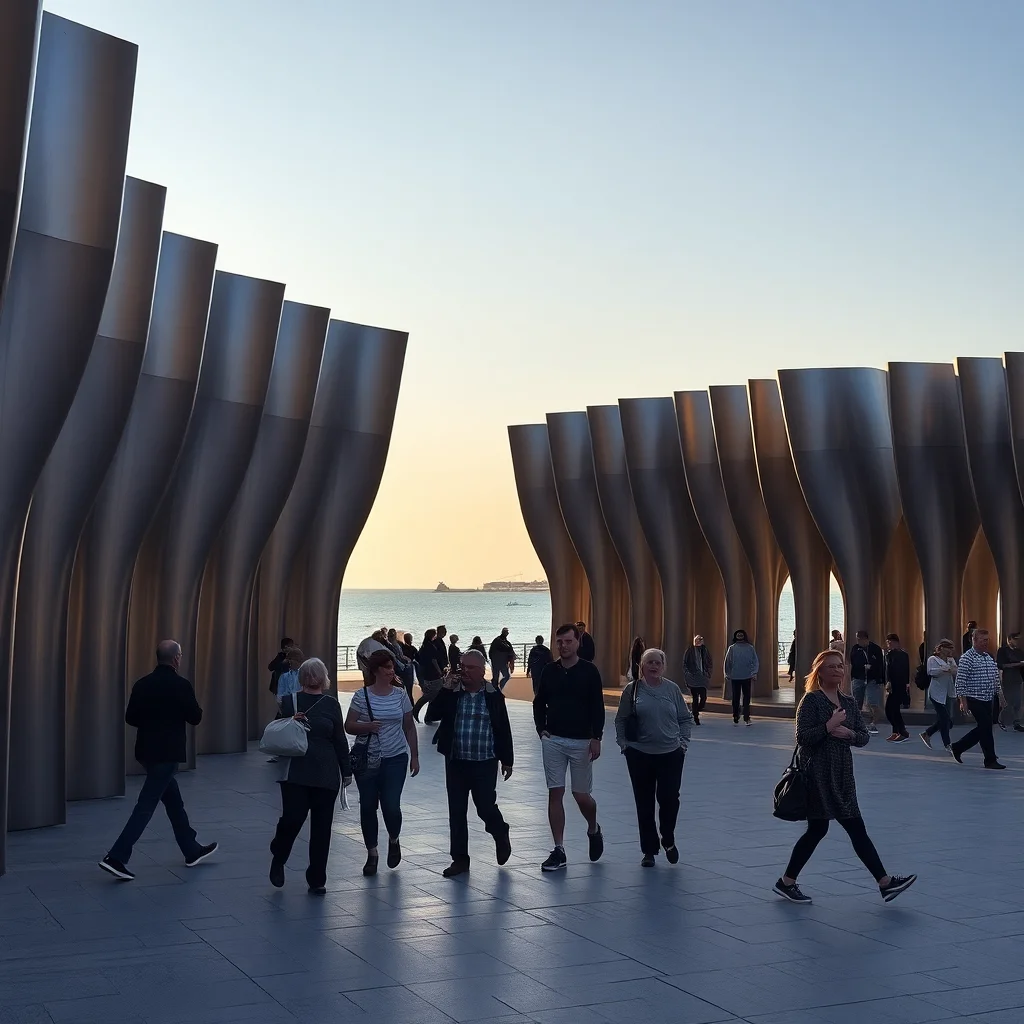
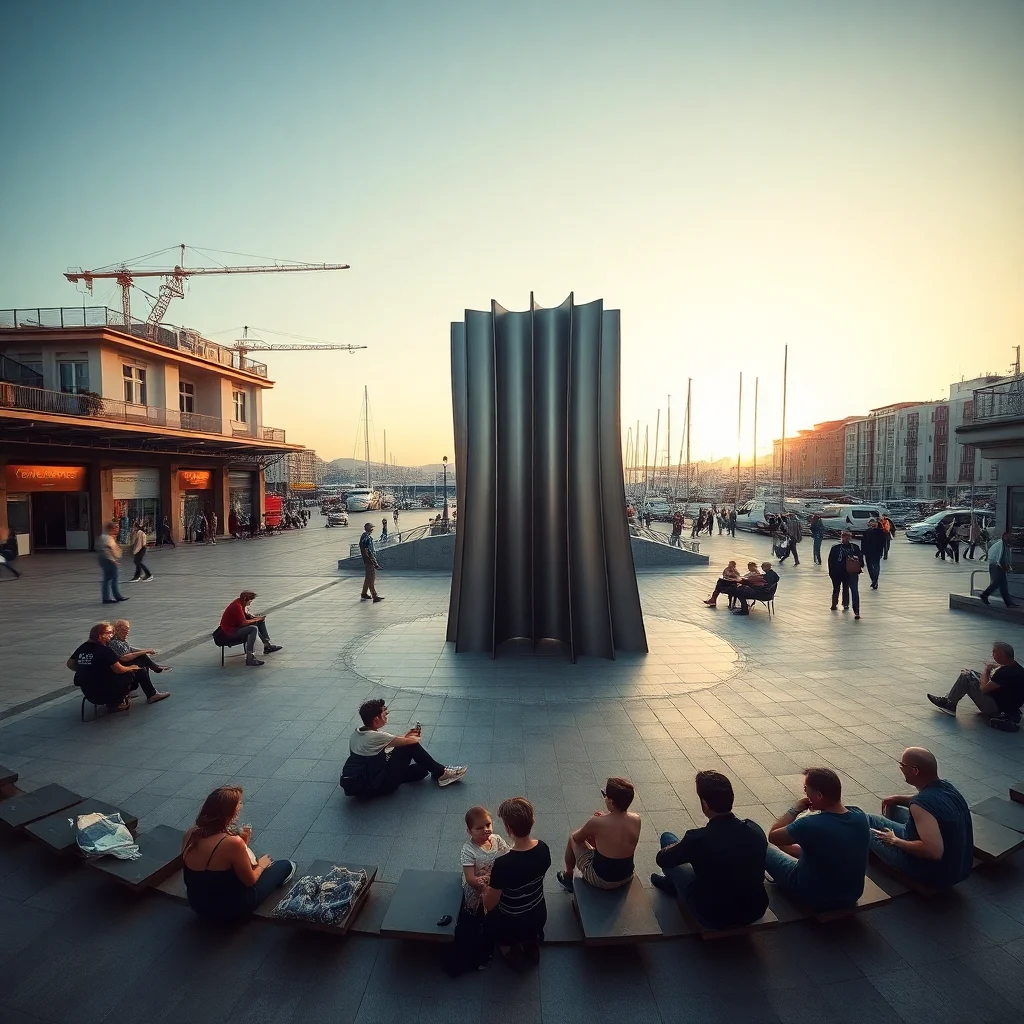
Marseille has always been a city that argues with the sea. Ports do that: they turn arrival into labor, departure into grief, and exchange into a politics of belonging. The project of 486 hand-folded metal panels, conceived as both gathering space and memorial, enters that history with a blunt ambition. It is not merely a sculptural object placed near the waterfront. It is a civic instrument that wants to hold memory in public, in the open, and without the security blanket of a museum wall.
That ambition matters because migration is one of architecture’s favorite abstractions and one of politics’ most difficult realities. Too often, built form is asked to “represent” movement while remaining safely symbolic. Here the project uses folded metal as a vessel-like language: reflective, rhythmic, at times almost ceremonial. But the real question is not whether it looks moving. The question is whether it can carry emotional and historical weight without turning pain into an aesthetic effect.
Marseille is a particularly loaded site for that test. It is a Mediterranean city shaped by centuries of exchange, displacement, colonial routes, labor migration, and informal arrivals. Any public work that invokes this history must do more than gesture toward cosmopolitanism. It has to resist the polished civic rhetoric that often turns collective memory into a branding exercise.
The Seduction of Form: Why Folded Metal Matters
There is a reason folded metal has become such a potent contemporary architectural device. It can be precise and rough at once, industrial yet hand-made, monumental yet lightweight in expression. In this Marseille project, the 486 panels create a surface that reads like origami translated into civic scale. That transformation from pliable sheet to rigid assemblage is already symbolic: a fragile history made visible through structural discipline.
But the formal language is not neutral. Metal catches sunlight, throws glare, produces shadow, and begs to be photographed. This is where the work risks drifting into the same spectacle economy that powers so many “memorial” commissions today. A memorial that performs too well can become a content machine. It circulates before it settles. It becomes an image before it becomes a place.
We have seen this tension before. Maya Lin’s Vietnam Veterans Memorial remains a landmark because it refuses theatricality while still producing an overwhelming emotional experience; its power lies in subtraction, not declaration. In contrast, many commemorative objects in recent decades have overplayed symbolism and underplayed use, becoming public art that asks to be admired rather than inhabited. The Marseille proposal tries to avoid that trap by functioning as a gathering space. That is a stronger move. Yet the danger remains: the more object-like the memorial becomes, the more it risks being consumed as form alone.
This is the same broader civic problem explored in waterfront urbanism and civic life, where the edge between public space and spectacle often determines whether a project feels genuinely shared or merely staged.
Memory Must Be Usable, or It Fails in Public
A civic memorial cannot live on sentiment alone. If it is truly public, it must support ordinary life: sitting, waiting, passing through, meeting, pausing, arguing. Otherwise it is not public space but a moral display. The Marseille project is most convincing when understood as a usable threshold rather than an untouchable monument. That distinction is crucial. A memorial that can be occupied by residents without requiring reverence has a better chance of becoming part of civic culture rather than a one-off gesture.
This is where architecture differs from sculpture. Architecture is accountable to duration, maintenance, weather, and use. It must survive the mismatch between symbolic intent and everyday reality. The strongest memorial environments in recent memory understand that. Consider Berlin’s Memorial to the Murdered Jews of Europe: its field of stelae operates as a spatial experience that is open, ambiguous, and physically traversable. Or consider Peter Eisenman’s insistence that monumentality need not depend on figurative representation. The Marseille project shares that openness, but it also tests whether a smaller, more intimate civic object can shoulder a similarly complex charge.
Yet openness alone is not enough. The risk of “multipurpose memorials” is that usability can smooth away difficulty. A bench, a shaded platform, a promenade: these are all valuable, but they can blunt the sharpness of memory if the work becomes too hospitable. A memorial to migration should not be so accommodating that it forgets why it exists. It must remain slightly uncomfortable, slightly unresolved.
That tension often appears in urban renewal without the grand plan, where projects succeed only when they preserve enough roughness to remain legible as civic space rather than polished consumption.
Against Performative Compassion
The most dangerous outcome for a project like this is not failure but consensus. Everyone applauds the sentiment, the city gains a polished public asset, and the deeper politics of migration remain untouched. That is performative compassion: the aesthetics of empathy without the burden of historical specificity. Architecture is especially vulnerable to this because it can make ethics appear solved through design intelligence.
To avoid that outcome, public memorials need friction. They need to acknowledge that migration is not a universal mood but a contested field shaped by borders, labor systems, imperial legacies, and unequal access to safety. Marseille’s maritime identity makes this undeniable. The sea is not a blank poetic metaphor. It is also a route of trade, rescue, loss, and exclusion. A memorial that romanticizes the Mediterranean as a shared cultural bath risks erasing the violence that has always moved across it.
There are examples of architects and artists who work with that tension rather than sanding it down. The Stolpersteine project by Gunter Demnig places remembrance directly into the street, forcing memory to coexist with daily circulation. For contemporary migration specifically, works by Doris Salcedo have repeatedly shown how absence, displacement, and grief can be made legible without ornamental excess. These projects do not flatter the viewer. They interrupt them. The Marseille tribute should be judged by whether it does the same.
Public Art as Vessel, Not Trophy
What makes the idea of a “symbolic vessel” compelling is that it avoids the static heroism of the traditional monument. Vessels contain, carry, and receive. They imply passage rather than victory. That is a far more honest metaphor for migration, which is never simply arrival or departure but the unstable interval between them. Folded metal can support that reading beautifully. It can suggest hull, shelter, fragment, sail, or skin without becoming literal.
But a vessel can still become a trophy if the city displays it as proof of sensitivity. Too many municipalities treat memorial commissions as evidence of cultural sophistication, especially in waterfront districts where public realm upgrades and real-estate narratives often overlap. In that setting, the memorial becomes a civic alibi: a way to sanitize development with symbolic gravity. That possibility must be named, not ignored.
The best public art does not solve this problem; it exposes it. It keeps the contradiction visible. A memorial to migration in Marseille should not pretend the city’s history is harmonious. It should acknowledge that routes of exchange also carry exploitation, that hospitality often coexists with exclusion, and that the sea is as much a graveyard as it is a connector. If the folded panels can hold that double truth, they have architectural seriousness. If not, they are just beautiful metal.
What the Marseille Project Asks Architecture to Risk
Architecture is often praised for empathy, but empathy is not the same as responsibility. A memorial worthy of public space must risk discomfort, ambiguity, and even failure. It must resist the easy legibility that makes design press-friendly. The Marseille project matters because it refuses the false choice between monument and amenity. It proposes that memory can be civic, and civic space can be mournful, but only if form does not outvote meaning.
That is a high bar. It should be. Memorials should not be decorative apologies. They should be arguments about what a society chooses to remember in common. In a city like Marseille, where migration is not a theme but a condition, a public art project that speaks in folded metal must answer to more than aesthetics. It must earn its place through use, difficulty, and honesty. If it cannot hold pain without romanticizing it, then it has already failed.
Still, the project’s strongest promise is real: it imagines remembrance as something lived rather than visited. That is the kind of memorial architecture the present needs—open enough to be used, specific enough to matter, and skeptical enough to distrust its own beauty.
Seen that way, the project also sits alongside broader debates about whether a city can be designed before its culture exists, or whether public form can only ever crystallize what residents are already willing to share.
FAQ
What makes the Marseille project different from a typical monument? It is designed as both a memorial and a gathering space, which means it has to function in daily civic life instead of standing apart as a purely symbolic object. That hybrid ambition makes it more relevant, but also more vulnerable to becoming aestheticized.
Why is folded metal such a loaded material choice? Folded metal suggests transformation, containment, and resilience, which fits the idea of migration as passage and survival. It is also visually striking, which creates the risk that the memorial is read primarily as spectacle rather than as a place of reflection.
Can a public memorial remain open and usable without losing seriousness? Yes, but only if it preserves some friction. The best memorials allow everyday use while refusing to smooth away the difficult histories they address.
What is the main criticism of memorials like this? That they can become performative: visually impressive objects that signal empathy without confronting the political and historical complexity of migration. A successful memorial must avoid turning collective memory into civic branding.
Conclusion
Marseille’s folded-metal tribute is valuable precisely because it exposes an uncomfortable truth: public art is never just about beauty, and memorial architecture is never just about remembrance. It is about who gets to define memory, how pain is translated into form, and whether a city is willing to live with the instability of its own history. That is not a soft question. It is the real one.
Get the Mainifesto weekly — curated design debates, speculative ideas and the week's best articles every Saturday.
Editorial Perspectives
Questions and counterpoints developed by the Mainifesto editorial desk to extend the discussion.
Perspective 1
If people can actually use the memorial, that’s not dilution — that’s reach. A piece that sits in the path of daily life has a better shot at being remembered than one everyone visits once for the photo and forgets. The real test is whether it still reads as a memorial when no one is performing for it.
Perspective 2
I’m fine with a memorial doing double duty, but only if the utility is honest and not some grand gesture pretending to be public life. A bench, a route, a pause point — that can work, and it keeps the thing from becoming an expensive object with a plaque. If it’s overdesigned, though, you lose both the function and the meaning.
Perspective 3
Useful memorials often last longer because they’re maintained, occupied, and part of the everyday fabric of the city. The problem isn’t use, it’s when the design overexplains itself and leaves no room for people to bring their own memory to it. So yes, usefulness can deepen remembrance — but only if the form is restrained enough to let that happen.
Perspective 4
Migration is infrastructure, politics, and trauma all at once, so a memorial that just sits there like a hero object misses the point. If it can be passed through, occupied, argued over, and used, then it starts to resemble the messy civic reality migration actually lives in. Spectacle is the enemy here; circulation is the right metaphor.
Perspective 5
There is always a French temptation to turn memory into a civic salon, but memorials are not lounges. If a monument must be useful, let that usefulness be minimal and disciplined, not a pretext for design sociability. Remembering requires interruption; too much comfort and the work turns into furniture.