
Can Parametric Architecture Escape Its Reputation?
Parametricism: from manifesto to suspicion
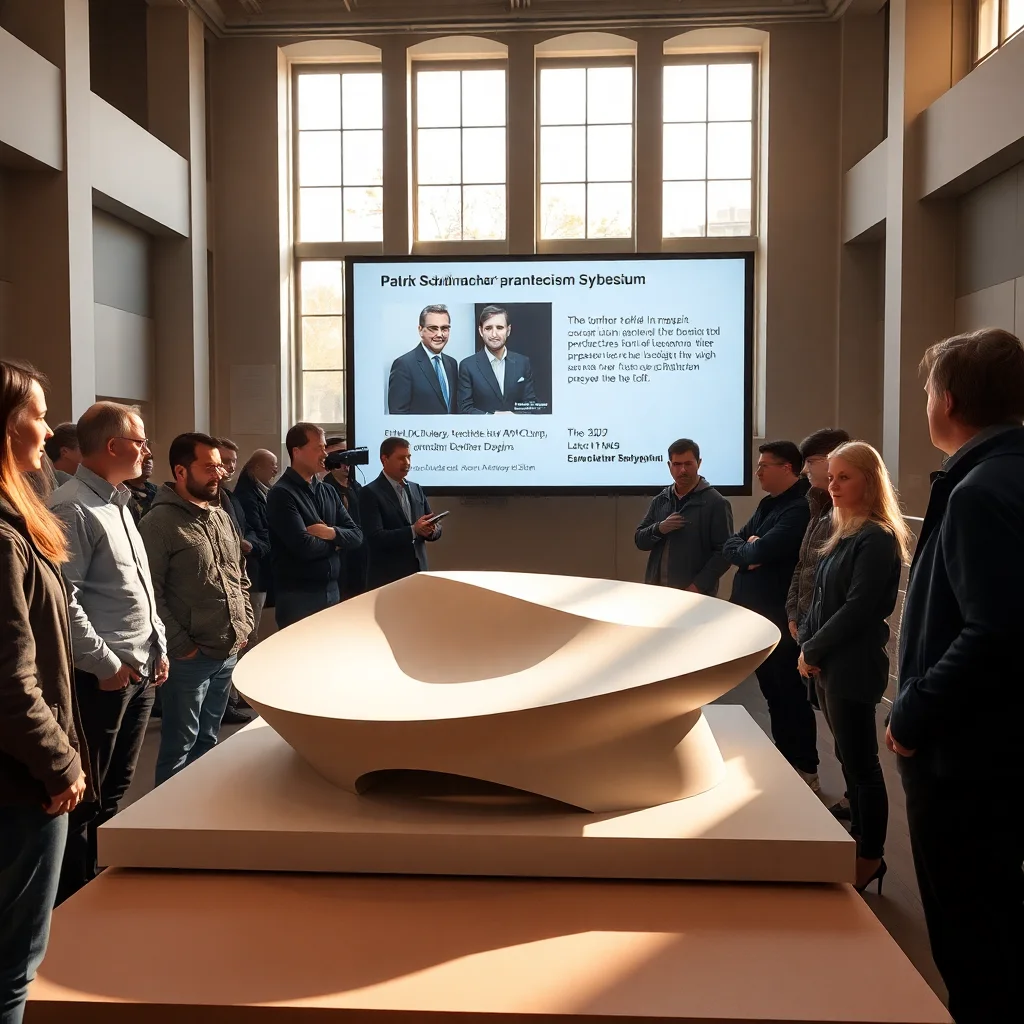
Parametric architecture has always suffered from a paradox: it promised to make buildings more intelligent, responsive, and efficient, yet it became infamous for producing an aesthetic of whiplash curves, digital excess, and overconfident theory. Patrik Schumacher did not merely advocate a style; he tried to install a worldview, declaring parametricism the defining architecture of the 21st century. That ambition was always going to invite backlash. In the public imagination, parametric design became shorthand for the kind of architecture that looked expensive, overprocessed, and politically smug.
That reputation was not invented out of thin air. The late-2000s wave of digitally scripted form-making often produced buildings that seemed more committed to visual novelty than civic necessity. Critics saw a closed loop: software enabled formal complexity, complexity signaled innovation, and innovation was then mistaken for cultural relevance. The result was a kind of architectural techno-optimism that arrived just as the world was dealing with financial crisis, ecological limits, and a growing impatience with elite formalism. Parametricism was always going to look slightly too pleased with itself.
And yet dismissing it now is too easy. The real question is no longer whether the style can win a beauty contest. It is whether parametric methods have become embedded so deeply in practice that the old style-versus-substance debate has simply become obsolete. The architecture world may still sneer at the word parametricism, but it increasingly relies on parametric thinking wherever buildings need to be optimized, coordinated, customized, or built with fewer errors.
PRO: Why parametric design has outgrown the meme
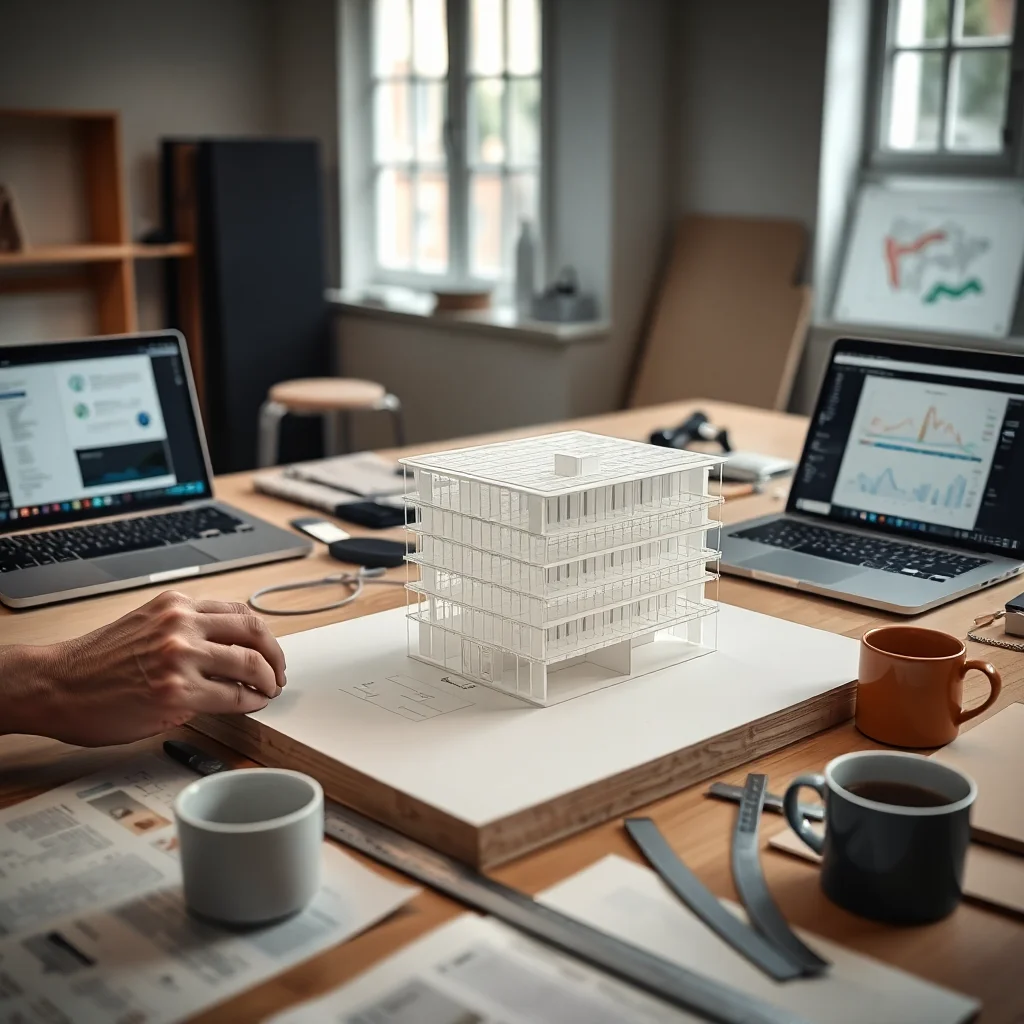
The strongest argument for parametric architecture is that it has quietly escaped the museum of styles and entered the operating system of the discipline. Today, parametric workflows underpin everything from façade rationalization to structural optimization, daylight analysis, acoustic modeling, and massing studies. In other words, the method survives because it solves problems that contemporary architecture cannot avoid. When a project must satisfy environmental performance targets, complex code requirements, and accelerated delivery schedules, scripting and iterative modeling are not ornamental extras; they are the only sane way to manage the brief.
This is where the post-heroic phase of parametricism becomes more interesting than its manifestos. Look at projects by studios such as Foster + Partners, Zaha Hadid Architects, and UNStudio, where digital methods are often less about flamboyant shape than about reconciling ambitious geometry with fabrication realities. Even the buildings most associated with the style are often more disciplined in practice than their critics admit. The Heydar Aliyev Center in Baku may be the canonical image of parametric fluidity, but its legacy is not merely visual; it also demonstrated how complex continuous surfaces could be coordinated across structure, cladding, and program at scale. That mattered, even if the result became a poster child for digital excess.
The same is true of projects that are not especially wavy or theatrical but are still deeply parametric in their logic. Herzog & de Meuron’s computationally informed work, the algorithmic planning used in major transport hubs, and the optimization strategies in contemporary timber architecture all reveal a deeper truth: parametricism is no longer a style in the narrow sense. It is a method of handling complexity. If modern architecture once celebrated the machine, then today’s practice celebrates the model — not as a fetish object, but as a live instrument that can be revised, tested, and coordinated.
This matters because the profession has changed. Architectural offices are no longer simply drawing buildings; they are managing information. In that context, parametric workflows can reduce waste, enable mass customization, and support more precise construction. The virtue is not in making everything look like a computational diagram. The virtue is in producing more adaptable, better integrated architecture. When parametric thinking is used to tune a façade for solar gain, or to vary housing units without multiplying cost, it is hard to argue that the method is a dead ideological relic.
For that reason, the conversation now overlaps with other debates about performance-led design, including the question of whether a building can be shaped by climate rather than imposed upon it. That is one reason articles like Architecture That Lets Weather Author the Plan feel adjacent to the parametric argument: both suggest that responsiveness can be a generative force rather than an afterthought.
PRO: The best parametric work is no longer about spectacle
Some of the most persuasive parametric projects are also the least memeable. Mass timber pavilions and educational buildings often rely on parametric coordination to resolve repetitive but non-identical components. The digital model becomes a negotiation space between engineering, fabrication, and climate response. That is a far cry from the image of the architect as a computer wizard inventing impossible shapes for wealthy clients. It is also closer to the future architecture claims to want: less wasteful, more adaptable, and more responsive to local constraints.
The rise of climate-conscious design has also changed the terms of the conversation. If early parametricism often appeared addicted to formal freedom, contemporary practice increasingly uses parametric tools to impose discipline. Generative systems can test shading fins, airflow patterns, and structural efficiency long before the first drawing is issued. This is not neutral technology; it is a shift in what counts as design intelligence. The building is no longer judged only by its silhouette, but by the quality of its performance over time. In that sense, parametric methods are among the few tools capable of aligning ambition with measurable environmental outcomes.
There is also a more democratic argument, though proponents rarely make it forcefully enough. Customization is not inherently elitist. If used properly, parametric systems can produce variation at scale, allowing housing, workplaces, and public buildings to adjust to different users without restarting the design process from scratch. The promise is not perfect uniqueness, which is a fantasy, but controlled difference. That is a serious architectural proposition in an age that claims to value inclusion, flexibility, and resilience.
And unlike the old caricature, the best parametric design is often boring in the best possible way: efficient coordination, fewer clashes on site, faster iteration, tighter tolerances, better outcomes. The profession may not reward that with glossy magazine covers, but it should. If architecture wants to matter beyond Instagram, it has to prove it can use computational tools to make buildings that are smarter, not merely stranger.
It is also worth noting that performance-driven design often travels alongside other low-drama environmental strategies, from shading systems to planted envelopes. The line between parametric coordination and greener building tactics is increasingly porous, which is why discussions of green walls as a climate fix or fire hazard sit in the same ecosystem of practical skepticism.
CONTRA: Parametricism still carries its own self-inflicted damage
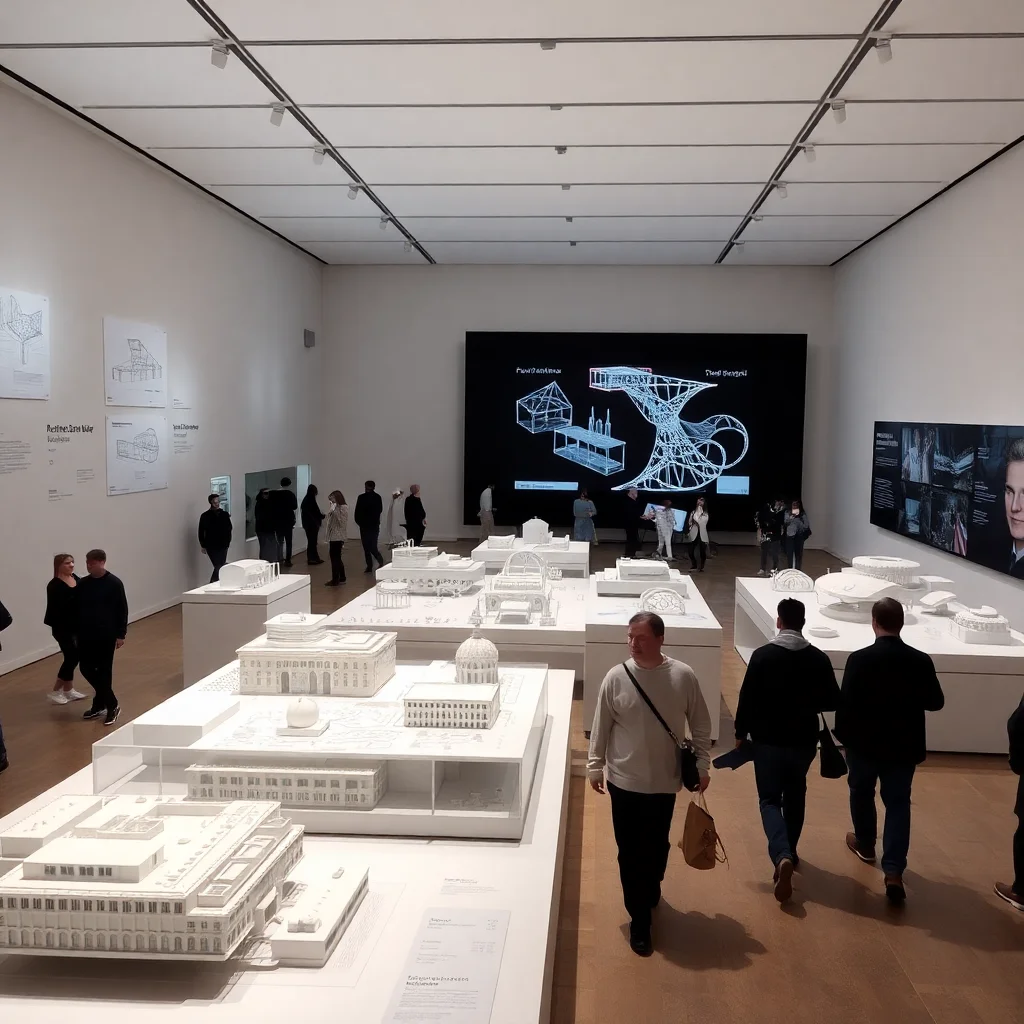
But let us not pretend the baggage has vanished. Parametric architecture’s reputation problem persists because many of its high-profile examples were built as demonstrations of power rather than as responses to context. The style became associated with a narrow global circuit of clients, star architects, and capital-intensive commissions. That made it easy to read parametricism as a language of privilege: glossy, expensive, and curiously detached from the ordinary city. In that light, the critique was never just about form. It was about politics.
Patrik Schumacher’s rhetoric made this worse. By insisting that parametricism should become the dominant style, he transformed a useful design method into a doctrinaire position. The problem with manifesto architecture is that it tends to mistake scope for truth. Once parametricism was cast as a totalizing cultural program, every flaw in its visible output became evidence against the philosophy itself. Critics were right to bristle at the implication that a software-driven aesthetic could settle the future of the built environment.
Then there is the sameness problem. For all the talk of variation, parametric architecture often produces a recognizable family resemblance: smooth surfaces, continuous lines, controlled irregularity, and a certain digital polish. Even when forms differ, the underlying visual grammar can feel stale. The danger is that parametricism replaces one orthodoxy with another. Instead of the rigid box, we get the hyper-tuned blob. Instead of democratic standardization, we get the illusion of endless differentiation generated through the same toolkit, the same interfaces, and often the same consultant ecosystem.
That sameness is not merely aesthetic. It reveals how easily computational design can become a style package divorced from its supposed logic. A truly parametric practice would be indifferent to whether the building reads as curved, faceted, or boxy, because the point would be performance and adaptation. But the market did not reward indifference. It rewarded recognizability. So the method was sold as a look, and once that happened, it became vulnerable to becoming dated.
CONTRA: The techno-optimist fantasy has not been disproven, only updated
The deeper criticism is that parametricism often assumes computation can solve problems that are fundamentally social, economic, and political. Better geometry cannot fix housing inequality. Smarter form-finding cannot substitute for land policy. Optimized envelopes do not automatically produce just cities. This is the core conceit of techno-optimism: it frames architecture as a field where technical intelligence can stand in for structural reform. That fantasy was always shaky, and in a decade defined by climate anxiety, cost pressure, and urban polarization, it looks even shakier.
There is also a labor issue. Parametric workflows can centralize authorship in the hands of specialists who control scripts, models, and decision chains that others cannot easily inspect. That can make architecture more opaque, not less. The promise of openness and flexibility is undercut when design knowledge is hidden inside proprietary systems or concentrated in elite offices with expensive software and high barriers to entry. In that sense, parametricism can reproduce the very hierarchies it claims to dissolve.
And yet the most annoying truth is that its critics sometimes overstate their case. Parametric architecture is not dead; it has simply lost its claim to novelty. The style that once wanted to define the century now looks like one tool among many, and that demotion is probably healthy. But demotion is not redemption. A method becomes trustworthy only when it is no longer treated as destiny. Parametricism may finally be learning that lesson, but it has not fully earned the public’s forgiveness.
So has parametric architecture escaped its reputation?
The answer is yes and no — which is exactly why the debate remains so useful. As a style, parametricism is still burdened by its own grandiosity, its visual clichés, and its association with a specific era of digital certainty. As a method, however, it has become indispensable. The profession now depends on computational processes to deal with complexity, to reduce waste, to customize building systems, and to coordinate the messy realities of contemporary construction. The style may be suspect, but the workflow is everywhere.
That tension suggests a more honest future. The next phase of parametric architecture will not be won by louder claims or shinier surfaces. It will be won by quieter competence: by architects who use generative tools without turning them into ideology, by offices that make better buildings rather than more conspicuous ones, and by designers who understand that complexity is not a virtue unless it improves life. If parametricism can accept that it is a method rather than a worldview, it may yet be redeemed.
But perhaps redemption is the wrong goal. Maybe parametric architecture should not be forgiven for its excesses; maybe it should be made useful enough that its old reputation simply stops mattering. The challenge is not to make the style lovable. It is to make the discipline honest about how deeply it already relies on it.
- What remains after the hype? A design culture that still loves curves but now depends on optimization, simulation, and iteration to get anything built at all.
- What should be left behind? The idea that computational complexity is automatically visionary, or that a building’s future value can be measured by its visual shock factor.
- What deserves a second look? The many non-iconic projects where parametric tools improve performance, reduce material waste, and simplify coordination rather than inflate spectacle.
- What still needs proving? Whether parametric workflows can genuinely democratize design instead of concentrating authorship inside elite offices and proprietary systems.
FAQ
What is parametric architecture?
Parametric architecture is a design approach that uses adjustable parameters, algorithms, and computational models to generate and refine buildings. It allows architects to test variations quickly and coordinate geometry, performance, and fabrication.
Why does parametricism have such a bad reputation?
Because it became associated with expensive landmark projects, overly fluid forms, and a kind of architectural techno-optimism that often seemed detached from social reality. Critics also objected to Patrik Schumacher’s claim that it should define the century.
Is parametric design still relevant today?
Absolutely. It is now embedded in standard architectural practice through environmental analysis, structural optimization, mass customization, and digital coordination. Even projects that do not look obviously parametric often rely on these tools.
Can parametric architecture be socially useful?
Yes, but only if it is used to solve real problems rather than to produce visual novelty. Its strongest role is in making buildings more efficient, adaptable, and responsive to climate and construction constraints.
Get the Mainifesto weekly — curated design debates, speculative ideas and the week's best articles every Saturday.



Olivier Dubois May 30, 2026
At this point, continuing to call parametric architecture a “style” is mostly a provincial habit of criticism. What matters is that it has moved, like so many once-radical tools, into the domain of method — the real question is whether architects have the discipline to use it without fetishizing the result.
Marcus Reed May 30, 2026
If a parametric workflow doesn’t improve guest experience, speed up coordination, or save money, I don’t care what you call it. Too often it’s been sold as intellectual garnish for projects that still underperform on the basics, and that reputation is earned.
Karim Haddad May 30, 2026
Parametric architecture is no longer just about expressive geometry; in practice it’s a way to manage complexity across climate, fabrication, regulation, and supply chains. The problem is that the benefits are unevenly distributed — in Dubai it can streamline delivery, while elsewhere it becomes another imported software habit with no local capacity behind it.
Elena March May 31, 2026
Yes, we should stop judging it only as a style, but only if we’re willing to ask for evidence. I’d want to see whether parametric methods actually improve performance, reduce waste, and make projects easier to adapt over time, not just produce more intricate façades.
Tom Brightwell May 31, 2026
From a developer’s point of view, parametric tools are useful when they help control cost, speed up options testing, and reduce errors on site. The moment they become a way to justify complicated forms with weak operational value, they stop being a method and start being an expensive aesthetic choice.