
Why Coffee Shops Are the New Luxury Chain
The café is no longer a café. It is a format.
The most ambitious coffee brands have stopped behaving like beverage businesses and started acting like hospitality systems. What they sell is not caffeine, but a repeatable social atmosphere: the feeling that you have found a place that is both globally legible and locally claimed. This is why the new wave of coffee operators looks less like a commodity sector and more like luxury retail with better lighting, more casual dress codes, and an almost obsessive attention to service choreography. The cup is just the ticket. The real product is mood.
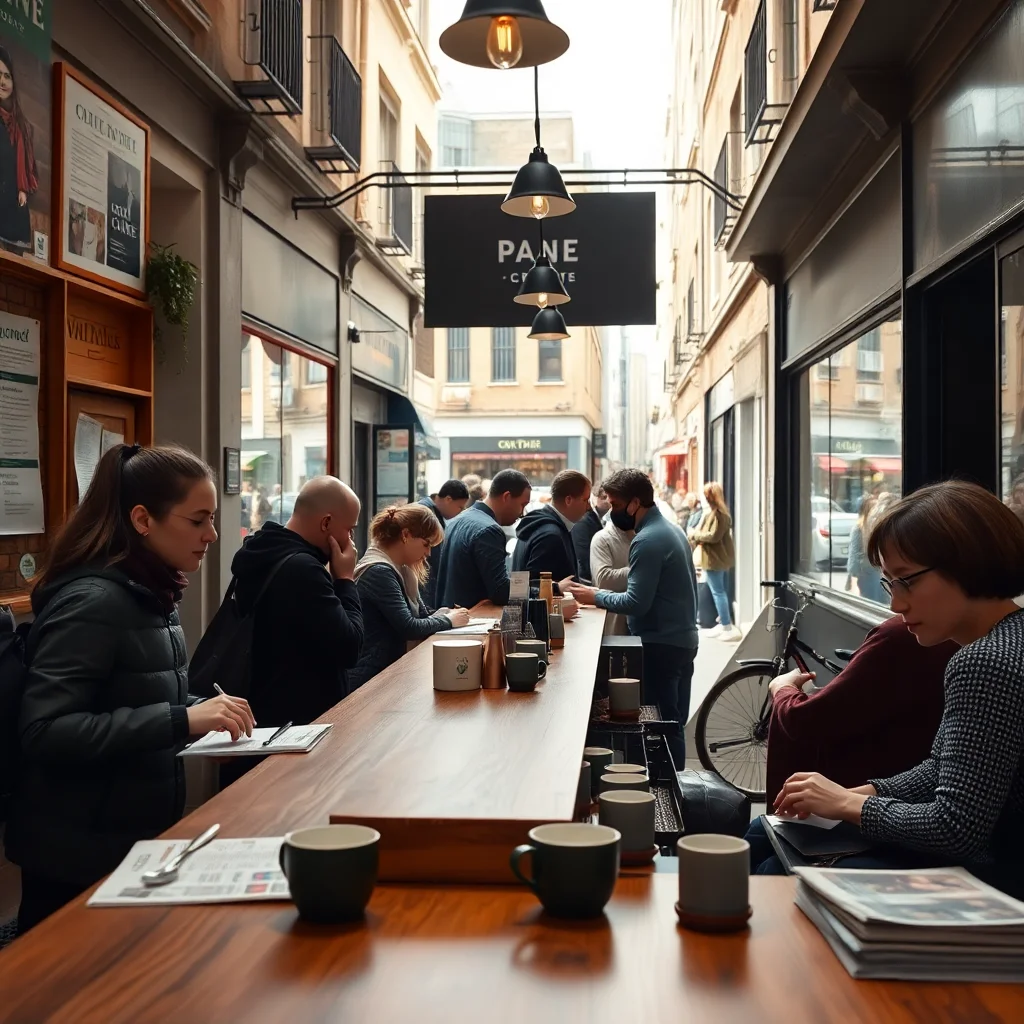
Monocle’s reporting on the international coffee market makes the point clear: entrepreneurs and investors are now taking neighbourhood cafés global, proving that a small, intimate typology can scale if it is packaged correctly. That packaging is architectural as much as financial. It involves oak counters, tactile ceramics, curated music, softened acoustics, and a kind of studied imperfection that suggests authenticity without surrendering control. In other words, the new coffee chain does not want to look like a chain. It wants to look like a place you discovered before everyone else did.
That tension is the defining drama of the sector. Café culture became desirable because it felt personal, informal, and embedded in the texture of a district. But the fastest-growing brands now understand that intimacy can be industrialized. They are turning neighborhood signals into assets: local menus, resident artists, cross-disciplinary collaborations, and interiors that borrow from the codes of independent design studios. The result is seductive, profitable, and slightly unsettling.
Luxury has learned to speak espresso
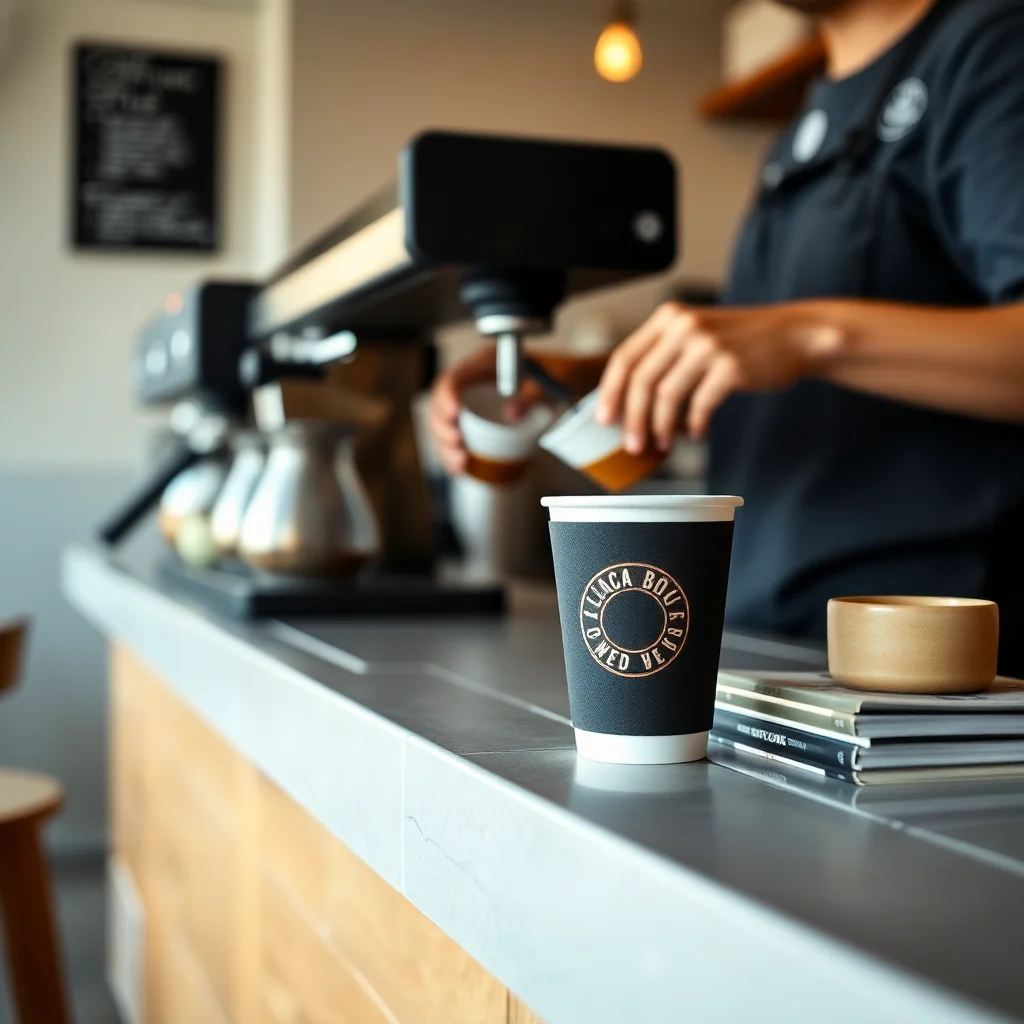
There is a reason coffee is suddenly behaving like luxury. Both categories are built on ritual, scarcity, and consistency; both depend on the promise that experience can be standardized without becoming dull. The best premium coffee concepts now borrow the same logic as fashion houses and boutique hotels: they produce a recognizable world, then reproduce it across cities with enough variation to feel site-specific. This is not about selling the same espresso everywhere. It is about selling a signature atmosphere that can survive translation.
Consider brands such as Blue Bottle, % Arabica, Alfred, or Intelligentsia. They are not merely cafés with better beans; they are environment-first businesses. Their stores are designed to communicate taste before the first sip. Minimal signage, immaculate counters, a restrained palette, and staff trained to perform a kind of approachable expertise all work together to create what luxury always wants: trust. Once that trust is established, the business can expand from one neighborhood to another, or from one continent to the next, without losing the aura of being carefully chosen.
This is why investors love coffee. It is a high-frequency habit with low individual ticket size but enormous cultural reach. It can be scaled through franchising, licensing, roasting, retail, and digital ordering, while still appearing artisanal. The format is incredibly flexible: it can be compact enough for a corner plot, polished enough for a mall, or hybridized into a concept store, bakery, listening bar, or co-working room. Coffee, in the hands of ambitious operators, becomes an interior strategy disguised as a menu.
Atmosphere is the new moat
The strongest coffee brands know that beans can be copied, but atmosphere is harder to counterfeit. That is where design enters as business infrastructure. In cities from Tokyo to Copenhagen to Seoul, the successful café is no longer just a point of sale but a calibrated environment: a place where the acoustics encourage lingering, the table spacing signals sociability, and the material palette quietly communicates values such as craft, calm, and cultural literacy. The same logic that is reshaping office acoustics and privacy is now being applied to hospitality, where sound and spatial comfort help determine whether people stay for ten minutes or two hours.
Look at the rise of spaces that feel closer to galleries than quick-service outlets. A brand like % Arabica, for example, has become a masterclass in spatial clarity: spare interiors, strong sightlines, a sense of graphic identity that photographs well and travels even better. Meanwhile, independent operators in London, Mexico City, and Melbourne often win loyalty by embedding themselves in the local design ecosystem, commissioning ceramicists, millworkers, and lighting designers to create a room that feels rooted rather than imported. In these places, the coffee counter becomes a stage for contemporary domesticity.
This is not accidental. The most desirable cafés are now engineered to be shareable, both physically and digitally. They work as social media sets without becoming empty backdrops. They have enough visual discipline to be recognized instantly, but enough friction—an idiosyncratic chair, a weathered wall, a neighborhood noticeboard—to avoid looking like airport retail. The goal is emotional plausibility. You are not just consuming a latte; you are renting a version of urban belonging.
Neighborhood credibility has become a luxury asset
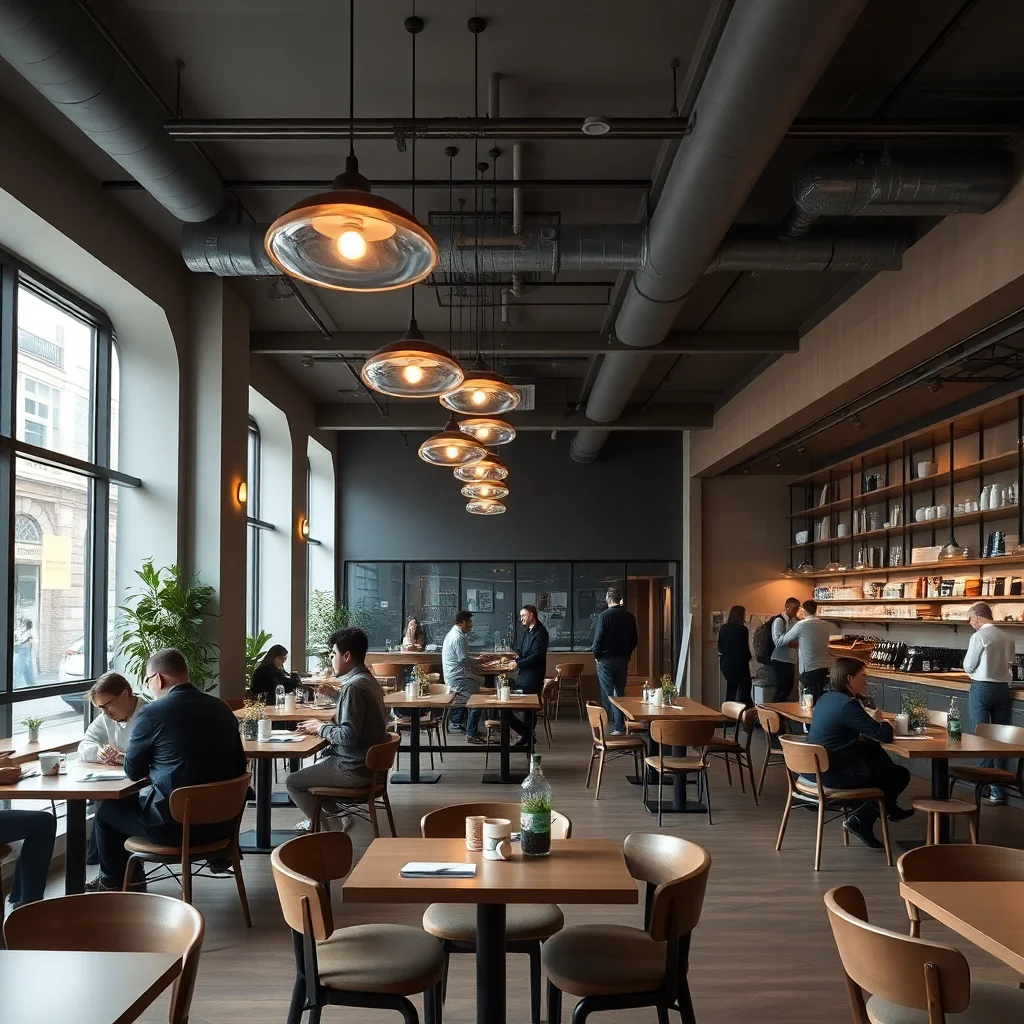
For decades, independent cafés used local credibility to differentiate themselves from corporate chains. Today, global coffee brands are trying to reverse-engineer that credibility as part of their expansion model. They open in neighborhoods where design culture already has symbolic capital, then borrow that capital through programming, collaboration, and restraint. The café becomes a diplomatic object: global in ambition, local in tone.
This strategy is visible in projects that treat community not as a slogan but as an operating principle. Book clubs, gallery nights, small-batch bakery partnerships, and neighborhood-led events help brands signal that they are guests rather than invaders. But let us be honest: the guest is often very well financed. The deeper truth is that local authenticity has become one of the most valuable luxury markers of all. A café that feels “found,” not manufactured, can justify higher prices and generate stronger loyalty than a generic premium concept ever could.
That is why the new café format is so politically charged. It promises support for local economies while also extracting the visual and social code of those economies for wider profit. If done well, this can create real value: better interiors, more jobs, stronger public life, and more ambitious hospitality. If done badly, it becomes cultural ventriloquism—corporate expansion dressed up as neighborhood warmth.
In the most ambitious cases, the café borrows from the broader luxury interior playbook, where material choices are treated as moral statements as much as aesthetic ones. That is part of why a piece like Can Recycled Copper Redefine Luxury Retail? resonates here: it asks whether high-end spaces can signal refinement without relying on the usual extractive cues. Coffee brands are now confronting the same question in miniature, one countertop and one cup at a time.
PRO: Why the expansion makes sense
1. Scale can fund quality. When a coffee brand grows, it can invest in better sourcing, stronger design teams, and more thoughtful interiors. What begins as a neighborhood café can become a platform for architecture, ceramics, graphic design, and hospitality training.
2. The best brands raise the bar for everyday life. A well-designed coffee shop gives ordinary routines a little ceremony. In cities crowded with generic food service, a carefully composed café can function like public infrastructure with taste.
3. Local credibility can travel. Brands that understand how to adapt to context—through regional pastries, local suppliers, or site-specific collaborations—can make global expansion feel less like invasion and more like conversation.
4. Coffee is an unusually elastic category. It can absorb retail, food, design, and community programming without losing clarity. That makes it one of the few sectors where lifestyle branding can still feel useful rather than merely decorative.
CONTRA: Why the model is dangerous
1. Intimacy is fragile. The qualities that make cafés beloved—quirk, informality, neighborhood memory—are often the first things sacrificed when a format is optimized for replication. Standardization is efficient, but it can flatten character.
2. “Local” can become a marketing costume. If every global chain borrows local ceramics, local language, and local programming, then authenticity risks becoming an aesthetic rather than a relationship. The neighborhood is no longer served; it is styled.
3. Expansion can hollow out the independent scene. Premium chains often raise rents, reset consumer expectations, and absorb the attention that once sustained small operators. The result is a city with better coffee but less diversity.
4. Luxury has a habit of excluding the public. Even when coffee shops present themselves as democratic, the price of a “good experience” can quietly turn into a barrier. Comfort, once universal, becomes curated and monetized.
The real contest is over who gets to define public life
At stake here is more than a business model. Coffee shops have become one of the few remaining indoor spaces where urban life still feels spontaneous, social, and semi-public. They are where freelancers work, meetings happen, dates begin, and neighborhoods observe themselves. When that role is captured by a global luxury chain—however tasteful—the city’s informal social life is subtly rewritten.
That does not mean the trend is inherently bad. Some of the best coffee spaces today are more ambitious, more inclusive, and more beautifully made than the independent cafés that inspired them. But the sector’s success depends on a delicate moral balance: it must offer refinement without erasing the messiness that gives café culture its meaning. A coffee shop can scale. A neighborhood cannot be manufactured with the same confidence.
The future of the category will belong to the brands that understand this contradiction and design for it honestly. The smartest operators will not pretend that expansion is innocent. They will treat each new location as a negotiated act—part hospitality, part architecture, part local diplomacy. The weakest will keep chasing the look of intimacy after they have already traded away its substance.
In the end, the global luxury coffee chain is not winning because it sells better beans. It is winning because it sells the fantasy of belonging, polished to a high gloss and served at exactly the right temperature. The question is whether that fantasy can remain generous once it becomes a machine.
FAQ
Why are coffee shops becoming more like luxury brands?
Because they now compete on experience, not just product. Design, service, and atmosphere have become the differentiators that let premium coffee operators command loyalty and higher margins.
What makes a coffee shop feel “luxury” today?
A luxury café usually combines refined interiors, consistent service, a strong visual identity, and a sense of cultural insider knowledge. It feels curated, but not overly formal.
Can global coffee chains still feel local?
Yes, but only if they adapt seriously to each place through suppliers, programming, material choices, and staffing. If the local layer is superficial, customers can tell immediately.
Are neighborhood cafés disappearing?
Not entirely, but they are under pressure. As premium chains expand, independents have to compete on distinctiveness, community trust, and the kind of intimacy that cannot be franchised.
So what happens when intimacy becomes a business model?
That is the uncomfortable question hanging over the new coffee economy: if the neighborhood café can be scaled into a global luxury chain, does it remain a civic asset—or does it become just another beautifully branded extraction machine?
Get the Mainifesto weekly — curated design debates, speculative ideas and the week's best articles every Saturday.
Editorial Perspectives
Questions and counterpoints developed by the Mainifesto editorial desk to extend the discussion.
Perspective 1
What gets lost first is usually the hand in the materials — the chair that was chosen, not specified from a catalog, the countertop that ages with touch instead of pretending to be perfect. I’m fine with consistency when it solves a problem, but once every location is polished into the same mood, the neighborhood vanishes into branding.
Perspective 2
Scaling a coffee shop as a luxury format only makes sense if the supply chain is equally disciplined, otherwise the aesthetics are just a cleaner layer over waste. The question isn’t only how much intimacy we lose, but whether we’re willing to demand local sourcing, repairability, and low-impact finishes as part of the luxury standard.
Perspective 3
Coffee shops succeed when the light feels accidental, not overproduced — a little unevenness, a corner that shifts through the day, a room that gives you a reason to stay. If the chain version can keep that softness while standardizing service, fine; if not, it becomes a set, not a place.
Perspective 4
From a customer standpoint, consistency is the product. People don’t want to gamble on whether the espresso is good, the Wi‑Fi works, or the seating is miserable just because the brand is being “authentic.”
Perspective 5
This is the same old cycle: a local typology gets packaged, polished, and sold back as lifestyle while the actual neighborhood gets priced out. I’d rather see coffee shops keep some rough edges and real context than become interchangeable luxury interiors with a regional accent.