
Can Brand Identity Survive the AI Aesthetic?
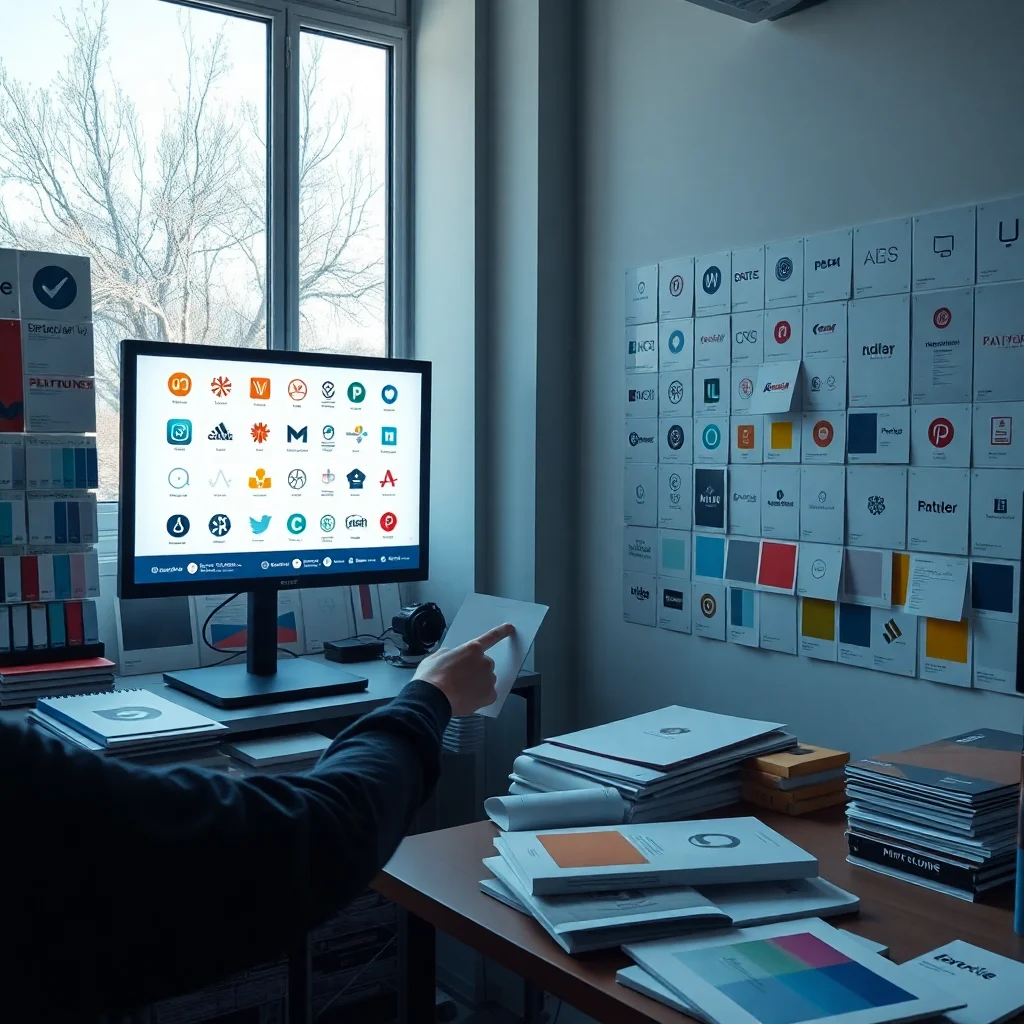
Brand identity used to be a promise. AI makes it a prompt.
The latest era of branding is not defined by a new logo form, a new grid, or even a new color trend. It is defined by abundance. The machine can now produce a hundred versions of a mark before a designer has finished their coffee, then spin out posters, motion systems, campaign images, and social assets in the same visual breath. That sounds efficient, even democratic. But in branding, abundance is not automatically intelligence. It can just as easily become visual noise.
The question now is not whether AI can make branding faster. Of course it can. The real question is whether it can make branding distinct. Identity has always depended on recognition through repetition: the disciplined use of symbols, type, color, scale, and tone. This is why the best identity systems have historically been stubbornly simple. Think of the clarity of the red square used by The New York Times’ typographic tradition, the elemental confidence of the BBC blocks, the ruthless coherence of the NASA worm, or the elastic but disciplined systems built by Experimental Jetset, Norm, or Paula Scher’s major identity programs. These are not “styles.” They are structures of trust.
AI threatens to flatten that structure into a generic visual soup. Its defaults are seductive: glossy gradients, soft blur, pseudo-futurist type, synthetic geometry, and that instantly recognizable “generated” polish. The risk is not that AI will replace brand identity. The risk is that it will make brands look like they were all invented in the same invisible studio at the same time, by the same statistical intelligence. In an era when every startup can ask a model for “premium, minimal, human-centered, dynamic” and get the same moodboard, sameness becomes the hidden tax on speed.
PRO: automation can finally free identity from its old bottlenecks

There is a strong case for embracing AI in brand design, and it begins with production reality. Most identities do not fail because the idea is weak; they fail because the system cannot keep up with demand. A brand today needs to live on packaging, app interfaces, motion graphics, presentations, retail environments, social templates, email headers, signage, event screens, and maybe even in generative environments that do not yet exist. AI helps design teams expand a core system without turning every adaptation into a laborious manual exercise.
That matters because contemporary identity is increasingly dynamic. From flexible logo systems to responsive typography, brands have already moved beyond the static mark. The work of studios such as Collins, Pentagram, and JKR shows how a strong identity can become a family of assets rather than a single emblem. AI can accelerate that logic. It can generate variant layouts, test legibility across contexts, and produce a wider visual range for campaigns that need to speak differently in Tokyo, São Paulo, and Berlin without losing coherence. In theory, AI can help brands behave more like living systems and less like museum pieces.
There is also a legitimate argument for democratization. Small organizations often cannot afford a full-service identity program, let alone the endless adaptation work required by modern media. AI can lower the barrier to entry, allowing local institutions, independent publishers, restaurants, cultural spaces, and startups to access a broader level of design output. If used critically, it can become an amplifier of craft rather than an enemy of it. A designer can use the machine to handle repetitive exploration while reserving human energy for the decisive moves: naming, hierarchy, editorial judgement, and the one line of type that actually cuts through.
That is the optimistic future: designers as editors of machine-made abundance. In that model, AI is not the author of identity; it is the engine of variation. The human role becomes more strategic, not less. It concentrates on the rules that matter most: what must never change, what can flex, where meaning lives, and how the brand remains legible as it expands. Used well, automation might finally let identity behave like the real world—messy, contextual, adaptive—without collapsing into inconsistency.
Seen this way, the debate overlaps with broader questions about when design stops optimizing and starts resetting. AI may be most valuable not when it accelerates the existing system, but when it helps teams rethink what the system is for in the first place.
CONTRA: endless options are the fastest route to sameness
But the anti-AI argument is harder, and more urgent. Branding depends on friction: the friction of constraint, of editing, of saying no. A brand identity gets its force from exclusion as much as from expression. It works because most possibilities are rejected. AI, by contrast, is optimized for proliferation. It offers choice as a default, and choice can become a trap. When every stakeholder can request another round, another mood, another variation, the result is often not refinement but dilution.
This is where the “AI aesthetic” becomes dangerous. It is not simply a style; it is a structural tendency toward averages. Models learn from what already exists, then remix it into something plausible. The output can be impressive, but plausibility is not identity. Plausibility says, “this looks like a brand.” Identity says, “this can only be this brand.” The difference is profound. A visually competent generated system may satisfy a presentation deck, but it may fail the real test: can a person recognize it in half a second, under pressure, in a cluttered feed, among ten competing messages?
Historically, the most enduring identities were not built by maximizing options but by sharpening symbols. Consider the discipline of Josef Müller-Brockmann’s Swiss modernism, the radical clarity of Otl Aicher’s systems, or the brutal economy of the best transport and civic identities. Even more recent examples, from Michael Bierut’s wayfinding and civic work to the restrained intelligence of House Industries’ typographic programs, show that memorability comes from limitation. Strong brand systems create a visual law. AI tends to create visual weather.
And weather is forgettable. That is the danger for brands chasing “freshness” through generative tools: they become one more atmospheric instance in the endless feed of polished sameness. The result is a new kind of corporate anonymity. Not a bad logo, exactly. Worse: a logo that is technically fine and culturally invisible. In a marketplace already saturated with minimalist sameness, AI can accelerate the erosion of distinction by giving everyone access to the same taste profile. If the software learns from the market, then the market gets back its own reflection, slightly blurred and made shiny.
This tension is not unique to identity work; it echoes the larger question of the new visualizer becoming an algorithm rather than a studio. When the tool starts producing the look, the designer has to work even harder to preserve authorship.
Human craft is not nostalgia; it is strategic recognition
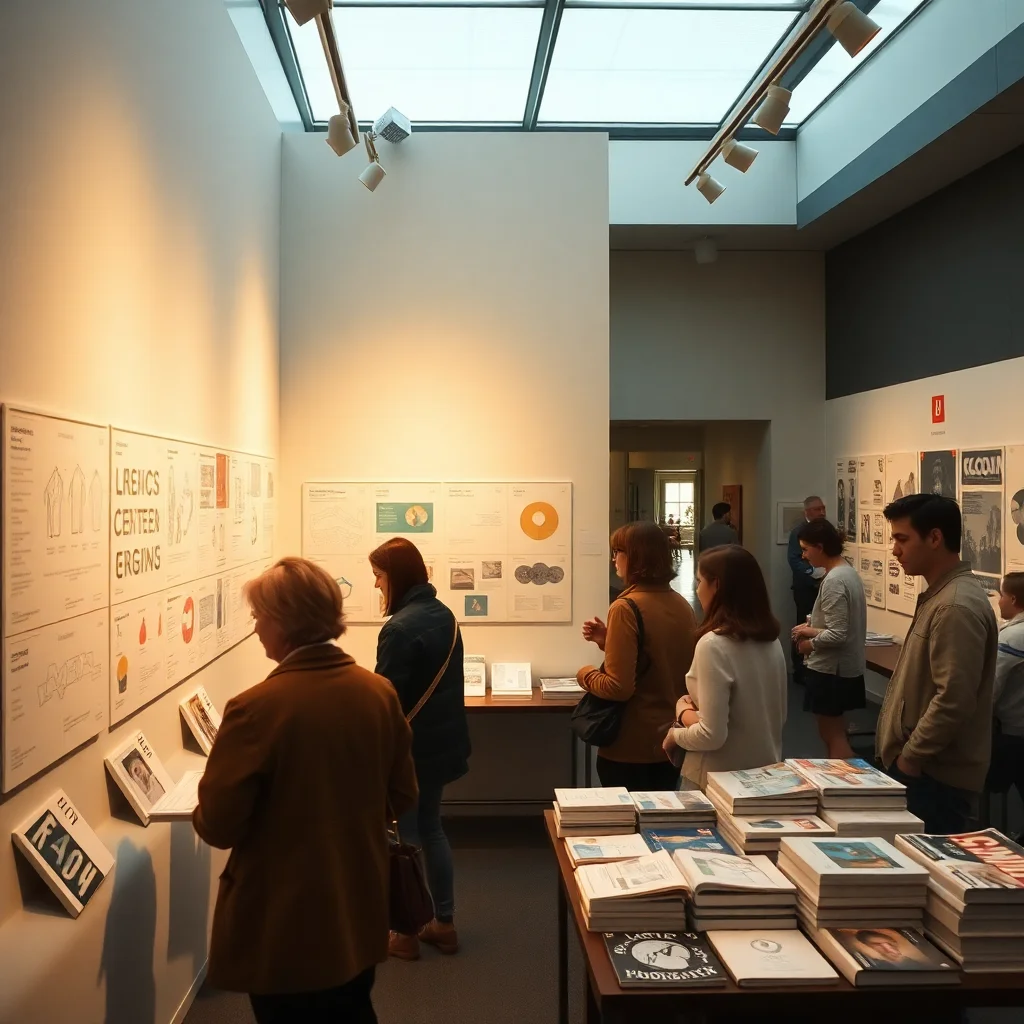
The defense of human-designed identity is often dismissed as sentimental, but that is lazy. Craft is not about romanticism. It is about decision-making that carries consequences. A carefully tuned typeface, a distinctive color system, a symbol with a memorable silhouette, a pace of motion, a hierarchy of tone—these are not decorative luxuries. They are instruments of recognition. They help people know who is speaking before they read the copy.
This is where the work documented in projects like the Taschen book The Elements of Brand Design becomes newly relevant. The book’s value is not nostalgia for a pre-digital era. It is a reminder that brand systems are built from discrete parts, each one chosen and maintained with rigor. The genius of a lasting identity is often invisible: the spacing, the contrast, the scale relationships, the repeated gestures that make a brand feel inevitable. AI can simulate these components, but it cannot automatically understand why one small adjustment makes a system feel authoritative while another makes it feel disposable.
Designers know that meaning accumulates through repetition under discipline. A color system becomes cultural memory only when it is used consistently enough to acquire weight. A logo becomes a symbol only when it survives enough contexts to mean something beyond itself. Type becomes voice when it is not merely stylish, but structurally aligned with the brand’s temperament. These are human judgments, not technical outputs. And in the age of AI, judgment is the scarce resource.
So the future of brand identity may not be a battle between human and machine. It may be a battle between authorship and automation, between symbolic coherence and visual surplus. Brands that surrender to the machine’s endless output will end up sounding and looking interchangeable. Brands that use AI as a tool, but keep the hard-won discipline of craft at the center, may discover something stronger: not less efficiency, but more meaning per decision.
That is especially true in adjacent fields like spatial experience, where identity must remain legible across environments. The same tension appears in conversations about AI becoming architecture’s junior partner, where systems, not surfaces, determine whether the result feels coherent or merely generated.
The real issue is not whether AI can design brands. It is whether brands can resist becoming content.
One of the most corrosive effects of the AI aesthetic is that it encourages brands to think of identity as a stream of deliverables rather than a long-term symbolic contract. If every asset can be generated instantly, then every asset risks becoming disposable. But brands are not content farms. They are memory machines. Their job is to accumulate trust through consistency, not to endlessly entertain with novelty.
This distinction matters across technology, culture, and public life. A museum, a university, a civic agency, and a luxury label do not need the same visual treatment; they need different levels of authority. Yet AI often pushes all of them toward the same mood of frictionless smoothness. That may work for a short campaign, but it is disastrous for institutions that depend on seriousness. Trust is not built by visual abundance. It is built by discernment.
And discernment is precisely what designers must now defend. Not against AI itself, but against the lazy idea that because a machine can generate a result quickly, that result is somehow better. The fastest path through identity is rarely the strongest one. In fact, the more abundant the options become, the more valuable the editorial eye becomes. The future belongs to designers who can say: here is the one symbol, the one color, the one typographic move that makes this brand unmistakable.
That is the challenge Mainifesto should be asking out loud. AI can produce an infinity of brand surfaces. But can it produce a brand with a face, a voice, and a memory that survives first contact with the crowd?
FAQ
- What is the AI aesthetic in branding?
It is the increasingly recognizable look produced by generative tools: smooth gradients, synthetic lighting, generic futuristic forms, and an over-polished minimalism that often feels statistically optimized rather than authored. - Can AI help build stronger brand identities?
Yes, if it is used for exploration, production scaling, and rapid iteration under human direction. The danger appears when AI starts replacing editorial judgment, because then variation overwhelms coherence. - Why are symbols, type, and color still so important?
Because they are the fastest route to recognition and trust. Strong identities rely on repeated, disciplined visual cues that help audiences identify a brand instantly, even before they read the message. - Will AI make all brands look the same?
Not inevitably, but it will if designers and clients accept the model’s default aesthetics without resistance. Distinctiveness now depends on deliberate constraint, not on endless generation.
Get the Mainifesto weekly — curated design debates, speculative ideas and the week's best articles every Saturday.



Mei Chen May 27, 2026
AI can generate endless identities, but production still exposes the weak ones fast. If a brand can’t survive on a shelf, in a factory, or across inconsistent materials, all that visual variety is just noise. Less is not a slogan here; it’s a manufacturing constraint that often creates stronger recognition.
Daniel Okonkwo May 27, 2026
The article gets at the right anxiety, but I’d push further: the problem isn’t AI style, it’s brands using it to avoid making any real point of view. When every system can be generated on demand, identity survives only if someone is willing to edit, exclude, and stand behind a narrower story. Otherwise you get fluent branding with no memory in it.
Karim Haddad May 27, 2026
Brand identity doesn’t happen in a vacuum; it lives in cities, markets, regulations, and supply chains that don’t care about generative flair. AI can help teams move faster, but if it flattens everything into the same polished output, you lose the local signals that make a brand legible where it actually operates. Choosing less is useful only if it’s tied to a system, not just a minimalist mood.
James Okoro May 28, 2026
I’m not worried about AI making brand systems faster; I’m worried about teams using speed as a substitute for judgment. True identity might be the courage to choose less, but only when that choice comes from clarity, not fear of experimentation. The best brands will use AI to test possibilities, then cut hard until what remains feels inevitable.