

When Climate Adaptation Becomes Public Space
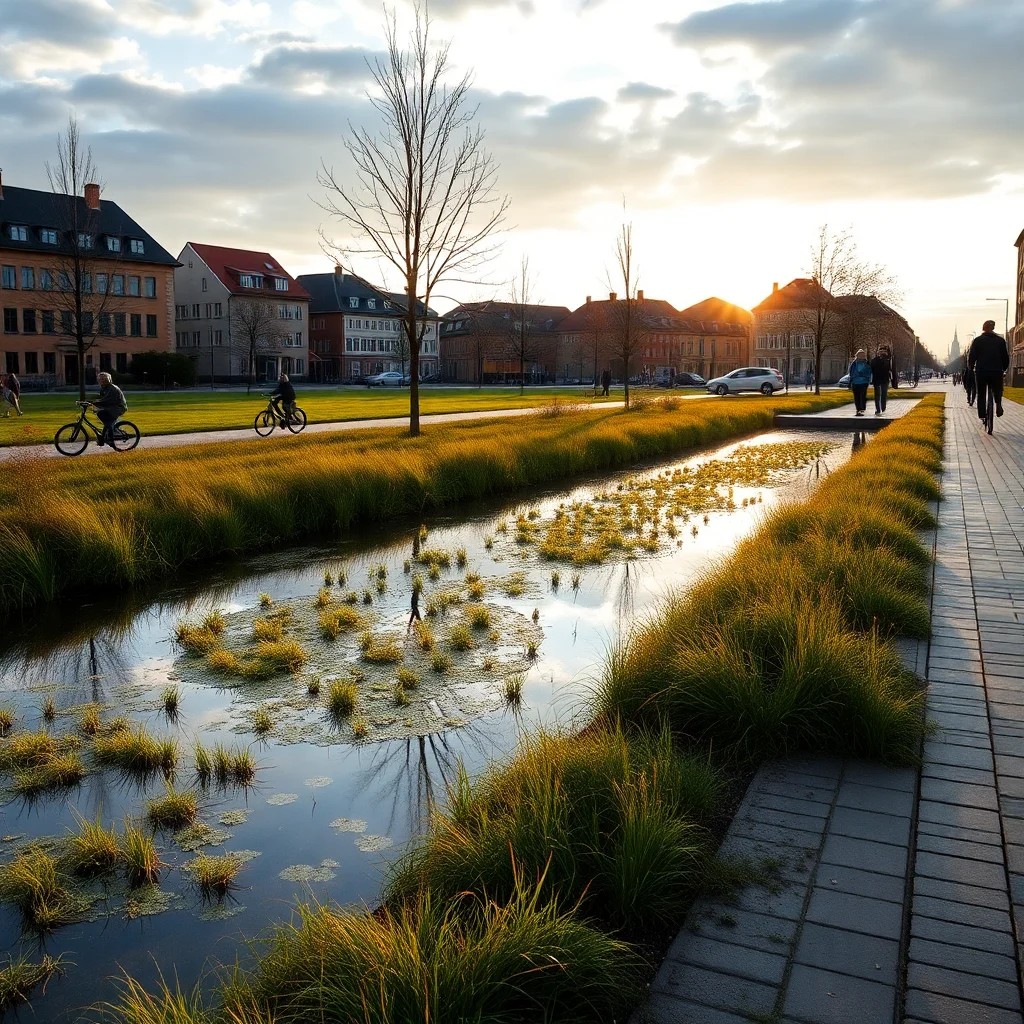
Public Space, Rewritten by Weather
Karens Minde Aksen in Copenhagen is not merely a pleasant green corridor that happens to manage stormwater. It is a blunt argument that landscape architecture can now function as civic infrastructure—one that absorbs excess rain, restores habitat, and still invites people to linger, walk, play, and gather. That sounds uncontroversial until you ask the harder question: should climate adaptation disappear into the background, or should it become visibly expressive enough to change how public life feels?
In this project, the answer is not hidden in technical diagrams. It is staged in the landscape itself. The elongated site has been reworked as a resilient public space where ecological performance and everyday beauty are not treated as separate tasks. That ambition places Karens Minde Aksen in a lineage that includes Copenhagen’s celebrated cloudburst infrastructure, but also broader international experiments: Rotterdam’s Benthemplein Water Square, which turns detention into urban theater; New York’s High Line, where infrastructure became promenade; and Lille’s Parc Matisse, where water, planting, and public use are braided into a designed experience. The key issue is not whether adaptation is necessary. It is whether necessity must always look obedient.
PRO: When Infrastructure Becomes Legible
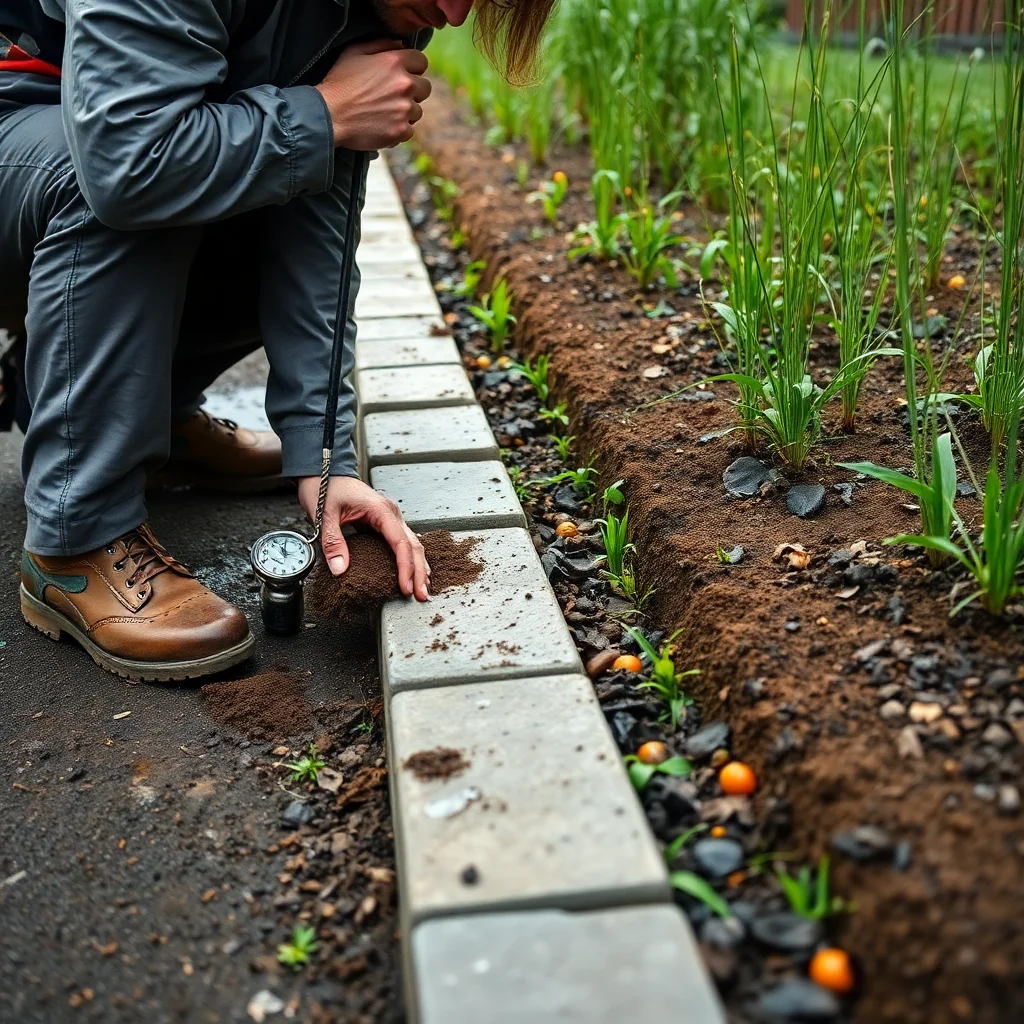
The strongest case for visible climate adaptation is political. If a public landscape is doing important work—catching water, storing runoff, cooling the air, supporting biodiversity—why hide that labor? Making the system legible can educate the public and build support for difficult urban transitions. Copenhagen has already shown the power of this approach in projects such as Superkilen, where design turns civic difference into a vivid shared environment, and in the city’s cloudburst streets, where slopes, basins, and edges quietly announce a new hydrological order. Karens Minde Aksen extends that logic: resilience is not tucked away in pipes but given form in paths, basins, swales, and planted zones that people can read with their bodies.
There is also an aesthetic argument. The history of infrastructure is filled with objects pretending not to be infrastructure once they enter the city—drains flattened into invisibility, flood barriers disguised as planters, technical landscapes made bland in the name of “integration.” But the climate crisis has ended the era in which public space could afford to be politely neutral. A landscape that visibly handles water can create a new civic drama: wet and dry edges, seasonal shifts, temporary flooding, changing vegetation. In that sense, resilient design can be beautiful precisely because it is honest. It reveals the city’s metabolism rather than masking it.
PRO: Beauty as a Civic Technology
To say that climate adaptation should be expressive is not to demand spectacle for its own sake. It is to insist that public space does cultural work as well as environmental work. A well-designed drainage landscape can teach people to notice rainfall, slope, absorption, and time. It can make maintenance visible, which is a democratic virtue in a moment when much urban infrastructure is either too hidden to understand or too broken to trust. Landscape architect Herbert Dreiseitl made this argument decades ago through water plazas and ecological public works, showing that stormwater systems can also become places of encounter. The best contemporary projects build on that lesson: ecological intelligence should not be bureaucratically invisible if it can help shape civic habits.
Karens Minde Aksen matters because it treats resilience as an experience rather than a backstage operation. The elongated green area becomes a sequence of conditions instead of a singular lawn. That matters in everyday life. Children will climb the edges. Residents will use the paths. People will notice wetness after a storm and shade in summer. Such ordinary perceptions are not secondary; they are the mechanism by which public space becomes public culture. If climate adaptation is going to receive public consent, it cannot remain an engineering abstraction. It must become a shared, lived image.
CONTRA: The Risk of Turning Resilience into a Style
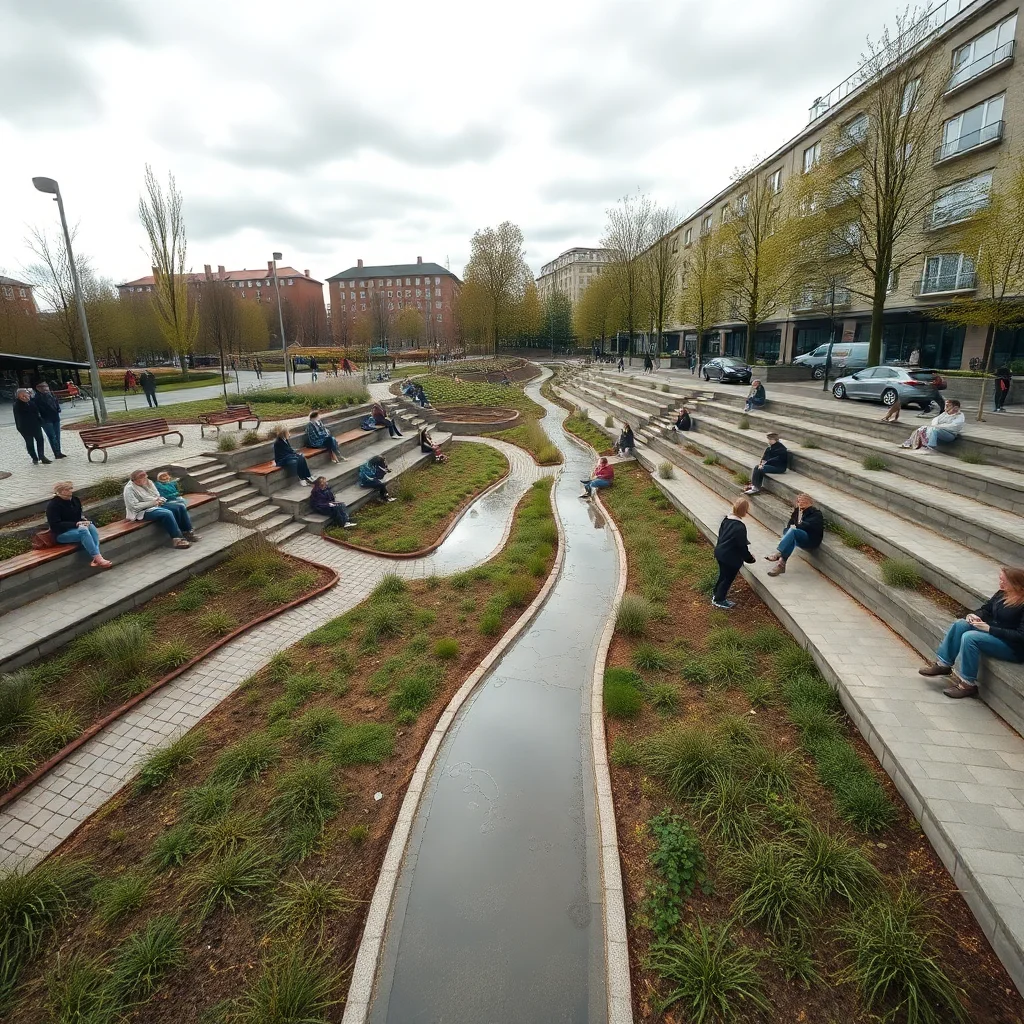
And yet the more visible climate adaptation becomes, the more vulnerable it is to becoming a designerly fashion. Once every basin is photogenic and every bioswale is framed as a picturesque event, resilience risks being reduced to a visual language—green stripes, stepped depressions, poetic puddles—rather than a long-term operational commitment. This is the danger of aestheticizing crisis. A landscape can look climate-ready while functioning merely as a branded amenity, especially when maintenance budgets lag behind design ambition. Public space is full of promising ecological forms that fail quietly when seasonal care, soil health, and governance are neglected.
There is also a social danger. Overly expressive adaptation can drift toward a kind of environmental gentrification, where climate infrastructure becomes a premium visual identity for already desirable districts. In such cases, the city’s vulnerable neighborhoods still get the floods, while the well-funded areas get the photogenic version of preparedness. That problem is not hypothetical. Many cities have embraced green design as a marketing tool without equalizing the underlying risk. If climate adaptation becomes a luxury aesthetic, then it will reproduce the same inequalities it claims to heal.
CONTRA: The Case for Background Intelligence
There is a more radical position, and it is less glamorous: climate adaptation should often disappear. The most successful systems may be the ones that work so well they stop asking for attention. In this view, public space should not shout its resilience; it should simply be resilient. The best infrastructure has long followed this principle. Copenhagen’s sewer upgrades, Tokyo’s underground flood control systems, and the quiet efficiency of Dutch water management prove that invisibility can be a civic achievement. In landscape terms, that means subtle grading, durable planting, seasonal flexibility, and material restraint over dramatic form-making.
This approach respects everyday use. Not every park needs to perform climate intelligence as a spectacle. People also need calm, continuity, and unforced beauty. A landscape that is too pedagogical can become didactic, too self-conscious to be comfortable. There is a reason many urbanists still admire the understated genius of Michael Van Valkenburgh’s landscapes or the understated restoration logic in Kate Orff’s work: they prioritize ecological performance without demanding constant aesthetic interpretation. In a city already overloaded with images, perhaps the most generous climate design is one that lets people simply live in it.
CONTRA: The Politics of Not Performing
There is a final critique: expressive resilience can become a moral alibi. Cities love visible adaptation because it photographs well, opens funding channels, and signals progressive intent. But a highly legible climate landscape can distract from deeper structural failures—housing precarity, heat inequity, impermeable development, and underinvestment in district-scale systems. A wetland-like plaza does not excuse a flood-prone basement. A sculpted swale does not replace policy. The danger is that public space becomes the theater of climate conscience while the real engines of vulnerability remain untouched.
This is why the debate is not between beauty and utility. It is between symbolism and substance, between the seductive image of resilience and the hard politics of distributed protection. Karens Minde Aksen is strongest when it refuses that false choice. It shows that a climate-adapted landscape can be useful without being dull, and beautiful without becoming decorative. But the project also exposes the larger dilemma facing landscape architecture today: if adaptation is the new civic mandate, then every public space must decide how much of its intelligence should be seen, and how much should be felt only through use.
A New Standard for Civic Landscape
What Karens Minde Aksen ultimately proposes is not a style but a standard. Climate adaptation can no longer be treated as an invisible service layer appended beneath public life. It must be designed as public life. Sometimes that means expressive geometry, seasonal change, and visible water. Sometimes it means quiet grading and careful planting. The point is not to choose once and for all between disappearance and expression. The point is to reject the lazy assumption that resilience should be aesthetically secondary.
In the coming decade, the most important public landscapes will likely be judged on two fronts at once: how much they can absorb, and how convincingly they can transform civic behavior. The boldest ones will not merely survive weather extremes. They will make weather politically intelligible. That is the real stakes of Karens Minde Aksen: not just a greener site in Copenhagen, but a warning that the future of public space may depend on whether climate adaptation can become both infrastructure and culture.
List: Six Lessons from Climate-Ready Public Space
- Make the system readable. When people can see where water goes, they understand why the landscape looks the way it does. Legibility can turn maintenance and ecology into shared civic knowledge.
- Do not confuse visibility with performance. A dramatic basin is not automatically a better basin. The most important test is still whether the landscape stores, slows, cleans, and cools effectively over time.
- Use beauty as governance. A compelling public landscape can generate care, attention, and political support. A well-loved floodable park is harder to neglect than a hidden detention tank.
- Avoid climate chic. Resilience should not become a visual brand that flatters affluent districts while leaving structural inequality untouched. The image must never outrun the justice question.
- Let some systems disappear. Not every adaptive move needs to be iconic. Quiet topography, robust planting, and invisible water logic can produce public space that feels natural rather than overauthored.
- Design for changing time, not frozen form. Climate-ready landscapes should reveal seasons, storms, and recovery as part of their character. Their beauty lies in endurance, fluctuation, and use.
FAQ
What is Karens Minde Aksen?
It is a landscape architecture project in Copenhagen that transforms an elongated green area into a climate-adapted public space, combining ecology, water management, and everyday social use.
Why is climate adaptation in public space controversial?
Because it sits between infrastructure and image. Some argue it should be nearly invisible and purely functional; others believe it should be expressive so people can understand and value the work it does.
What are examples of visible climate infrastructure?
Projects such as Rotterdam’s Benthemplein Water Square, Copenhagen’s cloudburst streets, and various water-sensitive public landscapes show how flood management can also become a civic and spatial experience.
What is the main risk of expressive resilience design?
It can become aestheticized, turning climate preparedness into a style rather than a serious long-term commitment, or worse, a green veneer that masks inequality and underinvestment.
Open Question
Should climate-adapted public space be designed to blend quietly into daily life—or should it proudly reveal its environmental intelligence and reshape the way cities imagine beauty, care, and civic responsibility?
Get the Mainifesto weekly — curated design debates, speculative ideas and the week's best articles every Saturday.

Tom Brightwell May 13, 2026
Climate-adapted public space should absolutely be visible. If it works hard for drainage, cooling, and biodiversity, there’s no reason to hide that behind generic paving and neat planting beds—people can understand value when they can see it. The best schemes will do the job well and make that intelligence part of the place’s identity.
David Lim May 13, 2026
I’m not convinced we need to turn every resilience measure into a civic spectacle. Too often “environmental intelligence” becomes a design gesture that dates quickly, while the real work is in systems performance, maintenance, and adaptability over time. A climate-adapted landscape can be legible without being performative, and that restraint matters.
Marcus Reed May 13, 2026
From a user-experience point of view, the space has to feel effortless first. If the adaptation is so loud that people read it as a lesson before they read it as a place to sit, walk, or meet, you’ve lost them. I’m fine with the intelligence being there, but it should improve the daily experience before it tries to make a philosophical point.