

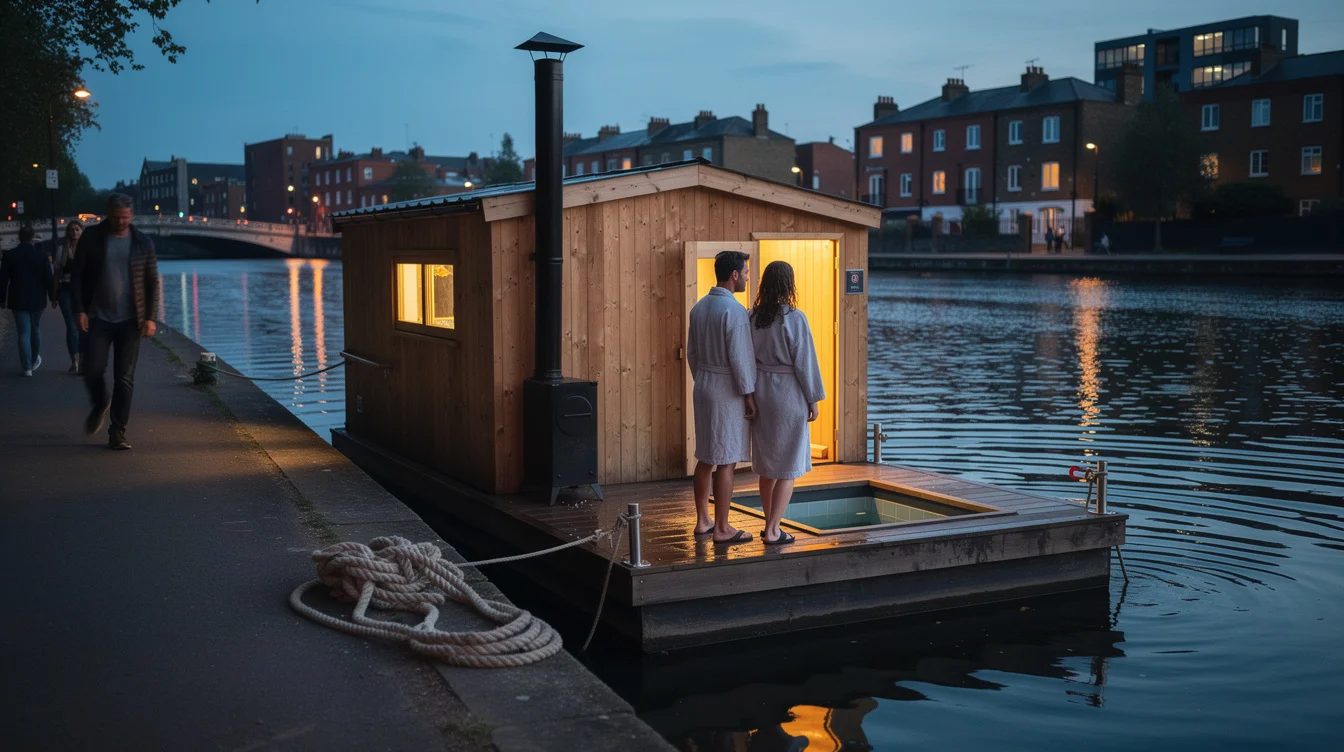
London’s floating Soak sauna tests the green promise of off-grid

Can India's stepwell restoration serve residents without sacrificing heritage? The

From Village to Hotel: Who Benefits from the New Landscape?
Dayun Landison Manor’s 360-metre walkway deserves scrutiny beyond its form: what happened to the village, its residents and access to the land?

Is a Cool City Still a Public City?
Air-conditioned malls and walkways offer refuge from urban heat. But who controls public life when the coolest route runs through private property?
Waste Wool Meets the Building Code
Harvard’s waste-wool cladding makes a circular promise. Fire tests, wet winters and installed costs will decide whether retrofit owners can trust it.
Beyond the Timber Halo: How Much Building Should We Keep?
Herzog & de Meuron’s Amherst project tests selective reuse. When do carbon, spatial performance and architectural heritage justify replacing a building?
The €100K Backyard Home: Solution or Inherited Privilege?
Yardbox’s Irish backyard prefab promises multigenerational living. But can a €100K home widen housing access when owning the garden comes first?

Saved from Demolition—but Public on Whose Terms?
Google’s Thompson Center rescue saves a Chicago landmark. But access, usable public space and architectural clarity will determine its civic future.

When the Concert Hall Becomes a Content Machine
Apple’s 600-capacity Battersea venue unites concerts, recording and broadcasting. Does platform-backed architecture serve artists—or sideline the crowd?

Manufactured Housing’s Hidden Material Health Costs
Parsons researchers challenge manufactured housing’s low-price promise. Can safer materials and smarter procurement protect residents without raising barriers?