
When Kitchens Become Systems, Not Rooms
The kitchen is no longer a room with appliances in it
The contemporary kitchen has escaped the old category of “room.” It is now an infrastructural field: a place where air, water, power, storage, circulation, and social life are designed together. The refrigerator is no longer an isolated box, the hood is no longer a mechanical afterthought, and the island is no longer simply a worktop. Together they form a domestic operating system, one that manages hygiene, conversation, display, and labor with the same architectural seriousness once reserved for façades and staircases.
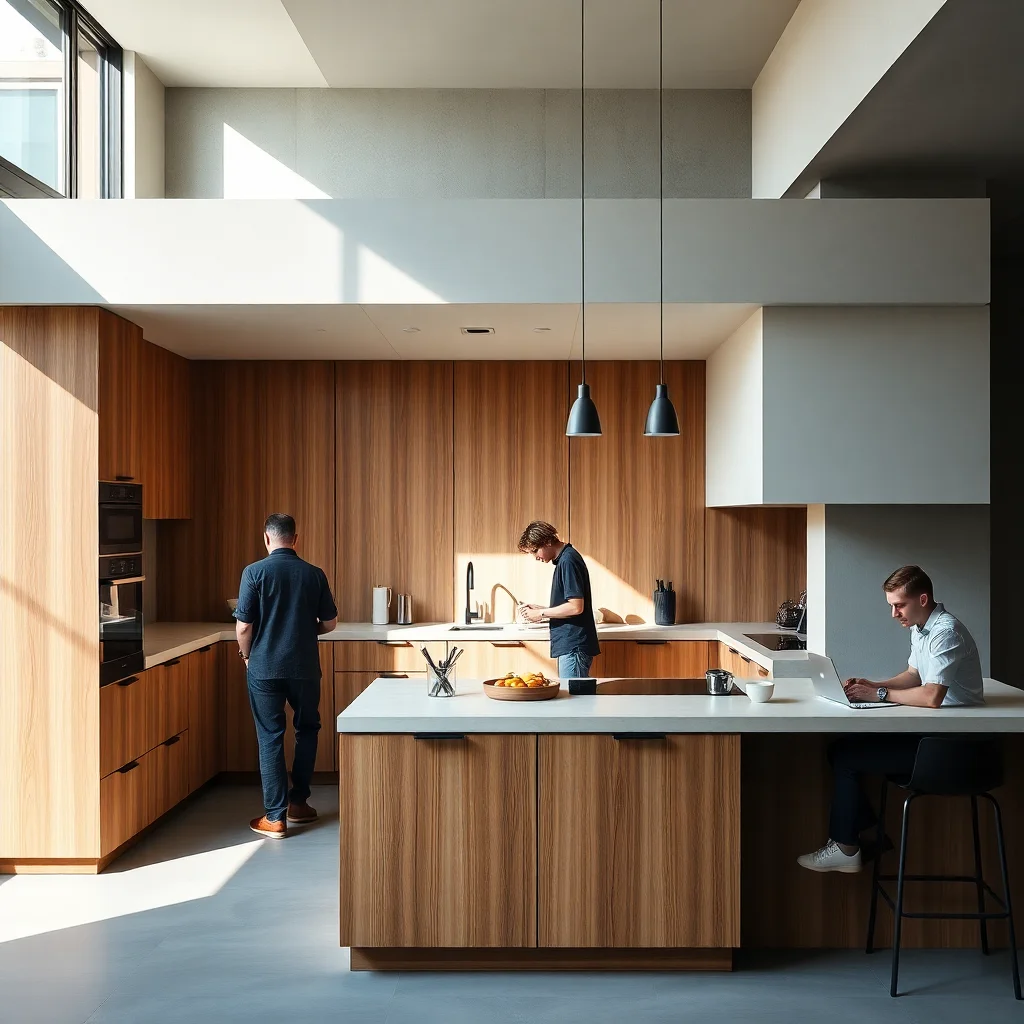
This shift is not just aesthetic. It is a consequence of how households actually live now. Kitchens host work calls, children’s homework, late-night dining, social gatherings, and the low-grade choreography of everyday care. The architecture follows suit: open plans, concealed storage, flush appliances, and continuous surfaces all try to erase the boundary between furniture and building services. In this sense, the contemporary kitchen resembles a distributed machine more than a room. It is designed to receive updates, absorb new technologies, and reorganize itself around changing domestic scripts.
Manufacturers and designers have already treated the kitchen as a system, even if the language has often remained conservative. Bulthaup’s b3 and Boffi’s integrated compositions turned cabinetry into architectural order. Valcucine’s emphasis on dematerialized structure and repairable components proposed the kitchen as a long-life framework rather than disposable décor. At the same time, architects such as David Chipperfield and John Pawson have repeatedly shown how the kitchen can disappear into a wider spatial calm, becoming a precise sequence of planes, joints, and hidden functions. The point is clear: the future kitchen will not be judged by style alone, but by how intelligently it organizes domestic life.
From appliance cluster to programmable infrastructure
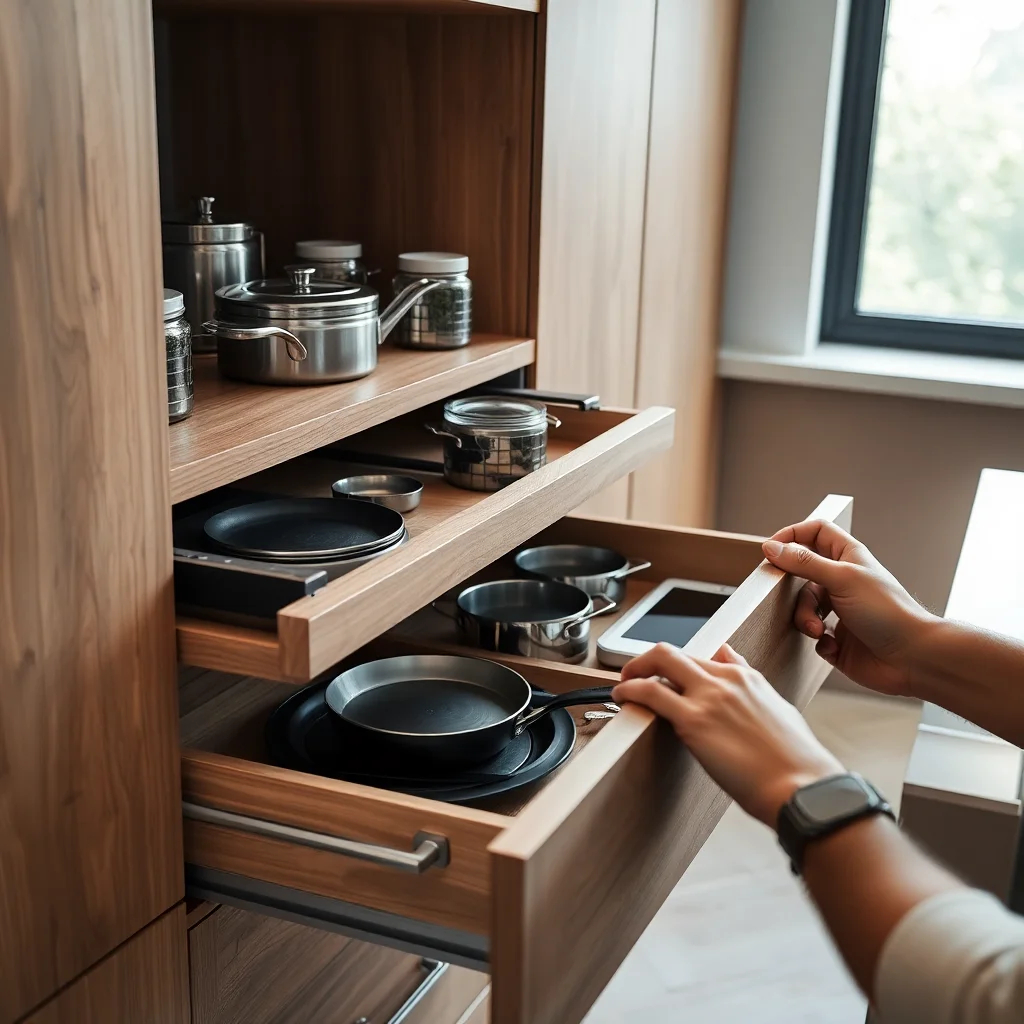
The decisive change is that appliances are no longer secondary objects to be accommodated; they are becoming the generators of spatial logic. A tall refrigeration wall, a ventilation spine, a concealed pantry, a charging drawer, an induction surface, and a boiling-water tap can now be composed as a single infrastructural band. This is where the kitchen starts behaving like architecture. It distributes heat, noise, steam, and movement across the plan, while also storing data, scheduling energy use, and responding to household routines.
Look at the best contemporary kitchen systems and you see the outline of a programmable domestic environment. Gaggenau’s seamless appliance language, for instance, insists on precision and retreat, allowing mechanical performance to be absorbed into the wall. SieMatic and Poggenpohl have long explored handleless geometries and modularity, but the current turn is more radical: the kitchen is becoming anticipatory. Drawers know what they contain, surfaces can be cleaned faster, ventilation can respond to actual use, and lighting can shift from task mode to social mode without architectural interruption.
In speculative terms, the kitchen will increasingly resemble building services exposed as furniture. Consider the value of a centralized service core in a compact apartment: the sink, waste, extraction, refrigeration, and storage can be clustered so the rest of the interior remains flexible. This is not merely efficient; it is politically charged. In dense urban housing, where square meters are contested and domestic labor is compressed, the kitchen-system offers freedom by reducing friction. It allows a table to become a desk, a counter to become a bar, and a prep zone to become a gathering edge without multiplying objects or partitions.
The new kitchen is a social stage, not a backroom
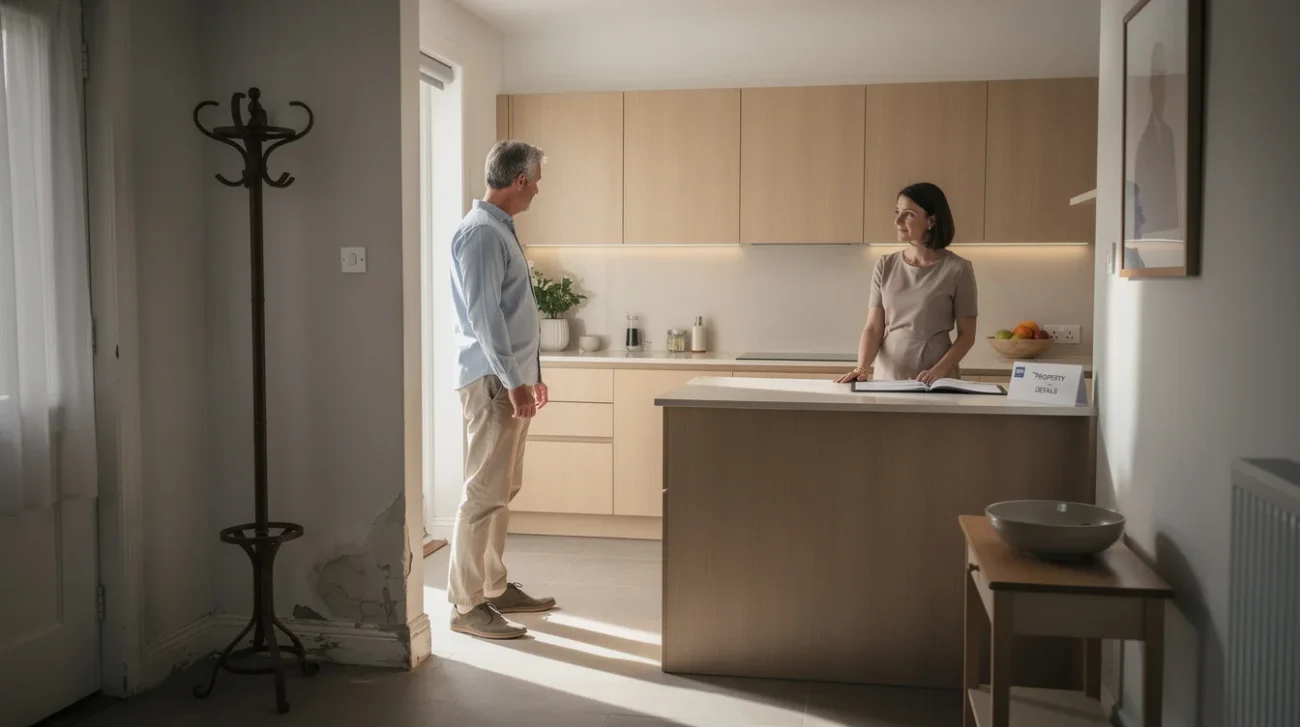
For most of modernity, the kitchen was the house’s service zone: hidden, subordinate, and often socially coded as labor space. That logic is collapsing. Today’s kitchen is expected to perform visibility. It must host guests, display taste, and support conviviality while still concealing the mess that makes conviviality possible. The result is a strange duality: the kitchen becomes both stage and backstage at once.
This is why islands have become so dominant. They are not just work surfaces; they are spatial diplomats. They separate without enclosing, they invite without exposing too much, and they create the casual hierarchy that contemporary domestic life now loves. In projects by Patricia Urquiola, the kitchen often reads as a soft, social landscape, where materials and edges encourage lingering rather than merely cooking. In contrast, minimalist approaches by designers such as Claudio Silvestrin or the studio of Norm Architects push the kitchen toward near-monastic calm, arguing that social richness emerges from restraint rather than spectacle.
But the social kitchen is not automatically democratic. It can also become a performance trap, where the owner is always on stage and the labor of cooking is aestheticized into lifestyle content. The polished kitchen of magazines and social media often erases the actual infrastructures of use: the drying rack, recycling system, pantry overflow, and practical clutter. A truly intelligent kitchen system should do the opposite. It should make conviviality possible without forcing domestic life into permanent display. That means better concealment, better acoustics, better ventilation, and better transitions between public and private modes.
That tension is familiar in other interior typologies too, especially in homes designed as stage sets for the feed, where the line between lived space and presented space can become almost impossible to see. The kitchen now sits at the center of that problem, because it is both intensely practical and highly photogenic.
Material intelligence will define the next domestic era
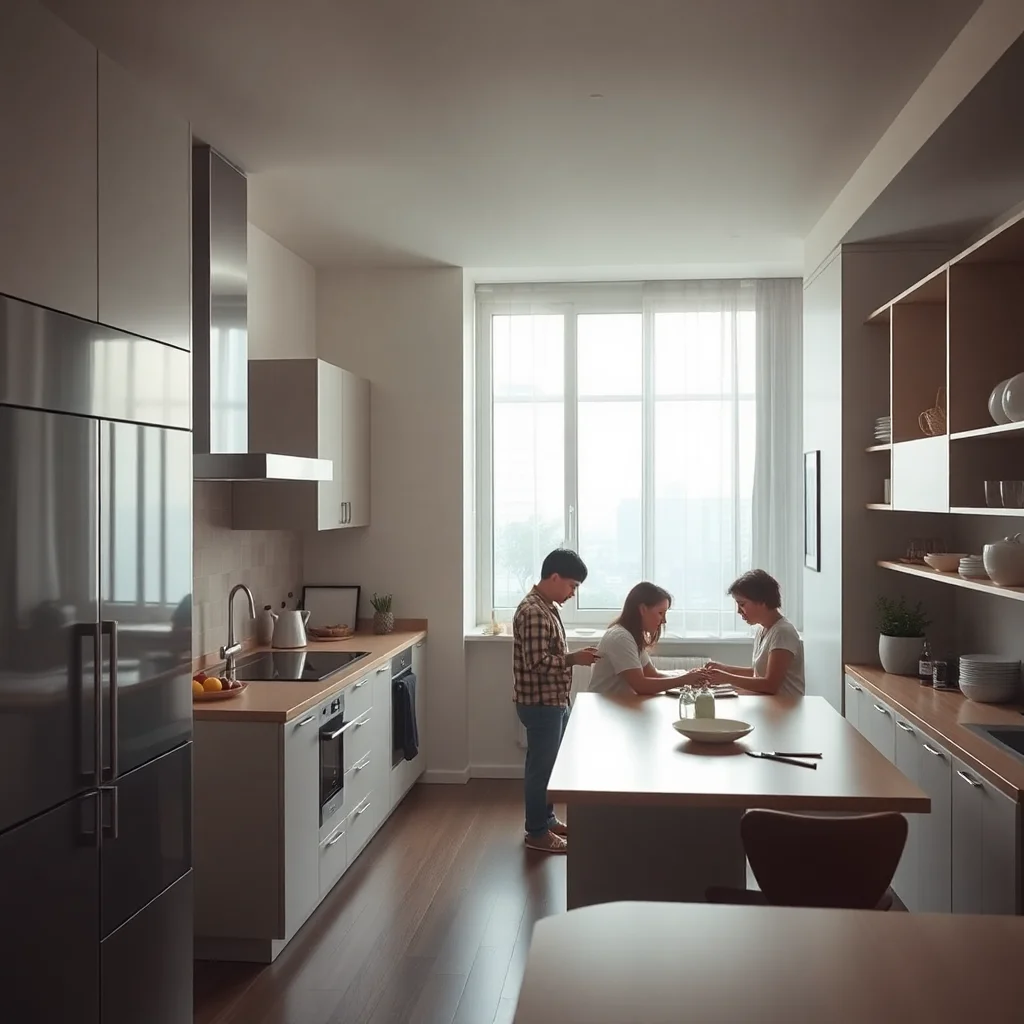
If the kitchen is becoming infrastructure, then materials matter more than ever. The future will not belong to shiny novelty alone, but to surfaces and assemblies that can be repaired, disassembled, and reprogrammed. This is where the kitchen becomes a test case for circular design. Worktops, carcasses, backsplashes, and integrated storage will need to perform under constant load while remaining legible and maintainable.
There is already a strong precedent for this thinking. Enzo Mari’s anti-disposable ethos and the broader tradition of Italian rational design insist that objects should be structurally clear and socially useful. In contemporary practice, brands such as Reform, Open Desk’s domestic-adjacent systems, and various made-to-measure European workshops have shown that modularity does not have to mean blandness. It can mean adaptability, especially in an era of changing households: multigenerational living, shared apartments, hybrid work, and homes that must shift from one life pattern to another without renovation.
Materials also determine the emotional temperature of the kitchen-system. Stainless steel speaks the language of production and hygiene; timber suggests domestic warmth and repair; mineral composites and recycled surfaces promise resilience; ceramic and stone communicate permanence. The most convincing future kitchens will combine these registers without falling into thematic decoration. They will accept that a domestic system needs both friction and softness: the hard edge of a service zone, the tactile reassurance of a drawer pull, the quiet intelligence of a hidden hinge.
Architecture must stop treating the kitchen as a leftover plan
The boldest implication of all this is architectural. Too many buildings still treat the kitchen as a leftover rectangle assigned after the fact, squeezed between corridor logic and structural convenience. That approach is obsolete. If the kitchen is a system, it should help determine the plan from the start. It should influence circulation, daylight, ventilation, acoustics, and adjacency. In apartments, it may even become the project’s true organizational core.
This is already visible in compact urban housing, where a single linear service wall can unlock the rest of the plan. It is visible in lofts where kitchen, dining, and living become one operational field. It is visible in renovation culture, where the removal of unnecessary partitions has turned the kitchen into the central civic room of the home. Yet the next step is more ambitious: designing kitchens as upgradeable domestic infrastructure, with accessible service zones, replaceable components, and flexible interfaces for future technologies.
That means a kitchen should be conceived like a small building inside a building. It needs structural logic, maintenance access, long-life materials, and the capacity to evolve. In this model, the architect is not merely decorating a culinary space; the architect is composing an internal utility landscape. The kitchen becomes a negotiation between hardware and atmosphere, between productivity and ceremony, between permanence and change.
Seen this way, it starts to resemble the same kind of spatial intelligence found in old stations transformed into civic interiors: a once-specific environment recast as a flexible public framework. The domestic version is smaller, but the logic is similar—design the system well, and the room can host many lives.
The contemporary kitchen is therefore not just evolving in style. It is being reassigned a role. It is no longer the room where food is made. It is the system that makes domestic life legible, adjustable, and shareable. And that shift is irreversible.
FAQ
What does it mean to design a kitchen as a system?
It means treating appliances, storage, circulation, lighting, and services as one integrated architectural framework. Instead of arranging objects in a room, the designer composes an operational environment that can adapt to different uses and routines.
Why are appliances becoming architectural elements?
Because high-performance domestic life depends on how appliances are embedded, concealed, and coordinated. Refrigeration, extraction, and cooking equipment now shape wall thicknesses, service cores, and spatial layout, not just kitchen aesthetics.
How does the kitchen become more social in contemporary homes?
Open plans and islands have turned the kitchen into a shared zone for eating, working, and gathering. The kitchen now performs as a social stage, but the best designs balance openness with concealment so the labor behind hospitality does not disappear.
What will the future programmable kitchen look like?
It will likely combine modular furniture, building services, and smart controls into a single adaptable structure. Expect more repairable materials, flexible storage, responsive lighting and ventilation, and service cores that allow the rest of the home to remain fluid.
Get the Mainifesto weekly — curated design debates, speculative ideas and the week's best articles every Saturday.
Editorial Perspectives
Questions and counterpoints developed by the Mainifesto editorial desk to extend the discussion.
Perspective 1
The risk here is that “system” becomes code for expensive kit and endless maintenance. In residential schemes, the best kitchens still do the basics well, with flexibility built in rather than over-programming every drawer and appliance.
Perspective 2
I like the move toward kitchens as systems, but only if the system still has texture, repairability, and honest materials. A programmable kitchen that ignores how a surface feels, ages, or gets mended is just a fancy interface with a short life.
Perspective 3
This sounds modern, but domestic life has always been systems layered over time — servants’ routes, service yards, patios, thresholds. The danger is that today’s “smart” kitchen turns complexity into a branded efficiency machine and strips out the social and historical messiness that makes a home alive.
Perspective 4
Programmable can mean less waste if it’s used to manage energy, water, and storage more intelligently. But if the system depends on constant upgrades, proprietary parts, and hidden electronics, then we’ve just traded one kind of control for another, and the environmental cost is pushed out of sight.
Perspective 5
I’m less interested in whether it’s a room or a system than whether it makes service smoother and guests feel at ease. If the tech saves staff time, reduces friction, and doesn’t turn the kitchen into a demo of itself, that’s freedom; otherwise it’s just another layer of operational drag.