

Can a Jacket Replace the Water Bottle?
The jacket as a canteen, the canteen as a luxury
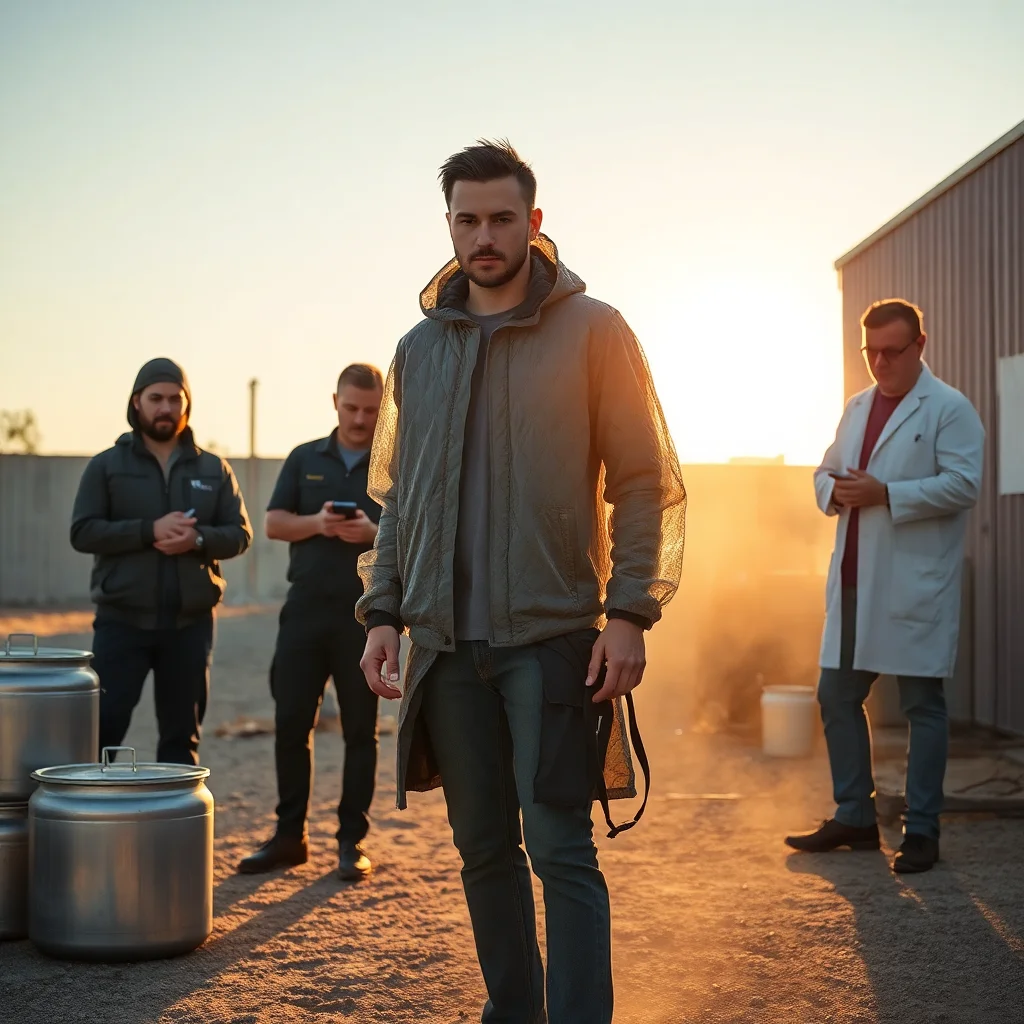
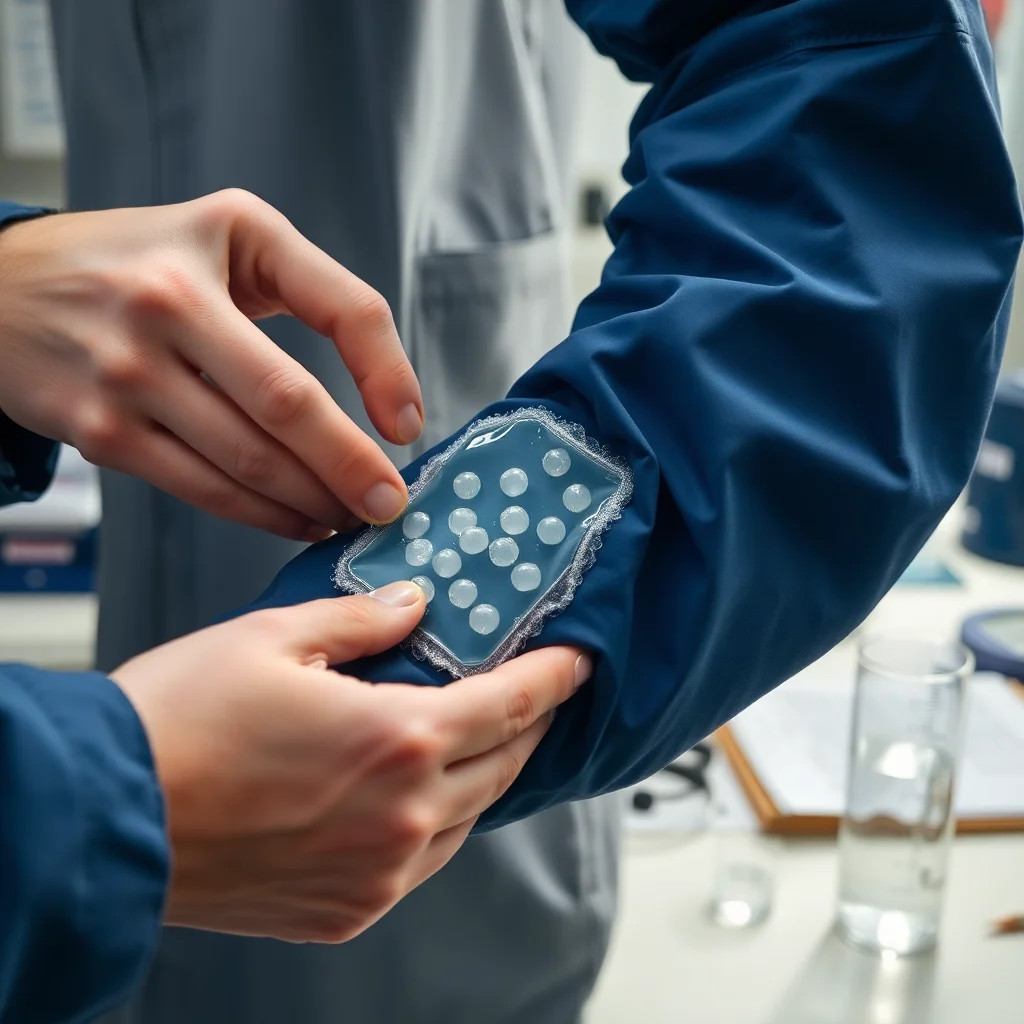
A jacket that pulls drinkable water from the air sounds like the kind of design provocation usually reserved for speculative studios and trade-show theatre. Yet the UT Austin research, as reported by designboom, is not fantasy: a hydrogel textile absorbs moisture through the fabric and can collect roughly 400 to 900 milliliters of water per day for outdoor and emergency use. That is not a novelty bottle accessory or a hydration gimmick. It is clothing recast as infrastructure, a wearable utility that turns the body into the center of a micro-environmental system.
This is where the idea becomes both brilliant and unsettling. If the garment can generate water in a dry landscape, then the old boundaries between fashion, architecture, and emergency equipment start to dissolve. The jacket is no longer an expression of taste alone; it becomes a survival device, something closer to a portable building skin than a coat. In a world of heat waves, drought, wildfire displacement, and failing municipal systems, that may sound visionary. It may also sound like a warning: perhaps we have reached the stage where corporations, laboratories, and designers are expected to privatize basic survival into premium products.
That tension is the real story. The water-harvesting jacket is not just about what clothing can do. It is about who gets to access the future, and whether resilience is becoming another luxury category.
Why the idea feels inevitable now
The research lands in a moment when water scarcity is no longer an abstract policy term but an everyday design problem. In Phoenix, Athens, Cape Town, and parts of India and Latin America, heat and shortage are shaping how people move, work, dress, and survive. Architecture has already responded with cooling shelters, shade canopies, misting systems, and passive design strategies. Fashion is only now being dragged into the same crisis logic. If a tent can be engineered to protect the body from a changing climate, why not a jacket that does the same while also producing water?
We have seen fragments of this direction before. Studio Roosegaarde’s speculative work around fog harvesting and climate-responsive public space, or the atmosphere-driven ambitions of Neri Oxman’s material ecologies, pointed to a future in which objects do more than symbolize innovation—they metabolize environmental conditions. On the more pragmatic side, water-from-air technologies have matured rapidly in architecture and product design, from atmospheric water generators used in off-grid locations to experimental facades that condense humidity. The UT Austin jacket compresses those ambitions into a wearable form, which is precisely why it feels so charged. It is architecture made intimate.
And there is an uncomfortable elegance to that compression. The body becomes the site where climate adaptation, design research, and emergency preparedness converge. The jacket says: if the environment will not reliably provide, then the garment must compensate. That is adaptive design. It is also a quiet admission of failure elsewhere.
From fashion statement to survival equipment
The most important shift here is conceptual: clothing is no longer content with protecting, insulating, or expressing. It now harvests. The jacket behaves like a soft machine, a wearable building envelope that absorbs and releases resources. In architectural terms, this is not far from a facade designed to collect rainwater or condense humidity. In fashion terms, it resembles the tactical logic that has already transformed technical outerwear into a status language of capability. Think of Arc’teryx, Stone Island, and Nike’s most climate-adaptive experiments: performance has become a marker of identity, and utility sells because it signals readiness.
But a water-harvesting jacket is not just performance wear with a higher-tech lining. It recodes the garment as emergency infrastructure. That puts it in the lineage of objects that are simultaneously everyday and catastrophic: life vests, respirators, emergency blankets, solar chargers, and military field gear. The difference is that this jacket does not merely respond to disaster. It extracts a resource from the air itself, which is both thrilling and deeply political. Who is the intended wearer? The hiker, the refugee, the worker in extreme heat, the soldier, the affluent eco-tourist, the future city dweller in a climate-controlled dystopia?
When a garment becomes a water source, it also becomes a gatekeeper. It can either distribute resilience more broadly or create a new premium market for survival. The same design can be emancipatory or exclusionary depending on pricing, access, and policy. That is why the object is not neutral even if the materials are.
PRO: resilience design for a hotter, harsher world
On the affirmative side, this jacket is exactly the kind of radical redesign the climate era demands. Traditional infrastructure is slow, centralized, and vulnerable. Pipes fail, trucks stall, delivery systems break down, and bottled water logistics become absurdly expensive in emergency zones. A wearable water source offers decentralization at the scale of the human body. It is agile, immediate, and potentially life-saving in situations where carrying a reservoir is impractical or impossible.
There is also a strong humanitarian case. In disaster relief, every milliliter matters. A garment that can collect between 400 and 900 milliliters a day does not solve water insecurity, but it can supplement it. For outdoor workers, first responders, desert communities, and people caught in temporary displacement, a jacket that quietly harvests moisture could reduce risk and extend endurance. Design has always flirted with this crossover between clothing and shelter; the difference now is that the environment itself is the source material. The jacket does not wait for infrastructure—it performs like a tiny, mobile infrastructure node.
Design precedents make this argument stronger, not weaker. EOOS’s W.O.W. systems for water in public space, hydroponic and fog-catching experiments in arid regions, and architectural prototypes that condense atmospheric moisture all suggest the same lesson: water scarcity can be met through distributed, local technologies. The jacket joins that family of solutions by shifting the locus of action from the building to the body. For once, the body is not the passive consumer of architecture; it is the active site of environmental production.
That is a compelling future. It imagines garments as civic tools, not just consumer objects.
CONTRA: when survival gets branded, scarcity gets normalized
And yet the backlash is unavoidable. A jacket that makes water drinkable may be a sign of ingenuity, but it is also a sign that the world has failed to provide a basic necessity at a basic scale. The danger is that we start celebrating clever patches instead of demanding systemic repair. If designers can sell us hydration as outerwear, governments may feel less pressure to fix infrastructure, protect watersheds, or regulate extraction. The object becomes a bandage over a political wound.
There is another problem: premiumization. We already live in a culture where health, safety, and preparedness are increasingly sold as lifestyle upgrades. Air purification became a consumer niche. Home generators became aspirational. Filtered water, insulated food storage, and emergency kits now arrive wrapped in design language and lifestyle branding. A water-harvesting jacket could easily follow the same path: a high-margin product for climbers, urban futurists, and affluent climate-conscious buyers. The poor would still stand in line for bottled water while the rich wear their hydration.
That is not resilience. That is stratification with better aesthetics. The more design celebrates self-sufficiency, the more it risks obscuring the collective obligation to maintain public systems. A true architecture of water would not stop at garments. It would include public fountains, resilient distribution networks, low-cost purification, landscape restoration, and policy that treats water as common life support rather than a purchasable edge. Without that, the jacket becomes a symbol of adaptation without justice.
Worse, it can normalize the idea that the climate crisis will be solved by consumer objects. But no textile, however clever, can replace civic water governance. If the jacket succeeds too well as a media icon, it may distract from the more important question: why are we designing survival gear for conditions that should not be normal in the first place?
The real design challenge: who benefits, and who is left out?
The UT Austin jacket should be read less as a final answer than as a diagnostic object. It reveals where design is most ambitious now: at the boundary between environmental performance and personal readiness. But it also exposes the ethical fault line running through contemporary technology. Who is this for, what does it cost, how is it distributed, and who maintains the systems that make it possible?
There is a world in which this technology is integrated into emergency response kits, affordable workwear, and humanitarian deployments. There is another world in which it becomes a boutique product sold in climate-anxious cities as the ultimate off-grid accessory. Those are not the same future, and the difference will not be decided by materials science alone. It will be decided by procurement, regulation, public policy, and the willingness of institutions to treat water as a common good instead of a branded feature.
That is why the jacket matters beyond novelty. It forces architecture and fashion to confront an old but newly urgent question: when the planet becomes less reliable, do we respond by building more equitable systems, or by turning the body itself into a premium survival platform?
Perhaps the most provocative thing about the water-harvesting jacket is not that it works, but that it makes a quietly terrifying proposition feel normal: that in the future, your clothes may have to do the job of the infrastructure around you.
FAQ
What is the UT Austin water-harvesting jacket?
It is a research garment made with a hydrogel textile that absorbs moisture from the air and can collect potable water for use in outdoor or emergency contexts.
How much water can it produce?
According to the source context, the jacket can collect roughly 400 to 900 milliliters per day, depending on conditions.
Is this meant to replace bottled water?
Not really. It is better understood as a supplement or emergency tool, especially in situations where access to clean water is limited or infrastructure is unreliable.
Why is the design controversial?
Because it can be read either as an ingenious resilience device or as proof that basic resources are being pushed into the premium consumer market instead of treated as public necessities.
Conclusion
The water-harvesting jacket is a powerful reminder that design now operates where climate anxiety, material science, and survival culture intersect. It is both a prototype and a provocation: a soft machine for harsh conditions, and a mirror held up to a world that increasingly asks individuals to engineer their own survival. The question is no longer whether clothing can become infrastructure. It already can. The question is whether we should accept that as progress, or demand a future in which hydration does not have to be worn.
Get the Mainifesto weekly — curated design debates, speculative ideas and the week's best articles every Saturday.


David Lim June 14, 2026
The jacket is fascinating because it turns the body into an active environmental interface, not just a passive user of garments. But if this is the direction, I want to know whether the real breakthrough is in material intelligence or in who gets access when water becomes embedded in premium apparel.
Mei Chen June 14, 2026
From a manufacturing standpoint, this is where the story gets messy fast: water collection, filtration, storage, durability, and cleaning all have to work at scale, not just in a lab demo. I’m more convinced by this as a niche resilience product than a replacement for bottles, unless the cost and lifecycle are actually better than the alternatives.
Karim Haddad June 14, 2026
If clothing starts producing water, that doesn’t automatically mean resilience; it can just as easily mean basic infrastructure is being pushed into the market and sold back to people. In places already dealing with unreliable utilities, that’s not innovation so much as a warning sign that public systems are being abandoned.
James Okoro June 14, 2026
I see this as a useful shift in thinking: why shouldn’t clothing do more than cover and insulate? The challenge is making sure it supplements public water access instead of becoming an expensive workaround for communities that should never have been forced to improvise in the first place.