

When House Design Becomes a Landscape Event
House as event, not object
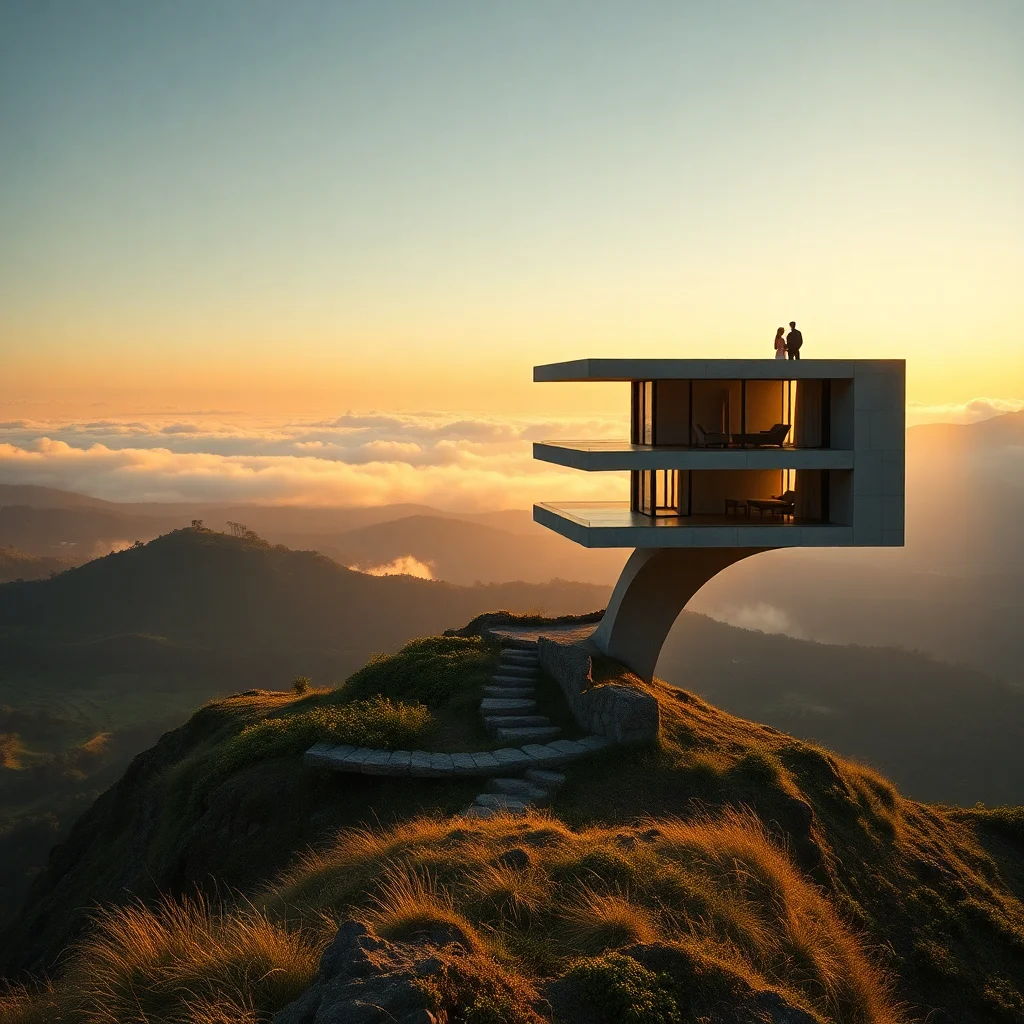
Something has changed in residential architecture: the house is no longer content to sit politely on a site like a finished object dropped from the sky. It now wants to choreograph terrain, catch weather, and weaponize perspective. That is why projects such as Tetro Arquitetura’s dramatically cantilevered Xingu House in Minas Gerais, alongside a growing family of terrain-sensitive homes like Ara Manor, matter far beyond their own luxury credentials. They signal a domesticity in which architecture behaves less like a noun and more like a verb.
The old fantasy was mastery: a house as a self-contained figure, cleanly separated from the land it occupies. The newer and far more interesting ambition is mediation. These homes do not merely “sit in nature”; they frame slope, water, air, and view as active ingredients of daily life. In this sense, the house becomes a landscape event, a calibrated interruption in the ground plane that makes site legible, dramatic, and sometimes even politically charged. The question is not whether this is beautiful. It is whether beauty has become inseparable from environmental intelligence.
That shift also helps explain why so many homeowners and architects now see domestic design as part of a broader cultural desire to stay home in style. If the house is doing more of the emotional and experiential work once outsourced to travel, public life, or spectacle, then its relationship to landscape becomes even more consequential. A well-sited home is no longer just a backdrop for living; it is one of the main events.
Brazilian modernism learned how to hover
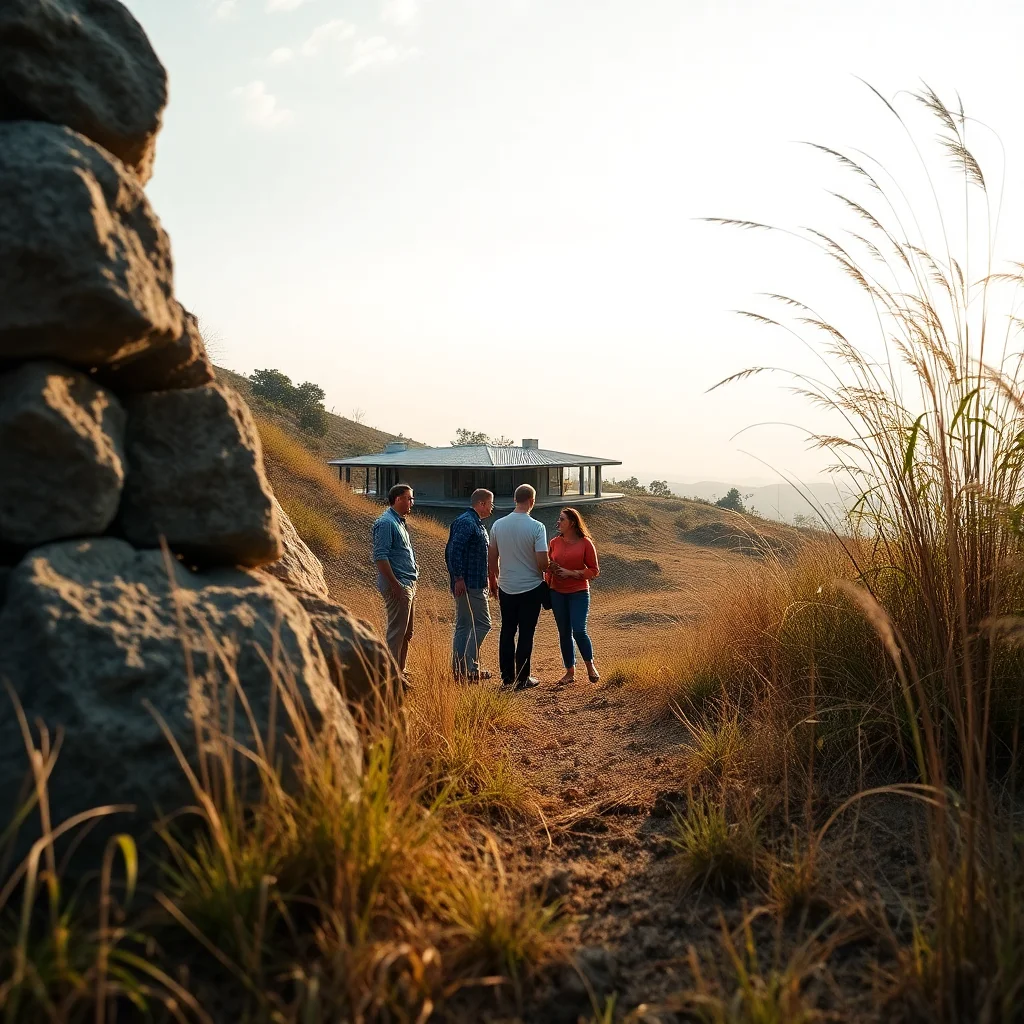
Xingu House is rooted in a lineage that Brazilian architecture has spent decades refining: the art of making heaviness look light. From Oscar Niemeyer’s floating gestures to Vilanova Artigas’s concrete boldness and Marcio Kogan’s polished spatial drift, Brazil has repeatedly treated structure as an instrument of atmosphere. Tetro Arquitetura extends that lineage into the hilltop condition of Minas Gerais, where the house’s cantilevered stance turns the slope into a stage set. The building is not just positioned on the terrain; it is made to read the terrain more sharply.
This is why the image of the cantilever remains so potent. A cantilever does not simply project; it declares a negotiation with gravity, a refusal to be entirely obedient to the ground. Yet the strongest contemporary examples are not about bravado alone. They are about opening a domestic interior to its environmental context without surrendering comfort or precision. In Xingu House, the architectural act becomes one of framing: the horizon, the drop, the vegetation, and the weather become part of the room’s furniture. The building is a lens with habitable thickness.
That sensibility also intersects with the rising question of whether homes can be built to handle instability rather than merely resist it. As climate pressures intensify, design language once associated with luxury increasingly overlaps with resilience, shading, ventilation, and thermal moderation. In that sense, discussions about homes absorbing climate chaos are no longer speculative; they are central to how residential architecture is judged.
ARA Manor and the politics of retreat
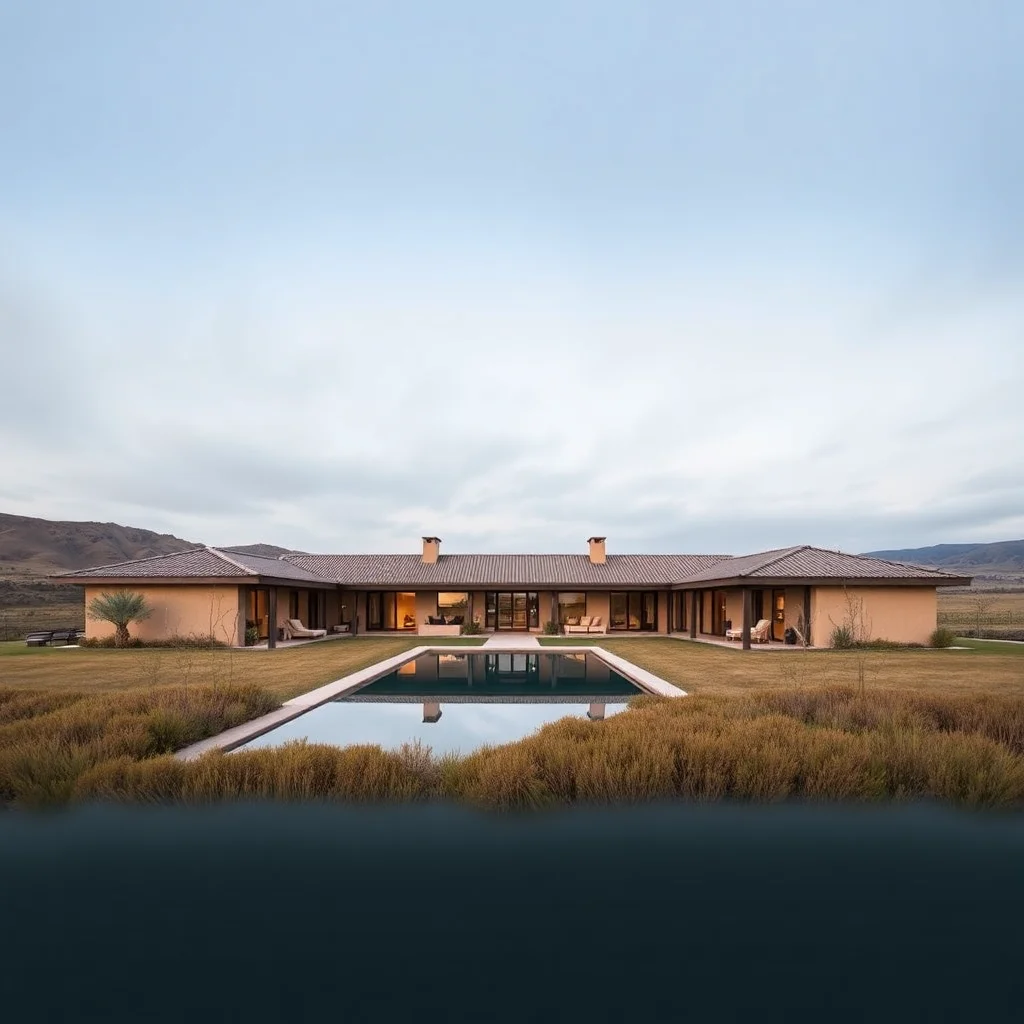
If Xingu House is a declaration, projects like Ara Manor suggest a quieter but no less forceful strategy: the house can also disappear by becoming topography. Across contemporary residential design, there is a fascination with low-lying profiles, earth-toned envelopes, and forms that seem eroded rather than assembled. The message is clear: the most sophisticated house may be the one that minimizes its own ego and amplifies the site’s presence. This is not meekness. It is a more advanced form of control.
The politics here are worth stating plainly. To “blend in” is not always to be humble; sometimes it is to stage invisibility with great expense and intent. Think of Olson Kundig’s projects, where raw materiality and precise siting often let the landscape dominate the experience, or the desert houses of John Lautner and later adaptive successors, which use low-slung massing to dissolve the line between interior and terrain. Ara Manor belongs to this lineage of retreat as performance. The house withdraws so that weather, shadow, and horizon can take the lead, but it does so through highly edited architectural choices. In other words, disappearance is also design.
That logic echoes a wider architectural debate: whether the most responsible move is to repair, adapt, or replace what is already there, and how much intervention a site can bear before its character changes irreversibly. The same tensions appear in Europe’s architecture culture war over repair or replace, where restraint can be as strategic as transformation.
PRO: sculptural presence can sharpen place
The strongest argument for sculptural domesticity is that a house should not apologize for its intelligence. In difficult sites—steep slopes, exposed ridges, waterfront edges—a bold architectural gesture can make a project more honest than camouflage ever could. Xingu House proves the point by using its overhang to turn topography into an experience rather than a background. The cantilever is not decoration; it is a spatial device that dramatizes the relationship between body and earth.
There is also a cultural argument. Contemporary residential architecture risks becoming timid under the banner of sustainability, as if environmental care must automatically look passive or generic. It does not. The work of practitioners such as Álvaro Siza, Richard Neutra, and Tadao Ando reminds us that precision and presence can coexist: a house can be unmistakable and deeply site-specific at the same time. In these projects, sculptural form intensifies awareness. It makes the act of living feel situational, not abstract. The house becomes a marker of where one is.
And that matters because landscape is not a neutral backdrop. It is often the most valuable, fragile, and culturally loaded element of a project. A house that asserts itself can, at its best, compel a richer conversation with the land rather than a vague romance of blending in. The danger of excessive site-fusion is that it can reduce architecture to atmosphere. Presence, when disciplined, keeps architecture legible as an ethical and artistic act.
CONTRA: disappearing into site is the new sophistication
Yet the opposite position is equally persuasive, and increasingly more urgent. The future of residential architecture may belong to houses that recede—because the ecological and experiential stakes demand it. In a climate-changed world, visibility is not always virtue. A house that merges with slope, sinks into the ground, or extends a landscape logic across roof and terrace may be doing more than pleasing the eye: it may be reducing heat gain, limiting visual disruption, and preserving the site’s larger continuity.
There is a reason why so many influential houses now appear almost geological. Peter Zumthor’s buildings, while not domestic in every case, have taught a generation that mass, silence, and material restraint can produce extraordinary intensity. In residential work, this tendency surfaces in the earth-hugging homes of Alejandro Aravena or in modern Scandinavian cabins that use timber, stone, and low silhouettes to avoid competing with terrain. These houses insist that architecture can be less an object than an edit. They do not dominate the landscape; they tune it.
For domestic life, this can be radical. A house that withdraws from spectacle often produces more meaningful intimacy: lower glare, more controlled views, quieter transitions between indoor and outdoor space. It resists the Instagram logic of architecture as image-production and instead restores duration, privacy, and seasonal change as primary experiences. In this view, the best house is not the one you notice first. It is the one that makes you more aware of rain, wind, shade, and the slow movement of the sun.
The real split is not form, but attitude
The false debate is whether residential architecture should be sculptural or discreet. The real issue is what kind of relationship it wants with its site. Xingu House and Ara Manor point to two ends of a spectrum, but they also expose a shared ambition: to make the site active in the life of the building. One does it by intensifying the encounter, the other by softening the boundary. Both reject the old suburban fantasy of the house as an autonomous box with a garden as an afterthought.
Look closely and the supposed opposition starts to collapse. The sculptural house often depends on landscape framing to justify its drama; the invisible house often relies on highly authored geometry to achieve its calm. Either way, architecture is less about mass than mediation. The most compelling residential projects of the last decade—whether in the Brazilian hills, the American desert, the Nordic forest, or the Mediterranean slope—understand that site is not scenery. It is an operating system.
That is the editorial wager here: the future of domestic architecture may not choose between monument and disappearance. It may demand both, depending on what the site asks for and what the climate allows. The house becomes intelligent when it stops performing as a single object and starts acting as an environmental instrument.
In other words, the house is no longer a thing in the landscape. It is the mechanism through which landscape becomes architecture.
FAQ
What does it mean for a house to become a landscape event?
It means the building is designed to shape how we perceive slope, water, air, and horizon rather than simply occupying land. The house acts as a frame, filter, or interruption that makes the site feel active.
Why is Xingu House important in this discussion?
Because its dramatic cantilever and hilltop position in Minas Gerais turn structure into a direct conversation with gravity and view. It exemplifies Brazilian modernism’s ongoing interest in hovering, framing, and spatial drama.
Is blending a house into its site always the more sustainable choice?
Not automatically, but it can support lower visual impact, improved thermal behavior, and stronger environmental continuity. Sustainability depends on many factors, yet site integration often helps architecture work with climate rather than against it.
Can a house be both sculptural and discreet?
Yes. Many of the best projects combine a strong formal idea with low visual disturbance, using precise massing, material restraint, and strategic siting. The future may belong to houses that are assertive in section and quiet in profile.
Open question
When the landscape itself becomes the real protagonist, should residential architecture aim to stand out as a sculptural statement—or disappear so completely that the site takes over the house?
Get the Mainifesto weekly — curated design debates, speculative ideas and the week's best articles every Saturday.



Ricardo Estévez June 12, 2026
I’m wary of the idea that a house should simply vanish into the site; that can become another way of erasing labor, craft, and local memory. What works in projects like these is when the architecture holds its own without competing with the slope or water, so the landscape stays legible and the house still has a voice.
David Lim June 12, 2026
The most interesting question here is not whether the house should stand out, but how it can calibrate its presence across gradients of light, wind, and view. If the structure is too sculptural, it risks flattening the site into a backdrop; if it disappears completely, you lose the spatial tension that makes the landscape readable.
Karim Haddad June 12, 2026
In practice, the “disappear” argument often serves people with enough land to romanticize absence while the real environmental costs stay hidden. A house should be a system that negotiates slope, drainage, and microclimate honestly; if it also reads as a strong form, fine, but it shouldn’t pretend the site does all the work.