
Can Design Save Us from the Air Conditioner?

We Built a World That Cannot Stop Cooling Itself
The air conditioner was sold as liberation: a technical miracle that made heat irrelevant, stabilized productivity, and promised universal comfort. But the bill is due now, and it is brutally architectural. Cooling systems consume vast amounts of electricity, lock buildings into brittle mechanical dependencies, and often erase the very climate intelligence that local architecture once used to survive. In a warming world, the AC is no longer just a convenience; it is a liability disguised as a lifestyle.
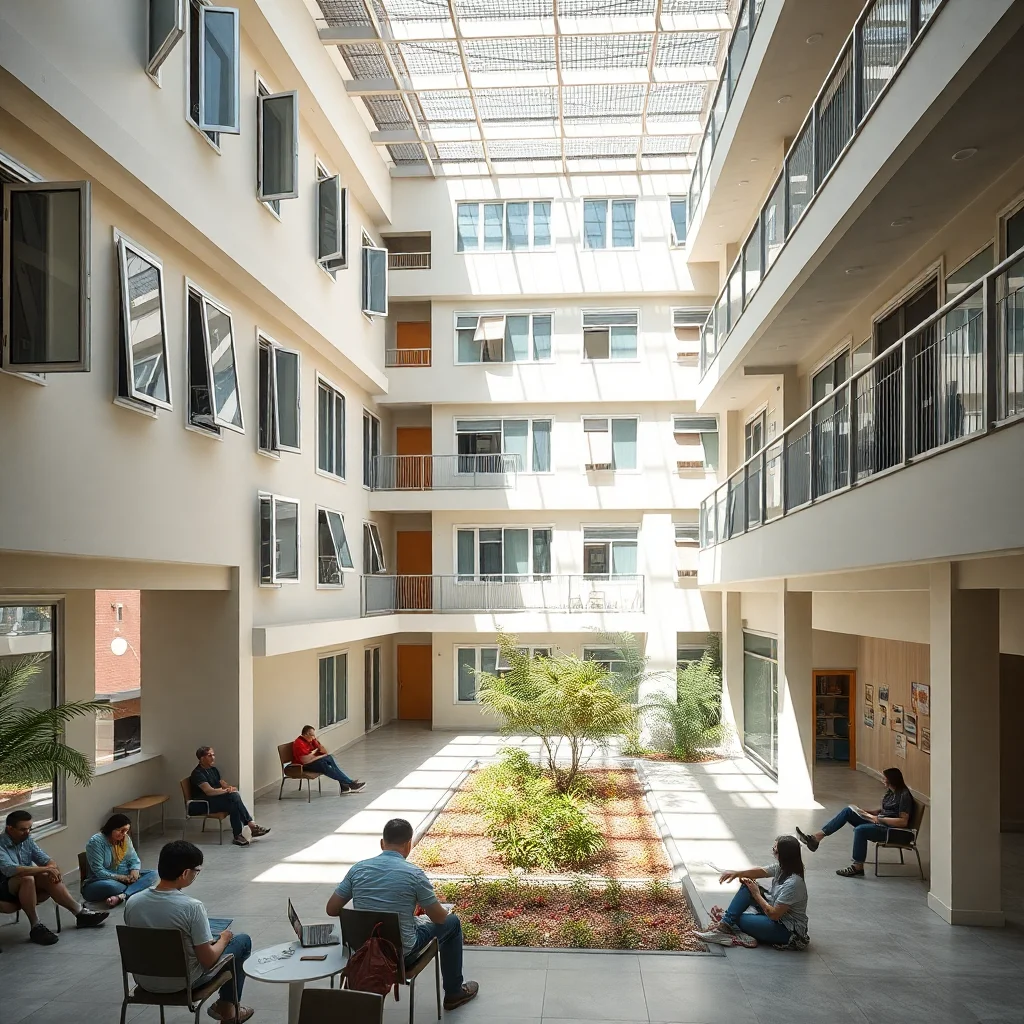
This is why passive cooling has returned—not as pastoral nostalgia, but as hard-headed design strategy. Architects, engineers, and material innovators are revisiting courtyards, deep overhangs, stack ventilation, shaded arcades, thermal mass, earth construction, and night flushing because these methods work where electricity falters and where carbon budgets tighten. The point is not to romanticize premodern life. The point is to ask why a hyper-technological industry still behaves as if every climate can be flattened into the same sealed box.
PRO: Climate-Responsive Architecture Is Smarter Than Mechanical Control
Passive cooling begins with humility. It accepts that buildings sit inside weather, not above it. That seemingly simple shift has profound consequences: orientation can reduce solar gain; cross-ventilation can move heat away without compressors; shaded voids can turn courtyards into thermal buffers; high ceilings can let hot air rise away from occupied zones. These are not antique tricks. They are performance strategies, and they are being refined with contemporary tools, from simulation software to low-carbon materials.
Look at the work of Anna Heringer, whose projects in Bangladesh use local material intelligence rather than imported mechanical dependency. Or the broader tradition of wind towers in the Middle East, which inform current experiments in naturally ventilated towers and mixed-mode buildings. In hot climates, architecture has always been a negotiation with airflow, shadow, and thermal lag. What changed was not physics, but fashion: the machine age taught us to treat comfort as a sealed contractual right.
Today, that contract is breaking. Cities are getting hotter, power grids are strained by demand spikes, and supply chains for compressors, refrigerants, and control systems are exposed to geopolitical shocks. Passive cooling is persuasive because it reduces load at the source. A building that needs less mechanical cooling is a building that costs less to run, emits less carbon, and remains more resilient when the grid is stressed. That is not a lifestyle argument. It is an infrastructure argument.
PRO: The Best Cooling Systems May Be Material, Not Mechanical
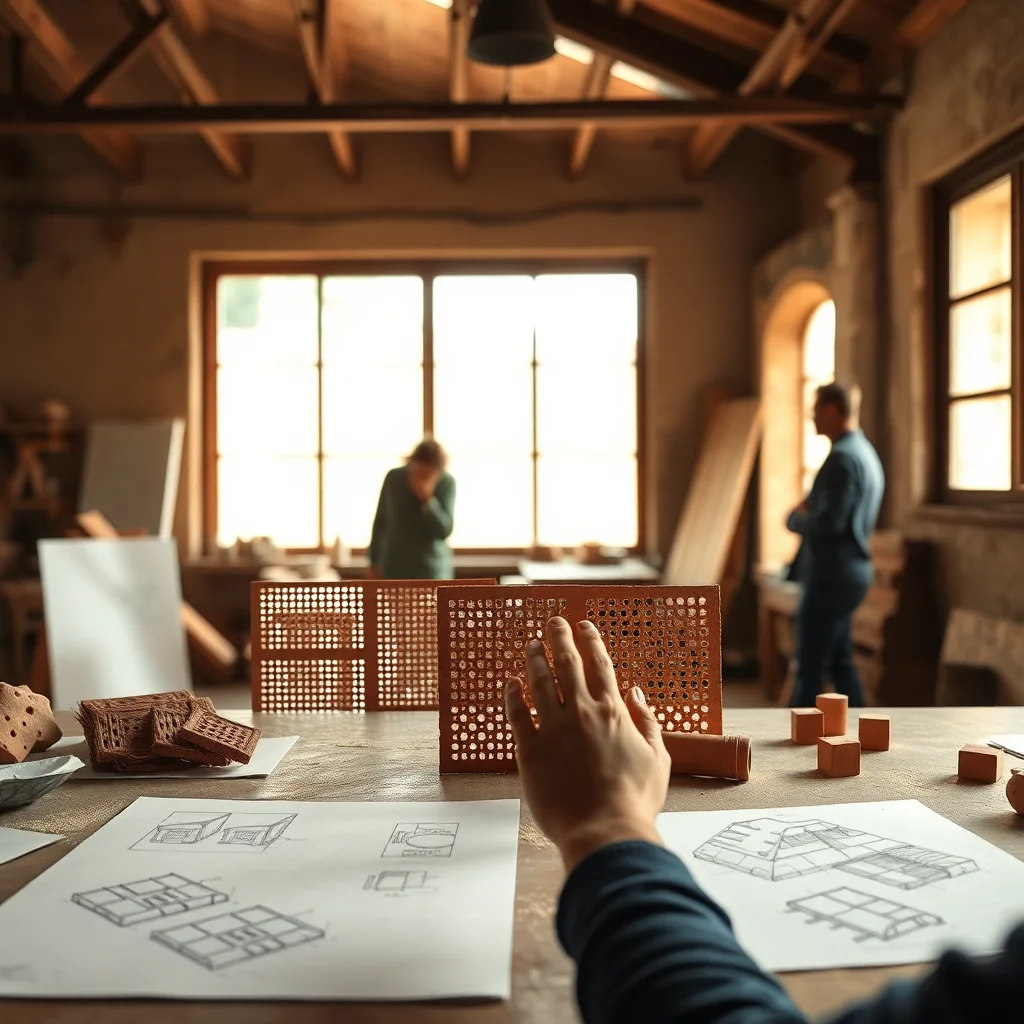
The renewed interest in passive cooling also reflects a broader material turn in architecture. Terracotta screens, porous brick, bamboo lattices, timber shading devices, and high-albedo surfaces are no longer decorative leftovers; they are climatic instruments. In many parts of the world, vernacular traditions used what was locally available because local materials were maintainable, repairable, and legible to builders. Globalized construction, by contrast, often replaces that intelligence with standardized assemblies that depend on distant factories and specialized maintenance teams.
Several contemporary projects prove the point. The Council House 2 building in Melbourne became a reference for integrated daylighting, thermal mass, and night purge strategies. In India, the use of jaali screens in contemporary civic and commercial architecture has been reinterpreted as a low-tech but sophisticated response to glare and heat. In Spain, offices and cultural buildings in Mediterranean climates increasingly combine shading, atria, and mixed-mode ventilation to cut dependence on full-time mechanical cooling. These are not aesthetic gestures. They are operational decisions.
The deeper advantage is cultural continuity. Traditional cooling techniques carried knowledge across generations through practice, not manuals alone. When that continuity was disrupted by industrial standardization, architecture lost a form of climate literacy. Rediscovering passive methods therefore means more than lowering emissions; it means re-learning how to design for place. That knowledge can be local, beautiful, and efficient at once. We do not need to choose between intelligence and atmosphere.
That same logic is shaping other parts of the built environment too, especially projects that treat existing fabric as an asset rather than a problem. As When Renovation Refuses to Start Over suggests, working with what is already there can preserve embodied energy while improving performance, a principle that aligns closely with passive cooling’s emphasis on adaptation over replacement.
CONTRA: Comfort Has Been Redefined, and There Is No Easy Retreat
And yet the pro-passive argument has a blind spot: modern expectations of comfort are not going away. Hospitals, laboratories, data centers, eldercare facilities, schools, and dense urban housing often require tighter temperature and humidity control than traditional methods can guarantee. The same is true in climates with prolonged heat waves, humid nights, polluted air, or noise that makes natural ventilation impractical. The fantasy that all buildings can simply open a window and become resilient is exactly that—a fantasy.
There is also the issue of scale. Passive cooling works brilliantly when design, site, climate, and use align. But many buildings are not isolated objects in ideal conditions; they are parts of complex systems with changing occupancy, internal loads, and unpredictable user behavior. A museum cannot allow priceless collections to drift with outdoor humidity. A high-rise office tower cannot rely solely on cross-ventilation when deep floor plates and sealed façades dominate the program. Mechanical systems, however flawed, still offer precision where passive strategies plateau.
Then there is equity. In affluent contexts, passive cooling can be framed as elegant restraint, a design virtue chosen by owners who can afford experimentation. In low-income housing, the stakes are harsher: if passive measures fail, the consequences are immediate and bodily. In a heat emergency, a cheap fan, a shared cooling center, or an AC unit can be the difference between discomfort and death. To argue against mechanical cooling without acknowledging thermal vulnerability is not radical; it is irresponsible.
CONTRA: The Real Problem Is Not the AC, but What We Demand From It
The sharper critique is this: the air conditioner did not create our thermal expectations alone. It amplified an existing architectural failure. Too many buildings are designed as sealed, overglazed, overlit, and over-conditioned objects that depend on HVAC to correct their own mistakes. If every façade becomes a glass billboard and every floor plate is deep and inflexible, then of course the compressor becomes the hero. The machine is patching a design culture that refuses to respect climate.
This is where the debate becomes uncomfortable. Passive cooling can be used as an excuse for austerity, shifting responsibility onto occupants to endure heat in the name of sustainability. But it can also be a demand for better buildings: more shade, more adaptive envelopes, more mixed-mode operation, more seasonal use, more public space that stays habitable without aggressive energy use. The question is not whether we can abolish the AC everywhere. It is whether we can stop using it as a default answer to bad architecture.
Some of the most compelling contemporary projects do not reject mechanical cooling outright; they subordinate it. They use it sparingly, only when climate, program, or health makes it necessary. This hybrid approach is likely the future. Total thermal control is expensive, carbon-heavy, and increasingly unsustainable. But pure romanticism is equally weak. The real challenge is to design buildings that can breathe, buffer, and adapt—while still protecting people when conditions become extreme.
In that sense, the conversation overlaps with broader questions of public life and shared services: even the most elegant environmental strategies have to answer to real civic needs. A building or district cannot be judged only by its ideals; it must also work for the people who rely on it, which is why debates like Public Toilets: Civic Design’s Hardest Test resonate here, too—both are about how architecture handles vulnerability, maintenance, and collective responsibility.
A New Thermal Politics: Less Uniformity, More Judgment
Passive cooling is not a return to the past. It is a correction to a model of architecture that treated weather as an inconvenience and energy as infinite. The best contemporary work understands that comfort is not one thing everywhere. It is contextual, negotiated, and political. A shaded courtyard in Marrakech, a ventilated school in Kerala, a mass-timber office in Scandinavia, and a hybrid cultural center in southern Europe all suggest the same lesson: buildings should do more before they ask the grid for help.
The more provocative position is that design can save us from the air conditioner only if we stop expecting architecture to perform magic. It must become climate-responsive again, yes, but also operationally honest. It must admit that some spaces need machines, while many others need only better thought. The future is not AC versus no AC. The future is intelligent restraint: architecture that uses less, leaks less, and learns from the places it inhabits.
The real test is not whether passive cooling can replace the air conditioner everywhere, but whether architects are willing to design buildings that no longer need to be rescued by it.
That broader shift toward place-based judgment also depends on culture, not just technique. The most durable design responses emerge where buildings, neighborhoods, and public expectations evolve together, which is why questions like Can Cities Be Designed Before Culture Exists? matter so much in the climate conversation.
FAQ
Is passive cooling realistic for modern buildings? Yes, but not universally. It works best when climate, program, and design are aligned, and it is especially effective as part of a hybrid strategy that reduces mechanical loads rather than eliminating HVAC entirely.
Does passive cooling mean giving up comfort? No. It means redefining comfort as climate-responsive rather than mechanically identical everywhere. In many buildings, better shading, ventilation, and materials can improve comfort while using far less energy.
What are the main passive cooling strategies architects use? Common strategies include orientation, external shading, courtyards, thermal mass, cross-ventilation, stack effect, night flushing, reflective surfaces, and breathable or porous façades.
Why is passive cooling getting renewed attention now? Because overheating, energy price volatility, grid strain, and decarbonization pressures are making full-time mechanical cooling less viable. Passive systems offer resilience, lower operating costs, and reduced carbon emissions.
Get the Mainifesto weekly — curated design debates, speculative ideas and the week's best articles every Saturday.
Editorial Perspectives
Questions and counterpoints developed by the Mainifesto editorial desk to extend the discussion.
Perspective 1
Because “total thermal control” is often a luxury crutch, not a design necessity. In hospitality, the smarter play is to reduce cooling loads first — better orientation, shading, airflow, materials — then use mechanical systems as backup, not the whole strategy. That’s better for guest comfort, better for operating costs, and honestly better design.
Perspective 2
We keep overdesigning for a narrow comfort standard and then acting surprised when energy use spikes. Passive cooling helps, but it’s not a universal fix; in dense cities, humid climates, and poorly maintained buildings, the data usually shows you still need mechanical support. The real question is why we treat airtight, fully conditioned interiors as the default instead of one option among many.
Perspective 3
Older buildings already knew they couldn’t control everything, so they worked with shade, mass, courtyards, and ventilation instead of pretending comfort was a sealed box. What bothers me is when “thermal control” becomes an excuse to erase complexity and replace climate-responsive architecture with generic glassy interiors. If the article pushes us back toward adaptation, that’s overdue.