Women’s-Only Sports Venues and Civic Space
Architecture’s newest provocation: build for one gender, or build for everyone?
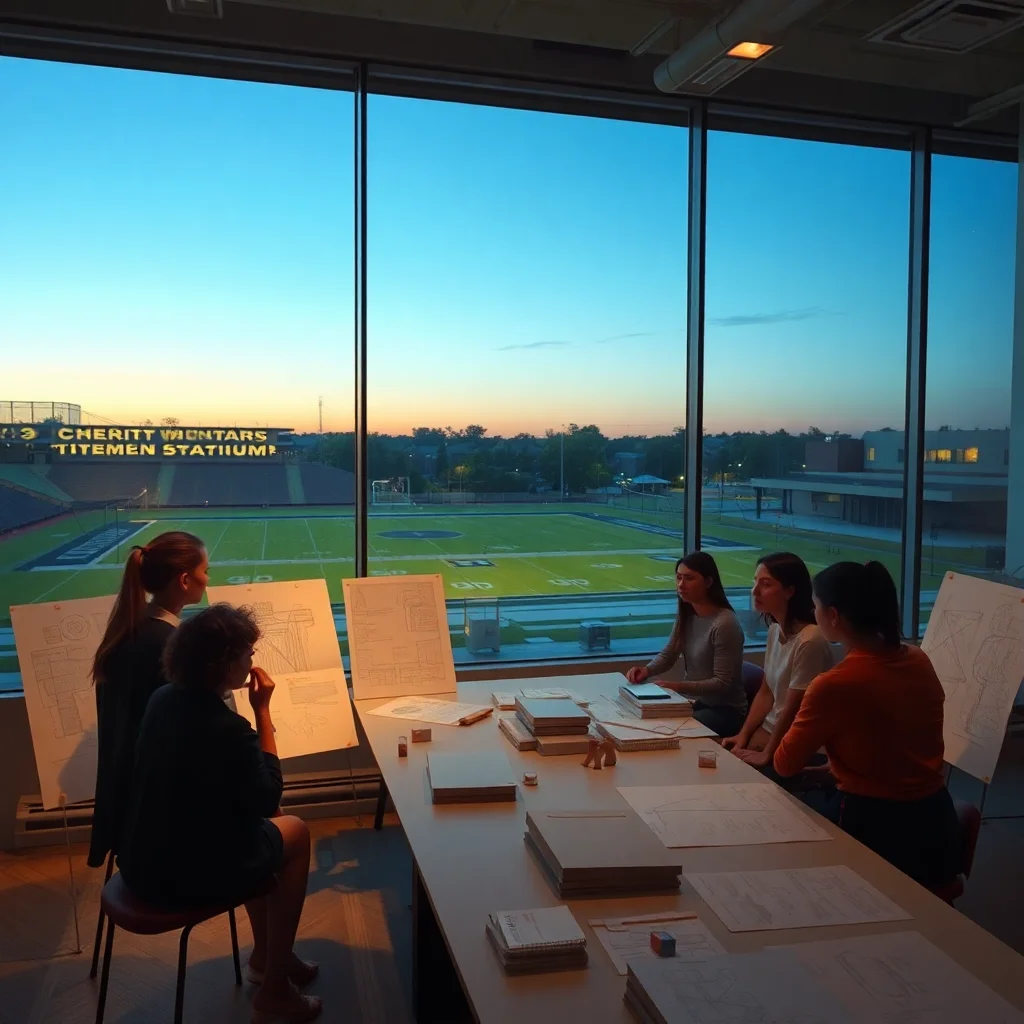
The proposal for a women’s football stadium from the University of Kansas is not just a student exercise; it is a diagnostic tool for architecture’s deepest contradiction. On one hand, it promises overdue visibility for women’s sport, a realm long treated as secondary in planning, funding, and design. On the other, it invites an uncomfortable question: when architecture names a group so explicitly, is it correcting exclusion — or hardening it into a new spatial logic?
That tension matters because civic space has always claimed neutrality while quietly serving power. Stadiums, arenas, and public plazas are never blank containers; they are instruments that decide who is imagined as the default user. A women-only football venue therefore lands as both a corrective and a provocation. It can be read as a refusal of male-centered sporting infrastructure, but also as a sign that equality has failed so thoroughly that separate architecture becomes necessary to stage parity.
The University of Kansas proposal arrives in a moment when women’s football is no longer niche, yet the built environment often behaves as if it were. Attendance is rising, media attention is surging, and commercial value is undeniable. But the architectural question is more radical than crowd size. If women’s sport deserves better than being squeezed into leftover men’s facilities, what form should justice take: dedicated spaces, or genuinely shared ones?
Why the women’s game keeps inheriting second-hand architecture
For decades, women’s teams have played in venues designed around male schedules, male crowds, and male assumptions about scale and ceremony. The result is a familiar compromise: too large to feel alive, too generic to feel owned, too often attached to training grounds or municipal stadiums where women’s fixtures are treated as occasional visitors rather than central programming. This is not only a problem of capacity; it is a problem of architectural status.
Look at how other cultural institutions have fought for visibility by building their own rooms, stages, and institutions. Women’s museums, feminist archives, and independent arts centers were often born from exclusion, not luxury. In sport, however, the argument is more volatile because stadiums are civic machines: they are financed, symbolic, and intensely public. Building a dedicated venue for women’s football can therefore feel empowering in a way that a borrowed pitch never will. It says: this is not an accessory to the main event. This is the main event.
Yet architecture has a habit of turning remedies into labels. Once a building is explicitly for women, it risks being interpreted as an exception to the rule rather than the rule itself. That is the trap: a women’s stadium may elevate one program while leaving the larger urban landscape untouched. If the broader city remains organized around male-coded norms — from transport and safety to sponsorship and media visibility — then the new building becomes symbolic relief, not structural change.
The PRO case: dedicated space can be a weapon against invisibility
There is a strong argument that women’s sport needs buildings of its own precisely because “shared” has often meant “subordinate.” A purpose-built women’s stadium can do what temporary accommodation never does: establish identity, build rituals, and formalize belonging. Architecture has always shaped status, and status matters in sport. A venue designed around women’s football would not simply host matches; it would recalibrate the hierarchy of attention.
Consider how venues built around specific communities can shift public perception. The best examples do not apologize for their specificity; they make it legible. LGBTQ+ community centers, Black cultural institutions, and Indigenous-designed civic buildings all argue that recognition sometimes requires formal separation from dominant norms. The point is not isolation. The point is authorship. If women’s football has been historically written into architecture as an afterthought, then a dedicated stadium becomes a counter-script.
There is also a practical dimension. Dedicated facilities can be designed around women’s training and match-day needs instead of retrofitting them into spaces optimized for men’s leagues. That includes locker-room planning, crowd circulation, medical support, family zones, broadcast infrastructure, and acoustic design that makes a smaller but passionate audience feel powerful rather than sparse. As with the best contemporary performance venues, the architecture can be calibrated to the actual user rather than a legacy template.
We should not underestimate the political force of naming. A women’s stadium publicly declares that women’s sport deserves permanence, not permission. In a world where investment follows visibility, dedicated architecture can also become a funding tool: a place that attracts sponsors, anchors youth programs, and gives young athletes a concrete image of professional belonging. This is how architecture produces possibility. It turns aspiration into address.
The CONTRA case: when correction becomes segregation by another name
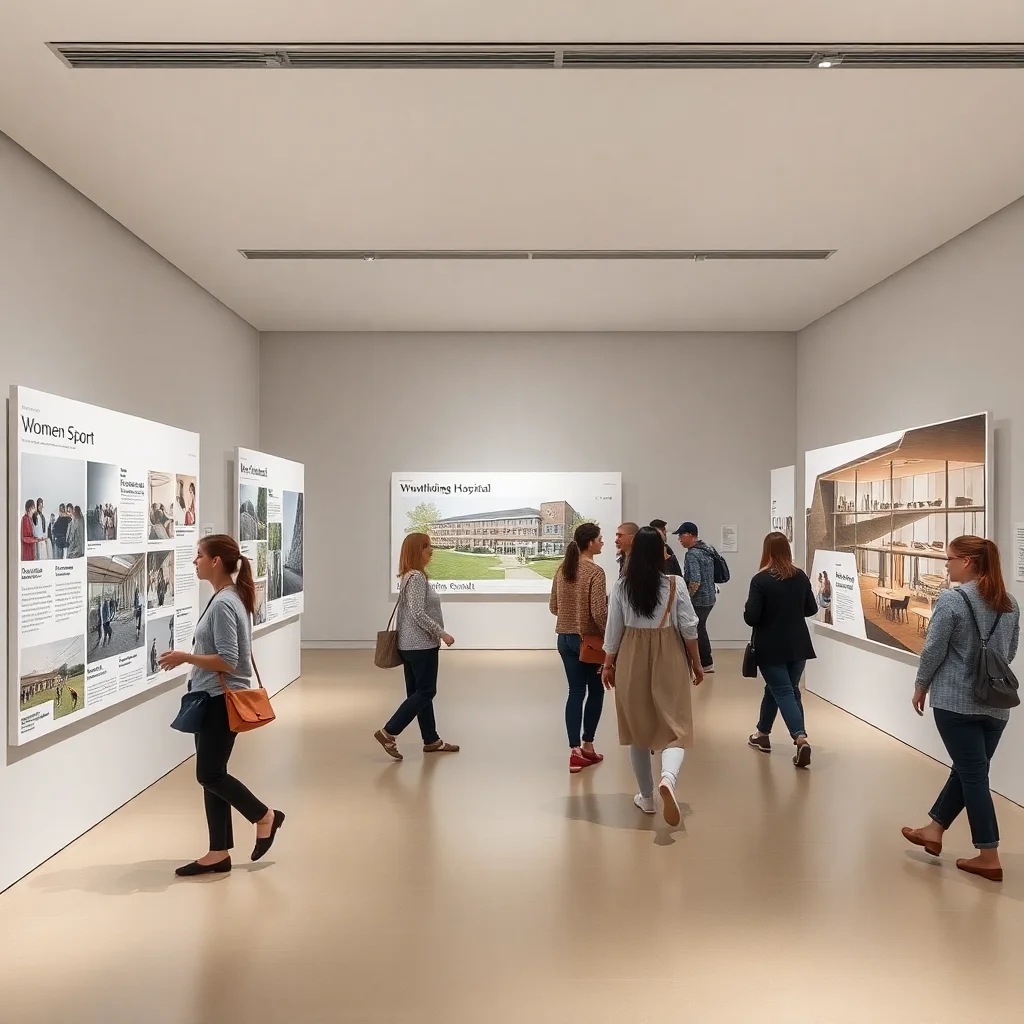
But let’s be honest: separate architecture can also be a seductive cop-out. The history of exclusion is full of spaces justified as “appropriate” for one group while reinforcing hierarchy in the wider city. If women’s sport gets its own stadium because existing men’s venues remain politically and financially untouchable, then the new building may simply codify inequality in a prettier form. It risks saying women deserve a special box, not the whole field.
This is why critics will ask the harder question: why not demand that all major stadiums be redesigned to serve everyone equally? Why build parallel infrastructure if the real failure is the dominant system itself? Shared venues, if genuinely equitable, could force the city to confront its assumptions. They would insist that women’s football not be tucked into a separate calendar, separate geography, or separate visual culture, but placed at the center of civic life.
There is a powerful precedent in architecture that resists fragmentation. Universal design, public transit reform, and inclusive urbanism all argue that the best correction is not a special lane but a better common street. In that logic, a women-only stadium may be too neat, too safe. It might create a sanctuary without changing the hostile terrain outside it. And because stadiums are expensive, every new dedicated venue also becomes an opportunity cost — money that could have been spent transforming existing public infrastructure for broader equity.
There is another danger as well: branding. A women’s stadium can be exploited as proof of progress even when the larger ecosystem remains unequal. The symbolic victory can be used to deflect more difficult reforms in media coverage, pay equity, youth access, and urban safety. Architecture is easily enlisted as evidence that change has already happened. That is the oldest trick in civic theater.
So what should architecture do — mirror inequality or abolish it?
The answer is not a polite compromise. Architecture should not pretend that equal treatment exists where it clearly does not. Nor should it celebrate segregation as empowerment simply because the segregated space is beautiful. The real task is to define which separations are strategic and which are surrender.
In practice, the most convincing future may be hybrid rather than doctrinaire. A women’s football stadium can be legitimate if it is conceived not as a ghetto of specificity but as a flagship of redistribution: a venue tied to youth development, public access, urban programming, and a broader campaign to rewire sports infrastructure across the city. In other words, the building must be more than an object. It must be an argument.
That’s where architecture becomes consequential. A women’s stadium can normalize women’s sport by giving it scale, dignity, and permanence. But it can only avoid becoming a spatial half-measure if it refuses to stand alone as the solution. It should provoke upgrades to schools, parks, transport, and existing shared venues. Otherwise, we are simply decorating a system that still ranks whose bodies deserve the best seats, the best sightlines, and the best budgets.
The University of Kansas proposal is compelling because it exposes this dilemma rather than smoothing it over. It asks whether design can compensate for decades of neglect without reproducing the logics of separation. That is the question architecture should be asking more often: not whether a building is inclusive in theory, but whether it changes the distribution of power in the city.
What this means for civic space, beyond sport
The debate reaches far beyond football. If women-only venues are accepted as a legitimate corrective, then other sectors will follow: performance halls, coworking campuses, health facilities, educational spaces. And that is not automatically a problem. Historically, women’s-only spaces have sometimes been necessary shields against harassment, exclusion, or erasure. But every such space should be judged by the same standard: does it create agency without confirming inferiority?
Architecture is at its best when it is suspicious of easy universals. The claim that “everyone” is served by one shared model has often concealed the fact that the model was built for someone specific. At the same time, the answer to bias cannot always be withdrawal into parallel worlds. The city becomes more democratic when its spaces can hold difference without turning it into distance.
That is the real stake of the women’s football stadium debate. Not whether women deserve a venue — they do — but whether the venue becomes a platform for wider transformation or a beautifully designed endpoint. If it is the latter, then the architecture has failed, however elegant the plan. If it is the former, then the building becomes something rarer than a stadium: a spatial manifesto.
FAQ
Why is a women’s-only stadium controversial? Because it can be read in two opposite ways: as overdue recognition for women’s sport, or as a form of architectural segregation that avoids fixing the wider system of inequality.
Can separate venues be empowering? Yes, if they create visibility, ownership, and better conditions than retrofitted shared spaces. The key is whether they expand opportunity or simply isolate it.
What is the alternative to a women’s-only stadium? A truly equitable shared stadium system, where existing venues are redesigned to serve women’s sport equally in terms of access, scheduling, broadcast support, and fan experience.
What should architects prioritize in this debate? They should prioritize power, not just form: who controls the space, who benefits from it, and whether the project changes the city beyond the site itself.
Get the Mainifesto weekly — curated design debates, speculative ideas and the week's best articles every Saturday.
Editorial Perspectives
Questions and counterpoints developed by the Mainifesto editorial desk to extend the discussion.
Perspective 1
I don’t think the question is just whether a women’s-only venue is segregating or corrective; it’s whether we can design thresholds, access, and programming that turn a venue into a bridge rather than a fence. If the stadium is framed as a temporary spatial intervention with clear civic spillover, maybe the deeper test is whether it expands what shared public space can look like, not just who it excludes.
Perspective 2
History is full of spaces that began as “necessary corrections” and then hardened into social sorting, so I’m wary of any clean answer here. In cities already marked by exclusion, the better move may be to fight for genuinely shared civic space while using adaptive, targeted interventions to make women’s access real, not symbolic.
Perspective 3
The temptation to build a separate women’s venue is understandable, but separation rarely resolves power; it usually re-stages it in a softer key. I would rather see architecture insist on the universal claim of the public realm, while exposing how “neutral” civic space has long been coded male.