
When Home Becomes Content: Interiors for the Feed
Home Is No Longer Off-Camera
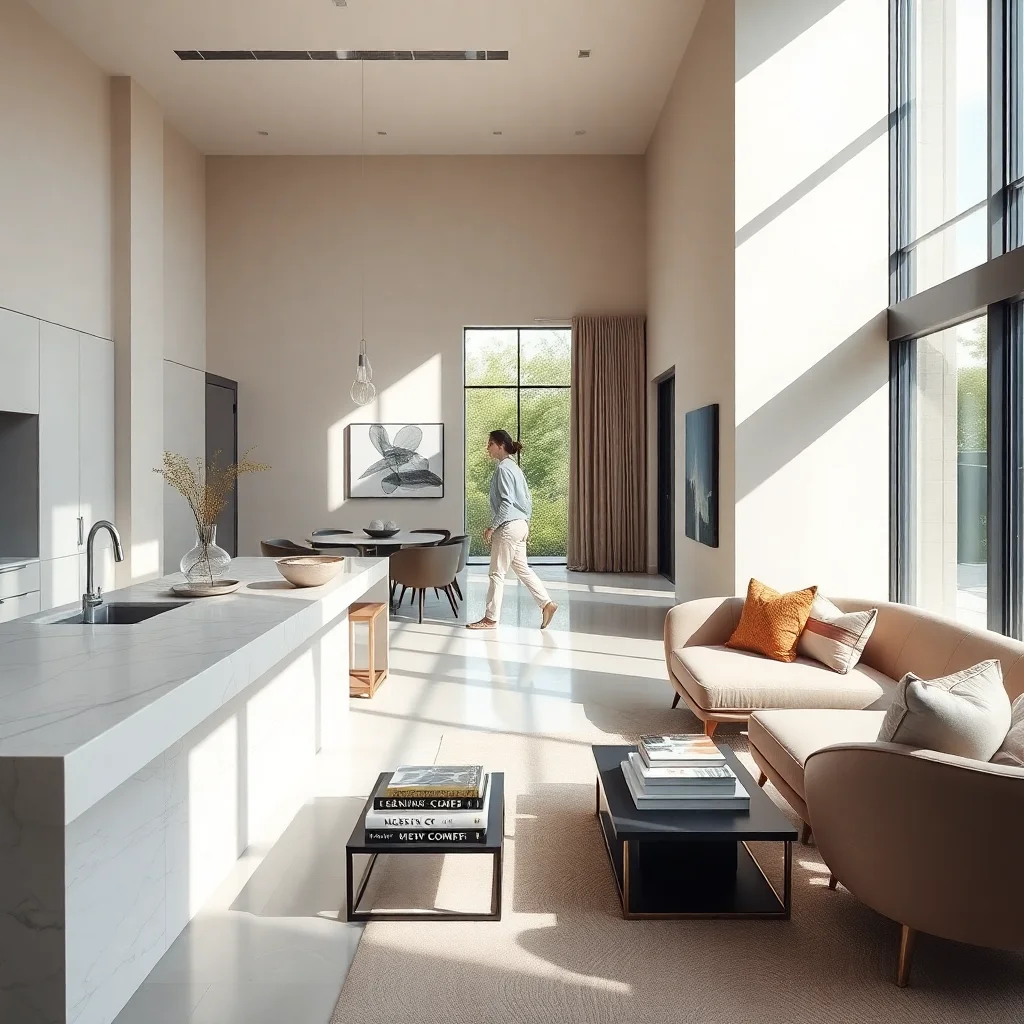
The modern interior has stopped behaving like a sanctuary. It now performs. In the era of always-on image culture, the living room is not merely where you read, argue, nap, or let the laundry accumulate; it is also where the frame is optimized, the light is curated, and the “casual” arrangement is arranged again and again until it looks inevitable. The result is a new domestic type: the stage-set interior, designed to appear lived-in while remaining ruthlessly ready for the next post.
This is not simply about vanity. It is about the collapse of the old boundary between private experience and public narration. In a house shared online, the sofa must be comfortable, yes, but it must also photograph beautifully at 4 p.m. on a Tuesday. The coffee table must hold books, candles, and a ceramic bowl, but never too many reminders that real life is untidy. The kitchen must signal use without showing evidence of use. The house becomes a story engine, and the resident becomes both inhabitant and art director.
The Architectural Digest profile of Kristy Sarah’s Houston home, designed with Nina Magon, makes this condition legible. The project presents a sleek, modern retreat that is also unmistakably camera-aware: polished surfaces, controlled contrast, and a spatial grammar built for images that can circulate instantly across platforms. What matters is not just how the interior feels in person, but how it reads in a thumbnail, a reel, a wide-angle shot, a sponsored post. That is the new test of domestic success.
The Aesthetic of Believable Performance
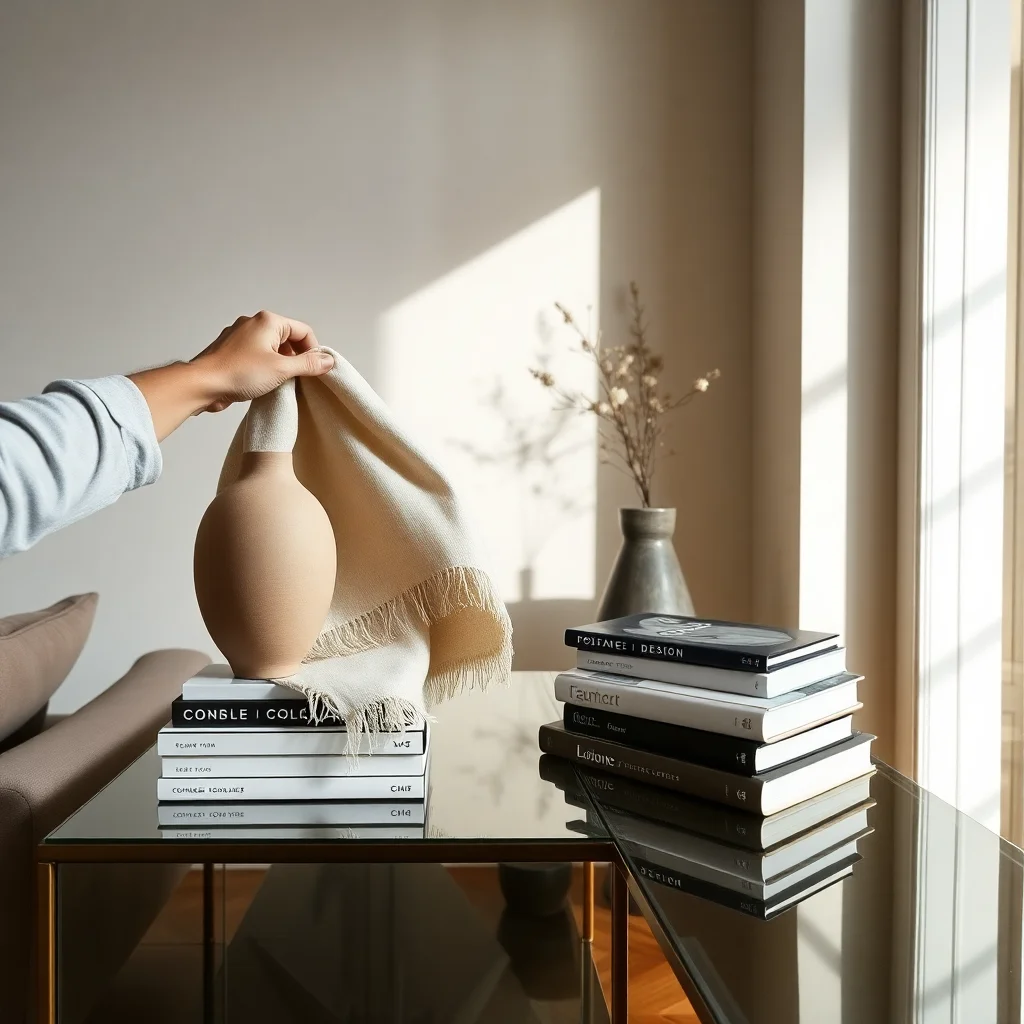
Stage-set interiors do not look like movie sets in the obvious sense. They are more insidious than that. They borrow the warmth of lived-in rooms while stripping away the awkwardness that makes life feel real. A throw blanket is left casually across a chair, but at a precise diagonal. Books are stacked as if consulted, not collected. A bowl of citrus appears organic, though it is often the result of a visual strategy as deliberate as a brand campaign.
This is why the most successful social interiors often resemble a hybrid of showroom and autobiography. They promise authenticity through signs of use, but those signs are heavily edited. The style is not sterile minimalism; it is controlled intimacy. Designers such as Kelly Wearstler, Athena Calderone, and Jake Arnold have helped normalize this visual language, where texture, shadow, and personal objects create an atmosphere of access without surrendering the underlying choreography.
Even more revealing is how these homes flatten time. There is no sense of morning mess, late-night exhaustion, or the friction that actually defines domestic life. Instead, every corner offers a perpetual “moment.” The room is always ready. The light is always flattering. The camera finds a home that seems to have been waiting for it, and that waiting becomes part of the aesthetic.
From Shelter to Set Design
The shift did not happen overnight. It emerged from a culture that increasingly rewards visual consistency over spatial complexity. Open-plan layouts, once sold as social and democratic, already reduced domestic life into a series of sightlines. Social media accelerated the logic. If one room can be seen from another, then one room can be staged in relation to another. If a home can be photographed from the entryway, then the entryway becomes a proscenium.
Contemporary residential design has adapted accordingly. In high-profile influencer houses, every decision is asked to do double duty. Marble surfaces must signify luxury and bounce light. Fluted wood must soften the image and imply tactility. Oversized mirrors extend space while reflecting the resident back into the scene. Even “mess” is often pre-approved mess: an open notebook, a folded knit, a coffee mug at rest. Nothing is accidental; everything is plausible.
Consider the broader visual culture surrounding celebrity residences, from the tailored interiors of fashion founders to the aggressively photogenic spaces featured in shelter media. Whether it is the restrained glamour of a Manhattan apartment or the desert modernism of a Palm Springs escape, the message is the same: domestic space must be legible as lifestyle. The home is no longer just where life happens. It is where life is packaged. That logic also helps explain the appeal of interiors that function as repair mechanisms, where atmosphere is tasked with doing emotional work as much as visual work.
Why Followers Want the Illusion of Intimacy
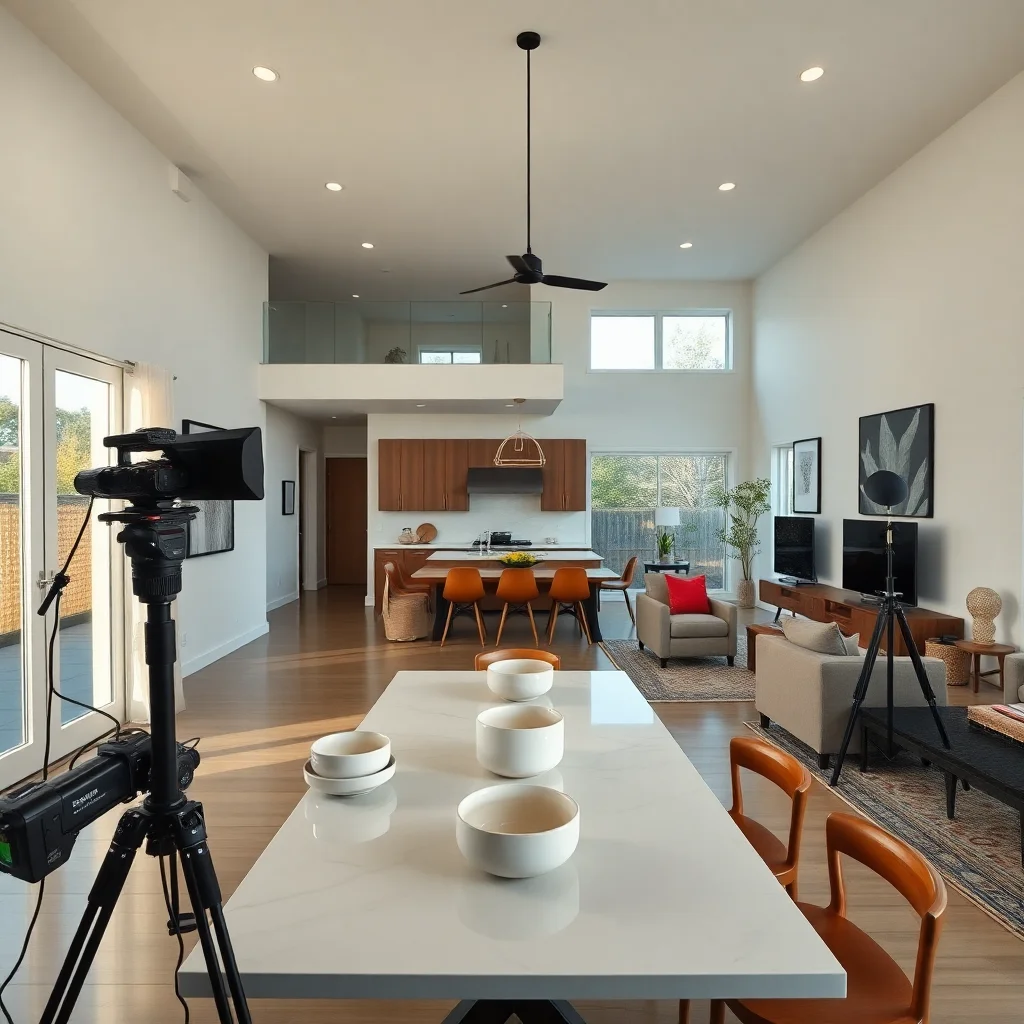
The stage-set interior thrives because audiences are complicit. Followers do not merely tolerate curated domesticity; they crave it. A polished home offers the fantasy of effortless order, the emotional reassurance that a beautiful life can be assembled, maintained, and monetized. The apartment, the pantry, the bathroom shelf, the nursery: all become micro-theaters of aspiration.
This creates a strange exchange. Residents offer intimacy as content, and viewers reward it with attention. But the intimacy is often carefully rationed. We see the edges of the bed, not the insomnia. We see the breakfast counter, not the arguments around it. The audience is invited to imagine access, while the creator protects the reality behind the image. In that sense, the stage-set interior is not a lie; it is a contract.
Designers are responding to that contract with ever more sophisticated environments. Studio McGee’s carefully moderated rooms, for instance, balance warmth and clarity in a way that feels built for repeat exposure. So do the neutral-but-textural interiors that dominate aspirational renovation content. These spaces do not shout. They whisper in a language the algorithm understands: softness, symmetry, daylight, and a sense that nothing ugly is allowed to intrude. The same logic can be seen in spaces outside the home, from cafés to lobbies, where coffee shops have become the new luxury chain and ambience itself is part of the product.
The Cost of Always Being Photographable
But the architecture of constant visibility has a price. When every room must be camera-ready, actual living becomes a liability. Children’s toys compete with compositional purity. Chargers, shoes, pet bowls, and paperwork become visual noise. Maintenance becomes performance labor. The home begins to demand the same discipline as a set between takes: reset, clean, conceal, repeat.
There is also a psychological cost. Residents internalize the lens and start seeing their own lives as editorial problems. Is this corner “working”? Does this rug read well? Should the lamp be warmer, the table more sparse, the gallery wall more personal? The private self becomes a critic of its own environment. Even rest can feel suspicious if it cannot be framed attractively.
This is where the promise of authenticity becomes especially dangerous. A space can appear warm and personal while being built on relentless self-surveillance. That tension is central to the contemporary interior. The home no longer protects the self from the public; it absorbs the public gaze and reorganizes life around it. The result may look relaxed, but it is often the product of extraordinary control.
A New Domestic Politics
To dismiss these interiors as shallow would be too easy. They are not just aesthetic trends; they are evidence of a broader economic condition. When personal branding becomes a survival strategy, the home is inevitably recruited into the brand. For creators, stylists, designers, and even ordinary residents navigating digital culture, domestic space is one of the few assets still available for visual differentiation. The room becomes labor. The floor plan becomes messaging.
That does not mean the stage-set interior is inevitable or benign. It should make us ask who gets to perform domestic perfection and who is forced to live with the consequences of its unattainable standards. It should also make designers uneasy about their role in producing environments that reward image over use. A beautiful room is not automatically a good room. A photogenic kitchen is not automatically a democratic one. And a home that performs well online may still fail the people who inhabit it when the camera is off.
The real question is not whether social media has changed interiors. It has. The question is whether architecture and design will continue to serve this performance economy without critique, or whether they will reclaim the messy, unflattering, unpostable dimensions of domestic life as part of their purpose. If the house is only good when it is seen, then it is no longer a home in any meaningful sense. It is a set that happens to contain a life.
FAQ
What is a stage-set interior? A stage-set interior is a home designed to look lived-in and effortlessly photogenic at the same time. It prioritizes visual readability, lighting, and composition so the space works both for daily life and for social media content.
Why are stage-set interiors becoming so common? Because domestic spaces now function as personal branding tools. Influencers, designers, and homeowners alike are encouraged to make rooms that signal identity, aspiration, and authenticity in ways the algorithm can reward.
Are stage-set interiors always inauthentic? Not necessarily. They can still be genuinely inhabited and emotionally meaningful. The problem is that authenticity is often packaged as a visual effect, which can turn real life into a polished performance.
How can designers resist over-performance in interiors? By designing for use first: storage that hides clutter without aesthetic panic, materials that age honestly, and layouts that support everyday habits instead of only camera angles. Good interiors should survive a bad day, not just a good photo.
What happens when a home is optimized for followers as much as inhabitants? The house begins to serve attention before comfort. The result is a domestic environment shaped by visibility, where maintenance, mood, and even mess are managed according to what will photograph well.
Could the stage-set interior ever be a positive thing? Only if it becomes a tool for pleasure rather than pressure. A home that is thoughtfully composed can uplift daily life, but once every surface is dictated by the feed, design stops supporting living and starts demanding performance.
Get the Mainifesto weekly — curated design debates, speculative ideas and the week's best articles every Saturday.
Editorial Perspectives
Questions and counterpoints developed by the Mainifesto editorial desk to extend the discussion.
Perspective 1
Authenticity in domestic design isn't about rejecting the camera; it's about whether the space still works when nobody is watching. Too many interiors are optimized for a single frontal view, and that usually means poor circulation, awkward storage, and a lot of wasted square meters.
Perspective 2
From a developer's point of view, the feed has made everyone think in renderings rather than rooms. If a home looks perfect online but is hard to live in, expensive to maintain, or impossible to adapt, that's not good design — it's short-term marketing dressed up as lifestyle.
Perspective 3
What gets lost in all this performance is material honesty. You can always spot a space that was assembled for the algorithm: the finishes are flat, the joins are hidden, and nothing invites touch, which is usually where real character lives.