

The New Quiet Code of Luxury Hospitality
The old grammar of luxury is cracking
Luxury once had a simple visual code: more marble, more shine, more volume, more things to prove that scarcity had been conquered. That grammar is now sounding archaic. Across hotel estates, desert villas, and private retreats, the most persuasive high-end spaces are not the loudest but the most disciplined. They do not seduce through display; they seduce through atmosphere, precision, and the feeling that everything unnecessary has been removed.
This is not just aesthetic restraint. It is a structural shift in status. In the emerging upper tier of hospitality, wealth is increasingly communicated through what is absent: glare, clutter, over-programming, even the constant performance of service. The new luxury does not want to be admired in the conventional sense. It wants to be felt as calm, time, and ecological intelligence. That is a more radical proposition than another gilded lobby could ever be.
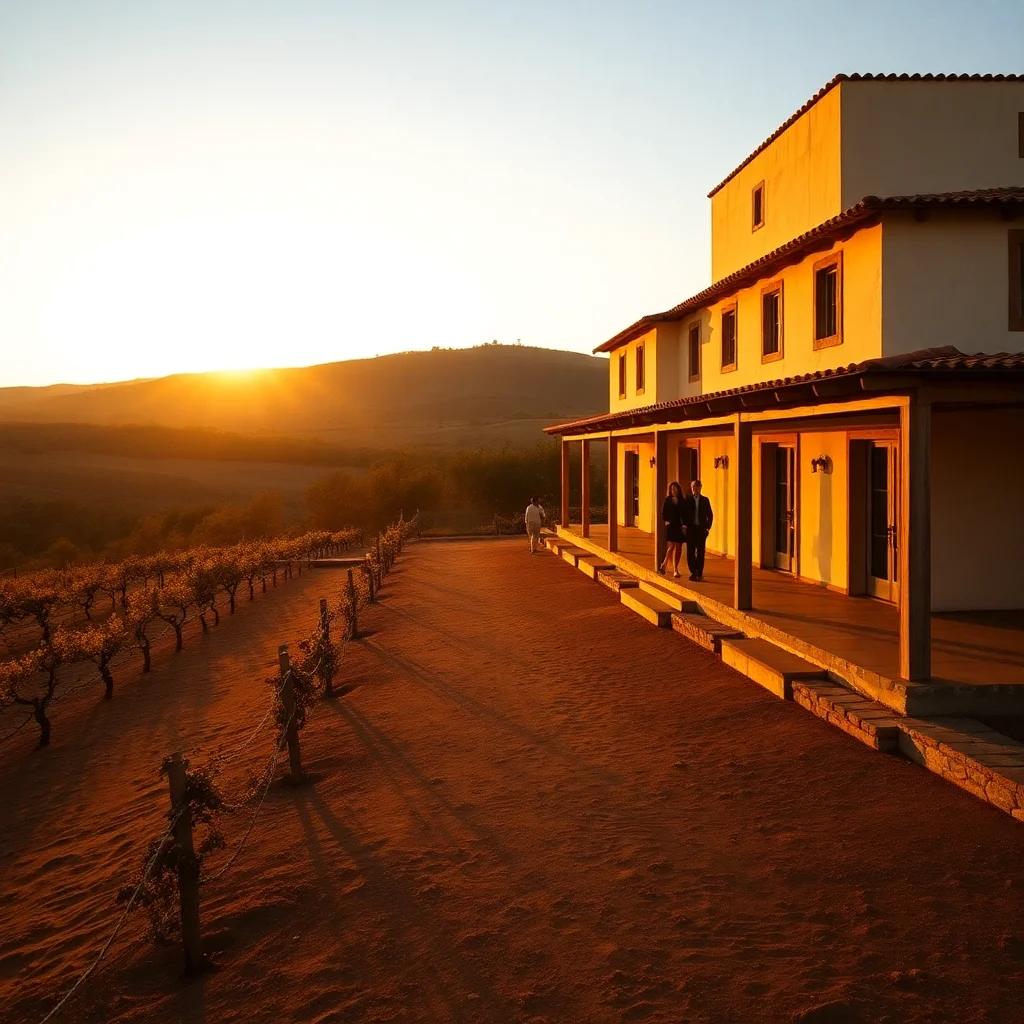
The recent framing of Herdade da Malhadinha Nova in Alentejo makes this shift legible. Rita Soares and her family transformed an abandoned property with no water and almost no infrastructure into an estate where hospitality, agriculture, and landscape are fused into a single narrative. The point is not opulence; the point is regeneration. That distinction matters. A generation ago, luxury architecture aspired to isolate itself from context. Today, the most persuasive projects appear to belong to their land, their climate, and their labor.
From visible excess to atmospheric authority
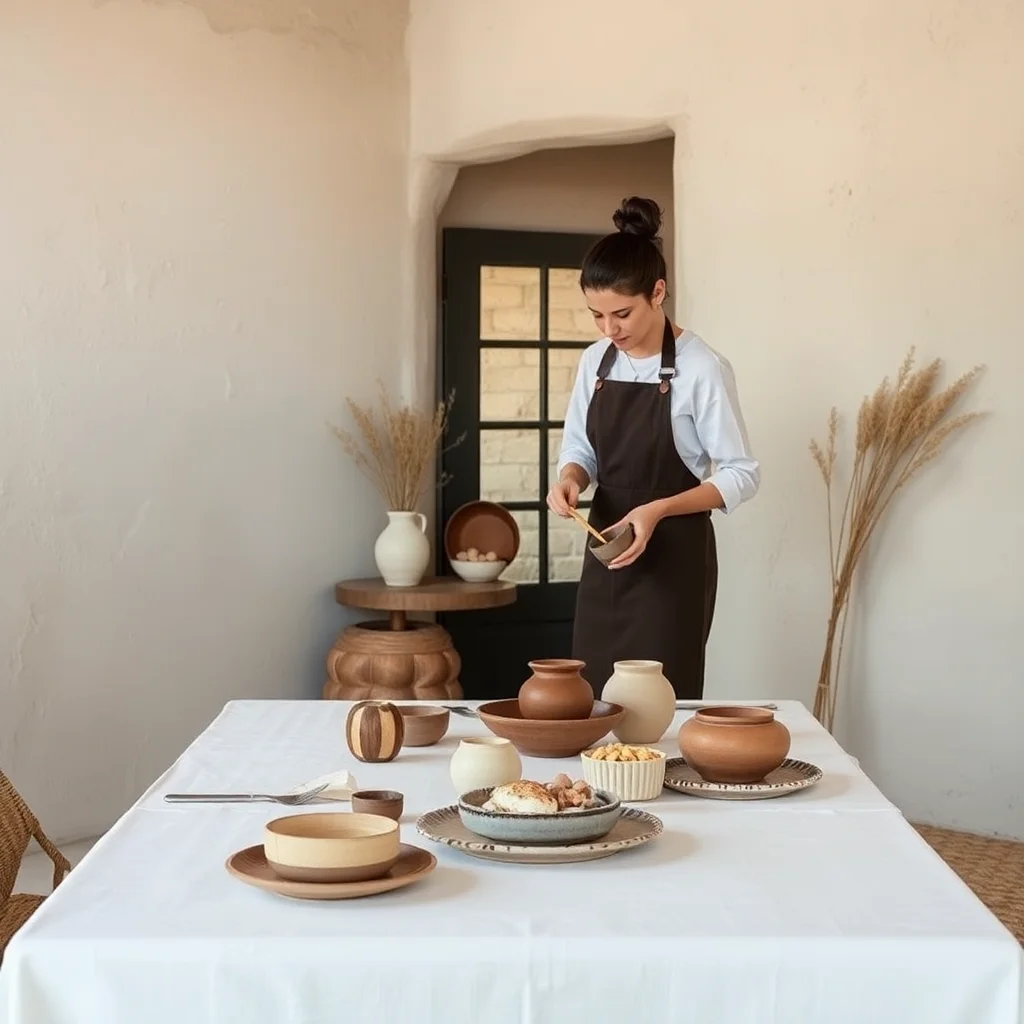
The strongest signal in contemporary luxury hospitality is not the object on the table but the quality of air in the room. Designers from the Japanese tradition of ma to contemporary practitioners such as John Pawson have long argued that space gains force through compression, pause, and proportion rather than ornament. What is new is that the market now rewards this philosophy at the top end, where clients once demanded spectacle as proof of investment.
Think of the trajectory from the maximalist destination resort to places that prefer low profiles, muted palettes, and deliberate quiet. At the Aman resorts, the signature has always been retreat, but even that vocabulary has been normalized by a broader appetite for understatement. Desert properties by designers such as Tadao Ando or studios influenced by his disciplined material language often rely on shade, sequence, and silence to create value. A wall of concrete can feel more luxurious than a chandelier if it frames the horizon correctly.
This is also why the most interesting hospitality projects now often read as landscapes rather than buildings. Their wealth is embedded in acreage, water systems, local stone, and agricultural cycles. The visual experience is intentionally low-frequency: long approaches, thin shadows, untreated surfaces, rooms that open to wind. In this register, luxury is not a set of symbols. It is an atmosphere of control so complete it becomes almost invisible.
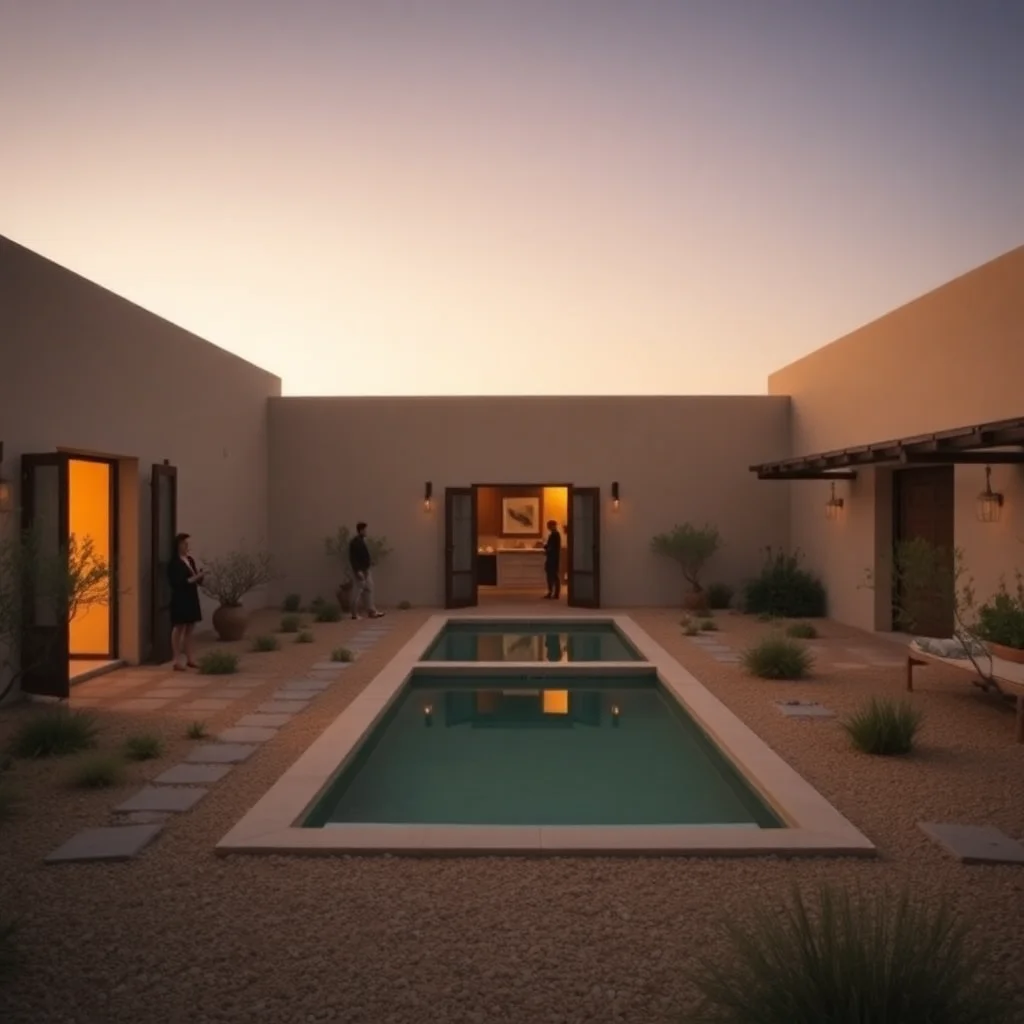
That atmosphere often depends on spatial tactics that are less about decoration than about climate itself. In projects where courtyards, shade, and enclosure regulate comfort, the architecture becomes an instrument rather than a backdrop. The logic is especially clear in courtyard living as a climate strategy, where microclimate, privacy, and sequence work together to make restraint feel expansive rather than sparse.
Malhadinha and the prestige of regeneration
Herdade da Malhadinha Nova matters because it demonstrates how a property can become luxurious without pretending to be untouched. Its appeal lies in the opposite: the estate is a visible act of care, persistence, and ecological conversion. In the Alentejo, where the heat is severe and the terrain is expansive, restraint feels earned rather than branded. The project’s evolution over 27 years suggests that time itself has become a material of luxury.
That matters in an era obsessed with immediacy. High-end clients are increasingly drawn to places that appear to have been assembled slowly, with agricultural logic and architectural patience. The new Assouline volume does not merely document an estate; it codifies a worldview in which luxury is inseparable from stewardship. This is crucial because it shifts value away from decorative consumption and toward operational intelligence: water management, soil recovery, planting strategy, and the choreography of arrival.
Malhadinha belongs to a growing family of projects where hospitality is not the main event but one expression of a larger territorial proposition. Similar thinking can be seen in estates that combine vineyards, farms, wellness programs, and low-density lodging, from the rhythms of rural Italy to the carefully edited retreats emerging in Greece, Portugal, and the American Southwest. The common denominator is not style. It is credibility. Guests can tell when a place has depth, and they can also tell when luxury is merely staged.
That credibility is often tied to the broader architectural frame as much as to the interior experience. In rural settings, the roofline, massing, and material discipline can signal whether a project belongs to its setting or merely occupies it. This is one reason the conversation around the new rural roofline and industrial geometry has become so relevant to hospitality, where form now has to express adaptation as much as image.
Ecology has become a status symbol
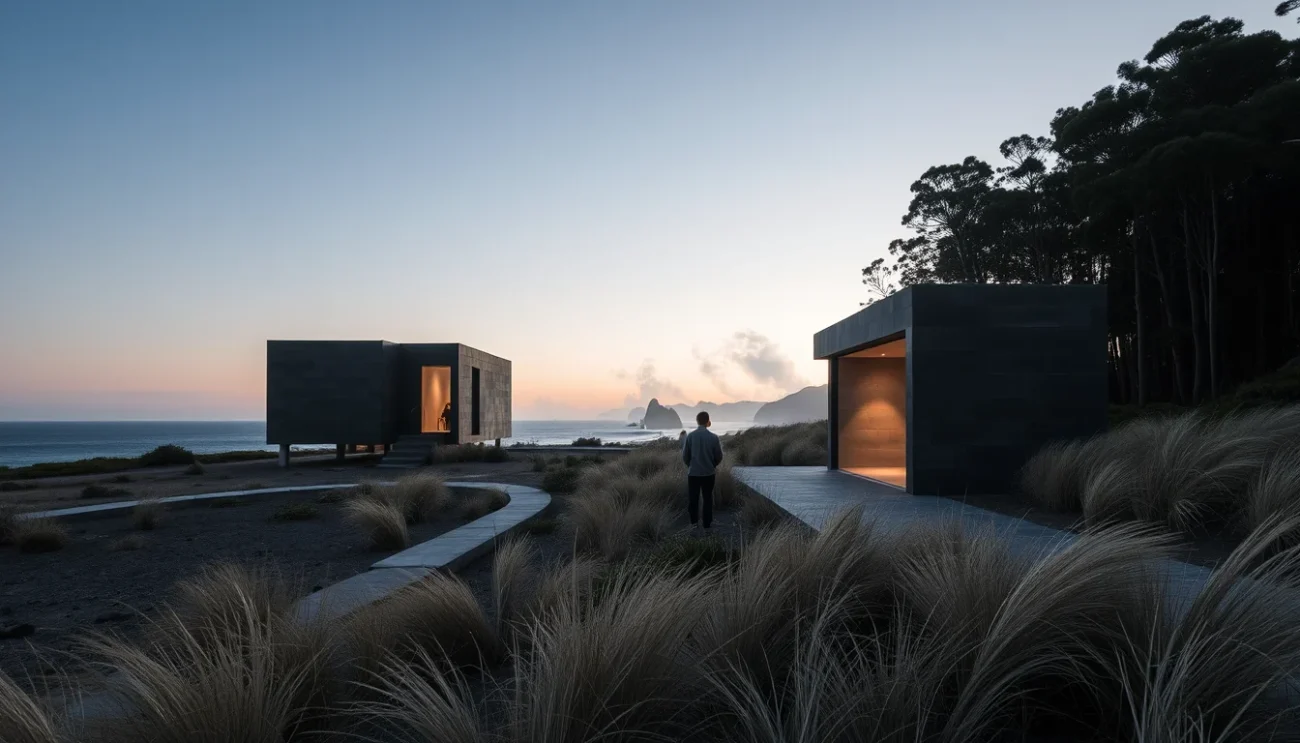
There is a harder truth beneath all the soft talk of serenity: ecology has become aspirational. A building that handles water elegantly, shades itself intelligently, uses local materials responsibly, and supports biodiversity now signals privilege more effectively than one that merely shines. This is not because sustainability has replaced luxury in moral terms. It has because the richest spaces can afford time, land, and maintenance, and time is the rarest resource in architecture.
Projects by studios such as Studio Mumbai, Ensamble Studio, and Herzog & de Meuron have shown that material intelligence can generate emotional richness without resorting to decorative excess. Their work often privileges tactility, climate responsiveness, and a sense of embeddedness. In hospitality, these qualities feel especially potent because they align comfort with conscience. The guest is no longer asked to marvel at indulgence; they are asked to inhabit a carefully maintained equilibrium.
That equilibrium has a political dimension. The old luxury model consumed resources conspicuously. The new one often disguises privilege inside the language of ecology. That ambiguity is not innocent. A retreat can be deeply restorative and still reinforce exclusivity through access, remoteness, and controlled scarcity. The challenge for architects is to avoid turning sustainability into another decorative badge. If water harvesting, native planting, and adaptive reuse are treated as style cues, the work becomes hollow. If they are treated as infrastructure, the project gains moral and aesthetic authority.
That shift also depends on what is built with. The materials themselves increasingly carry the narrative, especially when heritage techniques are used to lower carbon while preserving character. The best projects understand that stewardship is visible in construction choices as much as in landscaping, which is why heritage materials and lower-carbon architecture now feel central to the language of high-end restraint.
The challenge: can silence become cliché?
Here is the risk. The moment restraint becomes desirable, it becomes reproducible. Once every luxury hotel learns to dim the lights, sand the plaster, and remove the art, quiet itself can turn into a brand trope. We are already seeing this in a wave of beige interiors, rounded edges, and faux-spiritual minimalism that mistakes emptiness for sophistication. The market has a notorious talent for flattening innovation into an Instagram-friendly template.
That is why the most compelling examples of quiet luxury are those with a strong underlying narrative. Malhadinha is not persuasive because it is sparse; it is persuasive because its austerity is grounded in a lived agricultural transformation. Likewise, a desert retreat succeeds when its silence is tied to climate logic, local craft, and a specific relationship to place, not merely to a mood board. Without that grounding, restraint becomes aestheticized withholding.
The next generation of high-end hospitality will likely be judged by whether it can maintain this tension: emotionally rich, materially lean, and intellectually coherent. The best projects will not look expensive in the obvious sense. They will feel expensive because they have absorbed complexity and converted it into calm. That is a much harder accomplishment than adding another layer of polish. It requires architects, landscape designers, hoteliers, and owners to think less like stylists and more like editors.
The new code of luxury is not about emptiness. It is about meaning held under pressure. When the best rooms stop performing wealth and start performing time, ecology, and restraint, the entire category of hospitality changes. The real question is whether the industry can protect this shift from becoming just another aesthetic to buy.
FAQ
Is quiet luxury in hospitality just minimalism with better branding?
Not exactly. Minimalism is a visual language; quiet luxury is an operational and atmospheric system. It includes material restraint, but it also depends on landscape, privacy, climate logic, and emotional pacing.
Why is ecology becoming part of the luxury code?
Because ecological systems require land, time, expertise, and maintenance—resources that signal power. In high-end hospitality, sustainability is increasingly read as sophistication when it is integrated into the architecture rather than appended as marketing.
What makes Herdade da Malhadinha Nova relevant to this trend?
It shows how an abandoned rural property can become a model of organic luxury through stewardship, agriculture, and long-term development. Its value lies in transformation, not spectacle.
Will quiet luxury replace iconic design in hotels?
No, but it is forcing iconic design to behave differently. The future belongs to projects that can be memorable without being loud, and that can create identity through atmosphere instead of visual excess.
Get the Mainifesto weekly — curated design debates, speculative ideas and the week's best articles every Saturday.


Tom Brightwell May 19, 2026
A lot of this reads like luxury finally growing up. When you strip out the noise, the question is whether the place still works properly: comfort, maintenance, staffing, and long-term operating costs matter more than another gesture for the photo wall. If restraint happens to look expensive, fine — but it only earns the label if it performs.
Olivier Dubois May 19, 2026
This is not new, of course; every generation of elites rediscovers asceticism and calls it taste. The danger is that silence and apparent simplicity become a new code that is harder to decode, and therefore more exclusive than the old gilded excess ever was. One should be cautious before mistaking withdrawal for refinement.
Elena March May 19, 2026
I’m interested, but I’d want to see the evidence behind the branding. If the ecology is real — lower water use, passive cooling, local materials, better labor conditions — then the quieter aesthetic makes sense; if not, it’s just premium minimalism with a greener vocabulary. The open question is fair: restraint can be design intelligence, or it can be exclusivity wearing sensible shoes.
David Lim May 20, 2026
The technical challenge here is whether subtlety is actually measured, not just curated. In the best cases, less spectacle means more attention to climate responsiveness, material aging, acoustic control, and how guests move through space — that’s real sophistication. But if the “quiet code” just becomes a new filter for who understands the references, then we’ve only replaced one kind of status display with another.