

Can Adaptive Reuse Save Cultural Buildings?
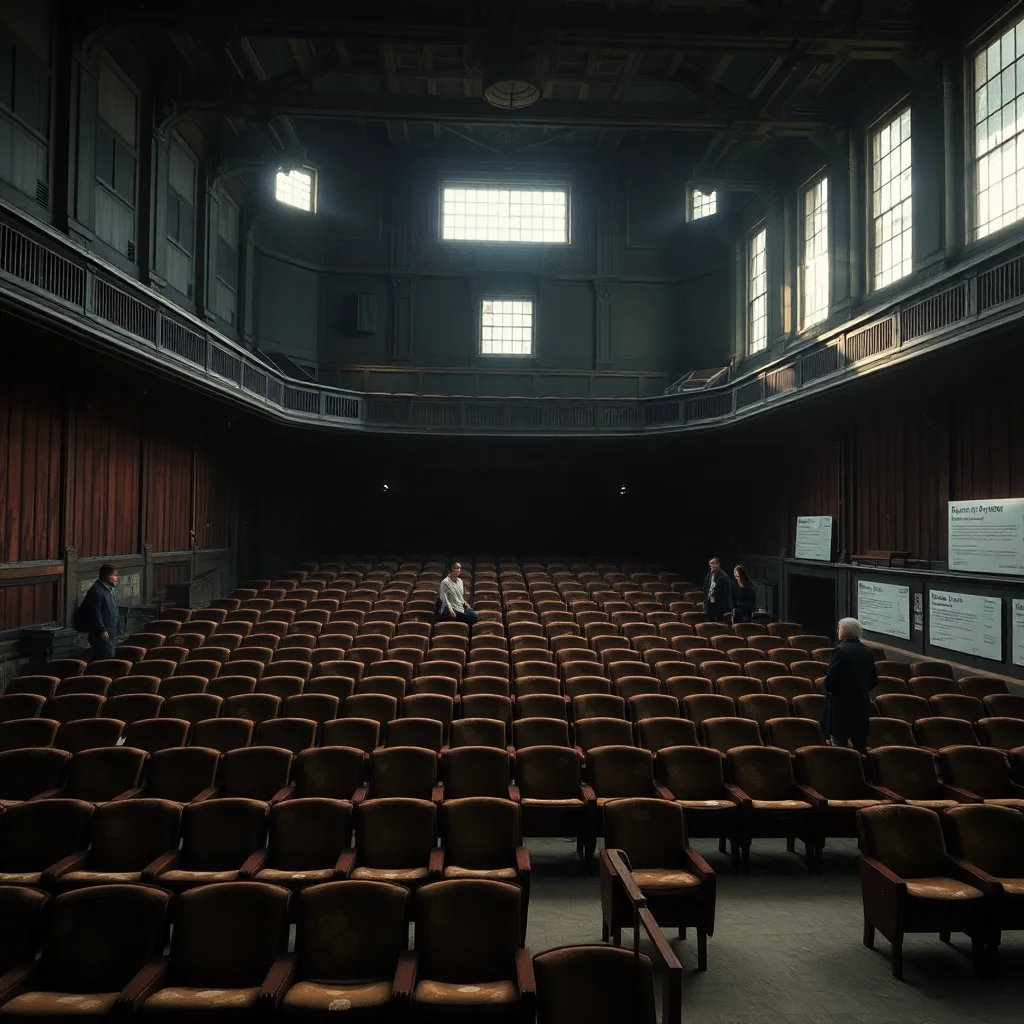
Theaters and cinemas are not simply empty shells waiting for a second life. They are civic instruments: machines for gathering strangers, amplifying desire, and staging a city’s shared imagination. When they close, the loss is not only architectural. It is social, political, and deeply cultural. The recent long-term project Theaters by French photographers Yves Marchand and Romain Meffre, shown at KYOTOGRAPHIE 2026, makes this painfully visible: early-20th-century entertainment venues across Oxford, Valparaíso, and Osaka appear not as dead monuments, but as suspended futures. Some are abandoned, others patched over, others converted into hybrid spaces that preserve façades while erasing the original public ritual inside. The question is no longer whether these buildings can be saved. It is what, exactly, we think we are saving.
The Slow Vanishing of Public Leisure
The decline of theaters and cinemas mirrors a larger reorganization of urban life. Television moved leisure into the private home; streaming dissolved the need to leave the sofa; the pandemic accelerated the fragility of venues that depended on constant attendance. But the erosion began earlier, with the steady individualization of culture and the financial pressure on buildings that were designed for mass public use rather than profitable flexibility. A cinema is not a neutral container. It is a specialized social technology, and that specialization has become a liability in an economy that rewards adaptability over atmosphere.
This is why so many historic entertainment venues end up in the same tragic category: too distinctive to demolish without backlash, too expensive to operate as originally intended, and too large to survive as boutique heritage objects. They are not ruined all at once. They are slowly depopulated, then subdivided, then repurposed, then cosmetically preserved as a memory of themselves. The result is often worse than demolition because it creates the illusion of continuity while quietly severing the building from its original public purpose. The same logic can be seen in Shanghai’s mall landscapes and civic memory, where commercial interiors inherit some of the social charge once carried by more explicitly public rooms.
Oxford, Valparaíso, Osaka: Three Stages of Urban Neglect
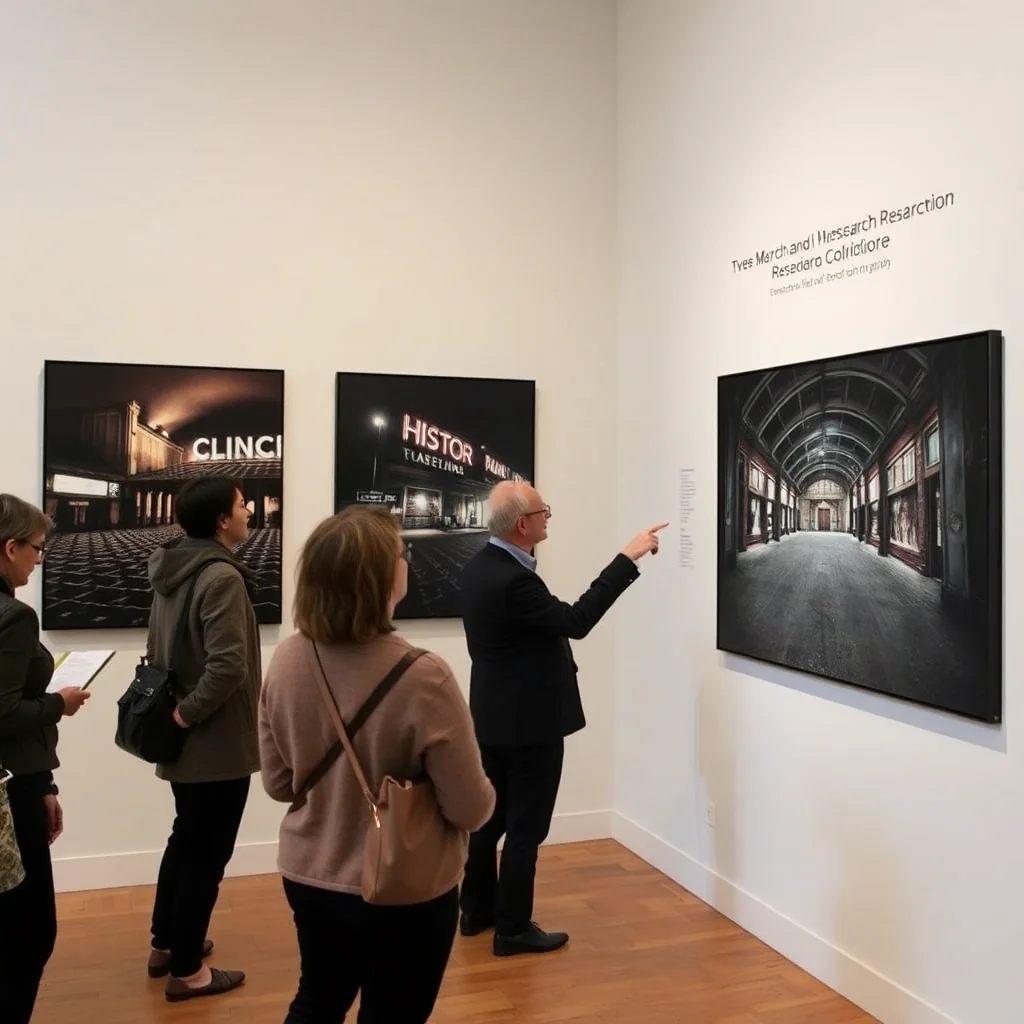
The cases highlighted in Theaters reveal a spectrum of decline. In England, historic venues are often trapped between conservation restrictions and commercial realities: the shell is protected, but the operating model is not. In Valparaíso, a city already shaped by seismic risk and uneven maintenance, cultural buildings can become symbols of civic aspiration and institutional neglect at once. In Osaka, where density and technological modernity meet old entertainment districts, the transformation is often more subtle: venues may survive by changing use, but the loss of their original atmosphere is unmistakable.
These are not isolated anecdotes. They reflect a global pattern in which culture is treated as a service, not an infrastructure. Once a theater is no longer able to support regular screenings or performances, the pressure to convert becomes irresistible. The archive of past urban pleasures becomes real estate inventory. And adaptive reuse, celebrated as the most enlightened form of preservation, arrives as both rescue and surrender.
Preservation or Compromise?
Advocates of adaptive reuse make a compelling argument. Reusing an existing structure avoids demolition waste, retains embodied carbon, and preserves the urban grain that gives cities their depth. Designers like Lacaton & Vassal have turned this ethic into a political position: never demolish if transformation can extend life. In cultural buildings, the case can be even stronger. A former theater can become a library, market hall, rehearsal space, community center, or mixed-use venue, maintaining public access rather than leaving the building to decay behind locked doors.
But the moral aura surrounding reuse can hide a hard truth: preservation without program can be a hollow victory. If the proscenium remains but the audience relationship disappears, what exactly survives? A converted cinema may keep its marquee, ornament, and acoustic volume, yet become a retail hall where people move through rather than gather in common. That is not preservation in the strongest sense. It is architectural afterlife, a managed survival stripped of its original collective intensity.
The danger is that cities use reuse as a substitute for cultural policy. Instead of funding the living institution, they preserve the dead shell. Instead of defending public access to leisure, they aestheticize memory. This is where adaptive reuse becomes politically convenient: it allows officials and developers to claim continuity while avoiding the harder work of sustaining cultural life. Questions of material retention and atmospheric continuity are central to heritage materials and lower-carbon architecture, but material care alone cannot guarantee a building’s civic purpose.
When Conversion Becomes a Quiet Form of Loss
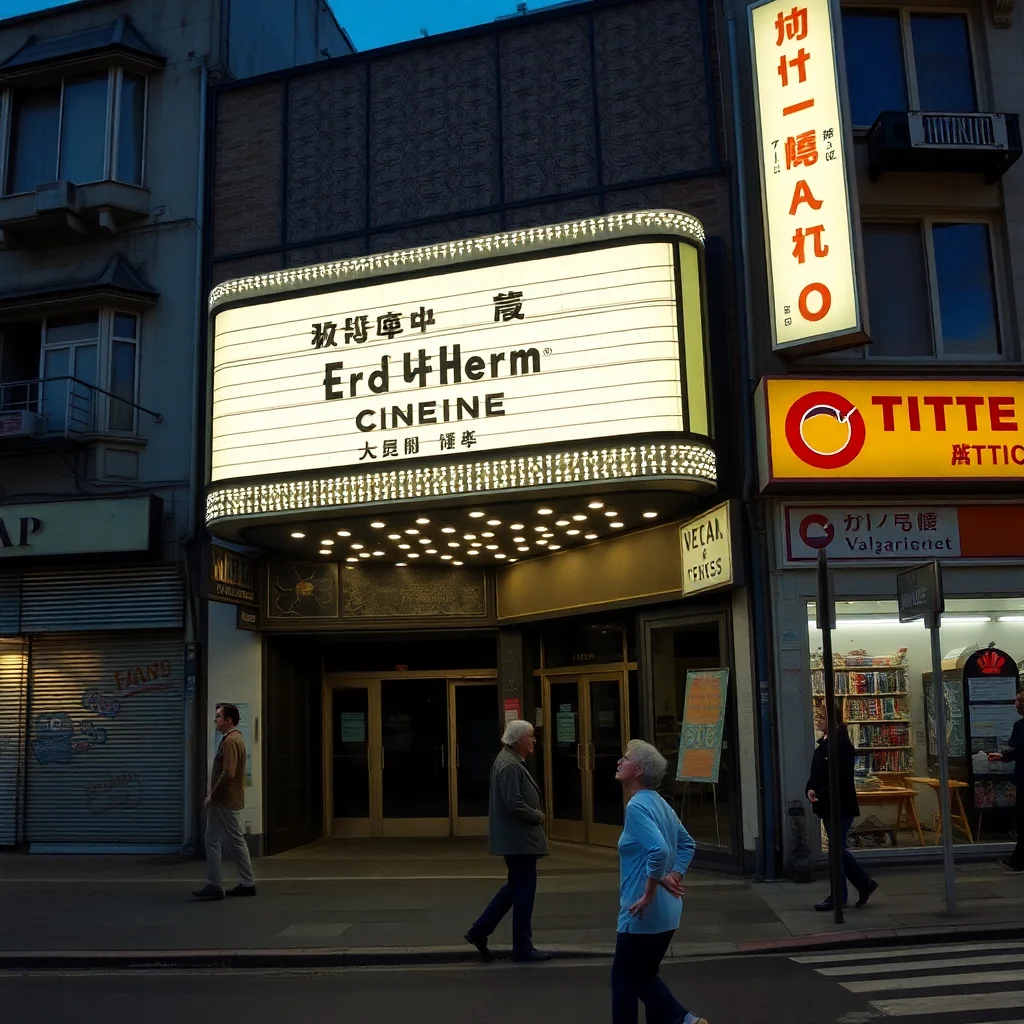
Some conversions are genuinely inventive. Heritage theaters have become performance labs, co-working spaces, neighborhood event halls, and hybrid civic rooms. Done well, these projects keep volume, drama, and public visibility in play. They can also democratize access by opening formerly exclusive spaces to broader communities. But conversion often exacts invisible costs. Sightlines are broken. Acoustic character is flattened. Waiting foyers become circulation zones. The building remains photogenic, yet its social choreography is gone.
That loss is difficult to name because it does not read as destruction. The staircase is still there. The dome still glows. The façade still photographs beautifully. But the building no longer organizes people around a shared event. It has shifted from collective experience to curated consumption. In that sense, a repurposed theater can become a monument to the very individualism that undermined it.
Marchand and Meffre’s images are powerful because they refuse easy nostalgia. Their theaters are neither triumphant ruins nor romantic relics. They are evidence that the city’s public interior is under pressure. The real warning is not that these buildings might collapse; it is that society may cease to value the social contract they once embodied.
What Cities Owe Their Cultural Buildings
If adaptive reuse is to mean more than cosmetic survival, it needs a stronger civic framework. That means recognizing theaters and cinemas as part of urban infrastructure, not decorative heritage. It means public funding models that support hybrid programming before closure becomes inevitable. It means tax incentives tied to cultural use, not only property value. And it means community-led stewardship, where local groups are empowered to shape the future of a venue instead of being handed a prepackaged conversion plan after the fact.
Some of the most promising models are not glamorous. They are cooperative management structures, municipal trusts, and phased renovation strategies that allow venues to remain active during adaptation. The key is to treat reuse as a negotiated continuity rather than a branding exercise. Architects can preserve volume and character, but only public policy can preserve the reason a building mattered in the first place. In that sense, these spaces belong to the same broader conversation as courtyard living as a climate strategy: both ask how spatial design can support durable forms of shared life.
That is the crux of the issue: adaptive reuse can save a cultural building from ruin, but it cannot by itself save the culture that produced it. If we accept conversion as the final solution every time, we risk normalizing a city where memory is maintained only when it can be monetized, and where public gathering survives only as a design gesture.
A Future Measured by What We Refuse to Lose
The slow disappearance of entertainment venues should alarm architects because it exposes a deeper urban failure. Cities that cannot sustain theaters and cinemas are not merely losing buildings; they are losing the spaces that trained citizens to occupy time together. These venues taught patience, anticipation, coincidence, and shared attention. Their decline signals a society increasingly comfortable with private consumption and increasingly suspicious of unproductive togetherness.
Adaptive reuse is therefore not a simple yes or no. It is a test of priorities. When a theater becomes a ruin, we have failed to maintain it. When it becomes a generic commercial interior, we may have saved the structure while forfeiting the civic meaning. The hardest, most ambitious path is to preserve use, not just form—to keep these buildings noisy, imperfect, and social.
The real challenge is not how to fill empty auditoriums, but how to defend the idea that some rooms in a city should still belong to everyone.
FAQ
What is adaptive reuse in architecture?
Adaptive reuse is the practice of giving an existing building a new function while retaining as much of its original structure, character, and embodied value as possible. In cultural buildings, it often means converting theaters or cinemas into new public or commercial uses.
Does adaptive reuse always count as preservation?
No. Adaptive reuse can preserve material fabric, but it may also erase the building’s original social role. A successful reuse should protect both architecture and civic meaning, not just the façade.
Why are theaters and cinemas especially vulnerable?
They were designed for large, shared audiences and depend on consistent public attendance. Streaming, changing leisure habits, and financial pressure make that model hard to sustain, especially when buildings require costly maintenance.
What is the biggest risk in converting cultural buildings?
The biggest risk is turning a place of collective experience into a decorative shell or retail container. That creates the appearance of continuity while quietly ending the building’s public life.
Get the Mainifesto weekly — curated design debates, speculative ideas and the week's best articles every Saturday.

Olivier Dubois May 19, 2026
A theater reduced to a retail atrium is not “saved”; it is translated into another regime of value, usually the one that pays rent most efficiently. Memory survives only if the spatial script still allows collective rituals to occur, otherwise we are left with a decorative corpse and a very French illusion of continuity.
Elena March May 19, 2026
Adaptive reuse can absolutely preserve a building’s lifespan, but not every program change preserves civic function. If the original gathering logic disappears—acoustics, thresholds, public access, the sense of occasion—then the project is more salvage than reuse, and we should be honest about that.
Karim Haddad May 19, 2026
We need to stop pretending every saved façade is a civic victory. In cities under pressure, the real question is whether reuse keeps a building in the public system or quietly hands it to private circulation; if the latter, we’ve preserved the shell and outsourced the memory.