

Can a Tower Be Democratic? Phoenix’s Green Metal Test
Can a Tower Be Democratic?
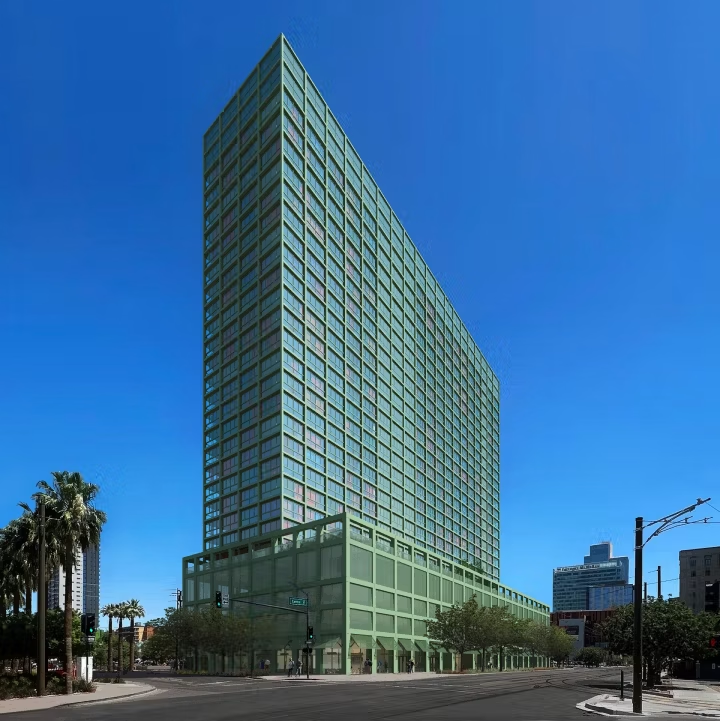
High-rise housing has long been accused of a familiar sin: it concentrates people while dispersing belonging. The tower, in the urban imagination, too often arrives as an object of control, capital, and abstraction—an instrument for stacking units, not for building civic life. Johnston Marklee’s Ray Phoenix, completed in Arizona’s Roosevelt Row Arts District, is a direct provocation to that script. With 401 apartments rising 26 storeys and wrapped in a mint green metal facade, the building is being framed as “democratic by nature,” a phrase that sounds optimistic enough to be suspicious and ambitious enough to deserve a fight.
Ray Phoenix is not merely another residential tower seeking moral redemption through better detailing. It is an attempt to make density appear softer, more local, and less corporate in a city where the ground plane has often been surrendered to heat, parking, and sprawl. Its color was reportedly informed by the surrounding desert, which matters because color in architecture is never just decoration. It is a claim about atmosphere, legibility, and emotional temperature. The question is whether that claim can survive contact with the hard realities of housing production: scale, market logic, and the tendency of iconic architecture to declare itself public while remaining privately owned.
That tension between appearance and ethics is familiar in debates about emotional architecture, where design tries to shape mood without necessarily changing power relations. Ray Phoenix sits in that same uneasy territory.
PRO: A Tower Can Act Like a Civic Object
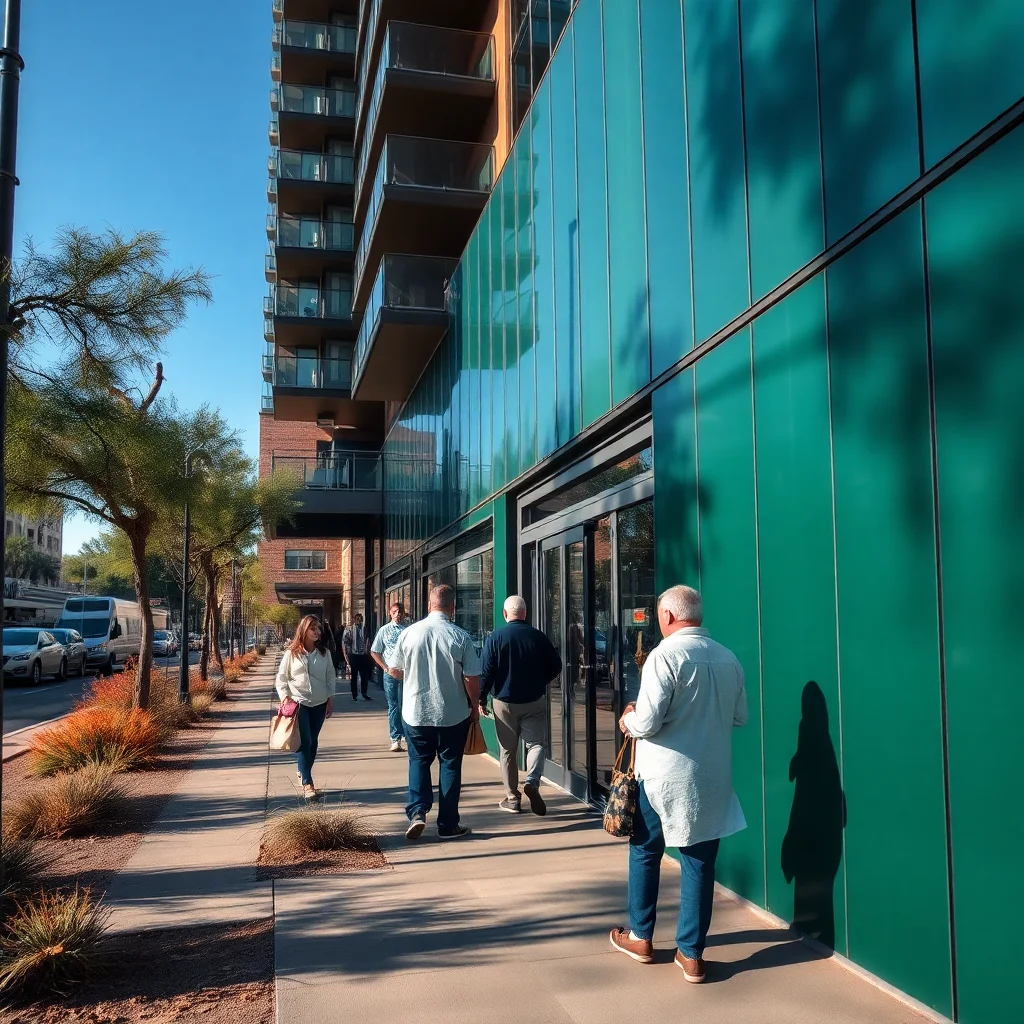
On the affirmative side, Ray Phoenix argues for a high-rise that does not behave like an alienated slab. In a downtown context shaped by asphalt, air conditioning, and the defensive habits of sunbelt development, the tower becomes a kind of vertical neighborhood—an attempt to concentrate life near transit, culture, and employment rather than pushing residents ever farther from the city center. That is a civic act, even if it is packaged within a development model. Density, here, is not a punishment; it is a strategy for making the city less wasteful and less exclusive.
Johnston Marklee’s reputation strengthens this reading. The Los Angeles studio has often worked through restraint rather than spectacle, from the compositional discipline of the Menil Drawing Institute in Houston to the sharp but measured gestures of House Anne in Santa Monica. Their projects typically resist the bombast of architecture-as-logo. If that sensibility is carried into Ray Phoenix, then the tower’s civic promise lies not in monumentality, but in its refusal to perform dominance. A softer silhouette, a more nuanced facade, and a color drawn from the desert can help the building read less like a financial instrument and more like an inhabited piece of city.
There is also a broader precedent for density that tries to be humane through public address. Think of Lacaton & Vassal’s housing transformations in Paris, where dignity comes from space, light, and generosity rather than symbolic purity. Or of Atelier 5’s Siedlung Halen, which made collective living feel intimate through sequence and proportion. These projects do not solve the politics of housing, but they insist that built form can either aggravate alienation or make neighborliness possible. Ray Phoenix appears to be betting that a tower can do the latter.
PRO: Color, Climate, and the Politics of Softening
The mint green facade is not a neutral gesture. In Phoenix, where heat is not a seasonal inconvenience but an organizing condition of life, color becomes a climatic and psychological tool. A cooler hue can make an object seem less aggressive in the landscape, especially in a desert city where glare already dominates the visual field. The tower’s green-metal skin suggests an architecture trying to lower its own volume, to visually temper the density it contains. That is a meaningful move in a culture that too often equates height with entitlement.
This is where the project touches a larger architectural argument. Contemporary housing is full of examples where color is used to humanize massing without surrendering to kitsch. SANAA’s Grace Farms in Connecticut does not rely on color, but on transparency and continuity to dissolve heavy form. MVRDV, by contrast, has repeatedly used saturated hues and patterned surfaces to break down bulk in dense urban projects, treating the facade as a civic interface rather than a corporate skin. Ray Phoenix seems to belong to this conversation: how to make a large building read as approachable, contextual, and physically receptive rather than aloof.
That said, the desert-informed palette should not be romanticized as if local color automatically equals local ethics. In the best reading, the facade acknowledges place and climate. In the worst, it is an aesthetic filter laid over an economically familiar tower typology. But the ambition matters. If a tall building can be made to appear less punitive—less like a fortress of capital and more like a shared urban instrument—then the visual language of housing is doing political work.
Designers interested in the everyday life of interiors and thresholds often return to questions raised by can small houses still feel generous, where proportion and atmosphere are asked to carry social meaning. Ray Phoenix scales that question up to the tower.
CONTRA: Democratic Aesthetics Do Not Equal Democratic Housing
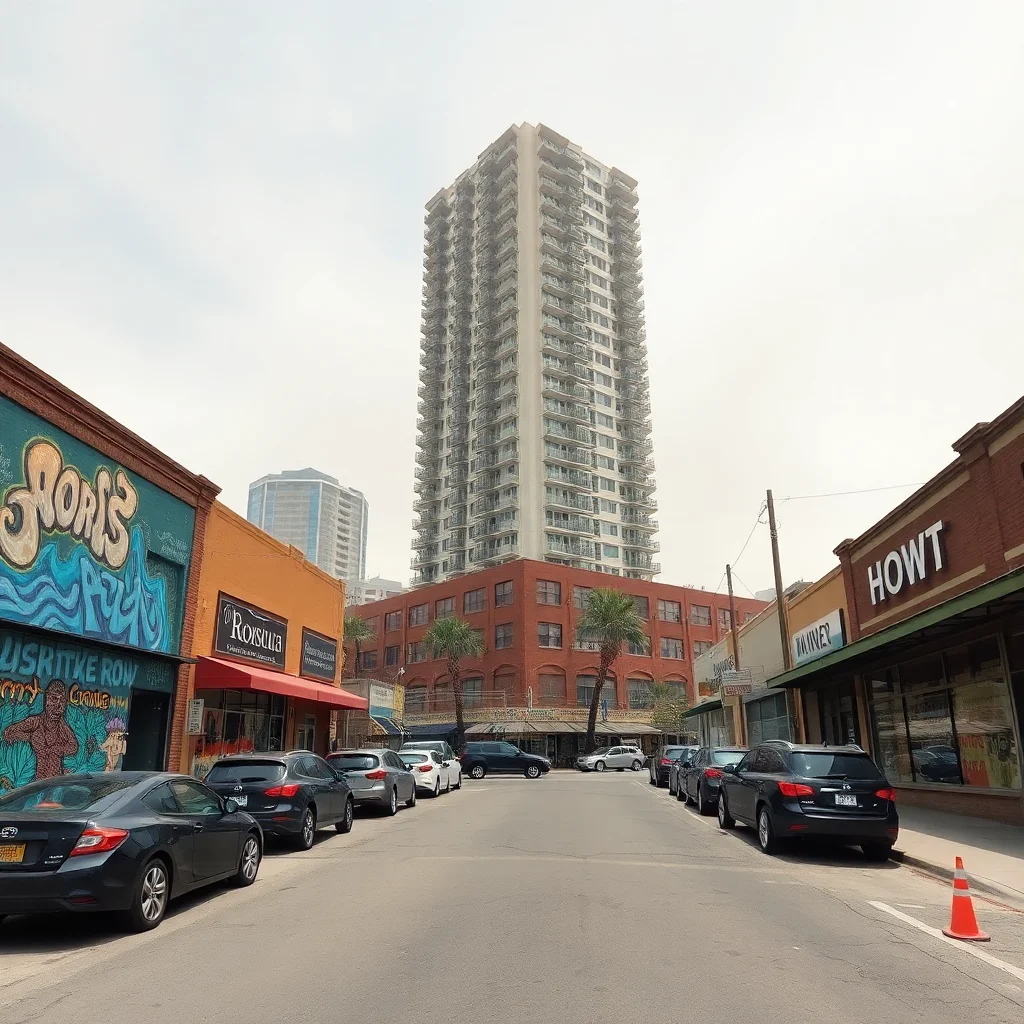
The strongest objection is simple: a beautiful tower is not a democratic one. The word “democratic” is doing heavy lifting here, and architecture has a long history of using such language to smooth over inequity. A building can feel welcoming while still participating in a market that prices out the very people it claims to serve. 401 apartments are not inherently civic; they are a number. Without meaningful commitments to affordability, access, and long-term inclusivity, the tower risks becoming a polished symbol of urban rebranding rather than a substantive answer to housing need.
This is where icon-making creeps in through the side door. Even architecture that announces itself as modest can become a signature object once photographed, circulated, and absorbed into the cultural economy of the city. Phoenix’s arts district, like many “creative” neighborhoods, is already a magnet for redevelopment narratives that celebrate vibrancy while quietly remaking who gets to stay. A tower clad in mint green may soften the image of density, but it cannot by itself resolve the political violence of displacement. In fact, softness can be a mask.
We have seen this pattern before. Torre David in Caracas became a global talking point not because it solved the housing crisis, but because it dramatized the social life of unfinished verticality. In London, the wave of luxury high-rise development has shown how towers can produce skyline spectacle while deepening social segmentation. Even projects with serious design intelligence can be folded into a market story that treats urban living as a lifestyle upgrade for the already-advantaged. Ray Phoenix may be better designed than most, but design quality is not a substitute for distribution.
That critique also echoes arguments about monumental hospitality and heritage luxury, where welcome can coexist with exclusivity. A tower may borrow the language of openness while preserving separation.
CONTRA: Humanizing Density Requires More Than a Pleasant Facade
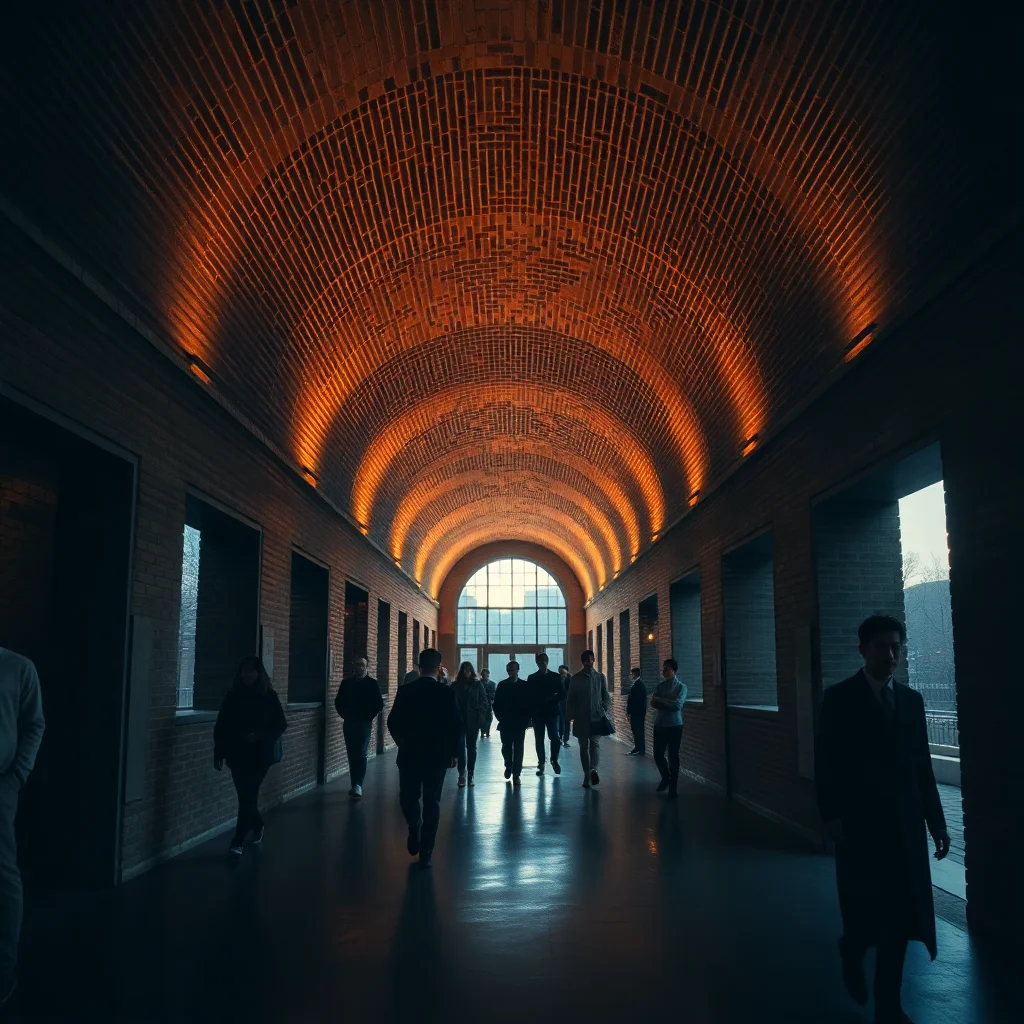
There is a deeper critique, and it concerns the limits of visual strategy itself. Human density is not primarily a question of facade color. It depends on thresholds, common spaces, ownership structures, management, and the daily choreography of elevators, corridors, shade, and ground-floor life. A tower can be visually softened and still feel emotionally brutal if its public realm is undercooked. If the lobby behaves like a checkpoint, if the street edge is sterile, if the rooftop becomes a private perk rather than a shared amenity, then the project is simply a prettier version of the same exclusionary machine.
That is why the most persuasive precedents for “democratic” housing tend to obsess over more than image. The best parts of Narkomfin’s legacy are not its heroic silhouette but its social ambition and spatial experimentation. Likewise, postwar housing experiments from the Netherlands to Scandinavia have shown that true hospitality emerges from common facilities, circulation, and the relationship between private and shared territory. The lesson is blunt: architecture can invite participation, but it cannot fake it with pigment.
Ray Phoenix may still matter precisely because it exposes this tension. It is compelling when seen as an urban proposition—one that wants to densify a hot, sprawling city without reverting to the familiar corporate tower aesthetic. But it should also be read as a warning. The temptation in contemporary architecture is to call something democratic once it looks calibrated, contextual, and softened. That is too easy. Democracy in housing is not a mood; it is a system. The tower can contribute to it, but only if the facade is backed by policies, programs, and spatial generosity that extend far beyond the render.
FAQ
What makes Ray Phoenix politically interesting? It challenges the assumption that towers must look corporate or indifferent. By using a desert-informed mint green metal facade and a more tempered visual language, it tries to reframe high-rise living as civic rather than merely lucrative.
Does a softer facade make high-rise housing more humane? Sometimes, but only partially. Color and material can reduce visual aggression and strengthen a sense of place, yet humane density also depends on affordability, common space, and how the building meets the street.
Why is the Roosevelt Row Arts District context important? Roosevelt Row is already a culturally charged part of Phoenix, where arts identity and redevelopment pressures overlap. That makes any new tower part of a larger debate about who benefits from urban intensification.
Is Ray Phoenix a model for future desert cities? It could be, if its civic ambitions are matched by real social commitments. Otherwise, it risks becoming another handsome example of how architecture can aestheticize density without truly democratizing it.
So, can a tower be democratic? Only if it does more than look democratic. The real test is whether it distributes urban advantages—light, access, community, and permanence—rather than simply staging them.
Get the Mainifesto weekly — curated design debates, speculative ideas and the week's best articles every Saturday.

David Lim May 12, 2026
What interests me is not just the civic look, but whether the tower’s section, circulation, and thresholds actually produce shared life instead of vertical segregation. If a high-rise can redistribute light, access, and social encounter while lowering embodied and operational carbon, then it’s not decoration — it’s a real urban prototype.
Tom Brightwell May 12, 2026
A civic-looking tower is still just a tower if the ownership model keeps the same people out. Form can help with marketability and neighborhood acceptance, but it doesn’t change zoning, financing, or affordability — and those are the bits that decide whether housing is actually democratic.
Elena March May 12, 2026
The question isn’t whether the building reads as civic, but whether it performs civically over time: who gets access, who maintains it, and who can afford to stay nearby. Architecture can influence the city, yes, but without policy and tenure reform it mostly ends up softening an unchanged system.