
When AI Becomes the Craft in Design

AI Is No Longer the Novelty. Judgment Is.
At iF Design’s Award Night and Trend Conference in Berlin, the conversation around AI did something unusual: it matured. The room was no longer seduced by the old spectacle of machine-generated images, synthetic concepts, and breathless claims that “the future has arrived.” That phase was always shallow. The real question now is harsher and more useful: if AI can generate more than any designer can manually produce, what exactly becomes valuable?
The answer is not “more creativity.” That phrase has been abused into meaninglessness. The answer is judgment. Taste. Selection. Editing. A designer who can direct a system, sift through hundreds of outputs, reject the statistically obvious, and insist on a stranger, more precise solution is not less creative than the classic image-maker. In many cases, they are more powerful. They are operating one level higher, in the space where meaning is made by refusal as much as by invention.
This is the shift the design industry is beginning to avoid naming: AI is not merely a tool for production. It is a stress test for authorship. The designers who matter most in the next decade may not be the ones who can make the best image, but the ones who know which images should never be made at all.
The End of the “Look What I Made” Era

For years, digital design culture rewarded acceleration. More renders, faster iterations, endless style variations, frictionless presentation. The internet taught a generation of designers to confuse output with insight. AI supercharges that tendency. It can produce a hundred plausible identities, a hundred product concepts, a hundred architectural moods before lunch. But plausibility is not originality. It is only the minimum requirement for being noticed.
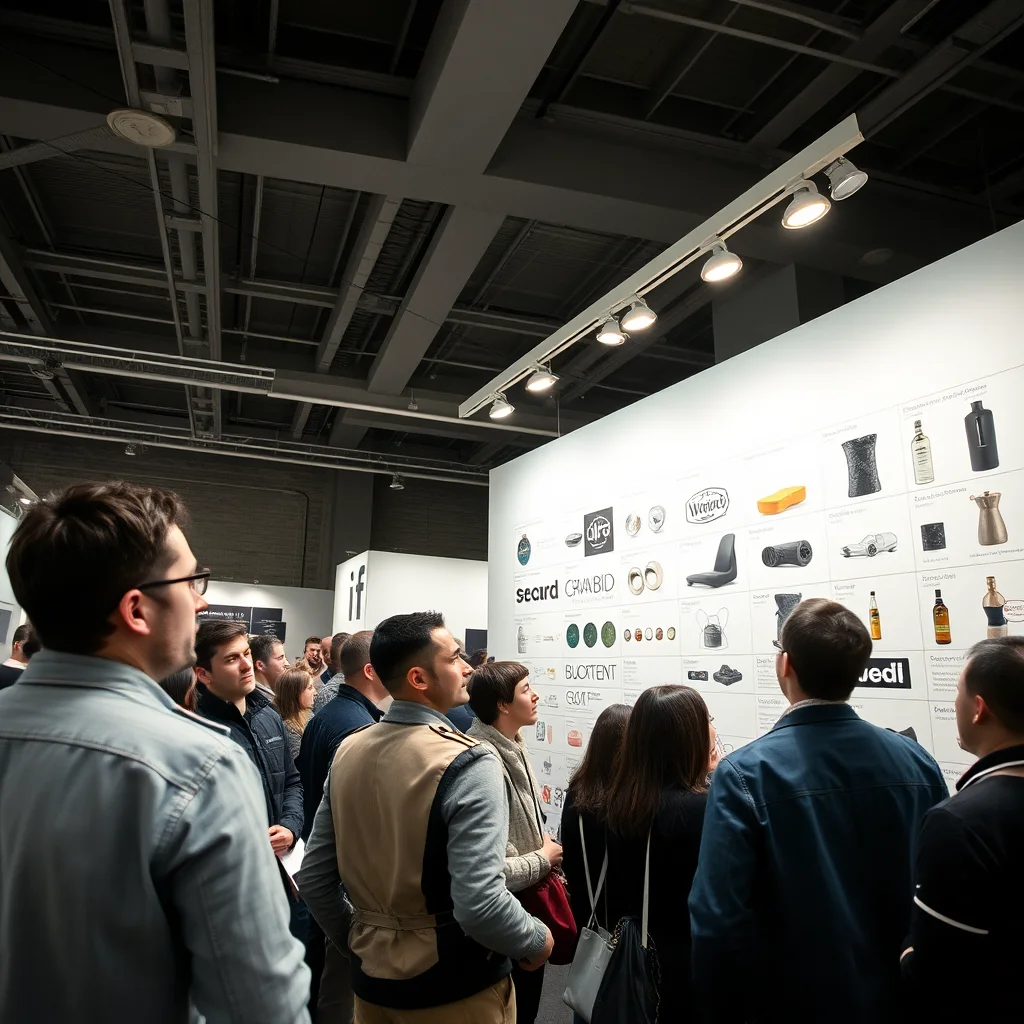
That is why the most serious AI work in design is no longer about spectacle. It resembles editorial practice. Consider the difference between generating a wall of options and curating a coherent argument. A magazine editor does not “create” every sentence on the page; they construct hierarchy, rhythm, emphasis, and omission. In a future design studio, the highest-value person may function the same way: not as a solo image author, but as a ruthless editorial intelligence.
This is already visible in practice. Designers using tools like Midjourney, Adobe Firefly, or Stable Diffusion are not simply asking for prettier renders. They are testing thresholds, biases, and blind spots. They discover that the machine will often overproduce the familiar: symmetrical, overlit, over-designed, suspiciously polished. To make something genuinely interesting, the human has to intervene. They must push toward discomfort, contradiction, local specificity, material realism, or conceptual restraint. The craft is in the edit.
PRO: Why AI Makes Designers More Human
There is a persuasive case that AI does not diminish authorship but clarifies it. Once a machine can generate nearly anything, the designer’s real contribution becomes unmistakable: intent. What are you actually trying to say? What are you willing to exclude? What qualities should survive optimization?
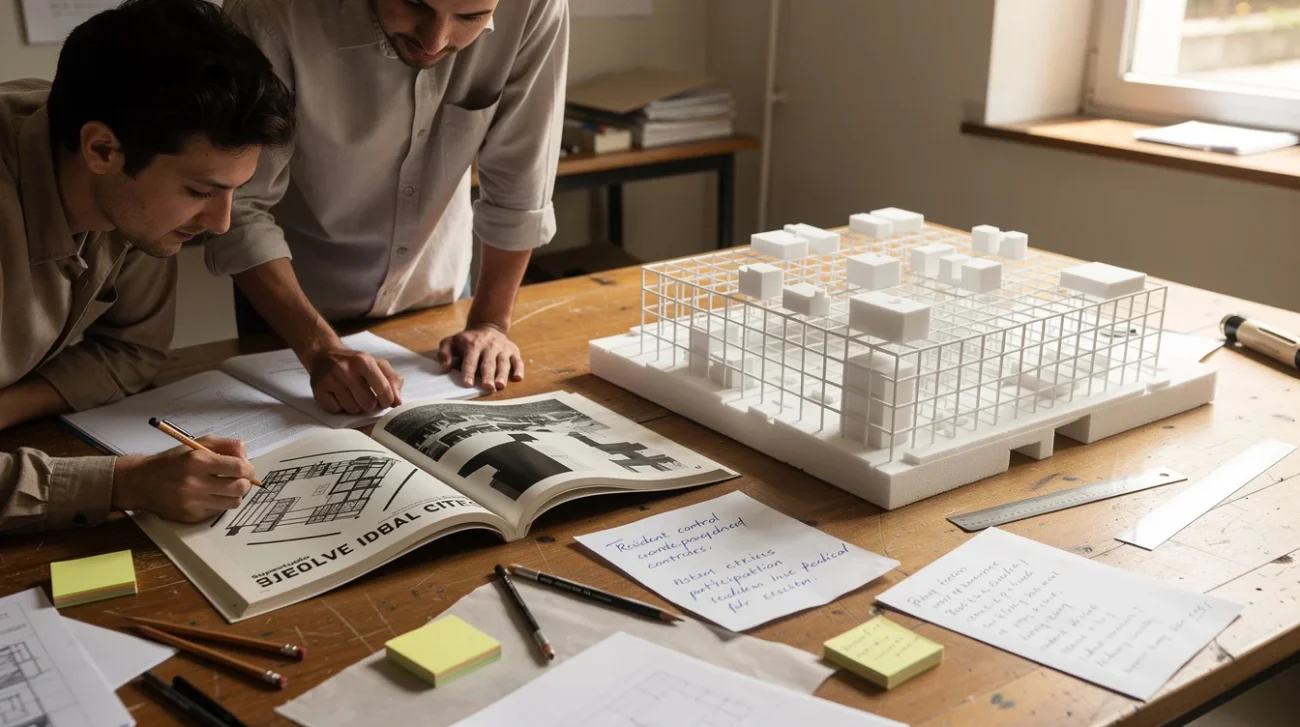
Look at how contemporary architects and product designers already work. Many studios use computational tools to explore structural logic, environmental performance, and form-finding. The software does not replace the architect; it sharpens the architect’s criteria. The same is true in graphic design, where identity systems increasingly rely on generative rules rather than fixed compositions. The value lies not in manually drawing every outcome, but in establishing an intelligent system and knowing when it has failed its purpose.
In this sense, AI could rescue design from decorative overproduction. It may force the profession back toward discipline. A designer who understands context, ethics, manufacturing limits, and cultural nuance becomes more valuable precisely because the machine lacks those forms of situated judgment. The machine can propose; only the human can care. And care, in serious design, is not a sentimental word. It is a practical method for deciding what deserves attention.
The best historical precedent may be editorial and curatorial design practices from the print era: designers like Massimo Vignelli, who believed in reduction, hierarchy, and control, or experimental identities that used systems rather than single images. AI extends that logic. It rewards the designer who can think like a chief editor rather than an art student chasing novelty.
CONTRA: The Risk of Turning Taste Into a Luxury Product
But let’s not romanticize the edit. A future where designers become “editors of machine output” can easily become a future where taste hardens into a class signal. If everyone can generate, then access to distinction may shift toward those who can afford expert curation, proprietary datasets, bespoke models, and the cultural literacy to recognize what the machine misses. In other words: AI may democratize making while privatizing judgment.
That is not a minor problem. Design has always been entangled with power, and AI intensifies that entanglement. The systems behind the outputs are trained on vast existing visual cultures, many of them extracted without consent, flattened into computation, and repackaged as style. A designer who simply “edits” the model’s suggestions may be laundering a pre-existing visual economy, not challenging it. The danger is that the profession becomes more managerial, less imaginative, and more dependent on invisible infrastructure it does not control.
There is also a creative risk. If designers retreat too far into the role of curator, they may begin to mistake selection for authorship. But strong design has never been only about choosing among options. It has required risk, awkwardness, physical iteration, and the stubborn intelligence of working through failure. A chair is not finished because a rendering looks convincing. A building is not resolved because an image performs well online. When the making disappears entirely, so can the evidence of thought.
This is where the argument gets uncomfortable: originality may become something you measure by what you refuse to automate. Refuse to outsource the first sketch. Refuse to automate the material study. Refuse to let a model determine the cultural tone of an object meant for a specific place. Refusal, in this context, is not nostalgia. It is authorship with teeth.
That tension also shows up beyond screens and studios, especially in environments where comfort, performance, and control are becoming design issues in their own right. One reason cooling offices is now a design problem is that the built environment increasingly asks humans to arbitrate between technical optimization and lived experience, not unlike the role designers now play with AI.
What Designers Will Be Paid For Next
The market is already hinting at the new hierarchy. In the near future, the best-paid designers may not be the fastest producers of visuals; they may be the people who can define taste systems, set constraints, and identify where machine output becomes generic. They will be paid for their ability to make decisions under abundance.
That changes the skill set. Training in typography, material intelligence, spatial reasoning, and cultural analysis becomes more important, not less, because the designer’s job shifts from making one image to maintaining a coherent world. The designer becomes part strategist, part editor, part ethicist. They must know when AI is genuinely useful: exploring alternatives, scaling variants, simulating environmental performance, prototyping interfaces. And they must know when to stop it: when nuance matters, when labor matters, when a human hand is the argument.
Look at how this already plays out across disciplines. Industrial designers are using AI to generate form studies but still relying on human judgment for ergonomics and manufacturability. Architects are using generative tools to test massing, but the decisive move remains the interpretation of site, policy, climate, and civic responsibility. Graphic designers can automate numerous layouts, but brand relevance still depends on cultural reading. In every case, the machine expands possibility; the human decides value.
That same distinction matters in adjacent debates about technology and identity. If you want a glimpse of how design can intensify questions of status and control, consider when smart glasses become luxury and who owns the face, where the object is not just functional but a claim on visibility, style, and power.
The New Originality Is Strategic Omission
We have been taught to think originality means adding something no one has seen before. In the AI era, originality may increasingly mean something more severe: knowing what to leave unmade. The designer’s signature will not only appear in what the system generates, but in what the designer forbids it to generate.
This is a much more mature definition of creativity. It acknowledges that too much of contemporary design culture has been built on volume, speed, and visual noise. AI can intensify that noise exponentially. But it can also expose the emptiness of endless production. Faced with abundance, the real talent is not output maximization. It is discernment.
That is the provocative future emerging from Berlin and beyond: the design profession may stop being celebrated for images and start being respected for discernment. Not because the image is dead, but because the image is cheap. What is expensive now is attention, judgment, and the refusal to confuse synthesis with thought.
If AI becomes the craft, then human authorship will not disappear. It will become more exacting. Designers will be judged not by how much they can make, but by how sharply they can choose. And that may be the first honest definition of originality this industry has had in years.
That logic extends into private life as well, where systems increasingly decide what is normal, desirable, or even safe. In that sense, when your home becomes a risk object offers another view of the same problem: when data and automation shape reality, judgment becomes the scarce resource.
FAQ
Is AI replacing designers or changing their role? AI is changing the role more than replacing it. The most valuable designers will increasingly act as editors, setting direction, evaluating output, and making judgment calls that machines cannot.
Why is judgment becoming more important than image-making? Because AI can generate endless plausible visuals, but plausibility is cheap. Judgment is what turns abundance into meaning by filtering, rejecting, and refining the output.
What does “originality measured by what they refuse to automate” mean? It means the most distinctive designers will be those who preserve human labor where it matters most: conceptual framing, cultural nuance, material decision-making, and ethical restraint.
Can AI still be a creative tool without flattening design? Yes, if it is used as an exploratory instrument rather than an authority. The danger begins when designers accept machine output as the endpoint instead of treating it as raw material for human judgment.
So what exactly should remain unautomated if design is to keep its soul?
Get the Mainifesto weekly — curated design debates, speculative ideas and the week's best articles every Saturday.

Daniel Okonkwo July 2, 2026
AI can absolutely handle the first draft, but the soul is in the edit: knowing what to cut, what to keep, and when something feels alive instead of merely polished. If design gives up judgment and cultural instinct, it stops being authorship and starts being output.
James Okoro July 2, 2026
I’m fine with AI doing the repetitive heavy lifting, especially if it helps us design less wastefully and more intelligently. What should stay human is the decision-making that balances beauty, use, and impact — because taste without responsibility is just decoration.
David Lim July 2, 2026
The interesting shift here is that design is moving closer to a feedback loop: prompt, test, evaluate, refine. What shouldn’t be automated is the critical frame — the questions about context, ethics, and why a form exists at all.
Mei Chen July 3, 2026
Pure aesthetics is the easiest thing to automate, which is why I don’t think that’s where design’s value will stay. Keep the parts that require negotiation with materials, tolerances, cost, and production reality — that’s where taste becomes something real, not just a moodboard.
Karim Haddad July 4, 2026
If AI takes over the pretty surfaces but leaves us with bad systems, we’ve gained nothing. The unautomated part should be the civic and political judgment: who the design serves, who gets excluded, and what kind of city it helps produce.