
The Politics of Air-Conditioning and Urban Heat
The hottest argument in the city is no longer about taste
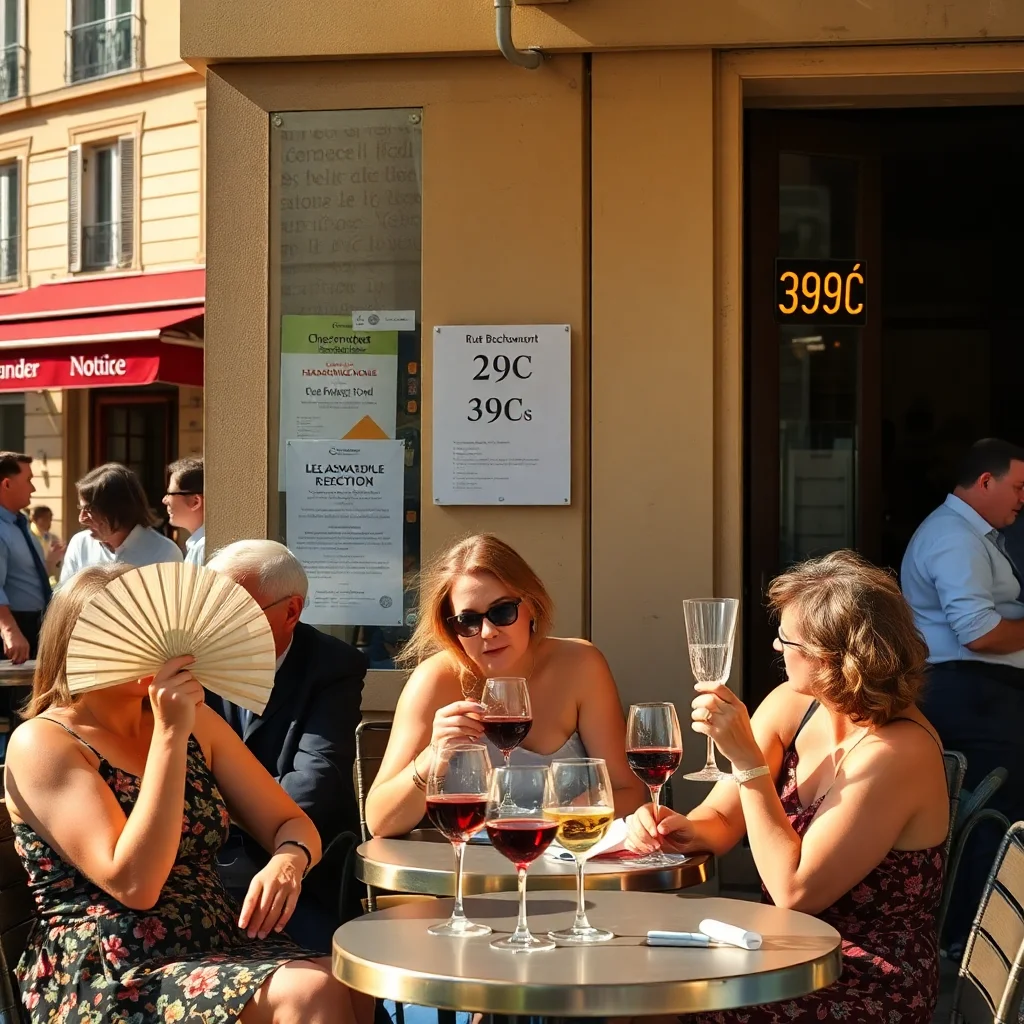
When Paris pushes toward 40C, the question is not whether people should be able to work, sleep, study or drink a glass of wine without melting. The question is why this basic condition of urban life has been left to settle, absurdly, as a style choice. Air-conditioning has moved from the background hum of office towers into the foreground of politics because heat is no longer an exception. It is the new baseline. And once that happens, cooling stops being a luxury object and becomes a matter of civic survival.
This is why the culture-war framing is so seductive and so dishonest. It turns a structural problem into a moral performance: one side claims AC is decadent, wasteful, Americanised; the other insists it is freedom, competence, and realism. But cities are not debating a lifestyle preference. They are deciding who gets relief, who pays for it, and whose discomfort is treated as an acceptable cost of urbanism. The built environment is already taking sides.
Monocle’s Paris snapshot matters because it captures the social choreography of overheating cities: meetings moved, school schedules disrupted, guests seeking shade, everyone improvising around a climate the infrastructure was never designed to endure. That is the new politics of cooling. Air-conditioning is not merely a machine. It is a proxy for how seriously a city takes climate adaptation, public health and inequality.
That also means the problem reaches far beyond homes and hotels. In many workplaces, thermal comfort is still handled as an office perk instead of a basic part of performance, retention and safety, which is why cooling offices as a design problem matters as much as cooling apartments. The same logic applies to every sealed interior that now has to function in a hotter climate.
Cooling has become an index of responsibility

In the old story, air-conditioning was a private upgrade: install it, overcool the office, complain about the bill later. In the new story, it exposes every failure of urban governance at once. A city that bans or discourages AC without expanding passive design, district cooling, tree cover and retrofits is not principled; it is punting. A city that relies only on AC is equally unserious, because it is locking in higher emissions and greater grid stress. The politically mature answer is not purity, but systems.
Look at how some places are already rethinking the problem. Singapore has spent decades treating thermal comfort as a planning issue rather than a consumer perk, pairing dense development with greenery, shading, breeze corridors and high-performance envelopes. In Copenhagen, cooling is often embedded in urban design through ventilation, waterfront strategy and more disciplined public realm planning. In Tokyo, where compactness and heat coexist, the conversation has long included everything from building skins to neighborhood-scale resilience. These are not anti-technology cities; they are anti-naivety cities.
Architects have been making this case for years. Lacaton & Vassal’s work on renovation rather than demolition showed that comfort can be achieved by enlarging thresholds, improving light and air, and respecting existing structures instead of defaulting to brute-force mechanical fixes. Alvaro Siza’s and Tadao Ando’s quieter lessons matter too: proportion, depth, shade and material can shape thermal experience long before a compressor starts up. The point is not to romanticize hardship. It is to admit that comfort is designed, not discovered.
And once comfort becomes a design question, so does risk: the same housing that traps heat can also become a broader climate liability for owners and residents alike, which is why the idea of your home becoming a risk object is no longer abstract. Buildings are being priced, retrofitted and judged through the lens of exposure.
Public health is the blunt reason this debate cannot stay aesthetic
Heat kills. Not symbolically, but medically. During heatwaves, emergency rooms fill, older residents suffer, outdoor workers are exposed, and people living in poorly insulated apartments face nights that never cool down enough for the body to recover. The fantasy that AC is optional collapses fast once heat becomes persistent rather than episodic. In many cities, the absence of affordable cooling is already a class issue: the wealthy retreat into chilled interiors while everyone else endures the city’s thermal penalties.
This is why schools, hospitals, care homes, libraries and transit systems cannot be treated the same way as penthouses and boutique hotels. Public buildings are climate refuges whether or not politicians use that language. Some cities have begun to formalize this reality with cooling centers, emergency alerts and expanded public access to air-conditioned spaces. But these measures are reactive. They are emergency tents, not permanent infrastructure. The real question is why the urban fabric itself is still so often hostile to heat.
There is a design scandal here. Many buildings still suffer from oversized glazing, shallow façades, poor cross-ventilation and mechanical systems that were specified for a climate that no longer exists. The result is a brutal paradox: cities advertise sustainability while quietly building overheated interiors that demand more energy to survive. Climate adaptation is being delayed by architectural habits that mistake glassiness for progress and sealed interiors for professionalism.
The anti-AC position is not morally superior; it is often lazy
There is a real argument against reckless air-conditioning: it can increase emissions, intensify outdoor heat through waste exhaust, and entrench dependence on fossil-powered grids. In cities already struggling with electricity demand, uncontrolled cooling can produce a vicious cycle. But too often this critique is deployed as a social veto rather than a design brief. It becomes a way of saying no to comfort without offering a credible alternative.
That is not environmentalism. It is aesthetic discipline masquerading as ethics. People who can afford excellent insulation, external shading, smart controls, heat pumps and secondary glazing are not living the same anti-AC lifestyle they prescribe to others. Nor are they the ones trying to sleep through a 33C night in a top-floor apartment, or care for a frail relative in a building with no thermal protection. The politics of cooling is inseparable from the politics of exemption: who gets to be heat-resilient because someone else absorbs the cost.
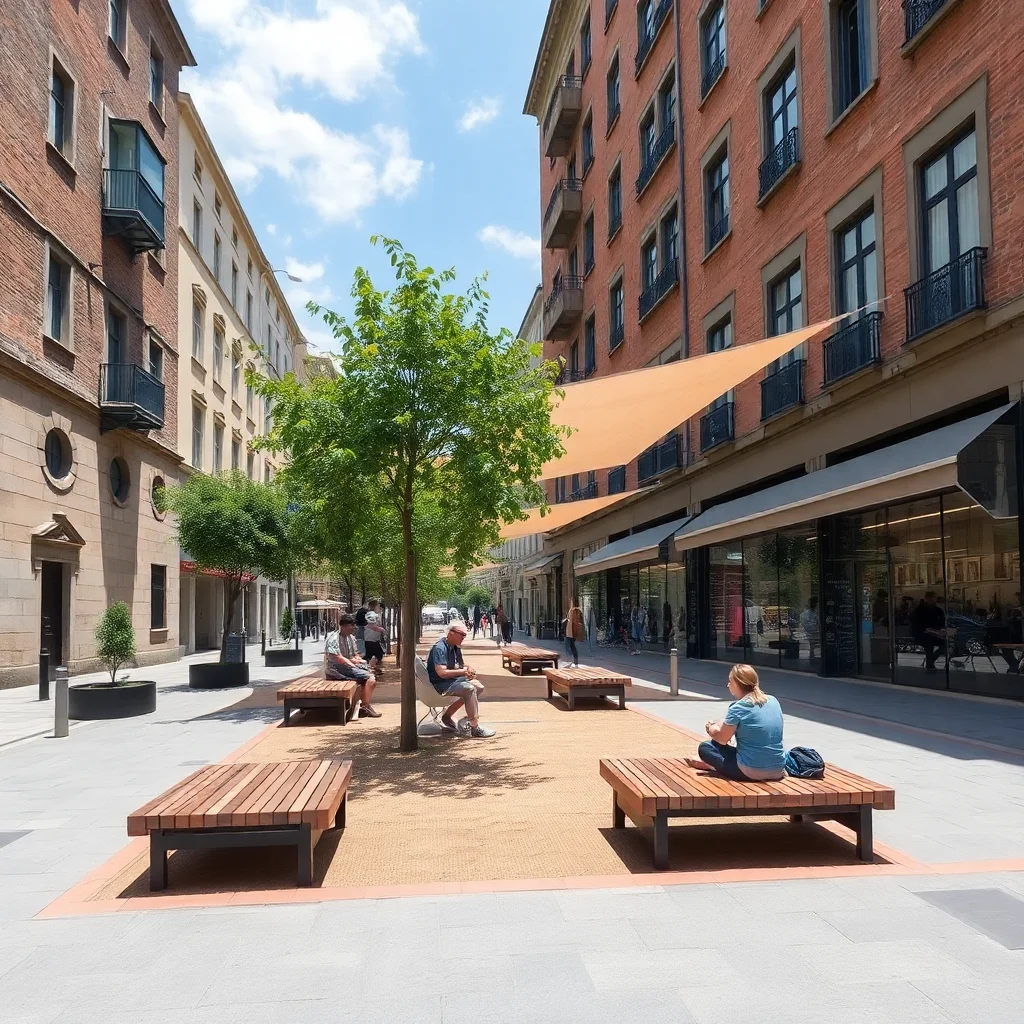
There are smarter strategies than simply switching AC off or turning it up. Reflective roofs, shaded courtyards, tree canopies, cool pavements, night ventilation, operable windows, thermal mass, external blinds and district cooling all reduce dependence on individual systems. The aim should be a layered ecology of comfort. But until that exists at scale, attacking AC alone is like banning umbrellas during a monsoon and calling it principled urbanism.
The case for AC becomes stronger when it is treated as infrastructure
The taboo around air-conditioning often comes from its association with excess: cold lobbies, sealed shopping malls, overcooled offices. Yet the same technology, when governed differently, can be part of a more equitable city. District cooling systems can serve dense neighborhoods more efficiently than countless individual units. Better building standards can reduce demand before machines even switch on. Renewable grids can lower the climate cost of cooling. Intelligent controls can prevent the wasteful overcooling that made AC a symbol of extravagance in the first place.
In other words, the future is not no cooling. It is better cooling, distributed more fairly. That is where the political stakes sharpen. If cooling is infrastructure, then it deserves the same seriousness as water, transit and sanitation. It should be planned, regulated, financed and maintained, not left to the market to allocate by income. Cities that pretend otherwise are effectively rationing comfort by class while calling it freedom.
Designers should stop treating thermal comfort as an invisible afterthought. The aesthetics of a livable city will increasingly be shaped by shade, air movement, material reflectance, envelope depth and the social availability of cooled public interiors. The best architecture of the next decade may not be the most photogenic, but the most habitable. If that sounds less glamorous than a monumental façade, so be it. A city’s ethics are now measurable in degrees.
What the next cooling politics should demand
The terms of the debate need to change. First: cooling must be recognized as an essential service in heat-prone cities, especially for vulnerable populations and public institutions. Second: new construction should be required to prove it can maintain comfort passively for as long as possible before mechanical systems take over. Third: retrofitting existing housing should become a planning priority, not a niche green incentive. Fourth: cities should expand public cooling refuges and daylight access to them, because emergency access cannot depend on private membership or retail etiquette.
Fifth: architects and developers should be made to account for embodied and operational emissions together, not use one as a rhetorical shield for the other. And sixth: the political class must stop pretending that discomfort is a noble substitute for adaptation. Heat is not a test of virtue. It is a design problem with public consequences.
The culture war around AC is therefore misnamed. The real conflict is between those who think cities can still be built around outdated seasonal assumptions, and those who accept that the climate has already changed the rules. Cooling is no longer just about comfort. It is about whether urban life remains livable at all.
FAQ
Why has air-conditioning become such a political issue now? Because rising temperatures have turned cooling into a question of public health, infrastructure and inequality rather than convenience. As heatwaves become more frequent, the right to a cool indoor environment is no longer trivial.
Does more air-conditioning always mean more emissions? Not necessarily. Efficient systems, renewable electricity, district cooling and better building design can reduce the climate cost dramatically, especially compared with inefficient individual units and poorly insulated buildings.
What alternatives exist to conventional AC? Shading, passive ventilation, reflective roofs, thermal mass, operable windows, trees, external blinds and district cooling all reduce the need for mechanical cooling. In practice, the best solutions combine several of these methods.
Who is most affected by the lack of cooling? Older adults, children, low-income households, outdoor workers and people living in poorly insulated apartments are most at risk. Public buildings such as schools, hospitals and libraries also become critical during heatwaves.
Is the anti-AC argument ever valid? Yes, when it targets wasteful systems, fossil-powered grids and overcooled interiors. But it becomes weak when it ignores the need for equitable, climate-responsive cooling for everyone.
Should cities subsidize air-conditioning? They should subsidize access to safe thermal conditions, not indiscriminate consumption. That means prioritizing retrofits, efficiency, public cooling spaces and infrastructure that lowers demand before machines are turned on.
What role should architects play in cooling? Architects should design for heat from the start: orientation, shading, envelope performance, ventilation and material choice all matter. Cooling is a design responsibility, not a mechanical afterthought.
Could widespread cooling make cities more comfortable but less liveable outdoors? Yes, if it is implemented badly and wastefully. That is why cooling must be paired with urban shade, energy reform and public-realm strategies that cool streets, not just interiors.
Why not simply rely on people adapting to heat? Because adaptation has limits, and those limits are unevenly distributed. Asking vulnerable residents to endure extreme heat is not resilience; it is neglect.
What is the central lesson of this debate? That comfort is political once climate stability disappears. The question is no longer whether cities should cool down, but who gets cooled, how, and at whose expense.
Get the Mainifesto weekly — curated design debates, speculative ideas and the week's best articles every Saturday.
Editorial Perspectives
Questions and counterpoints developed by the Mainifesto editorial desk to extend the discussion.
Perspective 1
Cooling can’t stay a private luxury when heat is already a public health issue. I’d push for cities and developers to shoulder most of it through building codes, shaded streets, and district cooling, because the people who are least responsible for the heat are usually the ones paying the most.
Perspective 2
If air-conditioning is now civic infrastructure, then the bill has to be treated like roads or water, not like a personal lifestyle choice. Individuals can pay for their own extra comfort, but the baseline should be funded by the city and enforced on developers, otherwise heat just becomes another way inequality hardens into the built environment.
Perspective 3
The article gets at the real issue: once cooling becomes essential, who pays is really a question about what kind of city we’re designing. I don’t think the individual should carry the main burden; the city should fund the public layer, while developers are required to reduce heat gain from the start through orientation, materials, and passive systems.