

Armored Facades and Open Living
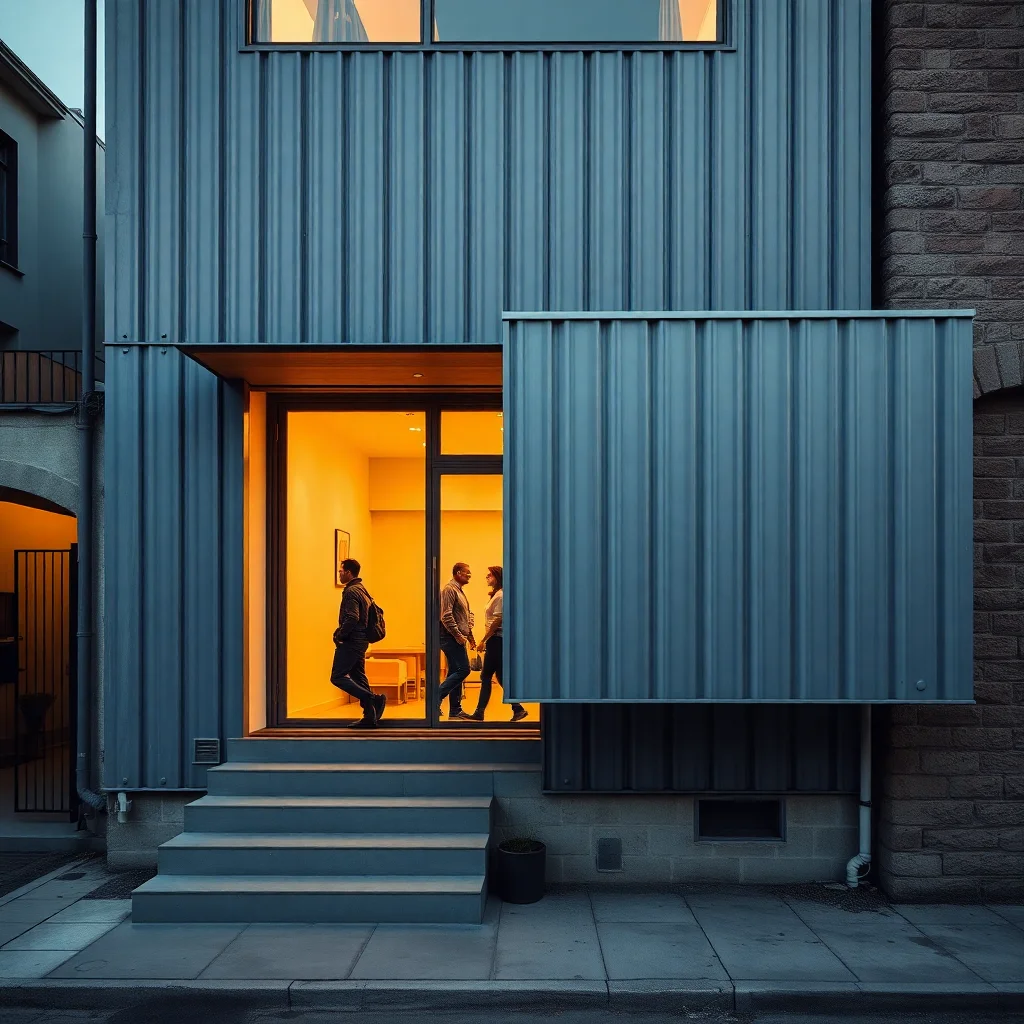
PRO: The armored facade is back because openness has become expensive
The new fascination with operable metal skins is not an aesthetic whim; it is a response to the fact that domestic life now has to perform three contradictory tasks at once. Homes must be secure, luminous, and breathable, while also preserving privacy in neighborhoods where density, surveillance, and heat are all rising. In that context, the Tbilisi house with its flanges of steel cladding and iron doors is more than an object of curiosity: it is a prototype for a harder kind of domestic freedom. A facade that can open in layers allows residents to stage the day like a sequence of permissions—sun, air, view, and then enclosure again. That is a powerful proposition in a city such as Tbilisi, where the climate rewards shade and cross-ventilation, and where the urban condition encourages a measured relationship between the street and the interior.
This logic has precedents, but they are not sentimental ones. Shigeru Ban’s houses with sliding screens, RCR Arquitectes’ dark metal domestic envelopes, and the robust shutters of Mediterranean architecture all demonstrate that protection and porosity are not opposites. In fact, the best houses often understand openness as something you actively regulate rather than passively enjoy. The Tbilisi project updates this tradition with a distinctly contemporary vocabulary: industrial steel, crisp folds, and an almost martial face that can soften into a breathable shell. It is architecture as equipment, not spectacle for its own sake. And that is precisely why it feels timely.
The strongest argument for armored facades is practical, not symbolic. Open-plan living may be the default language of the architectural press, but most households do not inhabit a perpetually transparent lifestyle. They need shade at noon, seclusion at night, and a way to let the building work with the weather instead of against it. Operable metal skins answer all three requirements at once. They can filter glare, temper heat gain, and create secure nocturnal closure without resorting to a dead wall. In cities where security concerns are real, that matters. The facade becomes an interface, not a moral statement about transparency.
PRO: Security, climate control, and freedom can share one skin
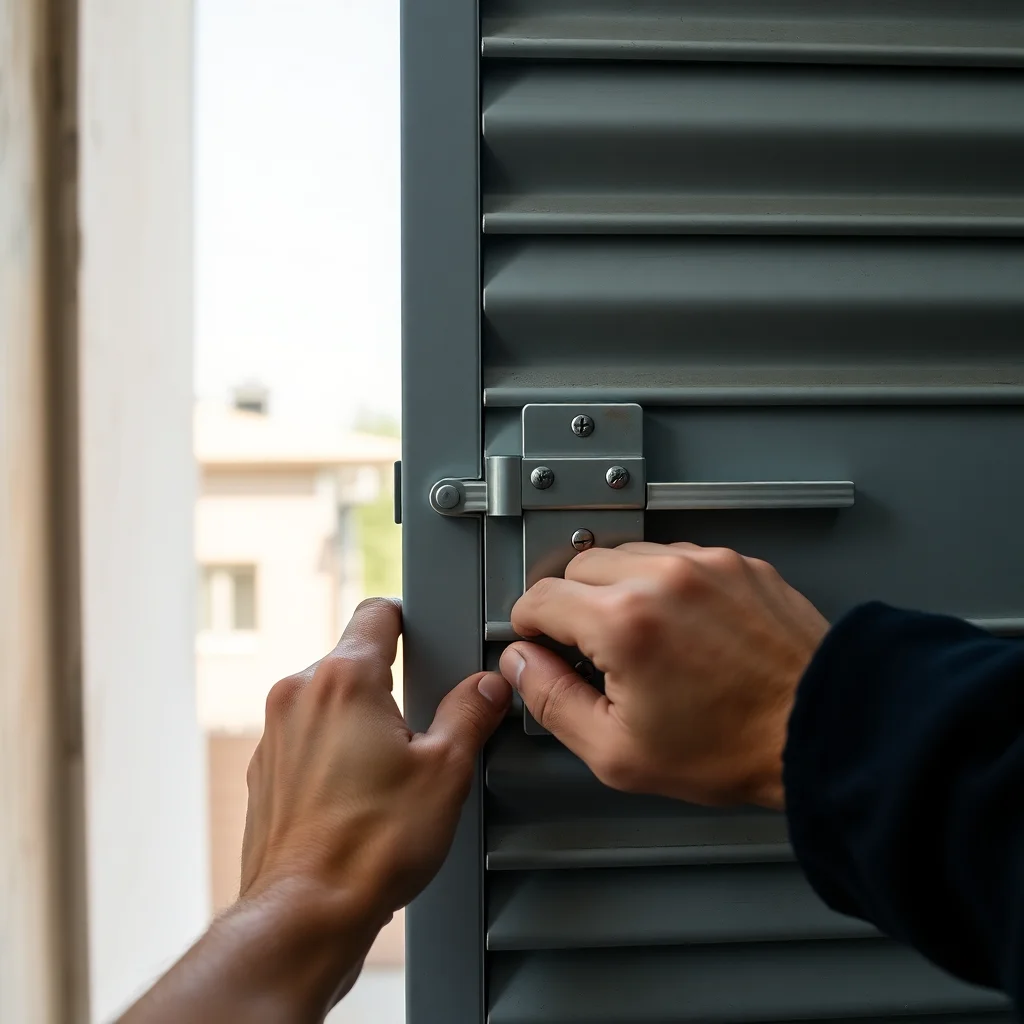
What makes the Tbilisi house especially compelling is that its armor is not sealed; it is adaptable. The flanges allow the facade to shift between open and closed positions, making the envelope perform as a device of atmosphere. When open, the metal screen invites daylight and breeze deep into the interior. When closed, it reads as a solid protective mantle, a kind of domestic gatehouse. This duality is not merely technical. It offers a new definition of comfort in an era of environmental instability, where the dream of the all-glass house begins to look naïve. A house that can breathe selectively is more intelligent than one that simply exposes itself.
Design history supports this stance. In warm climates, operable shading has long been essential: mashrabiya screens in the Middle East, timber shutters in southern Europe, and contemporary reinterpretations by architects such as Gluckman Tang and Marcio Kogan all reveal how privacy and light control can be folded into the facade itself. The difference today is material emphasis. Steel and aluminum bring a sharper, more industrial expression, which suits a world where domesticity is entangled with urban anxiety. That may sound harsh, but harshness is sometimes honest. A home that admits vulnerability without surrendering protection is arguably more humane than the manicured transparency of so many developer-friendly “open living” interiors.
There is also a cultural argument to be made. The armored facade resists the flattened global style of aspirational domestic architecture, where the same pale plaster, oversized glazing, and minimalist interiors are deployed from Lisbon to Los Angeles. By contrast, a metal skin that opens and closes according to local conditions feels embedded in place. Tbilisi’s mixture of Soviet residue, entrepreneurial reconstruction, and informal improvisation makes it a fitting laboratory for this kind of architecture. The house does not pretend that home is a neutral container. It acknowledges that the threshold is political, climatic, and social. That acknowledgment is refreshing.
Still, the real seduction lies in choreography. Operable armor turns a house into a set of actions: open for morning air, partially close for privacy, shut for security, then reveal again at dusk. In this sense, the facade produces a domestic ritual rather than a static image. The architecture becomes more like a tool than a monument. For residents, that can restore agency in a world where buildings increasingly automate experience. The irony is that a heavily articulated metal skin may deliver a more generous way of living than the supposedly liberated open plan ever did.
CONTRA: Fortification is not neutral, and “openness” can become theater
Yet the armored facade carries a dangerous romance. Every time architecture reintroduces the language of defense, it risks normalizing fear as a design value. The Tbilisi house may operate elegantly, but its visual grammar still borrows from fortification: flanges, shutters, heavy closure, a sense that the occupant must be protected from an unspecified outside. That can be read as pragmatism. It can also be read as the architecture of private withdrawal, the domestication of suspicion. In this light, the metal skin is not just a climate device; it is a statement about how much of urban life we are willing to retreat from.
There is a deeper critique here. Open living has often been misunderstood as a visual condition rather than a social one. Many contemporary homes boast expansive glazing and collapsible doors, yet their openness is carefully curated and often temporary. The facade opens for the camera, the party, the real-estate listing. Then it closes. What appears as freedom may in fact be performance: a way of signaling cosmopolitan ease while retaining total control. Operable metal skins can easily slip into that script. They make a house look adaptive, even radical, while preserving a highly managed domestic order. The gesture is seductive because it photographs well.
Architectural history offers cautionary parallels. The fortress-like villas of the interwar period, certain postwar modern houses wrapped in brise-soleil and shutters, and even recent luxury compounds with elaborate screening systems all suggest that protective envelopes can become badges of privilege. The problem is not the technology itself but its social meaning. Who gets an armored facade? Often, those who can afford to make insecurity aesthetic. In that sense, the metal skin risks becoming a luxury accessory for a world that refuses to address the structural causes of fear: inequality, privatized safety, and fragmented urbanism.
There is also an environmental cost to the rhetoric of hardness. Metal is durable, yes, but it is energy-intensive to produce, and heavy operable systems demand maintenance, calibration, and long-term care. If the facade becomes too complex, it may end up serving image more than use. A screen that is difficult to repair is not truly resilient. Likewise, a house that depends on elaborate hardware to perform openness may be less democratic than a simpler building whose generosity is built into plan, section, and orientation. The most progressive domestic architecture is not always the most dramatic.
CONTRA: The real challenge is whether the house can be open without pretending to be fearless
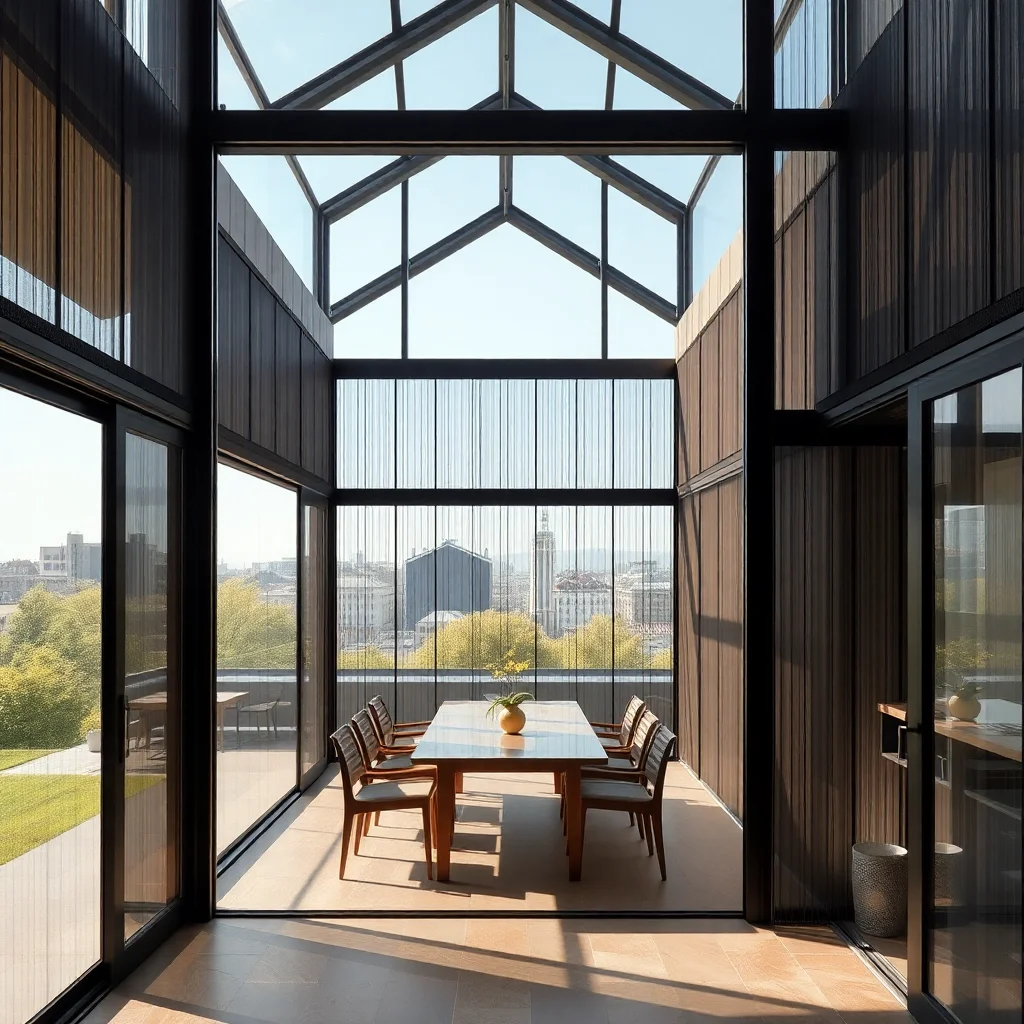
What the Tbilisi house reveals, ultimately, is that contemporary domesticity is caught between two incompatible desires: exposure and retreat. The question is not whether we need protection; we do. The question is whether protection must look like armor. There are other models of adaptability that do not invoke the rhetoric of siege. Passive design, deep overhangs, courtyard living as a climate strategy, layered thresholds, and thick walls can all mediate between interior and exterior without turning the home into a defensive object. In this sense, the armored facade is both symptom and solution: it answers a real need, but it also dramatizes the anxieties that produced that need.
That tension is what makes the Tbilisi project worthy of attention. It refuses the false innocence of glass-box openness and replaces it with something more ambivalent, more useful, and more unsettling. The house suggests that the future of domestic architecture may lie in controlled permeability, not total transparency. But it also warns that every mechanism of openness can be co-opted into performance. The most provocative homes now are not the ones that erase boundaries; they are the ones that admit boundaries are necessary, then ask how beautifully, honestly, and ethically those boundaries can operate.
- Armored facades answer real climate demands. In hot, changing climates, operable metal skins can filter sun, encourage cross-ventilation, and reduce reliance on mechanical systems. Their strength is not symbolism but environmental responsiveness.
- They also create a managed domestic theater. A facade that opens and closes in layers can become a compelling visual performance, especially in an age when architecture is constantly filtered through images, renderings, and social media circulation.
- Security is a legitimate design driver. In many urban contexts, the desire for protection is not paranoia but daily reality. Armored envelopes acknowledge that domestic architecture cannot pretend the city is harmless.
- But fortification carries social baggage. Once protection becomes a dominant aesthetic, it can normalize withdrawal, privilege, and suspicion toward the public realm. The house may become safer while the city becomes poorer.
- Open living needs a deeper definition. Openness is not only about large glass doors or seamless interiors; it is about degrees of access, privacy, and adaptability. A truly open house may need to close more intelligently.
- The best models are neither glassy nor militarized. When the home becomes a master plan, courtyards, screens, shutters, and layered thresholds offer more nuanced ways to mediate between inside and outside without turning domestic life into either exhibition or siege.
FAQ
What is an armored facade in residential architecture?
It is a building envelope made of tough, often metal components that can open, close, or shift position to control light, air, privacy, and security. Unlike a fixed wall, it behaves as a movable interface between home and city.
Why are architects returning to metal skins now?
Because contemporary homes must handle heat, privacy, and safety at the same time. Metal screens and shutters offer a compact way to address all three, especially in dense urban contexts and warmer climates.
Does an operable facade always improve sustainability?
Not automatically. It can reduce cooling loads and improve comfort, but the material, hardware, and maintenance burden matter. A complex system is only sustainable if it is durable, repairable, and genuinely useful in daily life.
Is the armored facade a sign of fear or resilience?
It can be both. In the best cases, it expresses adaptable resilience: a home that can breathe, shade, and secure itself. In the worst cases, it aestheticizes fear and turns withdrawal into a luxury style.
Can open living survive without large amounts of glass?
Yes. Openness is more than transparency. It can be achieved through layered thresholds, courtyards, screens, and selective openings that let in light and air without forcing constant exposure.
Are metal-clad houses a new architectural language or a revival?
Both. They revive older traditions of shutters and protective screens, but they do so with industrial materials and a contemporary sensibility shaped by climate anxiety, security concerns, and image culture.
Get the Mainifesto weekly — curated design debates, speculative ideas and the week's best articles every Saturday.


Ricardo Estévez May 19, 2026
I read this as a contemporary version of the shutters, grilles, and courtyard walls that have always mediated domestic life in cities under pressure. If the steel skin gives residents control over light, privacy, and risk without turning the house into a bunker, that’s not retreat—that’s a smarter, more honest kind of urban freedom.
Marcus Reed May 19, 2026
From a user standpoint, this sounds like a high-maintenance gesture that solves a problem most people don’t actually want to choreograph every day. If a home needs an armored routine to feel safe, it’s admitting the city has already won the experience battle—and that’s a hard sell for anyone thinking about livability and long-term value.
David Lim May 19, 2026
What interests me is less the fortress image than the control logic behind it: how the facade modulates porosity, visibility, and thermal performance as conditions change. The real question is whether this kind of operable envelope can produce a genuinely flexible domestic threshold, or whether it just formalizes fear into a very beautiful mechanism.