

The Bicycle Is the New Prestige Object
The prestige object has changed lanes
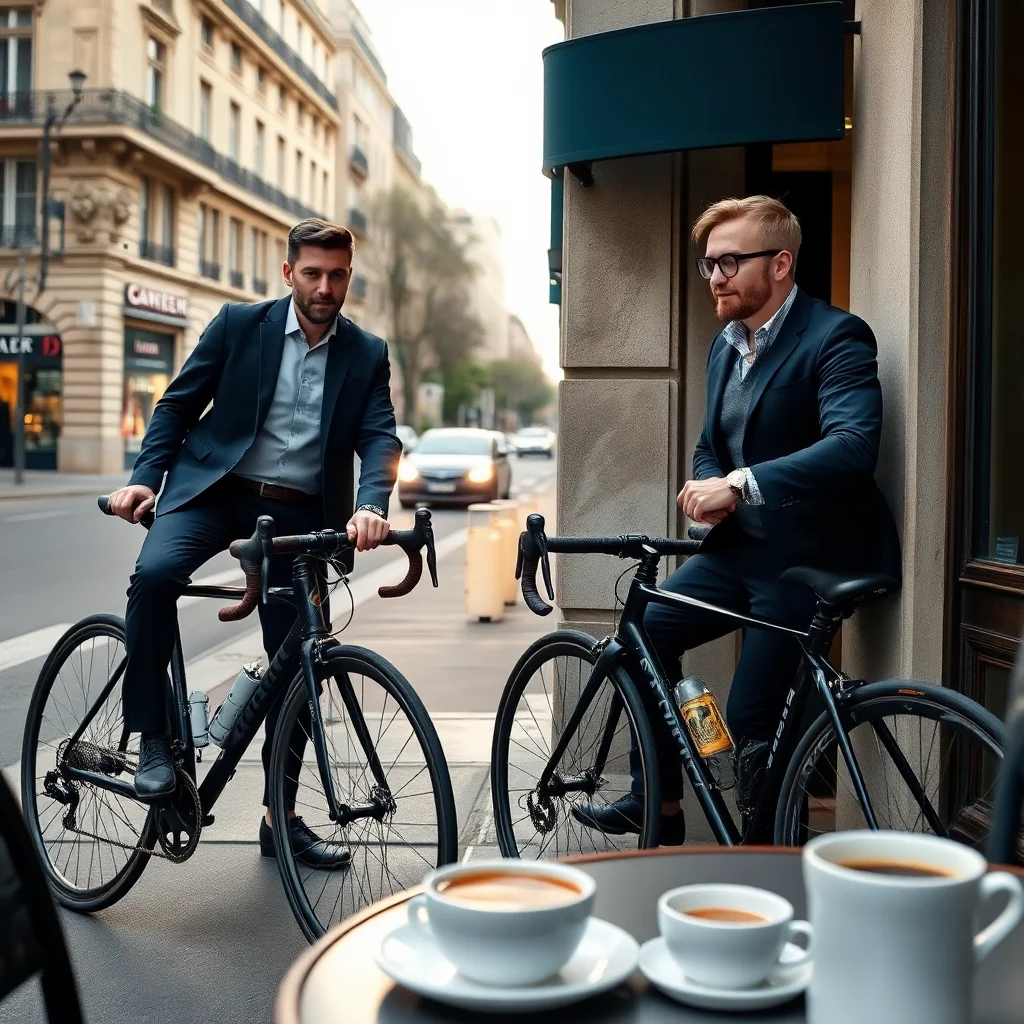
For decades, luxury chased horsepower. Watches sponsored Formula 1, motorbikes, rally teams, and endurance racing because speed was the cleanest metaphor for technical mastery and masculine fantasy. A chronograph on the wrist echoed a V12 on the road: precision, risk, noise, spectacle. But the latest move from brands such as Tissot, Bremont, and others into cycling suggests that luxury has quietly revised its ambitions. The prestige object is no longer the sports car parked in a private garage. It is the bicycle leaning outside a café, lightly scuffed, technically sophisticated, and legible to the urban class that values mobility over excess.
This matters because the bicycle is not just a vehicle. It is an editorial device for the self. It signals restraint, fitness, ecological fluency, and a certain anti-flash intelligence. A carbon road bike can cost as much as a motorcycle, but it still reads as more democratic, more intimate, more socially current. In that sense, cycling has become the new luxury image system: less about domination of the road than fluency within the city.
Why watch brands abandoned the racetrack mood
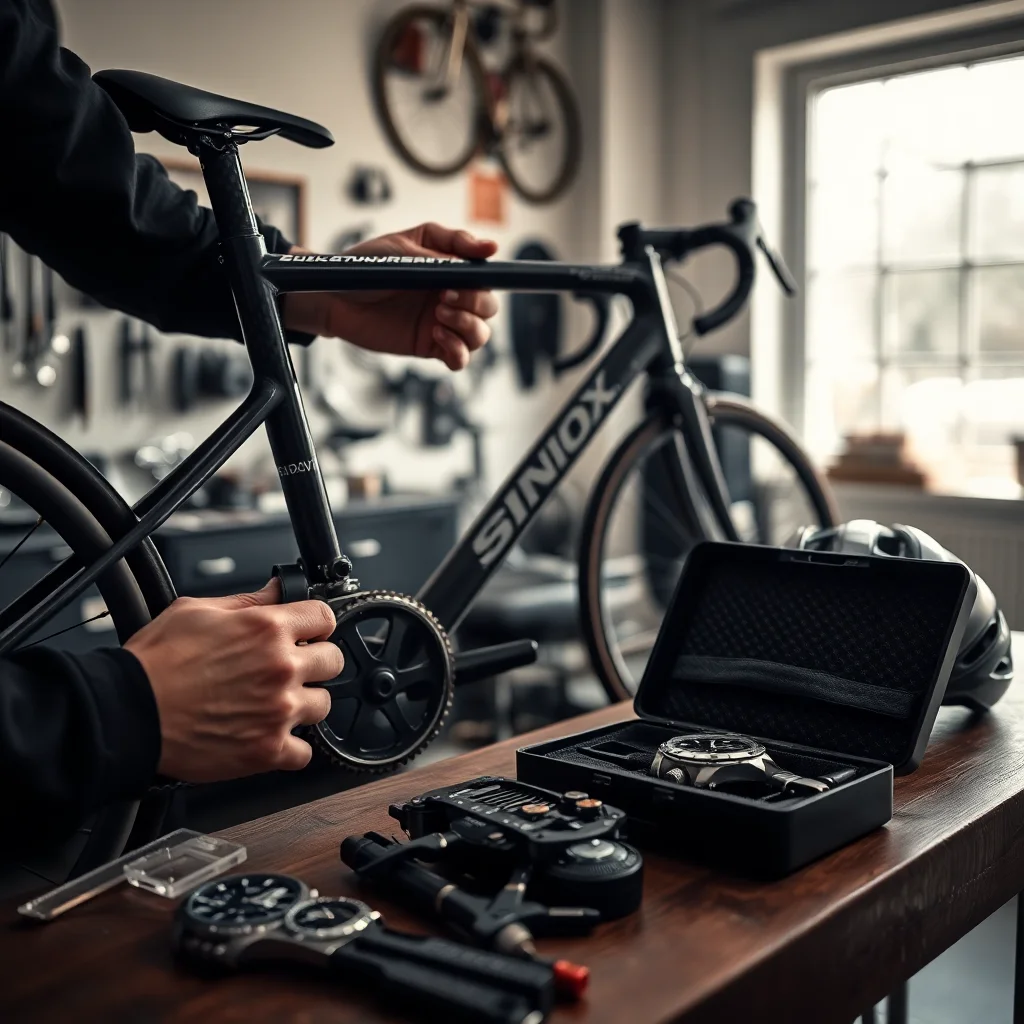
The motorsport era worked because it gave watchmaking a ready-made theatre of speed. TAG Heuer built an empire on this association, and Rolex has long turned endurance racing and glamorous driver culture into an architectural language of status. The problem is that this visual code has become predictable. Motorsport now risks looking like a heritage costume, a closed loop of wealthy men, heat-resistant fabrics, and advertising sunsets.
Cycling, by contrast, offers a fresher narrative. It is still technical, still elite in equipment terms, but it is also closer to daily life. A timepiece linked to cycling no longer says “I fantasize about going faster than everyone else.” It says “I understand the city, the body, the route, and the social code of sustainability.” That is a much more contemporary luxury position. Bremont’s collaboration with cycling culture, Tissot’s visibility around the Tour de France, and the broader embrace of performance bikes all point to the same pivot: speed remains, but the setting has changed from circuit to street.
The shift is also aesthetic. Motorsport imagery depends on slick surfaces, hard reflections, and aerodynamic aggression. Cycling imagery is softer, sweatier, and more human-scaled. It lets brands photograph movement without looking detached from reality. In a market increasingly allergic to blinding opulence, the bicycle delivers credibility. It says you can still afford the expensive object, but you do not need to perform wealth in the old way. This is part of the same logic explored in Can a Sports Car Still Be an Object of Desire?—where desire is increasingly tied to justification, not just performance.
The bicycle as a new class marker
The bicycle has a curious power: it can appear humble while operating as a high-end status object. This is why it is such a potent luxury symbol. A Brompton folded under a desk, a Colnago with hand-painted detailing, a Pinarello or Specialized S-Works on a townhouse wall, a custom titanium commuter with internal routing and silent hubs—each carries the same social message. The owner has taste, discipline, and access to specialist knowledge. The machine is not merely transport; it is a credential.
This makes cycling perfectly suited to the contemporary prestige economy, which increasingly rewards discernment over display. In place of the sports car’s brute visibility, the bicycle offers coded luxury. It can be expensive without looking vulgar. It can be athletic without appearing performative. It can be sustainable while still remaining exclusive. That combination is intoxicating to brands looking for a replacement mythology after the decline of obvious automotive glamour.
There is also an urban political dimension. The bicycle belongs to cities where parking is scarce, congestion is routine, and status now attaches to frictionless movement rather than car ownership. In places like Copenhagen, Amsterdam, Paris, and increasingly London and Milan, the bike is not an alternative lifestyle object; it is an instrument of cultural fluency. Luxury follows where the city leads. It does not invent credibility, but it can package it elegantly.
From speed fantasy to slow power
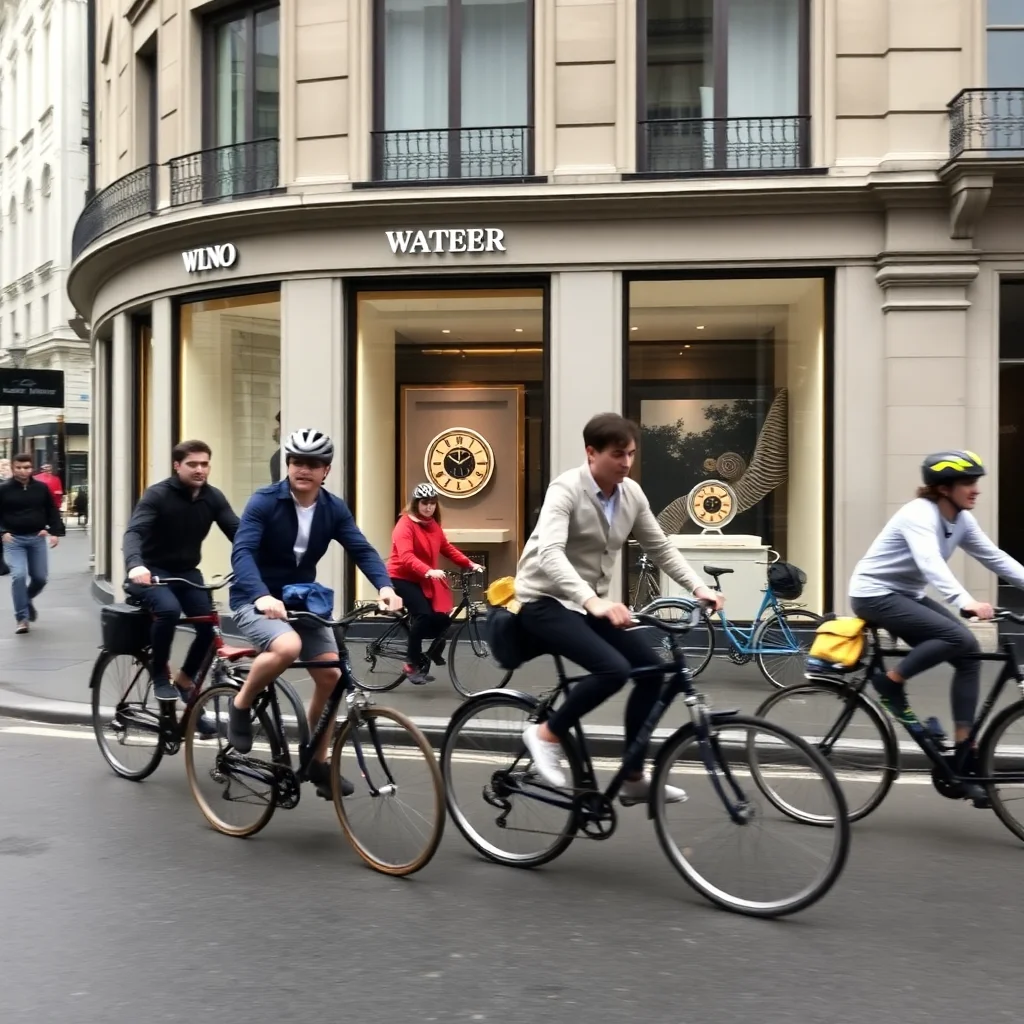
The most revealing thing about the bicycle’s rise is that it represents a luxury pivot from speed fantasy to slow power. That sounds contradictory until you look closely. Cycling is obviously fast in certain contexts, but its prestige comes from a different register: endurance, control, bodily effort, and precision under human power. This is not the abstract velocity of a supercar. It is motion with consequences. You feel the incline. You hear the chain. You arrive with evidence on your clothes.
Luxury has begun to understand that the fantasy of effortless speed has lost some of its appeal. The supercar often feels like a relic of fossil-fuel bravado, an object designed for a world that can no longer be convincingly desired in the same way. Cycling, by contrast, is aspirational because it reconciles performance with ethics. It offers the satisfaction of engineered excellence without the environmental guilt of combustion and excess.
That is why the bicycle is such an effective prestige object now. It performs a rare trick: it makes effort look refined. The wearer or rider is not secluded from labor; they are styled by it. In a culture increasingly suspicious of pure consumption, this is a powerful update to luxury’s old script. It also echoes the argument in When Evidence Becomes Beauty’s New Luxury, where proof and visible process become more desirable than polish alone.
Is this a real cultural shift, or just a smarter surface?
Here is the unresolved tension. The move toward cycling can be read as a genuine cultural shift toward everyday mobility, low-carbon transport, and more honest relationships between design and use. If luxury brands are learning from cycling rather than merely borrowing its image, that could indicate a healthier future: one in which prestige attaches to utility, resilience, and urban responsibility.
But cynicism is justified. The luxury sector is exceptionally skilled at laundering itself through new codes. Today’s cycling campaign can easily become yesterday’s motorsport fantasy in a different jacket: same status economy, different props. The bike becomes a styling device, not a social commitment. A watch brand that sponsors a bike race is not necessarily endorsing car-free cities or better infrastructure. It may simply be harvesting the aura of contemporary virtue.
This is the core question Mainifesto has to press: is the bicycle being recognized as a serious object of design culture, or is it being used to update the mood board of privilege? The answer may be both. That is precisely what makes the bicycle so powerful. It can be read as moral progress and elite branding at the same time.
Design, materials, and the new romance of performance
Cycling also aligns with the current fetish for advanced materials and invisible engineering. Carbon fiber, titanium, integrated cabling, ceramic bearings, 3D-printed components, and precision-lasered frames give the bicycle a technological depth that rivals any performance car. Yet unlike automotive design, where engineering is often hidden under volume and branding, bicycle design exposes its intelligence. The frame is legible. The geometry is visible. The object explains itself.
That clarity is part of its appeal to design-conscious consumers. It resonates with the same audience that admires precision in watches, furniture, and architecture: people who want to see function translated into form without theatrical excess. The bicycle becomes a portable manifesto for a more disciplined version of luxury. It is restrained, but not plain; technical, but not cold.
Even the social rituals around cycling reinforce this. Coffee stops, weekend group rides, urban commutes, and the bike-as-lifestyle image produce a culture of soft membership. It is exclusive, yes, but not hermetic. You can enter through equipment, knowledge, or habit. That is a more contemporary path to aspiration than the old sports-car dream, which depended on distance, ownership, and speed as separation.
The new prestige object is useful, not idle
The deepest break with the sports car is not the number of wheels. It is usefulness. The bicycle still does something. It gets you across a city. It solves a problem. It occupies less space, consumes less energy, and invites more public life. That functional legitimacy is what makes it so potent as a luxury object in 2026: it refuses to be purely decorative.
This is a challenge to product design as much as to branding. The next prestige object may be the one that can justify itself in public. It must be desirable, yes, but also intelligent, contextual, and socially credible. The bicycle fits this brief better than the sports car because it has no need for a myth of domination. Its myth is integration: body, machine, city, rhythm.
So when a watch brand moves from motorsport to cycling, do not mistake it for a casual sponsorship pivot. It is a signal that luxury is changing its language. The question is whether this language now points toward a less extractive future, or whether it is simply dressing the old hierarchy in Lycra and matte carbon. Either way, the bicycle has become the new prestige object because it can still seduce us while pretending not to.
That shift also reflects a broader design culture that has moved beyond signature alone. In that sense, cycling sits alongside the thinking in After the Signature Brand in Luxury Design, where identity is no longer carried by the logo first, but by the logic of the object itself.
FAQ
Why are luxury brands interested in cycling now?
Because cycling offers a contemporary blend of technical credibility, sustainability, and urban sophistication. It lets brands stay performance-oriented while aligning with a more socially acceptable version of prestige.
How is a bicycle a status symbol?
High-end bicycles can cost as much as premium watches or motorcycles, but their status is subtler. They signal taste, discipline, and insider knowledge rather than blunt wealth.
Does cycling really replace motorsport in luxury marketing?
Not completely, but it is becoming a more relevant symbol for many brands. Motorsport still communicates speed and heritage; cycling communicates modern mobility and everyday relevance.
Is this shift actually environmentally meaningful?
Sometimes, but not always. A cycling-themed campaign may reflect real values, or it may simply be a new visual code for the same elite status economy.
Get the Mainifesto weekly — curated design debates, speculative ideas and the week's best articles every Saturday.


James Okoro May 19, 2026
I’m interested in the bicycle here because it changes the status script: less combustion theatre, more everyday intelligence. But luxury only becomes credible if it backs the symbol with better materials, repairability, and real urban advocacy—not just another shiny object for people who already have options.
Daniel Okonkwo May 19, 2026
This feels like the luxury world rebranding restraint as aspiration, which is a very modern kind of flex. The bicycle can point to a more responsible future, but if the story is still about scarcity, exclusivity, and image management, then it’s just techno-greenwashing on two wheels.
Karim Haddad May 19, 2026
Luxury brands love borrowing the language of the city without dealing with the city. If they really mean the bicycle, they should fund infrastructure, safe lanes, and mobility systems that work beyond affluent districts; otherwise it’s just a cleaner status prop for people who can already avoid the mess.
David Lim May 20, 2026
The shift from motorsport to cycling is interesting because it moves the prestige object from speed as excess to speed as efficiency and fit. But the real question is whether design is being used to normalize lower-impact behavior, or just to make private consumption look ethically optimized.