

Why Iconic Objects Still Rule Design Culture
The paradox of the uncopyable copy
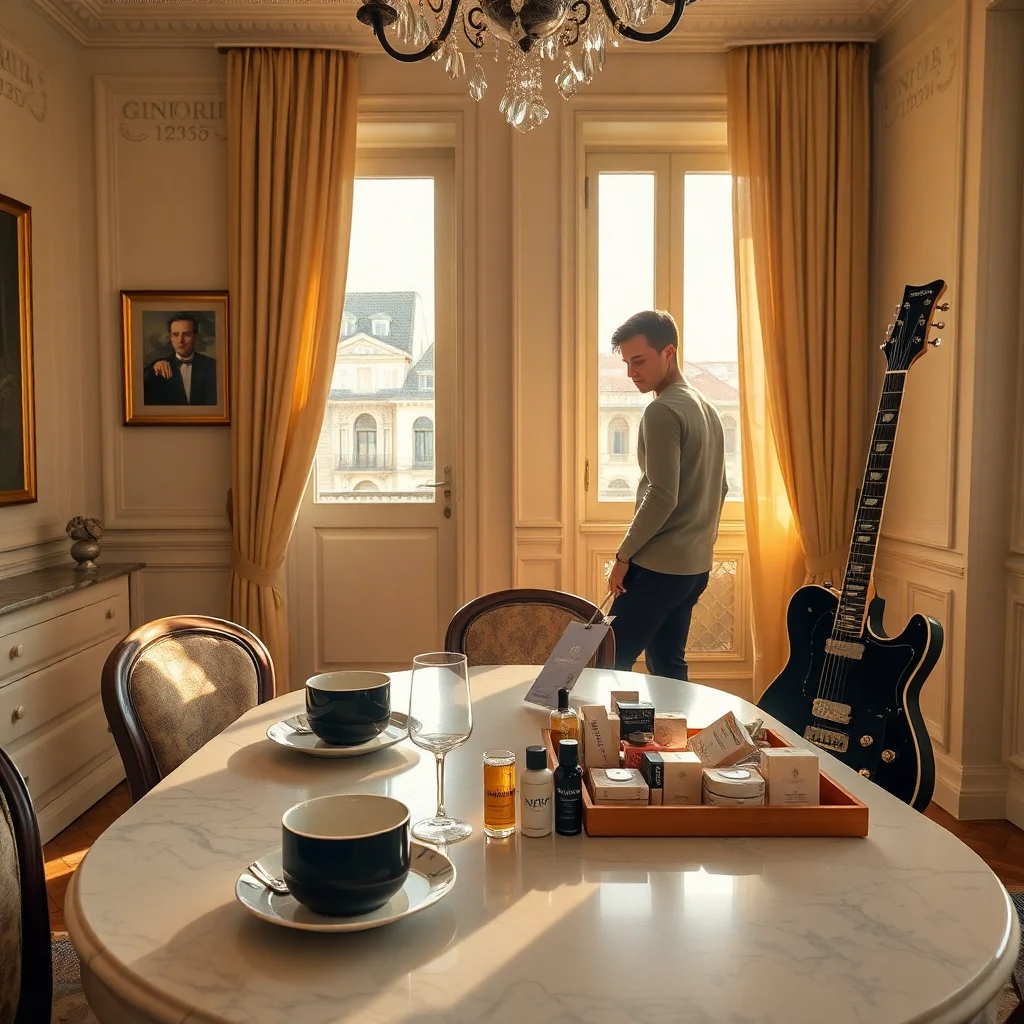
Design culture keeps announcing the death of the icon, and yet the icon keeps collecting new audiences. In an era of infinite copies, the objects that become culturally louder are not the ones that mutate beyond recognition, but the ones that remain stubbornly themselves: the Fender Telecaster, the Ginori 1735 porcelain plate, a Le Creuset Dutch oven, a Smeg toaster, a Baccarat glass, a Byredo bottle, a Laboratorio Olfattivo jar. Their power is not mystery alone; it is instant legibility. The silhouette is the brand, the brand is the silhouette, and the silhouette survives every repost, resale, and showroom refresh.
The deeper story is not nostalgia. It is strategic continuity. An iconic object can absorb new contexts without surrendering its core form, because in a noisy market the recognizable shape becomes a kind of cultural contract. You know what it is before you touch it, and that pre-knowledge creates desire. For product design, that is the real drama: how to stay authentic while learning to perform for feeds, registries, interiors, and algorithms all at once.
- Recognition is now a form of value. The most desired objects often arrive already familiar, which makes them feel trustworthy in a market saturated with novelty theater.
- Visibility is part of the object itself. If a product photographs well on Instagram or in a wedding registry, that is not secondary marketing; it is now part of its cultural function.
1. The object as a visual argument

The Fender Telecaster is a masterclass in how form can become philosophy. Its slab body, bolt-on neck, and unapologetic industrial clarity make a case for functional honesty, but also for a certain anti-preciousness. You can spot one from across a stage, and that recognition is not superficial: it tells you the instrument belongs to a lineage of working tools, not decorative artifacts. The same logic operates in Ginori 1735’s tableware, where the historic Florentine porcelain house preserves a distinctly identifiable language of rims, glazes, and ornamentation while still appearing in modern registries and contemporary cabinets.
Iconic objects do not merely look good; they argue for a worldview. They say that a chair, a cup, a guitar, or a perfume bottle can achieve endurance by refusing to chase the latest aesthetic dialect every season. In this sense, the object becomes a compact manifesto: continuity over churn, legibility over gimmick, authorship over faceless sameness. That is why designers from Dieter Rams to Jasper Morrison have long insisted on forms that are quieter than trends but louder than anonymity.
The icon survives because it is readable at a glance. In product design, readability is not a compromise; it is a weapon. The object that can be drawn from memory is the object most likely to become culture.
2. Ginori and the prestige of staying recognizably itself
The case of Ginori 1735, recently reintroduced to a wider audience through design media attention and high-profile interiors, is revealing because it refuses the lazy assumption that heritage equals stagnation. Nearly 300 years of production could have turned the brand into a museum label, but instead it behaves like a living system. Its appeal in modern homes and registries comes from the fact that the pieces still feel like Ginori: the forms are edited, the decoration is coded, the porcelain is unmistakably European without becoming stiff or antique.
This is where heritage design becomes provocative. Too many legacy brands confuse reinvention with amnesia, stripping away the very characteristics that made them desirable. Ginori demonstrates the opposite: modernity can be introduced as a contextual layer, not a total reset. A table setting with Ginori is not saying “look how new I am”; it is saying “look how long taste can last when the object is disciplined.” That message has real social-media power because it photographs as both inheritance and aspiration.
What makes the category so potent now is that tableware has become identity infrastructure. Weddings, dinner parties, and styled kitchens are broadcast spaces, and the object on the table has to perform in person and on screen. Ginori’s endurance lies in understanding that a plate is no longer just a plate; it is a signal that can move from family ritual to content without losing status.
3. The Instagram test is harsher than the museum test

For decades, design criticism privileged the museum pedestal: could an object justify preservation, study, and canonization? Today the more brutal test is the feed. Can it remain itself in a cropped image, a resale listing, a close-up unboxing video, or a wedding registry carousel? Cult beauty packaging understands this perfectly. A Byredo perfume bottle or a Diptyque candle jar is not only a container; it is a grid-ready emblem that stays recognizable even when partially obscured, restyled, or placed in a bathroom cabinet shot with harsh natural light.
This is not banal branding. It is a new ecology of objecthood. Social media rewards forms that can be repeated without collapsing into visual fatigue. The irony is that the more an object circulates, the more its iconicity depends on not changing too much. If every season forces a radical redesign, the object loses its memory, and memory is what makes repeat viewing profitable. In other words: the icon must be infinitely repostable, but never fully exhausted.
The feed punishes ambiguity. Objects that survive the internet age tend to have a strong outline, a stable color story, and one or two instantly legible gestures. The algorithm may be new, but the ancient law of silhouette still rules.
4. Reinvention without self-erasure
The smartest brands understand that reinvention is not a cosmetic event but a calibration. Consider how classic product families are updated: a new finish, a seasonal palette, a collaboration, a limited run, a reinterpretation by an invited designer. The object remains itself, but its social temperature changes. This is the route taken by countless design houses that now use collaboration as a controlled disruption rather than a total reboot.
Furniture and product design offer many examples. The Eames lounge chair survives because every reissue confirms the original proportions rather than trying to outsmart them. The Alessi kettle line keeps its recognizable wit while absorbing new authorship. Even the humble water bottle or kitchen mixer can become iconic when its outline stays consistent long enough to build trust. Designers like Patricia Urquiola, Michael Anastassiades, and Naoto Fukasawa have shown that refinement often means editing, not inventing from zero.
The point is not to freeze the object in amber. It is to preserve the core code while allowing peripheral variation. The best icons behave like languages: grammar remains, accent changes. That is why the market can accept a fresh color or material finish, but punishes the kind of reinvention that leaves the object visually unrecognizable. If the icon disappears inside its own update, it has betrayed the very audience that made it iconic.
5. Authenticity is a style, but also a system
Authenticity is often treated as an emotional label, a vague promise that something is “real.” In product design, it is more technical than that. Authenticity is the disciplined repetition of a form, a material logic, and a manufacturing attitude that together create continuity over time. The Fender Telecaster feels authentic not because it is old, but because it keeps announcing its construction. Ginori feels authentic not because it is fragile and precious, but because it has learned how to translate craft into a contemporary domestic setting without flattening its identity.
This matters because consumers are now exquisitely skilled at detecting fake heritage. They can sense when a brand is borrowing vintage cues without carrying any of the substance. The quickest route to cultural irrelevance is to imitate iconography while changing the underlying values into disposable trend language. A true icon does not merely quote the past; it remains accountable to a lineage of use, repair, display, and repeated encounter.
That accountability is what gives the object moral force. It suggests durability in an age of planned obsolescence. It suggests that the object will still look like itself when the trend cycle has moved on, which is exactly why it can command higher desire than the novelty item that screams for attention and then vanishes.
That logic helps explain why some design categories increasingly borrow from evidence-led luxury branding: the object must prove, not merely claim, its value. In a market suspicious of polish without substance, visible construction and material honesty become part of the aesthetic appeal.
It also clarifies the appeal of design after the signature brand, where recognition no longer depends on a single authorial flourish but on a more durable system of cues, proportions, and behaviors. The strongest products are less like signatures than like inherited vocabularies.
6. The future belongs to objects that know their face
If product design has a new ambition, it is not to invent endless novelty but to produce forms that can endure cultural compression. The icon of the future will be able to live in a luxury cabinet, a studio apartment, a museum archive, and a smartphone screen without changing its character. That is a high bar, but it is increasingly the only one that matters. Designers, manufacturers, and heritage brands are now competing not on how radically they can transform an object, but on how precisely they can preserve its identity while expanding its audience.
This is why the return of the iconic object feels less like a backlash than a correction. After decades of churn, we are rediscovering that repetition can be a form of intelligence. The object that holds its shape across generations is not refusing modernity; it is mastering it. It knows that cultural power does not come from being endlessly new. It comes from being endlessly recognizable, while still feeling alive.
The age of infinite copies has not killed the icon. It has made the icon more valuable, because the object that can survive copying without losing its authority is the one that has truly earned its place in culture.
FAQ
What makes an object iconic in design?
An iconic object combines a strong silhouette, cultural recognizability, and a form that remains meaningful across time. It is not just popular; it is immediately legible and durable enough to survive changing contexts.
Why do heritage brands like Ginori 1735 remain relevant?
Because they preserve a recognizable core while updating how the object is positioned, displayed, and used. They do not erase their history; they convert it into contemporary desirability.
How does social media affect product design icons?
Social media rewards objects that photograph clearly, repeat well, and retain identity in cropped or stylized settings. In practice, this means strong outlines, stable visual codes, and designs that look good in both real life and the feed.
Is reinvention always good for legacy products?
No. Reinvention becomes destructive when it erases the traits that made the product distinct in the first place. The best updates preserve the core form and adjust the surrounding language, not the identity itself.
Should iconic objects resist trends, or can they borrow from them?
They can borrow, but selectively. A true icon can absorb color, finishes, or collaborations without surrendering its essential shape and meaning.
Are we worshipping nostalgia when we buy iconic objects?
Not necessarily. Often we are buying continuity, confidence, and visual clarity in a chaotic market. Nostalgia may hover nearby, but the real attraction is permanence that still feels current.
What happens when an iconic object becomes overexposed?
Overexposure can weaken the aura, but it can also deepen recognition if the object remains disciplined. The danger is not visibility itself; it is losing the core form in the process of chasing attention.
Can a new object become iconic quickly today?
It can, but usually only if it establishes a distinctive silhouette, a clear use case, and strong cultural circulation. Fast fame is possible; lasting iconicity still takes repetition and restraint.
What should designers learn from Telecasters, Ginori, and cult packaging?
That consistency is not the enemy of creativity. The most powerful products are often those that evolve slowly enough for people to build memory around them.
Open question: in a culture that rewards constant novelty, should product designers pursue more radical reinvention—or is the real radical act to make an object so recognizably itself that time cannot dilute it?
Get the Mainifesto weekly — curated design debates, speculative ideas and the week's best articles every Saturday.
Editorial Perspectives
Questions and counterpoints developed by the Mainifesto editorial desk to extend the discussion.
Perspective 1
Iconic objects win because people know what they are in one glance, and that saves time in hospitality, retail, basically anywhere the object has to do work fast. I’m not interested in reinvention for its own sake; if a chair, lamp, or glass isn’t instantly legible and desirable, it’s just burning budget.
Perspective 2
The radical act is not novelty, it is fidelity. An object becomes iconic when its form and use are so resolved that time only clarifies it, instead of wearing it down into trend.
Perspective 3
I’d push back on the idea that radical reinvention and icon status are opposites. The most interesting objects today will be the ones that feel unmistakable, but are also built for repair, lower impact, and longer life—that’s how you make something endure without freezing it in the past.